
Reading options
What's inside (9 sections)
I came to this book expecting a footnote and found a novel. For decades the story of Túrin and his sister existed only in fragments, tucked inside The Silmarillion and Unfinished Tales and the early poetry of the legendarium. In 2007 Christopher Tolkien pulled those pieces together into a single continuous book, edited from his father's manuscripts, and gave it the shape Tolkien himself had never managed in his lifetime. Reading it, I understood why the book feels both complete and slightly uneasy. It is a finished narrative built out of unfinished ones. The result is a dark, compressed tragedy about a man who keeps making the wrong choice and calling it fate.
A story assembled after a lifetime
J. R. R. Tolkien wrote the first version of this tale in the late 1910s and returned to it several times over the following decades, but he never finished it to his own satisfaction before he died in 1973. The material survived in several forms. A short account became chapter twenty one of The Silmarillion. A longer but broken version called the Narn i Hîn Húrin appeared in Unfinished Tales. Earlier still there was a narrative poem, The Lay of the Children of Húrin, and a version called Turambar and the Foalókë. None of these was a complete mature novel, and each stopped at different points.
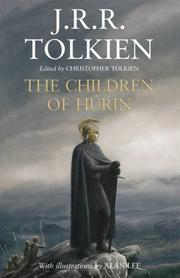
Christopher Tolkien's job was to make one story out of these drafts. He has described his aim as presenting his father's long version between its own covers, with as little editorial presence as possible, and above all in continuous narrative without gaps, so long as that could be done without distortion or invention. He wrote bridging passages where the sources broke, drew on The Silmarillion to fill the largest hole, and added genealogical tables and a redrawn map of Beleriand. Alan Lee supplied the cover painting and more than thirty illustrations, eight of them full page and in color. HarperCollins published the book in Britain and Houghton Mifflin in the United States in April 2007, and the hardback ran to roughly 320 pages.
That editing process is worth keeping in mind while you read. The prose is Tolkien's, but the shape is Christopher's, and scholars still argue about where one ends and the other begins. I found it useful to stop treating the book as a lost masterpiece found intact and to see it instead as a careful reconstruction. That lowered my expectations in one way and raised them in another. If the seams show, they show because the original material was scattered, not because anyone was careless.
Morgoth's curse on the house of Hador
The story is set in the First Age, long before the events of The Lord of the Rings. Morgoth, the fallen Vala, rules from his fortress of Angband in the north and presses south against the Elves of Beleriand. The Elven kingdom of Doriath is held by King Thingol. Among the Men who came west are the Edain, and the lordship of Dor-lómin belongs to the House of Hador, now led by Húrin.
Húrin fights in the Battle of Unnumbered Tears, a catastrophic defeat for the Elves and their allies, and he is taken alive by Morgoth. Brought before the enemy, he refuses to give information or serve, and Morgoth responds by cursing him and every member of his family. The curse is the engine of the whole book. It promises that evil will follow Húrin's line for the rest of their lives, and much of what follows can be read as the curse working itself out through ordinary human choices.
Back in Dor-lómin, Easterlings have moved into the land and Húrin's wife Morwen is trapped with their son Túrin. She sends the boy away to Doriath for safety, to be fostered under Thingol's protection. She stays behind and in time gives birth to a daughter, Niënor. Túrin grows up among the Elves of Doriath, but he carries the temperament of his father's house, proud, quick to take offense, and unwilling to be managed. The book wastes little time on his early years, and the speed is appropriate. This is a story about a fall, not a childhood.
Doriath, Beleg, and the flight into outlawry
Thingol takes Túrin as a foster son, and the young man becomes close to Beleg, a skilled hunter and one of the Elves of Doriath. Beleg is the best person in the book, patient and loyal, and his friendship is the one steady thing Túrin has. That makes what happens to him much harder to bear.
The break comes through Saeros, a counsellor of Thingol who resents the newcomer. Saeros insults Túrin in public and challenges him, and Túrin, furious, chases him through the woods until Saeros tries to leap a ravine and falls to his death. Túrin is guilty of a killing he did not quite intend, and he refuses to go back to Doriath and submit to judgement. He flees instead. Thingol, who had cared for him, pardons him and sends Beleg to find him and bring him home.
What Beleg finds is a band of outlaws in the wild, and Túrin has become their captain. The men are cruel and careless. Beleg locates the camp while Túrin is away, and the outlaws tie him to a tree, intending to wring information from him. Túrin returns in time to cut him loose. He is horrified at what his men have done and swears off the brutal habits he had picked up, but he still refuses Beleg's pardon and the return to Doriath. The two friends remain together, and the choice to stay in the wild sets up the next disaster. Tolkien is careful here to show Túrin as responsible for his own errors. The curse presses on him, but he keeps opening the door.
Amon Rûdh and the death of Beleg
The outlaws capture a Petty-dwarf named Mîm, who leads them to a stronghold in the caves of Amon Rûdh. For a while things go well. Beleg returns to Túrin and is welcomed, and the band has a defensible base. But the outlaws resent the Elf among them, and Mîm comes to hate him as well. Mîm eventually betrays the camp to orcs. The band is destroyed, Túrin is taken prisoner toward Angband, and Beleg is left chained to a rock.
Beleg escapes and follows. In the forest of Taur-nu-Fuin he comes across Gwindor, an Elf of Nargothrond, mutilated and half mad from his captivity. Gwindor joins him, and the two slip into the orc camp at night and carry the sleeping Túrin away. The moment that follows is the most painful in the book. Beleg begins to cut Túrin's bonds with his sword Anglachel. The blade slips and nicks Túrin, who wakes, takes Beleg for an orc, seizes the sword, and kills his friend with it. A flash of lightning shows him the face he has just struck. He goes mad with grief and refuses to leave Beleg's body until morning, when Gwindor can bury it.
Túrin takes Anglachel and keeps it for the rest of the story. The weapon is a gift and a burden, much like the name he will later give himself. I found this section the strongest in the novel. The killing of Beleg is an accident born of haste and fear, and it cannot be undone. There is no villain in the room except the situation Tolkien has built. When Túrin later claims that fate drove him, this scene is the evidence against him.
The bridge at Nargothrond
Túrin and Gwindor make their way to Nargothrond, the hidden Elven city on the river Narog. There Túrin wins the confidence of King Orodreth and becomes his chief counsellor and commander of the army. He wins real victories, and for a time it looks as though the exiled outlaw might become the defender he always wanted to be. His pride grows with his success.
Against the advice of Gwindor and others, Túrin refuses to keep Nargothrond concealed or to avoid a full battle with Morgoth's forces. He builds a great bridge over the Narog so his army can strike quickly. The bridge makes the city easy to reach. Morgoth sends an army under Glaurung, a dragon of enormous power, and the Elves are defeated in the field. The orcs cross Túrin's own bridge and sack Nargothrond, taking prisoners, among them Finduilas, Orodreth's daughter, who loved Túrin.
Túrin returns to find the city destroyed and meets Glaurung face to face. The dragon does not simply kill him. It enchants him, planting the belief that his mother and sister are in danger back in Dor-lómin, so that he rides off to save them instead of rescuing the prisoners. By the time he learns the truth, Finduilas is dead. This is the cruellest stroke in a book full of them, because the deception works on what Túrin most wants to believe about himself, that he is a good son and a protector. Glaurung wins by telling him a story he is ready to accept.
Turambar, Niënor, and the dragon's last malice
In Doriath, Morwen and Niënor hear rumors of Túrin's deeds. Morwen determines to find him or to learn that he is dead, and she rides out alone against Thingol's advice. Niënor conceals herself among the riders of Mablung whom Thingol sends after her. At the ruins of Nargothrond they encounter Glaurung. The dragon scatters the Elves, discovers who Niënor is, and blanks her mind so that she forgets her name and loses the power of speech.
Mablung tries to get her back to Doriath, but they are stranded in the wilderness, and in an orc attack Niënor runs off and is lost. She collapses near Brethil on the grave of Finduilas, where Túrin finds her. By now he has taken the name Turambar, Master of Doom, and has become a leader among the Men of Brethil, superseding their lame chieftain Brandir. He brings the silent woman back, she recovers her speech but none of her past, and the two fall in love. They marry not knowing they are brother and sister, and she becomes pregnant.
Glaurung returns to destroy the Men of Brethil. Turambar leads an expedition to ambush it and stabs the dragon from beneath. As the creature dies, blood from the wound spurts onto his hand and burns him, and he faints. Niënor finds him and believes him dead. In one final act of malice, Glaurung opens his eyes and tells her the truth about their kinship. The spell of forgetfulness breaks, and she understands that the child she carries was conceived in incest. She drowns herself. Turambar wakes to Brandir's account of what happened, and in his grief and rage he kills Brandir. When Mablung confirms the story, he kills himself with Anglachel.
The book does not end on that image. An appended passage from The Wanderings of Húrin tells how Húrin is finally released by Morgoth and comes to the grave of his children. There he finds Morwen, who dies in his arms. It is a quiet coda, and it gives the father the last word in a story where his curse did most of the damage.
The old story underneath and the cost of editing
Tolkien did not invent this plot from nothing. The core of it follows the legend of Kullervo from the Kalevala, the Finnish collection of folk poetry that he had read and adapted early in his career. Kullervo kills a companion through a similar mistake, lives as an outlaw, seduces his sister unknowingly, and dies by his own sword after a mocking exchange with it. Túrin also draws on Sigurd the dragon slayer, on the Volsung tales, and, in the brother sister relationship, on Oedipus. Tolkien himself listed those sources in a letter. Knowing them does not spoil the book. It clarifies what he was doing, which was to recast an old tragic shape in the language and moral world of Middle-earth.
That older shape explains the themes critics find here. Evil is real and active in Morgoth and Glaurung, but the book resists blaming everything on the curse. Túrin is shaped by fate and also by his own pride, his refusal to listen, and his hunger for honor. Courage and arrogance are set close together, and the difference between them is one of the quiet arguments of the tale. The bridge at Nargothrond is the clearest example, a bold piece of engineering that becomes the means of ruin.
Now the fair criticism. Reviews were divided, and I understand both sides. Some readers found the book overblown or fragmentary, and some wondered whether it was really only for devoted Tolkien fans. Jeremy Marshall of The Times called parts of the prose too stilted, the dialogue too portentous, and the unexplained names too opaque, even while arguing that the book deserved readers beyond the faithful. Entertainment Weekly was harsher about the density of names and syntax. There are stretches, especially in the council scenes at Nargothrond, where the formal speech slows the story to a crawl, and the long roll of Elvish names asks for patience.
Christopher Tolkien insisted that he introduced no invention of any kind, only bridging passages, and many readers accept that claim. Others see the edited text as a construction that can never be the book his father would have written. I sit closer to the first view while admitting the second has force. What survives is undeniably powerful. The Beleg killing and the Glaurung revelation are as grim as anything Tolkien wrote, and the coda gives the whole tragedy a human scale. If you want an accessible entry to Middle-earth, The Silmarillion or The Hobbit is a gentler start. If you already care about the First Age, this is the story those other books kept promising and never quite delivering.
FAQ
Who actually wrote The Children of Húrin?
J. R. R. Tolkien wrote the story, beginning in the late 1910s, but never finished it. His son Christopher Tolkien edited the surviving manuscripts into a single narrative and published it in 2007.
Is this book part of a series?
It stands alone as a complete story, but it is one of three Great Tales from Tolkien's First Age, alongside Beren and Lúthien and The Fall of Gondolin. Its events are summarized briefly in The Silmarillion.
Do I need to have read The Silmarillion first?
No. The book gives enough background to follow Túrin's story on its own, though readers familiar with Beleriand and Morgoth will recognize the wider history. The prose is formal and the cast is large, so it rewards patience.
Similar books
The Silmarillion
Tolkien's posthumous First Age history, edited by Christopher Tolkien: the Music of the Ainur, Feanor's Silmarils, Beren and Luthien, Gondolin, and the fall of…
2,544-word summary · 11 min read
The Two Towers
Frodo and Sam crawl toward Mordor with Gollum while Aragorn, Legolas and Gimli chase orcs across Rohan.
2,284-word summary · 10 min read
The Return of the King
Frodo and Sam reach Mount Doom while Aragorn claims Gondor and Pippin and Merry fight at Minas Tirith.
3,341-word summary · 15 min read
The Fellowship of the Ring
Tolkien's The Fellowship of the Ring retold: Frodo's flight, Strider, Moria, Lothlorien, and the breaking of the Fellowship.
2,315-word summary · 10 min read
The Secret of the Nagas
Shiva hunts the Naga who attacked Sati, discovers her hidden twin sister and lost son, and follows the trail to the Naga capital of Panchavati.
2,442-word summary · 11 min read
The Immortals of Meluha
Tribal Shiva learns he is fabled Neelkanth prophesied to save Meluha.
1,994-word summary · 9 min read
The Hobbit
The Hobbit from Bag End to the Lonely Mountain: Bilbo's riddle game with Gollum, Smaug, the Battle of Five Armies, and how the fairy tale sets up The Lord of…
2,469-word summary · 11 min read
The Sandman, Vol. 4: Season of Mists
Dream travels to Hell and is handed the key to its gates, then every god and demon arrives to argue who should rule.
2,351-word summary · 10 min read
A Game of Fate
The Fates choose a queen for Hades, but the god of the dead resists, and the journalism student sent to expose him defies him at every turn.
2,373-word summary · 11 min read
The Tyrant's Tomb
Apollo, still trapped in a mortal teenager's body, carries Jason Grace's coffin to Camp Jupiter and must learn what a hero is before the emperors destroy it.
2,292-word summary · 10 min read
The Sorceress
Flamel takes the twins to London to find Gilgamesh, while Perenelle fights for her life on Alcatraz and an older threat wakes.
2,684-word summary · 12 min read
Medea
A wronged wife in Corinth loses her husband to a royal bride and asks for one day of grace, which she spends planning revenge.
2,310-word summary · 10 min read

Magic Bleeds
The fourth Kate Daniels novel finds Kate investigating a magical plague in Atlanta while her relationship with Curran fractures and an ancient enemy tied to…
2,236-word summary · 10 min read
Glow
In the fourth Plated Prisoner book, Auren escapes Midas's death only to stand trial for it, while Slade fights to keep her and their world from tearing apart.
2,667-word summary · 12 min read
Percy Jackson's Greek Gods
Rick Riordan's illustrated 2014 companion: Percy Jackson retells the Greek myths, from Chaos and the Titans to the Twelve Olympians, with sarcastic asides and…
2,709-word summary · 12 min read
Magic Strikes
Drafted into the Order of Merciful Aid, Kate Daniels investigates the beating of her friend Derek and finds a hidden tournament where rakshasas fight in human…
2,012-word summary · 9 min read
The Thief
A boastful young thief is pulled from a prison to steal a legendary stone for the king's magus, and the story he tells about himself is not the whole story.
2,514-word summary · 11 min read
Hounded
A two-thousand-year-old druid runs a bookshop in Arizona, hides from an Irish god who wants his sword back, and talks to his dog.
2,159-word summary · 10 min read

Magic Burns
A magic flare hits Atlanta, and mercenary Kate Daniels must recover stolen maps, find a missing witch, and keep a teenage girl alive while Celtic gods try to…
2,021-word summary · 9 min read

The Siren
Saved from a shipwreck in 1930, Kahlen becomes a siren who sings men to their deaths for the Ocean, until a boy in a college library makes her want a life she…
2,369-word summary · 11 min read
The Chalice of the Gods
Percy needs three recommendation letters from three gods to apply to college, so his first quest is recovering a stolen chalice from the god of old age.
2,106-word summary · 9 min read
The Ship of the Dead
Magnus and his crew sail to the edges of the Norse worlds to stop Loki from launching Naglfar, the ship of the dead.
2,426-word summary · 11 min read
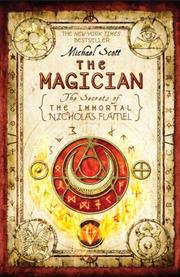
The Magician
Sophie and Josh flee to Paris with Nicholas Flamel, where John Dee, Machiavelli, and an awakened god close in on the missing pages of the Codex.
2,162-word summary · 10 min read
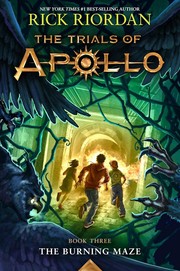
The Burning Maze
Apollo, still trapped in a mortal teenager's body, follows a dangerous prophecy through the Labyrinth with Meg and Grover as the Triumvirate's grip tightens.
2,248-word summary · 10 min read
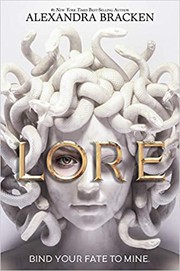
Lore
Lore Perseous, the last of a hunted bloodline, is pulled back into the Agon when a wounded Athena offers her revenge against the god who killed her family.
2,188-word summary · 10 min read
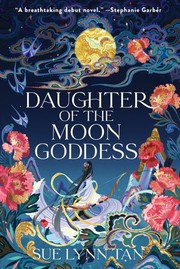
Daughter of the Moon Goddess
The daughter of Chang'e hides in the Celestial Court, trains as an archer, and risks everything to free her mother from the Emperor's punishment.
2,146-word summary · 10 min read
The Magician King
Quentin rules a peaceful Fillory until a golden key strands him on Earth, while Julia's brutal road from hedge witch to demigod rewrites the whole story.
2,431-word summary · 11 min read
A Fate Inked in Blood
In Norse-inspired Skaland, a fish gutter hiding a goddess's blood is claimed by a jarl, bound by oath, and guarded by the son she cannot want.
1,971-word summary · 9 min read
The Epic of Gilgamesh
Gilgamesh loses Enkidu, then seeks endless life past the flood.
2,246-word summary · 10 min read
The Burning God
Rin burns south and bargains with the Phoenix as the Republic splits.
2,381-word summary · 11 min read