

Reading options
What's inside (9 sections)
I read the Hackett paperback on a grey Sunday afternoon, and it took me less than two hours. That is 104 pages of Greek tragedy in a translation by Diane Arnson Svarlien, with an introduction by Robin Mitchell-Boyask (ISBN 9780872209237). The play was first performed at the City Dionysia in Athens in 431 BCE, which is why the date on this post reads 431 even though the event belongs to a world more than two thousand years behind us. Euripides placed third in the competition that year, behind Euphorion and Sophocles. It is strange to think that a tragedy we now treat as a pillar of the Western canon once came in last.
The image that stays with me is not the poison or the knife. It is the final scene. Medea appears above the stage in a chariot sent by her grandfather, the sun god Helios, with the bodies of her two sons beside her, and she refuses to let Jason come near them. She has killed her own children in cold blood and she is not punished. The chorus closes by marveling at the ways of Zeus, saying that things no one expected have come to pass. There is no arrest, no lightning bolt, no tidy moral. The theatre goes dark on a woman who has done the unthinkable and flown off to Athens.
To understand the rage you have to know the backstory the audience already knew. Medea is a princess of Colchis, a barbarian from the edge of the Greek world, and she is descended from the sun. When Jason arrived with the Argonauts to steal the Golden Fleece, she fell in love with him and used her magic and her knowledge to help him. She betrayed her father and her house for him. She tells Jason later that she saved him and slew the dragon, and then asks where she is supposed to go now. That question hangs over the whole play. She gave up everything for a man who has now decided he wants a different wife.
The play is set in Corinth, in front of Medea's house. The chorus is made up of Corinthian women, and most scenes are just Medea talking to one other person. There is no sprawling cast and no subplot. Euripides strips the story down until it is almost a duel.
A Nurse's Fear and a King's Patience
The play opens before sunrise with the Nurse, who has overheard Medea lamenting her marriage. The Nurse is frightened. She knows her mistress's temper and her powers, and she worries that Medea will do something to herself or to the children. The Tutor brings the boys home from their exercises, and the mood is already uneasy. These children are the people Medea says she loves most, and the Nurse's fear tells you they are also the people she could hurt.
Creon, the king of Corinth, arrives with an announcement. His daughter Glauce is to marry Jason, and Medea and her sons are to be sent into exile. He does not want her plotting against his family. Medea falls at his feet and begs in the name of her children for one day to prepare. She plays the part of the desperate mother, and it works. Creon grants the delay. She does not waste it. She knows exactly what she is doing, and she later admits she would never have flattered him if she had not needed the time.
This is the first of several moments where I admired the craft and disliked what I was watching. Medea gets what she wants by performing weakness. The scene is a lesson in how a person who is underestimated can turn that into a weapon. It is also uncomfortable, because Creon's fear is not irrational. He has reason to worry about what she might do.
Jason Makes His Case
Jason comes next, and he is the most ordinary villain in the play. He does not arrive raging. He arrives with an argument. He tells Medea that marrying Glauce is not a rejection of her but a practical decision. He is a man in exile, he says, and a royal marriage will give him security and children. He reminds her that she is a barbarian woman in a Greek city, and he suggests that one day he could keep her as his mistress while his new wife provides him with heirs. He even offers money for her trip.
Medea listens and then tears the argument apart. She reminds him that she left her own people for him, that she betrayed her father and her house, and that she saved his life. She points out the absurdity of his claim that he is doing this for their family. If he truly cared about the children, he would not be planning a new marriage that makes them outsiders in their own home. She tells him to go ahead and play the bridegroom, because the match he has made may give him cause to lament. It is a line that lands like a threat, because that is what it is.
I found Jason genuinely tiresome, and I think Euripides meant me to. He is not a monster. He is a man who believes his own reasoning, who thinks a sensible arrangement is the same thing as a fair one. That kind of character ages badly in the best way. You can hear him in any argument where someone explains why a betrayal is actually for everyone's good. Medea sees through him instantly, and the chorus of Corinthian women sides with her.
The Bargain with Aegeus
Before she can act, Medea needs somewhere to go. Aegeus, the king of Athens, arrives on his way home from a religious visit. He is married but childless, and he has consulted the oracle at Delphi, which told him not to unstop the wineskin's neck. He does not understand the instruction. Medea understands it perfectly and offers to give him drugs that will make him fertile. In exchange she asks only for refuge in Athens, a place to land after Corinth throws her out.
Aegeus agrees without asking what she plans to do. He swears an oath, which matters in this world because a sworn promise invokes the gods. Medea has secured her escape before anyone knows what she intends. This scene can feel like a detour when you are reading for the revenge, but it is the hinge of the plot. Without a safe place to flee to, the story cannot end the way it does. I also liked the quiet irony of it. A childless king wants children so badly that he will shelter a woman who is about to destroy her own.
The Robes and the Coronet
Once Aegeus has given her a destination, Medea turns to the revenge itself. She will not stab Creon or Glauce. She will use the things her family gave her. Her grandfather Helios provided a set of golden robes and a coronet, and she decides to coat them with poison. The plan depends on Glauce being unable to resist wearing beautiful gifts. Medea knows the bride will put them on, and she knows the poison will spread.
She then makes the decision that defines the play. She will kill her sons too. She says outright that they have done nothing wrong. She does it to hurt Jason, because taking his new family away is the only wound he will truly feel. There is a moment where she argues with herself, where the pain of losing them nearly stops her. Then she hardens. The chorus, which has been sympathetic up to now, cannot follow her all the way and warns her against the act. She goes ahead anyway.
The next scene is a masterpiece of deceit. Medea calls Jason back and tells him she was wrong to rage against his marriage. She says she has accepted the decree and only wants her children to stay. She asks that the boys be allowed to carry the robe and coronet to Glauce as a peace offering, hoping the princess will persuade Creon to lift the exile. Her performance is so convincing that Jason believes her. He even seems moved by her change of heart. She weeps in front of him, and those tears are for the children she has already decided to kill.
Reading this, I had to put the book down for a minute. The cruelty is not in a burst of passion. It is in the calm of a woman who has thought it all through and is now acting on a schedule.
The Messenger and the Children
The messenger scene is reported rather than shown, and it is the most vivid piece of writing in the play. Glauce receives the gifts and puts them on. She admires herself, delighted with the golden crown and the robe. Then the poison takes hold. Her limbs burn, she falls, and she dies in agony. Creon tries to save her, clutching her body, and the fabric and coronet poison him as well. He dies with her.
Medea hears the news and does not celebrate for long. She knows Jason will come for the children, and she knows what he will do to them if he gets the chance. She goes offstage with a knife. The chorus hears the boys scream. That is all Euripides gives us. No detailed account of the killings, no chance to look away in comfort. The screams and then silence do more work than a description would.
Jason arrives expecting to punish Medea for the deaths of Creon and Glauce. He learns that his sons are dead too. His grief is immediate and loud, but the play has already given Medea the last word, so his rage has nowhere to go. He calls her hateful to gods and men, and the chariot above him makes the claim look small. Whatever the audience thinks of what she has done, the machinery of the theatre has put her in the position of a god.
Above the Stage
Medea appears in the chariot sent by Helios, high above the actors, with her children's bodies. The stage machinery used for this scene, the mechane, was normally reserved for gods. Euripides borrows it for a human being, and the effect is deliberate. Medea has placed herself beyond ordinary judgment. She tells Jason she will bury the boys in the precinct of Hera, which denies him even the chance to hold them. She prophesies an evil end for him. Then she leaves for Athens.
Scholars point out that this is the only surviving Greek tragedy in which a kin-killer goes unpunished to the end. It is also the only one about child killing where the deed is done in cold blood rather than in a fit of madness. Many believe the filicide was Euripides' own invention, because in other versions the Corinthians killed the children after Medea escaped. That choice is what makes the play so hard to watch and so hard to forget. He took a story his audience thought they knew and made the mother do the worst thing herself.
The chorus closes with a few lines about the unpredictability of divine will. They do not condemn Medea and they do not absolve her. They simply note that the gods bring about what no one expected. After two thousand years that refusal to tidy things up still feels radical.
What I Struggled With
My biggest difficulty is the same one many readers have. For most of the play Medea is a wronged woman fighting a system stacked against her, and I was fully on her side. Then she kills her children, and the sympathy I had built up has nowhere to go. Feminist readings have argued that Euripides is showing the desperation of a woman in a patriarchal world, and there is plenty in the text to support that. Other readers see a misogynist portrait of a foreign witch who devours men and children. I think the play is deliberately doing both, which is why it still provokes argument.
There are things that do not work as well. Jason's self-justification is so flimsy that the debate can feel one-sided. The play gives Medea the magnificent language and gives Jason the small, defensive speeches of a man who knows he is beaten. Aegeus exists largely to hand her an escape route. If you want every character to get an equal hearing, you will finish this frustrated. But the form is so lean, and the scenes move so quickly, that the imbalance reads as intentional rather than clumsy.
I also kept thinking about the title character's position as a foreigner. Medea is called a barbarian repeatedly, and Jason uses that word as a reason to replace her. Whether Euripides means us to hear cruelty in that argument or to agree with it is anyone's guess. What is clear is that being an outsider is part of what makes her vulnerable and part of what makes her frightening. She is the woman who helped a Greek hero win his prize, and the moment she is no longer useful she is treated as disposable.
The translation is plain and readable, with notes that explain the myths without interrupting the flow. If you have never read Greek tragedy, this is a short and brutal place to start, though I would not call it comfortable. The play asks you to understand someone all the way to a point where understanding turns into horror, and then it leaves you alone with the result. I closed it still hearing those children scream, and still unable to decide whether Medea was a victim, a monster, or simply a person the world had pushed past the point of no return.
FAQ
When was Medea first performed?
It was first staged at the City Dionysia in Athens in 431 BCE as part of a tetralogy whose other plays are lost. Euripides came third behind Euphorion and Sophocles.
What happens at the end of the play?
Medea kills Glauce, Creon, and her two sons, then escapes to Athens in a chariot sent by Helios. She goes unpunished, which is highly unusual for Greek tragedy.
Which English edition is this post based on?
The Hackett paperback translated by Diane Arnson Svarlien, with an introduction by Robin Mitchell-Boyask. It runs 104 pages and carries ISBN 9780872209237.
Similar books
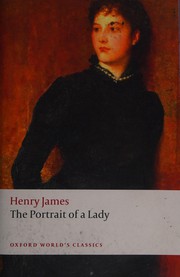
The Portrait of a Lady
A young American woman inherits a fortune, refuses two suitors, and marries a polished expatriate who makes her independence a trap. James watches her mind at…
2,903-word summary · 13 min read
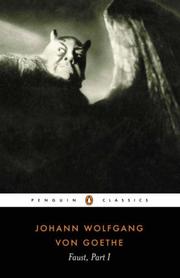
Faust, Part One
A restless scholar bets his soul against one perfect moment, then ruins an innocent girl in Goethe's 1808 verse tragedy.
2,568-word summary · 11 min read

A Doll's House
Nora forges a loan to save Torvald, then walks out on doll life at Christmas.
2,468-word summary · 11 min read

Julius Caesar
Brutus joins Cassius to kill Caesar for Rome, then loses Rome to Antony words and Octavius swords.
1,916-word summary · 9 min read

A Streetcar Named Desire and Other Plays
Blanche DuBois moves in with Stella and Stanley in New Orleans while her past closes in, plus two more Williams plays.
2,902-word summary · 13 min read

Othello
Iago's lies drive the Moor of Venice to murder his innocent wife in Shakespeare's tragedy of jealousy.
2,409-word summary · 11 min read
Macbeth
Macbeth hears witches hail him king and murders Duncan with Lady Macbeth pushing him on.
4,056-word summary · 18 min read

Hamlet
Hamlet sees his father's ghost in Elsinore and pretends madness to test Claudius and Gertrude while Denmark slides toward duel and death.
2,996-word summary · 13 min read
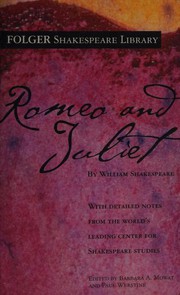
Romeo and Juliet
Shakespeare's Romeo and Juliet retold: Verona feud, balcony, Friar's plan, and why the last minutes collapse.
2,531-word summary · 11 min read

The Arabian Nights: Alf Laylah Wa-Laylah
A frame story about a woman talking for her life holds jinn, sailors, caliphs, and tricksters.
2,338-word summary · 10 min read

Women Who Run with the Wolves
A Jungian analyst reads fairy tales as maps to a woman's instinctual self, from La Loba to Bluebeard and Vasalisa.
2,331-word summary · 10 min read

As You Like It
A usurped duke, two runaway cousins, and a girl disguised as a boy turn a forest exile into Shakespeare's most playful comedy about love, loyalty and freedom.
2,815-word summary · 13 min read

Ariel
Plath's second collection, published in 1965, gathers the poems written in her fierce 1962 burst, from Morning Song to Lady Lazarus and Daddy, in a book edited…
2,235-word summary · 10 min read
The Children of Húrin
Tolkien's First Age tragedy of Túrin and Niënor, edited from his manuscripts by Christopher Tolkien and published in 2007, follows a cursed family to a…
2,329-word summary · 10 min read

Revolutionary Road
A Connecticut couple who believe they are too good for the suburbs plan to move to Paris, and the plan slowly exposes everything they cannot say to each other.
2,085-word summary · 9 min read

Rosencrantz and Guildenstern Are Dead
Stoppard's 1966 play retells Hamlet from the wings, where two minor courtiers wait, joke, and walk toward a death they cannot see.
2,021-word summary · 9 min read

Sophie's Choice
A young Southern writer in 1947 Brooklyn befriends a brilliant, unstable couple and slowly learns the story of the Polish Catholic woman at the center of their…
2,798-word summary · 12 min read

Wide Sargasso Sea
Jean Rhys gives the first Mrs. Rochester a Caribbean childhood, a marriage built on money and suspicion, and a voice that Charlotte Bronte left in the attic.
2,021-word summary · 9 min read
The Silence of the Girls
Briseis, queen of Lyrnessus, is captured by Achilles and narrates the Trojan War from inside the Greek camp, where women are prizes and survival is its own…
2,098-word summary · 9 min read

The House of Mirth
Lily Bart, beautiful and penniless at twenty-nine, navigates New York's marriage market until a Dorset yacht scandal strips her of the only currency she has.
2,468-word summary · 11 min read

Galatea
The statue brought to life narrates her own story: a jealous sculptor, a locked hospital room, a daughter to protect, and one last plan to escape.
1,972-word summary · 9 min read

A Raisin in the Sun
Lorraine Hansberry's 1959 play follows the Younger family as a $10,000 insurance check, a house in a hostile neighborhood, and a stolen investment test their…
2,444-word summary · 11 min read

The Epic of Gilgamesh
Gilgamesh loses Enkidu, then seeks endless life past the flood.
2,246-word summary · 10 min read

Pygmalion
Higgins bets he can pass flower girl Eliza off as a duchess.
2,521-word summary · 11 min read
The Once and Future King
T.H. White retells Arthur from boyhood with Merlyn to Camelot's fall, mixing comedy, myth, and a hard look at war and power.
2,200-word summary · 10 min read

The Heart is a Lonely Hunter
A deaf man becomes the quiet center for lonely souls in a small Georgia mill town.
2,000-word summary · 9 min read

The Call of Cthulhu and Other Weird Stories
Seventeen tales from Dagon to Innsmouth, led by Cthulhu, the Colour, and the Whisperer, in S. T. Joshi careful Penguin edition with notes and corrected texts.
2,593-word summary · 12 min read
The Call of Cthulhu
A professor's papers link a sculptor's dreams, a Louisiana cult raid, and a sailor's voyage to a sleeping god under the sea.
2,530-word summary · 11 min read

The Tenant of Wildfell Hall
Helen flees a cruel marriage, hides as Helen Graham at Wildfell Hall, and tells her full story through a long diary young Gilbert Markham must read before…
2,838-word summary · 13 min read

The Aeneid
Trojan Aeneas flees burning Troy for Italy, losing Dido and friends before warring to found a line that becomes Rome.
2,080-word summary · 9 min read