
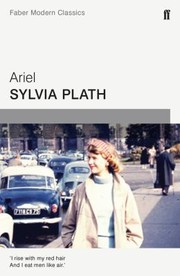
Ariel
2,235-word summary 10 min read 96 pages in the book
- First published
- 1965
- Publisher
- Faber and Faber
- Pages
- 96
- ISBN
- 9780571322725
Reading options
What's inside (9 sections)
I came to Ariel through The Bell Jar, as a lot of readers do. The novel is the famous one, the book that gets taught and argued over, so I assumed the poetry would be quieter company. It is not. This is a short, hard, brilliant collection: 96 pages in the Faber Modern Classics paperback I read, first published in 1965, two years after Plath died. Almost every poem feels like it was written with the volume turned up. I finished it in an afternoon and then spent a week going back to single poems, trying to work out how they are made.
A book put together by someone else
Most of these poems were written in 1962, in a cold farmhouse called Court Green in Devon, where Plath lived with her husband, the poet Ted Hughes, and their two young children. That autumn was the period when her marriage came apart, and it was also a burst of work unlike anything she had done before. She wrote "Daddy" on 12 October, "The Applicant" the day before, the four bee poems over the first part of the month, "Fever 103°" later that month, "Ariel" and "Poppies in October" on 27 October, and "Lady Lazarus" the next day. In December she moved to London carrying a manuscript of about forty-one poems, and she died in February 1963.
The book that reached bookshops in 1965 was not quite that manuscript. Hughes edited it, and he changed the order, took some poems out, and added others, many of them written in the last weeks of her life. The American edition followed in 1966 with an introduction by Robert Lowell, whose book Life Studies Plath had said mattered deeply to the poetry she was writing at the end. So from the start there have been two Ariels: the one Hughes made, and the one Plath left. That matters, because the order in which you meet these poems changes what the collection seems to be saying. You can feel the argument between the two versions even if you never read about it.
The title itself is small and plain, and it has two sources. Plath took it from the name of a character in Shakespeare's The Tempest and from the name of a horse she used to ride in England. The horse is the better clue. This is a book about speed, flight, and the wish to be rid of the body, and the title poem turns a dawn ride into something close to a launch.
Morning Song and the hospital room
The Hughes edition opens with "Morning Song," which begins with a line that sounds cheerful until you hear the worry under it: "Love sets you going like a fat gold watch." The speaker is a new mother looking at her child in the night. She compares herself to a cloud that makes a mirror and then watches its own reflection fade in the wind. The pun on morning and mourning is there from the first title, and the poem is willing to hold both at once. It is a love poem that refuses to pretend that having a baby is simple.
"The Couriers" follows, and it is short and strange, a command to refuse bad news: "Do not accept it. It is not genuine." I read it first as a piece of magical thinking, and then as something more tough minded, a person trying to decide which messages she will let into the room. It sets up a habit that runs through the collection, where ordinary objects carry news that the speaker would rather not have.
"Tulips" is one of the oldest poems here, written in March 1961, after Plath had her appendix removed. She is in a white hospital room and she likes being nobody. She has handed her name to the nurses, her history to the anaesthetist, and her body to the surgeons. Then a bouquet of red tulips arrives, and the flowers breathe and watch her and drag her back toward being alive. The poem is a tug of war between the peace of being empty and the annoyance of being made to feel. Plath makes the tulips almost rude, and you can understand why the speaker wants them gone. You can also see that she will not win.
Readers who know only the explosive poems are often surprised by how quiet these first pages are. That is part of the design. The collection starts with a newborn and a patient, both people who cannot speak for themselves, before it moves into the voice that will not stop speaking.
The applicant and Lady Lazarus
"The Applicant" is written like an advertisement. A voice offers a wife the way a clerk might offer an appliance, listing what she is good for and what she costs. The poem is funny for about two lines and then stops being funny. Part of the dread comes from the rhythm, which has the push of a nursery rhyme, so that the horror arrives in a voice a child could chant. Plath uses that same sing song energy again in "Daddy," and the effect is unnerving.
"Lady Lazarus" is the poem I remembered most from before, and it is stranger than memory suggested. The speaker says she has died three times, once by accident when she was ten and twice on purpose, and each time she has been brought back. She treats her own resurrection as a show, with a crowd that crunches peanuts and pays to see her scars. Dying is an art, she says, and she is very good at it. The poem ends with a threat that has been quoted so often it can lose its force:
Out of the ash I rise with my red hair And I eat men like air.
What gets me each time is the cold comedy of the middle. She calls the doctors and the men who saved her by plain names, Mr. Doctor and Mr. Enemy, and she describes herself as a prized object they have made. The poem is about wanting control over your own body and finding that even death has been turned into a public event.
Daddy
"Daddy" is the hardest poem in the book and the one I would hand to a reader last. Plath described it for a BBC reading as the speech of a girl with an Electra complex whose father died while she thought he was God, with the father cast as a Nazi and the mother as possibly part Jewish. The speaker begins in a black shoe, unable to breathe or sneeze, and then builds her father into a marble statue, a swastika, a vampire, and a devil with a cleft chin. She casts herself as a Jew on a train to the camps. The lines move fast and the images keep multiplying, so that by the end, when she says she is through, you cannot tell whether she means she is finished with him or worn out by him.
This is where I have to be honest about a real difficulty. The Holocaust imagery in "Daddy" and "Lady Lazarus" has been argued about for decades, and not only by people who want to defend Plath. The comparison borrows the worst violence of the twentieth century to describe a daughter's anger and a woman's pain, and for some readers that borrowing is unforgivable. I think the poems are too good to dismiss on that ground, and I also think the discomfort should not be waved away. A book this forceful is worth arguing with.
The ride and the bees
The title poem, "Ariel," is a short gallop. A woman rides out before dawn and feels herself turning into the horse, then into the arrow, then into the dew that flies into the morning sun. The pronouns slide around, and the poem speeds up as the images get hotter. It is easy to read it as a story about a ride and also as a story about writing, or about wanting to be gone. I do not think it settles on one of those meanings, and that refusal is part of the pleasure.
The bee poems sit near the end of Plath's own manuscript, and in the Hughes edition they are broken up. "The Bee Meeting" puts the speaker in a village where masked figures handle hives and she cannot tell who is who. "The Arrival of the Bee Box" gives her a box of bees that she cannot put down, and she keeps saying she will let them out tomorrow. "Stings" lets the bees sting and then waits for the honey. "Wintering" closes the sequence with a queen bee and a sense of something kept alive through a cold season. Read together, these poems are patient in a way the famous ones are not. They are about learning a craft and enduring a season, and they end the restored version of the book on a note of survival rather than extinction.
"Fever 103°" is dated 20 October 1962 and it is a fever dream in literal terms. The speaker is ill and her mind runs on images of heat, purity, and a body that has become too bright to bear. It is one of the poems where the pressure of the writing feels closest to the circumstances in which it was made. I found it exhausting, and I mean that as a strength. There are poems here that you can read calmly and poems that make you want to put the book down for a day.
The poems Hughes added at the end
The last stretch of the 1965 edition contains poems Plath wrote in January and February 1963, days before she died. "Sheep in Fog," "The Munich Mannequins," "Totem," "Paralytic," "Balloons," "Contusion," "Edge," "Kindness," and "Words" were not in her manuscript. Hughes put them in. They are the bleakest pages in the book, and they change the shape of the ending.
"Edge" imagines a woman who has reached the end of a long struggle and looks on the result as a kind of perfection, with her children folded into the image beside her. It is a terrible poem and I would not want to pretend otherwise. "Kindness" tries to name a quality that the speaker cannot find in the world, and "Words" turns toward language itself, with the speaker stripped down and short of what to say. These are not poems that offer comfort. They are also not easy to separate from the facts of how Plath died, and I think any honest reading has to admit that the biography keeps getting in the way.
The effect of adding them is that the Hughes edition ends in near silence, while Plath's manuscript ended with "Wintering." That is a large difference. One version closes on a queen bee surviving the winter; the other closes on a woman past speech. I read the Hughes edition first, and the book felt like a long approach to a locked door. Reading the restored order later made me see how much of that feeling was an editorial choice.
Two versions of the same book
In 2004 a restored edition appeared, with a foreword by Frieda Hughes, Plath's daughter, that explains why the two versions differ. It puts back the twelve poems Hughes removed, among them "The Rabbit Catcher," "Thalidomide," "Barren Woman," "A Secret," "The Jailor," "The Detective," "Magi," "The Other," "Stopped Dead," "The Courage of Shutting-Up," "Purdah," and "Amnesiac." It also returns the sequence to Plath's arrangement. The scholar Marjorie Perloff argued that Plath had laid out the poems in a careful order, down to the first and last words of the volume, which makes Hughes's changes more than a matter of taste.
I am glad both versions exist. The restored book is the better one to read if you want to see what Plath was making, and the 1965 book is the one that made her famous and shaped how the world reads her. If you only want one, I would start with the restored edition and then look at the differences. The Guardian placed Ariel at number seventeen in its list of the best nonfiction books of all time in 2016, a strange category for a poetry collection that says very little about public facts, but the ranking says something about how much this book has been treated as a document of a life rather than as a set of poems.
That is the trap and the source of its power. It is very hard to read Ariel without watching for the author behind it. The poems keep handing you clues about a marriage, a father, a hospital, a breakdown, and a death in London in February 1963. They are also made things, full of sound, rhythm, and deliberate shocks, and the more you look at the craft the less simple the biography becomes. I would not call this an easy book to love. It asks you to stay with a voice that is often cruel, often funny, and nearly always sure of itself. But I would not give up the experience of it either. Read one poem at a time, leave a gap between the fierce ones, and let the quiet bee poems have their say. That is how this short collection lasts longer than its 96 pages.
FAQ
Is Ariel a novel or a poetry collection?
It is a collection of poems. Most were written in 1962 and it first appeared in 1965, two years after Plath died by suicide.
Why are there two versions of Ariel?
Ted Hughes edited the 1965 book, changing the poem order and adding pieces from Plath's final weeks. A 2004 restored edition, with a foreword by Frieda Hughes, reinstated Plath's own selection and arrangement.
Which edition does this summary follow?
The retelling covers both the 1965 Hughes edition and the 2004 restored order, based on the 96-page Faber Modern Classics paperback with ISBN 9780571322725.
Similar books
The Complete Poems of Emily Dickinson
Thomas H. Johnson's one-volume edition gathers all 1,775 of Emily Dickinson's poems in their restored texts, the standard reading edition since 1960.
2,191-word summary · 10 min read
The Princess Saves Herself in This One
Lovelace reworks princess stories across four parts, from early family wounds to grief, ending with a note that hands the rescue to the reader.
2,613-word summary · 12 min read
The Raven
A grieving student asks a midnight raven and hears only Nevermore.
2,141-word summary · 10 min read
The Bell Jar
Esther Greenwood wins a New York internship that should feel bright, then sinks into depression at home. Plath's 1963 novel follows her breakdown, treatment,…
2,504-word summary · 11 min read
The Pull of the Stars
Over three days in a Dublin maternity ward in 1918, a nurse, a suffragette doctor on the run and a young volunteer face the flu, childbirth and unexpected love.
2,578-word summary · 11 min read
The Portrait of a Lady
A young American woman inherits a fortune, refuses two suitors, and marries a polished expatriate who makes her independence a trap. James watches her mind at…
2,903-word summary · 13 min read
Medea
A wronged wife in Corinth loses her husband to a royal bride and asks for one day of grace, which she spends planning revenge.
2,310-word summary · 10 min read
American Pastoral
Roth's Pulitzer winner follows a Newark glove maker's son whose perfect family life is broken by his daughter's antiwar bombing, retold by a narrator who…
2,660-word summary · 12 min read
The Autobiography of Benjamin Franklin
Franklin writes his own life in four parts, from a Boston boyhood and a runaway apprenticeship to printing, science, and public service, while keeping careful…
2,259-word summary · 10 min read
Revolutionary Road
A Connecticut couple who believe they are too good for the suburbs plan to move to Paris, and the plan slowly exposes everything they cannot say to each other.
2,085-word summary · 9 min read
Naked Lunch
Burroughs's banned 1959 collage novel follows Bill Lee through addiction, Tangier, and the nightmare bureaucracy of the Interzone.
2,082-word summary · 9 min read
The Lottery
In Jackson's 1948 story, a village draws lots to keep the corn heavy, and the chosen person is stoned by her neighbors.
3,080-word summary · 14 min read

Wide Sargasso Sea
Jean Rhys gives the first Mrs. Rochester a Caribbean childhood, a marriage built on money and suspicion, and a voice that Charlotte Bronte left in the attic.
2,021-word summary · 9 min read
The Last of the Mohicans
During the French and Indian War, Hawkeye and two Mohican warriors try to save two British sisters from a Huron chief whose revenge will end the Mohican line.
2,017-word summary · 9 min read
Doctor Zhivago
A doctor and poet lives through revolution, war, and love in Pasternak's novel of private life under the pressure of Russian history.
2,213-word summary · 10 min read
Native Son
Richard Wright's landmark novel follows Bigger Thomas through one panicked night in Chicago and the manhunt, trial and reckonings that follow, exposing the…
2,265-word summary · 10 min read
A Raisin in the Sun
Lorraine Hansberry's 1959 play follows the Younger family as a $10,000 insurance check, a house in a hostile neighborhood, and a stolen investment test their…
2,444-word summary · 11 min read

Clap When You Land
Two half sisters, one in Sosúa and one in Queens, discover each other after their father dies in a plane crash, in Elizabeth Acevedo's novel in verse.
2,890-word summary · 13 min read
The Epic of Gilgamesh
Gilgamesh loses Enkidu, then seeks endless life past the flood.
2,246-word summary · 10 min read
Leaves of Grass
Free verse songs of self, America, bodies and democracy.
2,240-word summary · 10 min read
Sonnets & Poems
154 sonnets plus Venus and Adonis and other poems on time, love, and fading beauty.
2,341-word summary · 10 min read
Howl and Other Poems
Ginsberg's 1956 City Lights debut: Howl for outcasts plus tender shorter poems, in 48 pages that survived an obscenity trial.
2,570-word summary · 11 min read
The Tenant of Wildfell Hall
Helen flees a cruel marriage, hides as Helen Graham at Wildfell Hall, and tells her full story through a long diary young Gilbert Markham must read before…
2,838-word summary · 13 min read
The Aeneid
Trojan Aeneas flees burning Troy for Italy, losing Dido and friends before warring to found a line that becomes Rome.
2,080-word summary · 9 min read
Long Way Down
Will rides an elevator with ghosts to decide if he will avenge his brother Shawn.
2,172-word summary · 10 min read
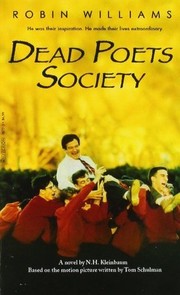
Dead Poets Society
Keating tells Welton boys to seize the day and his secret club costs more than grades.
2,031-word summary · 9 min read
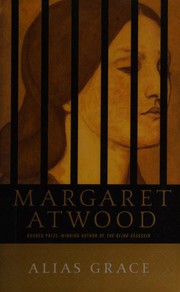
Alias Grace
A teenage maid convicted of a double murder in 1843 tells her story to a young doctor hired to decide whether she deserves a pardon.
2,788-word summary · 12 min read
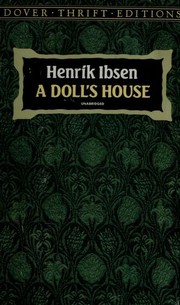
A Doll's House
Nora forges a loan to save Torvald, then walks out on doll life at Christmas.
2,468-word summary · 11 min read
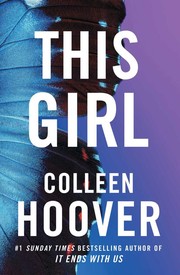
This Girl
Honeymoon retelling as Will recalls first love, classroom ban, loss, fights, and vows that stick.
2,526-word summary · 11 min read
Walk Two Moons
Sal rides west with her grandparents telling Phoebe's story while facing her own mother's absence in Idaho.
2,554-word summary · 11 min read