
Reading options
What's inside (8 sections)
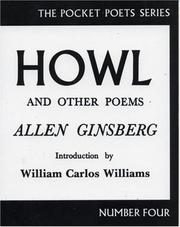
I came to this book late, after hearing about it for years as the poem that got its publisher arrested. That story made me expect something wild and unreadable, half rant and half court exhibit. What I found instead was stranger and more tender. The 1956 City Lights edition is only 48 pages, small enough to fit in a back pocket, yet it reads like a crowded room. You hear grief, humor, lust, anger, and a kind of desperate affection for friends who were falling apart. I read it in one sitting on a rainy afternoon, then reread parts aloud because the rhythm almost forces you to.
Ginsberg was twenty-nine when Lawrence Ferlinghetti published it as number four in the Pocket Poets Series. He was not yet famous. He had been in therapy, working odd jobs, typing, falling in love with the wrong people, watching friends cycle through hospitals and jails and cheap apartments. This book turns that private mess into a public address. It does not explain the 1950s so much as shout back at them.
If you have never read Beat poetry, this is the entry point people always name. I think that reputation is fair, though it can mislead. The title poem gets all the attention, but the shorter poems after it change the temperature. They show Ginsberg could be funny, wistful, and plainspoken when he wanted. Some of them sag a little. A few passages feel stuck in their moment. Still, the best parts hit with a directness that is hard to shake.
The Night at the Six Gallery That Started It
On October 7, 1955, in a converted auto repair shop in San Francisco, Ginsberg read a draft of Howl in public for the first time. Kenneth Rexroth, older and already respected as a poet and host, introduced the readers. The lineup included Gary Snyder, Michael McClure, Philip Lamantia, and Philip Whalen. Jack Kerouac was in the audience, drinking wine and cheering and refusing to read himself.
Accounts of that night have grown mythic. The room was packed, money for wine was collected in a hat, and Ginsberg, shy at first, found his voice as Kerouac cheered him on. Rexroth reportedly closed by saying a new generation was present.
Ferlinghetti was there too. He ran City Lights Books, the bookstore and small press in North Beach. Legend has it he sent Ginsberg a note shortly after, modeled on Emerson welcoming Whitman, saying he greeted him at the start of a great career. Whether the wording is exact matters less than the result. Ferlinghetti asked for the manuscript.
That context helps explain the tone of the whole volume. These poems were written to be heard. The lines are long and breath-driven, meant to carry over a noisy bar or gallery. When I read silently, some passages felt cluttered. When I read them aloud, even in a mumble at my kitchen table, the repetitions started to work like drums. If you try this book and stall on page two, I suggest reading out loud for five minutes before judging it.
That circle explains why friendship sits at the center. Snyder, McClure, Whalen and the rest were listening to each other and daring each other to be more open. You can feel Ginsberg trying to match their courage while finding a Jewish, queer, city kid voice of his own.
Part One: The Best Minds and Moloch
Howl is in three parts plus a footnote, and the opening part is the famous one. It begins with a sweeping dedication to friends seen as ruined by the pressures around them. Ginsberg piles up portraits: young people hitchhiking and starving and studying through the night, searching for visions, getting thrown out of schools, wandering through subways and parks and rented rooms. The method is accumulation. One image follows another without much pause, as if stopping would let the feeling escape.
Carl Solomon, to whom the poem is dedicated, anchors a lot of this. Ginsberg had met Solomon in a psychiatric institution, and Solomon's mix of wit and distress gave him a central figure for the theme of sensitivity punished by institutions. Part One keeps returning to that idea. Brilliant people try to live outside routine jobs and marriages and Cold War caution, and they pay for it through poverty, addiction, arrest, or medical treatment. Ginsberg treats them with admiration rather than pity. He presents their excess as a search for something real.
Then comes Moloch, the name Ginsberg gives to the devouring force in Part Two. In older religious texts, Moloch suggests a false god demanding sacrifice. Ginsberg uses it as shorthand for everything that eats people: money hunger, war machinery, rigid government, heartless industry, conformity dressed up as common sense. The section repeats the name like a hammer. Each repetition attaches it to a different part of American life, from office towers to schools to television to bombs. Read today, the device can feel blunt. I found myself wishing he had cut a few repetitions. Yet the bluntness feels intentional. He wants the reader to feel pounded.
Part Three speaks directly to Solomon in a place Ginsberg calls Rockland, standing in for the asylum. The tone turns from accusation to companionship, with a repeated closing response in each stanza that rocks like a lullaby after the noise before. I liked this part more than I expected. After so much fury, the offer to stay beside someone lands quietly.
A fair criticism: Part One can exhaust a newcomer. The catalog style means that if three or four images do not connect with you, the next twenty may blur. I lost the thread around the middle on my first pass and had to restart. On second reading, I paced myself and noticed more humor tucked inside. Still, readers who prefer tight lyric poems may find this section baggy. That bagginess is part of the design, but design does not always equal pleasure.
Footnote to Howl: Holy the World
After the long denunciation, Ginsberg appends a short Footnote that flips the sound. Where Part Two hammered one harsh name, the Footnote repeats a word of praise. It declares ordinary and overlooked things worthy of reverence: bodies, friendships, music, food, work, solitude, even failure. The effect is deliberate contrast. If Moloch consumes, this closing claims that attention can bless.
I found this the most moving pages of the title poem on reread. The main sections document damage. The Footnote insists damage is not the whole story. It reads like someone stepping outside after an argument and noticing the air. The language stays simple, almost childlike in its listing, which helps after the density before.
Critics have split over whether this ending earns its uplift. Some hear real tenderness. Others hear a quick fix after pages of despair. I land somewhere between. A few of the praises feel forced, as if Ginsberg wanted to end on light and reached for whatever was near. But the impulse suits him. He often pairs grief with celebration in the same breath. He refuses to leave the reader only with ash.
For a first time reader, my advice is to pause before the Footnote. Put the book down, walk around, then come back. The shift works better with a breath between. Read straight through, it can feel abrupt. With a pause, it feels like morning.
This short section also shows his debt to older prophetic writing. The parallel structure recalls psalms and Whitman. He wants the reader to hear scripture turned toward outsiders. Whether you find that moving or presumptuous may depend on taste. I admired the nerve even when a line made me wince.
A Supermarket in California: Talking to Whitman
A Supermarket in California is only a page or two, and many readers love it more than Howl itself. I understand why. It is easier to enter, funnier, and sad in a way that sneaks up.
The premise is simple. The speaker wanders a supermarket at night and imagines Walt Whitman beside him, the older poet of grass and avenues now pushing a cart past frozen food and bright displays. The speaker addresses Whitman as a kind of father figure, asking what America has become and where desire fits inside abundance. The store glows. Everything is available. Yet the speaker feels lonely and slightly absurd, trailing after an idol who cannot answer.
What I like is how plain the feeling is beneath the fantasy. Postwar America promised plenty: cars, appliances, packaged food, suburbs. Ginsberg, writing in Berkeley in the mid 1950s, felt outside that promise as a poor queer son of a poet and a troubled mother. The supermarket becomes a stage for that outsider feeling. He can see the plenty. He can even enjoy its colors and smells. He cannot quite believe it was made for him.
Whitman had celebrated crowds and open roads. Ginsberg asks what is left of that vision when the road leads to a parking lot. He answers with images rather than argument: late night aisles, a tired shopper, unanswered questions about love and time. No cart is filled.
If I have a complaint, it is that newcomers sometimes treat this poem as gentle when it is also sharp. The humor about following Whitman around can distract from the bite about consumer life. I missed that bite the first time. On reread I noticed how the bright store makes the speaker's solitude louder. That tension is the point. Plenty without belonging feels thin.
For reading aloud, this is the best test piece in the book. One page, clear situation, room for comic timing. Try it before tackling Howl. If this poem leaves you cold, the rest of the volume may be a struggle. If it hooks you, you will have an easier time with the longer breath lines elsewhere.
Sunflower Sutra: A Lesson by the River
Sunflower Sutra is my personal favorite here, though it rarely gets top billing. It records an afternoon with Kerouac by the Southern Pacific yards and the bay, where the two men find a discarded sunflower coated in grime. From that battered object, Ginsberg builds a meditation on how to see a damaged America without hatred.
The setup is plainspoken. Two friends, broke and observant, sit among junk: rusted metal, old timbers, river smell. Kerouac points out the sunflower, already gray with dust and missing parts. Instead of scoring it as ugly, Ginsberg talks to it as if it were a person with a past. He imagines its history from seed to industrial fallout, then turns that history into a small lesson about perception. The flower is still a flower, even dirty. The sun still touched it.
What moves me is the refusal to sneer. Ginsberg had every reason in 1955 to write a straight protest about pollution and poverty. He gestures at those facts, but he spends more energy on attention. He looks until the object returns the look. That choice feels spiritual without belonging to any church. The word sutra in the title nods east, toward teachings Snyder and others were passing around, but the tone stays American and conversational.
There is also a quiet self portrait here. Ginsberg often felt like that sunflower himself in those years: gifted, sooty, thrown aside by respectable institutions. By blessing the flower, he blesses his circle too. I found that more persuasive than the grand holy claims in the Footnote because it grows from a specific thing seen on a specific day.
A criticism worth naming: the poem explains its moral a bit too clearly near the end. Ginsberg tells you how to take the image rather than trusting the image alone. I prefer the earlier stanzas, where description does the work. Still, the directness fits his style. He would rather risk preaching than risk being missed. Readers who like suggestion may feel nudged. Readers who like clarity will feel met.
If you only have ten minutes, read this poem and Supermarket back to back. Together they show his range: city night and river day, irony and affection, Whitman as ghost and Kerouac as friend. They also show why the book survived beyond scandal. Remove the trial story entirely and these two would still be taught.
The Trial and Why the Book Survived
The obscenity case is now part of the book's legend, and it is worth getting straight because summaries often blur it. Ferlinghetti published Howl and Other Poems in 1956 through City Lights. Officials in San Francisco treated the title poem as obscene. Copies were seized by customs and police, and Ferlinghetti and bookstore manager Shigeyoshi Murao faced charges for selling indecent writing. The trial took place in 1957.
I want to stress what was actually on trial. It was not only frank references to sex, including queer sex, though those passages drew the complaint. It was a theory of literature. The prosecution argued the poem had no redeeming value and appealed only to base interest. The defense, led by attorney Jake Ehrlich, argued the poem was serious art with social importance, and brought poets, critics, and teachers to say so. Judge Clayton Horn, in the municipal court, had to decide under the legal standard of the time whether the work as a whole lacked value.
Horn acquitted Ferlinghetti. His opinion said the poem contained rough language but was not without social importance, and that honest criticism of custom need not be suppressed. That ruling did not end censorship in America, but it gave small presses more room and helped later battles over books and films. For City Lights, it confirmed the Pocket Poets gamble: cheap, portable volumes could carry risky new writing to a wide audience.
Knowing this history changed how I read the quieter poems. Without the trial, a reader might shelve the book as period protest. With it, you see the stakes of plain speech in 1956. To name queer desire, addiction, or mental hospital life without shame was itself a claim about who counted as a subject for poetry. Ginsberg paid for that claim with notoriety that followed him for decades, sometimes flattening him into a symbol.
Winning in court did not make every poem equal. America reads today as funny and scattershot, with jokes that land and rants that tire. Two shorter pieces, Transcription of Organ Music and In the Baggage Room at Greyhound, show sincerity but thinner music. That unevenness is normal for a first collection written fast by a young author.
Why return to this 48 page book now? The sound still works when spoken, rough edges and all. The affection for outcasts feels lived rather than performed. And the 1956 context clarifies our own arguments about art and offense. Horn's point was not that Howl is polite. It was that impoliteness can carry meaning.
I would hand this to a reader who likes Whitman or the Beats, or to anyone curious about how a small press book helped shift public speech. I would warn that reader about the repetitions, the dated slang, and the male heavy scene around the poems. Women appear mostly at the edges here, and that absence is noticeable. Read with that in mind, and with patience for long lines, the book still gives more than its size promises. It left me sadder and lighter at once, which is not a bad outcome for 48 pages.
FAQ
When was Howl and Other Poems first published?
City Lights Books published it in 1956 as a 48-page Pocket Poets volume, with the obscenity trial following in 1957.
Why was Howl tried for obscenity?
San Francisco officials seized copies over frank sexual language. Judge Clayton Horn acquitted the publisher, ruling the poem held social importance.
Which poems should a new reader start with?
Start with A Supermarket in California and Sunflower Sutra, then tackle Howl aloud in parts.
Similar books
Orlando
A young Elizabethan nobleman becomes a woman and lives for centuries, moving through English history while writing a single poem about an oak tree.
2,030-word summary · 9 min read

Doctor Zhivago
A doctor and poet lives through revolution, war, and love in Pasternak's novel of private life under the pressure of Russian history.
2,213-word summary · 10 min read
The Complete Poems of Emily Dickinson
Thomas H. Johnson's one-volume edition gathers all 1,775 of Emily Dickinson's poems in their restored texts, the standard reading edition since 1960.
2,191-word summary · 10 min read
The Epic of Gilgamesh
Gilgamesh loses Enkidu, then seeks endless life past the flood.
2,246-word summary · 10 min read
Leaves of Grass
Free verse songs of self, America, bodies and democracy.
2,240-word summary · 10 min read
Sonnets & Poems
154 sonnets plus Venus and Adonis and other poems on time, love, and fading beauty.
2,341-word summary · 10 min read
Brideshead Revisited
At Oxford Charles Ryder befriends Sebastian Flyte and falls into the Catholic Marchmain family, from Brideshead summers to Julia's affair and Lord Marchmain's…
2,353-word summary · 10 min read
The Aeneid
Trojan Aeneas flees burning Troy for Italy, losing Dido and friends before warring to found a line that becomes Rome.
2,080-word summary · 9 min read
Dead Poets Society
Keating tells Welton boys to seize the day and his secret club costs more than grades.
2,031-word summary · 9 min read
Carmilla
Lonely Laura in Styria befriends beautiful Carmilla, whose night visits bring dreams, bites, and ancestral dread.
2,158-word summary · 10 min read
The Raven
A grieving student asks a midnight raven and hears only Nevermore.
2,141-word summary · 10 min read
Giovanni's Room
An American in Paris stalls between his fiancee in Spain and an Italian bartender who loves him. Baldwin's brief tragedy still stings.
2,264-word summary · 10 min read
Beowulf
An anonymous Old English epic in Heaney's Norton translation: Beowulf faces Grendel, Grendel's mother, and a dragon across a lifetime of fame and cost.
2,810-word summary · 12 min read
The Iliad
Achilles quits the fight over Briseis, Patroclus falls to Hector, and Troy burns toward its fate in Homer's war epic.
2,320-word summary · 10 min read
A Light in the Attic
Silverstein's attic poems and line drawings turn chores, monsters, and homework into jokes and small rebellions.
2,998-word summary · 13 min read
I Know Why the Caged Bird Sings
Angelou recalls Stamps, St Louis and San Francisco, from childhood silence after trauma to voice through books and work.
2,607-word summary · 12 min read
The Odyssey
Homer's Odyssey in Fagles translation: Odysseus fights home past Cyclops, Circe, and Sirens while Telemachus seeks news and Penelope stalls suitors in Ithaca.…
2,504-word summary · 11 min read
Where the Sidewalk Ends
Sidewalk Ends retold: poems and drawings, Sarah Cynthia, unicorns, homework and giants.
1,952-word summary · 9 min read
The Long Winter
Dakota Territory, 1880: seven months of blizzards cut a town off from the railroad, and a family survives on twisted hay, ground wheat, and a dangerous wheat…
2,210-word summary · 10 min read

The Crying of Lot 49
A California woman named executor of her ex-lover's estate follows a muted post horn into a possible centuries-old postal conspiracy, and Pynchon refuses to…
2,003-word summary · 9 min read
Silas Marner
A falsely accused weaver hoards gold in Raveloe until a stolen hoard and an abandoned child remake his narrow life.
2,699-word summary · 12 min read

Revolutionary Road
A Connecticut couple who believe they are too good for the suburbs plan to move to Paris, and the plan slowly exposes everything they cannot say to each other.
2,085-word summary · 9 min read
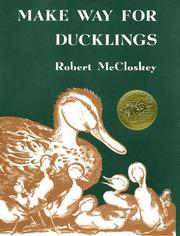
Make Way for Ducklings
A pair of mallards raise eight ducklings on the Charles River and lead them across Boston to the Public Garden, with a little help from a friendly policeman.
2,044-word summary · 9 min read
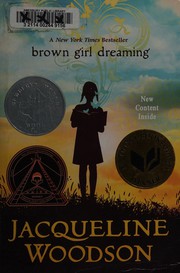
Brown Girl Dreaming
Jacqueline Woodson retells her childhood in verse, moving from Ohio to South Carolina to Brooklyn while the civil rights movement reshapes the world around her.
2,727-word summary · 12 min read
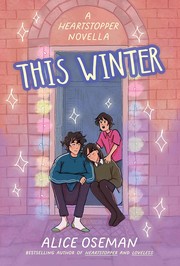
This Winter
On one difficult Christmas Day, Tori, Charlie, and Oliver Spring try to hold their family together while Charlie's eating disorder makes every tradition a test.
2,034-word summary · 9 min read
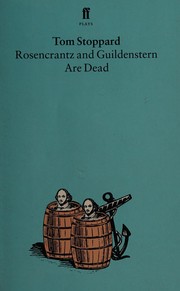
Rosencrantz and Guildenstern Are Dead
Stoppard's 1966 play retells Hamlet from the wings, where two minor courtiers wait, joke, and walk toward a death they cannot see.
2,021-word summary · 9 min read

Little Town on the Prairie
In the spring after the Long Winter, fifteen-year-old Laura sews shirts, studies for a teaching certificate, and helps send her blind sister Mary to college.
2,071-word summary · 9 min read
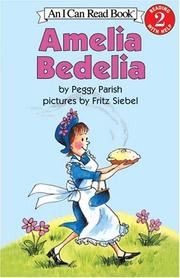
Amelia Bedelia
A literal-minded housekeeper follows her employer's list to disastrous and funny effect in the 1963 picture book that made wordplay a children's staple.
2,038-word summary · 9 min read

Ace of Spades
Two Black seniors at an elite academy are celebrated by day and hunted by an anonymous texter in this YA thriller about institutional racism.
2,066-word summary · 9 min read
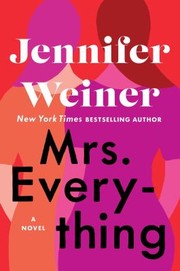
Mrs. Everything
Two Jewish sisters in Detroit grow up, apart and together, across seven decades of American life, from the 1950s to the 2016 election.
2,362-word summary · 10 min read