
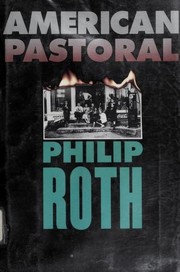
American Pastoral
2,660-word summary 12 min read 423 pages in the book
- First published
- 1997
- Publisher
- Houghton Mifflin
- Pages
- 423
- ISBN
- 9780395860212
- Series
- The American Trilogy (#1)
Reading options
What's inside (9 sections)
I picked this up because someone told me it was the great American novel about the American Dream, and I wanted to see whether it deserved the weight. It did, though not in the way I expected. What stays with me is not the rise and fall of a man but the strange position of the person telling the story, a writer who admits he is making most of it up. American Pastoral was published by Houghton Mifflin on May 12, 1997, ran to 423 pages in the first hardcover edition, and took the Pulitzer Prize for Fiction in 1998. It opens Roth's American Trilogy, a run of three novels about the country coming apart, followed by I Married a Communist and The Human Stain. I finished it wanting to argue with it, which I take as a sign it did its job.
A reunion and a man who is not there
The book begins with Nathan Zuckerman, a writer whom Roth used in several of his novels, attending his forty-fifth high school reunion in 1995. He grew up in Newark, New Jersey, and the reunion brings him back among the people he knew there. The person who matters most is not in the room. That is Seymour Levov, known since childhood as the Swede, who has recently died of prostate cancer. What Zuckerman gets at the reunion is a conversation with Jerry Levov, the Swede's younger brother. Jerry is a heart surgeon, a difficult and bitter man with very little tenderness for his older sibling, and he tells Zuckerman a version of how the Swede's life came undone.
That conversation is the seed of the whole book. Zuckerman goes away and builds, out of Jerry's account, a few newspaper clippings, and his own two brief encounters with the Swede, a full imagined life. He says plainly that much of it is conjecture. This framing matters more than it first appears. We are not reading the Swede's story from the inside. We are reading what one man guesses another man's life was like, and the gaps in that knowledge are part of the point. When Roth writes about how poorly we can know anyone, he is not making an abstract claim. He is making us watch a writer strain against the limits of what he was told.
The Swede, the glove maker's son
Seymour Irving Levov was born in 1927 in the Weequahic section of Newark, the elder son of Lou Levov, a Jewish American glove manufacturer, and his wife Sylvia. He was called the Swede because he did not look like the boys around him. He had blond hair, blue eyes, and the kind of Nordic good looks that stood out in a neighborhood of dark-haired Jewish kids. In high school he was a star athlete, good at baseball and football, and he was Zuckerman's idol. He served two years in the Marine Corps, went to teachers college in nearby East Orange, and came back to take over the family glove business, Newark Maid Leatherworks.
Roth based the character on a real man, Seymour Masin, another blond Jewish athlete from Weequahic High whom the local middle-class Jews revered. Knowing that does not make the fictional Swede less vivid. He is drawn as a man who believes, with real conviction, that he can live a clean and generous life if he only arranges things properly. He runs the factory with a patience and decency that his workers respect. He is not a flashy man. He is careful, physically graceful, and quietly proud of being able to provide. Zuckerman, who is shorter and bookish and jealous of the Swede's ease in the world, watches him with something close to worship.
There is a strain of criticism in the book about how much the Swede relies on his own good intentions. He thinks that being fair and hardworking will keep chaos out. Roth keeps showing us a man who mistakes his own comfort for a moral achievement. The Swede is not a fool, but he is committed to an idea of himself that the world will eventually test. I found him most convincing in the small moments, a man at home in his own skin, moving through a life that seems to fit him exactly. That fit is what makes what follows so painful.
Dawn, Meredith, and the house in Old Rimrock
The Swede marries Dawn Dwyer, a former beauty queen from Elizabeth, New Jersey, whom he met in college. Dawn is Catholic and converts to Judaism, and Roth gives her a history and a vanity that keep her from being a mere symbol. To research her, Roth interviewed Yolande Fox, the winner of the 1951 Miss America pageant, and some of that smart, funny energy got into Dawn. The couple has a daughter, Meredith, whom everyone calls Merry. Their Thanksgiving tables bring together the Swede's Jewish parents and Dawn's Catholic in-laws in a warm domestic ceremony, and that picture of a family at peace is close to what the title means.
They move to a large old house in the idyllic hamlet of Old Rimrock, a place of lawns and quiet roads far from the factories of Newark. This house is the center of the Swede's idea of a good life. It is beautiful, it is solid, and it seems to promise that his family will be safe there. Zuckerman describes it with a long, loving attention that signals how much is riding on it. The pastoral of the title is not a vague notion. It is a specific place, a particular kind of American success built on a glove maker's son making good. The cover of the book uses a photograph of a real post office in Brookside, New Jersey, and literary historians have argued that Brookside is the model for Old Rimrock.
Merry is the crack in the picture. She speaks with a stutter that is not a cute quirk but a source of real anguish, a physical refusal of the fluency that her articulate, assimilated family values. Zuckerman imagines a scene from her childhood in which eleven-year-old Merry asks her father to kiss her the way he kisses her mother, and the Swede answers with a stutter of his own, mocking her without meaning to. He is horrified at himself, and the moment lodges in his memory as a possible first step in a long drift away from her. As the Vietnam War escalates and Newark burns in the 1967 riots, Merry's anger finds a political language. She reads Frantz Fanon, and Zuckerman imagines her taking inspiration from A Dying Colonialism. She becomes certain that the country is violent and that only violent resistance will answer it.
Roth does not present Merry as a monster. He presents her as a daughter who becomes radicalized, and the novel takes her reasoning seriously enough to let us understand it, even when it horrifies us. The argument between father and daughter over the war is one of the book's best scenes, because neither of them can hear the other. The Swede, who served in the Marines and believes in the basic decency of the country, cannot grasp how his child could want to destroy it. Merry, who sees the news every night, cannot understand how he can defend it. They talk past each other in a way that feels true to how families fight about politics.
The bomb and the years of looking
In February 1968, while still in her teens, Merry plants a bomb in the Old Rimrock post office. A bystander is killed. She disappears that day and stays in hiding for years. This is the moment the Swede's carefully arranged life breaks, and Roth spends the rest of the novel tracing what comes after. The Swede does not stop loving his daughter. He searches for her. He keeps the family together, keeps the business running, and lives with a grief that has no clean outlet, because the child he lost is alive somewhere and guilty of a killing.
A few months after she vanishes, a young woman named Rita Cohen turns up at the factory. She says she is researching the leather industry for a business school thesis, and the Swede gives her a tour of Newark Maid, glad of someone to talk to. Then her friendly manner drops. She announces that she is Merry's emissary and attacks him for his capitalist comfort. Later she lures him to a hotel room, where she impersonates his daughter and tries to seduce him, and he runs out in disgust. The Swede never reports her. His need for a thread back to Merry is stronger than his suspicion, and Roth uses the scenes to show how easily a desperate parent can be strung along.
Five years later he finds her. In 1973 a letter from Rita brings him to an address in inner-city Newark, and there is Merry, living in a filthy room in deplorable conditions, unwashed and malnourished, with a veil over the lower part of her face. She has become a Jain. In their reunion Merry tells him that she was responsible for several more bombings, which killed three other people. The Swede learns that the daughter he had pictured as a confused young woman has a much longer and darker history. Yet he chooses not to turn her in. He decides that she must have been manipulated, and he fixes on Rita Cohen and an unknown political group as the people who corrupted her.
That choice is one of the hardest things in the book. Merry tells him plainly that what she did was deliberate. He hears her and refuses to believe it, because believing it would mean giving up the daughter he still loves. I found this section the most painful in the novel, because it shows a father constructing a comfortable explanation out of a terrible truth he has been handed directly. Roth never lets us forget that the Swede's love is real, and he never lets us forget that it is also a way of looking away.
The affairs and the dinner party
The Swede's marriage unravels in a way that compounds the first loss. At a dinner party he discovers that Dawn has been having an affair with William Orcutt III, a Princeton-educated architect, and that she has had a facelift in preparation for leaving him. It is revealed that the Swede himself had an earlier short affair with Sheila Salzman, the speech therapist who worked with Merry, and that Sheila and her husband hid Merry in their home after the bombing. The dinner party also carries one of the book's sharper touches, a conversation about Watergate and the pornographic film Deep Throat, two uses of the same name that catch the decade's appetite for revelation and evasion.
What the Swede concludes from all of this is the novel's hardest idea. He decides that everyone he knows wears a veneer of respectability and that every one of them is hiding something subversive. The loyal wife, the helpful therapist, the brilliant brother, the dutiful daughter: each has a private life that contradicts the surface. He cannot know the truth about anyone from the way they behave. This is where the book's title becomes ironic. The pastoral scene of the happy family in the pretty house was a performance, and he was the most convinced member of the audience.
I have to admit that this part of the book sometimes feels too neat. Roth keeps stacking revelation on revelation, as if he wants to prove the same point about hidden depths one more time than necessary. The affair with the architect and the facelift can read as a bit of a cartoon about suburban dishonesty. But the dinner party scene itself is superb, and the Swede's quiet shock at Dawn's betrayal lands hard because Roth has spent so much time making us believe in their marriage.
Zuckerman's reconstruction and the novel's doubts
It is easy to forget, reading all of this, that Zuckerman has invented much of it. He was not there for most of the scenes he describes. He pieces the Swede's life together from Jerry's account, from clippings, and from two brief encounters, and he admits that some of what he writes is guesswork. That admission quietly changes everything. The novel is a fiction about the impossibility of knowing, narrated by a man who is himself a fiction. Zuckerman is a smaller, more embattled version of the Swede, a writer rather than an athlete, and there is a current of envy running through his admiration.
This is the part of American Pastoral I admire most and the part that also irritates me. Roth keeps the frame visible, reminding us that this is a reconstruction. On one level it is a brilliant formal choice that enacts the theme. On another, it can feel like the author protecting himself, refusing to commit to the story by hiding behind a narrator who says he is only guessing. I wanted, at times, to be allowed to forget the frame and just live inside the Swede's life. Roth rarely lets that happen. The book is more interested in the act of telling than in surrendering to the tale.
The ending, when it comes, is deliberately flat and a little strange. Zuckerman imagines the Swede in a nursing home in a coda that refuses the grand tragic note the rest of the book has been building toward. After all the bombings and betrayals, the last image is modest and unresolved. Some readers find this a letdown. I think it is the right choice, because the novel has argued all along that there is no clean verdict to deliver about a life. To end with a neat moral would betray the messiness the Swede discovers in his last years.
The politics under the pastoral
American Pastoral is often filed as a novel about the 1960s tearing apart a stable American family. That is true as far as it goes. Roth weaves in the Newark riots, the Weathermen bombings, the Black Panthers, the trial of Angela Davis, and the rhetoric of revolutionary violence, and the argument between the Swede and Merry over the war is fierce and specific. The book names the force that destroys the Levovs as an indigenous American berserk, something violent that comes from inside the country rather than from an enemy. That is a sharp observation, and it is one reason the novel has lasted.
But the politics are inseparable from the private disappointments. The bombings matter as much for what they reveal about a father's need to excuse his daughter as for the deaths they cause. The affairs matter because they prove that the Swede was wrong about the people closest to him. The book's real subject is the moment when a man who believed he understood his life discovers that he understood very little, and that the story he told about his family was a comfort he constructed. That is why the narrator's act of invention is so fitting. We are all of us, Roth suggests, reconstructing the people we love from fragments and then acting as though we knew them.
This is not a comfortable book, and I would not hand it to someone looking for a warm story about family alongside the glories of the American Dream. It is also longer than it needs to be in places, and the Swede's passivity in the face of his daughter's crimes can try a reader's patience. The stretches about the glove business and the various affairs sometimes feel like they are circling the same insight. Still, when Roth is at full strength, as he is in the argument over the war and the reunion in Newark, few writers can match his feel for how a family comes apart. The Pulitzer was well earned.
FAQ
Is American Pastoral based on a real person?
Partly. Roth based the Swede on Seymour Masin, a blond Jewish athlete from Newark's Weequahic High School, and he interviewed 1951 Miss America winner Yolande Fox while developing the character of Dawn Dwyer.
What does the title refer to?
It points to the Levovs' beautiful house in the imaginary hamlet of Old Rimrock and the picture of a family at peace that it represents, an ideal the book shows was built on a story people told themselves. The cover uses a photograph of a real post office in Brookside, New Jersey.
When was American Pastoral published, and did it win any awards?
Houghton Mifflin published it in 1997, and it won the 1998 Pulitzer Prize for Fiction. It is the first volume of Roth's American Trilogy, followed by I Married a Communist and The Human Stain.
Similar books
More from The American Trilogy first, then related titles.
Revolutionary Road
A Connecticut couple who believe they are too good for the suburbs plan to move to Paris, and the plan slowly exposes everything they cannot say to each other.
2,085-word summary · 9 min read

Howards End
Forster's 1910 novel follows two families, a house in Hertfordshire, and a burned note, asking whether money and feeling can ever be connected.
2,187-word summary · 10 min read

Fathers and Sons
Arkady brings the nihilist Bazarov home to his father's estate, and a generational argument turns into love, a duel, and an early death.
2,192-word summary · 10 min read

Stoner
William Stoner trades farm life for literature, then endures a cold marriage and petty campus wars in John Williams's quiet classic.
2,282-word summary · 10 min read
The Rest of Our Lives
A law professor drives his daughter to college, then heads west instead of home, testing a private promise he made twelve years ago.
2,238-word summary · 10 min read
Three Days in June
A Baltimore mother loses her job, and her ex-husband turns up with a rescue cat, in Anne Tyler's short, funny novel about the three days around her daughter's…
2,867-word summary · 13 min read
The Vacationers
A New York family's two-week stay in Mallorca turns into a comedy of exposed secrets when a magazine editor's affair and a son's debts come to light.
2,324-word summary · 10 min read
The Portrait of a Lady
A young American woman inherits a fortune, refuses two suitors, and marries a polished expatriate who makes her independence a trap. James watches her mind at…
2,903-word summary · 13 min read
The Night Watchman
A Chippewa night watchman in 1953 North Dakota recognizes a bill as an attempt to end tribal recognition, while a young woman searches for her missing sister…
2,036-word summary · 9 min read
Oranges Are Not the Only Fruit
An adopted girl in a strict Pentecostal household learns to read the Bible, preach sermons and love women, then faces her church and mother for it.
2,384-word summary · 11 min read
Black and Blue
A nurse leaves her abusive police-officer husband and vanishes into small-town Florida with her son, where a new name buys years of peace and a fear that never…
2,456-word summary · 11 min read
The Mermaid Chair
Jessie Sullivan returns to her childhood home on Egret Island to care for her agoraphobic mother, then finds her marriage, her faith, and a monk's vow thrown…
2,237-word summary · 10 min read
Naked Lunch
Burroughs's banned 1959 collage novel follows Bill Lee through addiction, Tangier, and the nightmare bureaucracy of the Interzone.
2,082-word summary · 9 min read

The Chosen
A shattered pair of glasses in a 1944 Brooklyn softball game starts a friendship between a Hasidic boy and his Orthodox neighbor, and their fathers pull them…
2,443-word summary · 11 min read

A Spool of Blue Thread
Four generations of the Whitshank family in Baltimore, and the silences, resentments and quiet love they hand down without ever saying so.
2,408-word summary · 11 min read
The Orphan Master's Son
Adam Johnson's Pulitzer-winning novel follows Pak Jun Do from a North Korean orphanage to a deadly identity swap, under a state whose loudspeakers never stop…
2,219-word summary · 10 min read
The House of Mirth
Lily Bart, beautiful and penniless at twenty-nine, navigates New York's marriage market until a Dorset yacht scandal strips her of the only currency she has.
2,468-word summary · 11 min read
A Raisin in the Sun
Lorraine Hansberry's 1959 play follows the Younger family as a $10,000 insurance check, a house in a hostile neighborhood, and a stolen investment test their…
2,444-word summary · 11 min read
We Were the Mulvaneys
After a rape following a school dance, the Mulvaneys, a family that believed it was blessed, comes apart over fifteen years. Narrated by the youngest son.
2,094-word summary · 9 min read
The Most Fun We Ever Had
Four Sorenson sisters orbit perfect parents hiding old cracks.
2,590-word summary · 12 min read
Song of Solomon
Milkman Dead leaves Michigan to hunt for family gold and finds instead the old song of his ancestor Solomon.
2,465-word summary · 11 min read
Trust
Four rival accounts of one Wall Street fortune collide: a 1930s novel, a tycoon's memoir, a secretary's story, and a wife's diary.
2,217-word summary · 10 min read
Lady Chatterley's Lover
A baronet's wife, starved in a marriage the war broke, takes the gamekeeper as her lover. Lawrence's banned 1928 novel of class and touch.
2,566-word summary · 11 min read
Ethan Frome
In snowy Starkfield, farmer Ethan Frome falls for his wife's young cousin Mattie, and one sled ride ends any hope of escape.
2,558-word summary · 11 min read
Empire Falls
Grill manager Miles stays in dying Maine town for daughter while past pulls.
2,072-word summary · 9 min read
Tender Is the Night
Dick Diver marries his patient Nicole, and their Riviera marriage slowly breaks apart in Fitzgerald's 1934 novel of money, care, and drinking.
2,607-word summary · 12 min read
Fates and Furies
Lauren Groff tells one 24 year marriage twice, first through Lotto's bright luck, then through Mathilde's hidden past and quiet control.
2,992-word summary · 13 min read

The Age of Innocence
Engaged New York lawyer Newland Archer falls for Ellen Olenska, his fiancee's cousin fleeing a bad marriage, and must choose between love and duty in 1870s old…
3,100-word summary · 14 min read
Middlemarch
Idealistic Dorothea marries dry scholar Casaubon while ambitious doctor Lydgate marries Rosamond, and a Midlands town watches both marriages strain.
2,883-word summary · 13 min read
Freedom
A St. Paul couple and their grown children strain marriage, loyalty, and ideals in 2000s America.
2,678-word summary · 12 min read