

American Fantasy
2,403-word summary 11 min read 304 pages in the book
- First published
- 2026
- Publisher
- Riverhead Books
- Pages
- 304
- ISBN
- 9798217046850
Reading options
What's inside (8 sections)
I almost put this book down because of the title. There is something about "American Fantasy" that reads like a promise and a joke at the same time, and for a while I could not tell which one Emma Straub meant. It turned out to be both, though the joke is the louder of the two for most of the way. This is a 2026 novel from Riverhead Books, published on April 7 and running 304 pages, and it spends nearly all of its time in one place: a four-day themed cruise aboard a ship called the American Fantasy. When I first read the premise it sounded like a lark. A washed-up 1990s boy band, all five members, and roughly three thousand women who have worshipped them since childhood, sealed together on one boat for a weekend. By the last page I was thinking about something less cheerful, which is what becomes of the parts of ourselves we packed away when we grew up.
A boat built for a very particular kind of worship
Straub does not waste much time getting the cruise underway. The American Fantasy is carrying all five members of Boy Talk, a group that was enormous in the 1990s, and the passengers have come to see them. These are women who have loved the band since they were girls, and the love has had decades to harden into something more serious than a crush. Onboard, they scream like teenagers. They wave shirts and hats printed with the band members' faces. They have made the trip expecting a certain kind of faithfulness in return, the sense that the people onstage remember the people in the crowd.
I kept coming back to one piece of backstory while reading. Straub has said the idea came from a real New Kids on the Block cruise she took after her father, the writer Peter Straub, died. That detail cast a long shadow over the comedy for me. It explains why a book that looks from the outside like a gag about grown women and a boy band keeps circling a quieter question about what we lose and what we manage to keep. A cruise is a strange thing to choose in the immediate aftermath of a parent's death, and I think the novel is quietly interested in why anyone would want to go back, even artificially, to a time when a father was alive and a future felt wide open.
The ship itself works as a machine for producing the past. The music, the crowd, the sheer repetition of devotion all push the passengers backward in time. Straub notices the small logistics of cruising, right down to turnaround day, when the crew cleans the ship and gets it ready for the next sailing. That detail matters more than it first appears to. It keeps the fantasy on a schedule. The romance has a departure time. Whatever the women onboard feel during those four days has to fit inside a trip that ends, and the knowledge that it ends is part of what makes the feeling so precious to them.
Annie, who did not especially want to be there
The reluctant center of all this is Annie, a woman in her fifties who is newly divorced. She feels her husband traded up, and that small, bitter thought follows her onto the ship and into most of her conversations with herself. She was not supposed to make the trip alone. Her sister was meant to be her partner in it, and her sister is the genuine fan, the one who actually cares about Boy Talk and knows the songs and the history. Then an injury sidelines the sister. Because the trip cannot be refunded, Annie goes by herself. From the first pages she is a pilgrim in a cathedral dedicated to somebody else's faith, and she never lets us forget that she would rather be somewhere else.
Her life on land is not much more comfortable. At work she senses that a younger Gen Z colleague, a person who communicates in TikToks, is making her obsolete. It is not a dramatic moment, no confrontation or pink slip, just the slow suspicion that the ground under her has shifted and that she is now the person who needs to catch up. She is also uneasy with the changes in her own body, that quiet estrangement which arrives in middle age and is surprisingly hard to name out loud. Straub drops Annie onto the ship at precisely the moment when she feels least at home in her own skin, which is a tidy way to make a familiar setting strange. The girl she used to be might have understood what all the screaming was about. The woman she has become mostly wants to hold back and watch.
That tension is the engine of the book, such as it is. Annie is surrounded by people who have consciously decided to suspend disbelief for four days, and she cannot quite bring herself to join them. She stands at the edge of the party, half embarrassed and half curious, measuring the distance between the woman she is and the women around her. Straub is good on that particular kind of loneliness, the one you feel in a crowded room where everyone else seems to be in on a joke you have forgotten.
The sister who was supposed to come along is an absent presence for most of the story. Because the injury keeps her home, Annie has to carry the tickets, the anticipation and the disappointment on her own. It is a clever arrangement. The person with the real enthusiasm is the one who cannot use it, while the person with no enthusiasm at all gets the full four days. Straub uses that mismatch to keep Annie slightly out of step with everything around her, a woman performing a devotion she never signed up for while the sister who would have meant it sits somewhere else entirely.
When the noise starts to do its work
Annie's turn is not a single dramatic event. It is the slow accumulation of the cruise itself. The music, the slushy alcohol and the sheer force of nostalgia begin to unlock something she had long buried, and the book is patient about how that happens. She resists first. She watches the other women with a mixture of horror and envy. Then, bit by bit, the defenses loosen. Straub treats nostalgia as something almost physical, a reaction that happens in a body before it happens in a mind, and that choice is what makes the premise work at all.
I found myself believing this section even where I doubted the setup. There is a real logic to a room full of middle-aged women suddenly behaving like teenagers, and Straub clearly enjoys the comedy of it while still taking it seriously. The shirts and the hats are funny. They are also a kind of armor, a way of announcing that for four days you get to be the person you were when the world still felt open and your biggest worry was whether the boy across the hallway liked you back. Annie's slow surrender to that idea is the most convincing thread in the novel, because it is told from the outside in, as a series of small permissions she grants herself.
What Straub understands, and what a lot of books about nostalgia miss, is that the feeling is not really about the band. Boy Talk is a container. The women are not longing for five men so much as for the version of themselves who first loved those men, before divorce and career anxiety and a changing body complicated the picture. When the music gets loud enough, that earlier self becomes reachable again. Annie's unease is that she half wants it back and half thinks she is too old to want it, and the cruise is built to dissolve that argument by force of volume.
There is something almost tender about the way the crowd operates as a single creature. Three thousand women screaming together give one another permission to feel things they would be embarrassed to feel alone. Annie sees this happening in front of her and cannot decide whether it is ridiculous or beautiful, and the book never fully settles the question for her. That ambivalence is the right response. A room of grown women waving shirts with a stranger's face on them is funny until you remember what they are reaching for, at which point it becomes something you are careful about mocking.
A friendship rather than a fantasy
Eventually Annie connects with one of the band members. The important part, and the thing that gives the book whatever generosity it has, is that this member turns out to need a friend rather than simply a fan. That distinction is the whole point of the premise. Annie is not rescued by celebrity, and the band member is not a prize to be won. What develops instead is a late relationship that carries the book's sense of possibility, a suggestion that being truly seen by another person matters more than adoring someone from a safe distance in a crowd of three thousand.
I want to be straight about how this is handled, because it is where the novel both comes alive and lets itself down. The connection arrives very late, and once it arrives it is not given much room to breathe. Straub has written a book about how slowly feelings can surface, and then she asks us to accept the most important one in a hurry. That is a choice, and not every reader will forgive it. The chemistry is there, but the time to develop it is not, so the relationship lands more as an idea than as a lived-in thing.
Even so, the shape of it is right. The fantasy of the fan, the woman screaming in the dark, gives way to something smaller and better: two people recognizing each other outside the roles the cruise has assigned them. One is a star playing at being ordinary for a weekend, and the other is an ordinary woman playing at being a teenager. For a moment those performances drop, and what is left is two people who are lonely in compatible ways. That is a more interesting ending than a romance would have been, and it fits a book that is really about the difference between wanting someone and being known by them.
The pieces that refuse to fit
I should pass along the criticism here, because it is remarkably consistent across reviews. Very little happens for the first eighty percent of the book. The band members other than Keith are hard to tell apart, and most of them behave as caricatures rather than as full people. The late development, the one I just described as the heart of the book, is rushed and left open-ended rather than resolved. Some readers found the characters flat and the Sarah thread extraneous. Sarah is a secondary point of view that runs alongside Annie's story, and in a book this short, a second storyline can feel like a detour the reader did not ask to take.
I think that criticism is largely fair, though I would soften it in places. A novel that deliberately stalls for most of its length is taking a real risk: either the stillness turns into meaning, or it turns into tedium. American Fantasy sometimes settles on the wrong side of that line. Long stretches of the cruise repeat the same note, women screaming, shirts waving, Annie hanging back, and the return on that repetition is thinner than Straub seems to expect. The band members blur together in a way that makes it genuinely hard to keep track of which one Annie is speaking to, and Keith, the one who is drawn more clearly, ends up carrying more weight than the rest of the ensemble can support.
The open-ended finish is the more interesting problem. On one hand, leaving things unresolved suits a theme about suspended feeling and the things we never quite retrieve. On the other hand, it can read as a decision the author did not quite commit to, a way of avoiding the hard work of showing what this new relationship actually becomes. I finished the last chapter wanting a few more pages, not because I needed a happy ending but because I wanted to see the possibility tested. The Sarah point of view has a similar effect. It is not clear what it adds to Annie's arc, and it pulls attention away at exactly the moment the book needs to concentrate.
The question under the fanfiction
And yet I did not regret the trip. The writing is warm and funny, and Straub has a sharp ear for the particular embarrassment of being a woman who is still expected to feel like a girl. Underneath the fanfiction premise there is a serious question, which is whether the passions of youth are truly lost or merely dormant. That question is older than any cruise, and it is more interesting than the plot Straub wraps around it. A woman in her fifties, newly divorced, worried about her job and her body, standing on a boat surrounded by women screaming for boys they once loved, is a way of asking whether any of that feeling ever really leaves us or simply waits for the right song to call it back.
The audiobook, read by Marin Ireland, is widely praised, and I can see why this story would work especially well heard aloud. The comedy of the crowd and the hush of Annie's private moments are both easier to take in when someone else is doing the voices, and Ireland gets to play both the noise and the quiet. I should also say plainly that this is one of Straub's more divisive books. Goodreads readers rate it around 3.1 out of 5, which is a long way from any kind of consensus. Readers who want a tidy story with a firm ending will likely come away annoyed. Readers willing to sit with a writer more interested in a mood than in a plot may find that the mood repays the wait, even when the boat never quite reaches the place it promised.
FAQ
When was American Fantasy published and by whom?
Riverhead Books published it on April 7, 2026. The hardcover runs 304 pages and the ISBN is 9798217046850.
Was the Boy Talk cruise based on a real one?
Straub drew on a real New Kids on the Block cruise she took after her father, the writer Peter Straub, died. The Boy Talk cruise in the novel is fictional.
Why did some readers dislike American Fantasy?
Critics said very little happens for the first eighty percent, the band members blur together, and the late development feels rushed and open-ended. Goodreads readers rate it around 3.1 out of 5.
Similar books
The Rest of Our Lives
A law professor drives his daughter to college, then heads west instead of home, testing a private promise he made twelve years ago.
2,238-word summary · 10 min read
The Vacationers
A New York family's two-week stay in Mallorca turns into a comedy of exposed secrets when a magazine editor's affair and a son's debts come to light.
2,324-word summary · 10 min read

Reckless
Kiera and Kellan marry in secret as the D-Bags explode onto the charts, then fight to keep their private life from becoming the band's best publicity.
2,231-word summary · 10 min read

Our Souls at Night
A widow asks her widower neighbor to lie beside her at night, not for sex but for company, and two lonely people in a small Colorado town begin again.
2,582-word summary · 11 min read

The Rachel Incident
A funny, sharp novel about two twenty-somethings in recession-era Cork whose bookshop friendship, tangled romance and a married professor's lie leave a secret…
2,346-word summary · 10 min read
Eligible
Austen's Bennet sisters move to modern Cincinnati, where marriage is a reality show and the house is losing its value.
2,293-word summary · 10 min read

Big Swiss
A transcriptionist for a sex coach falls for one of his clients, the tall Swiss gynecologist she calls Big Swiss, in a funny novel about work and secrets.
2,523-word summary · 11 min read

Universality
Natasha Brown's short second novel turns a lockdown fracas over a gold bar into a sharp satire of money, identity and public argument.
2,302-word summary · 10 min read

The Wilderness
Four Black women move through twenty years of friendship in Angela Flournoy's discontinuous, widely praised second novel.
2,141-word summary · 10 min read

The Pelican Child
Twelve short stories by Joy Williams, where talking dogs, bleak comedy, and the nearness of death mark a late-career stylist at work.
2,415-word summary · 11 min read
The Nix
A stalled novelist and community college professor goes looking for the mother who left him and finds a radical activist whose rock thrown at a governor made…
2,214-word summary · 10 min read

Seascraper
In a rain-swept English coastal town, a young shrimp scraper is drawn in by a stranger claiming to be a film director scouting locations.
2,544-word summary · 11 min read

Only Son
A brief, funny, melancholy debut about a boy whose father dies in 1982 Florida, and the man he becomes, still trying to read the mystery of that loss.
2,170-word summary · 10 min read

One Boat
A woman returns to a Greek coastal town after her father's death, and the holiday she took nine years earlier after her mother's death keeps breaking through.
2,143-word summary · 10 min read

I Feel Bad About My Neck: and Other Thoughts on Being a Woman
In short, funny essays written just after her sixty-fifth birthday, Nora Ephron takes on aging, vanity, a White House summer, and the daily upkeep of looking…
2,099-word summary · 9 min read

When Life Gives You Lululemons
Emily Charlton leaves Runway for Hollywood and ends up in Greenwich, where a supermodel's DUI and a senator husband's ambitions draw three women into a…
2,028-word summary · 9 min read

Three Days in June
A Baltimore mother loses her job, and her ex-husband turns up with a rescue cat, in Anne Tyler's short, funny novel about the three days around her daughter's…
2,867-word summary · 13 min read
The Impossible Fortune
Osman gathers the Coopers Chase pensioners for a fifth mystery that opens on a quiet year, a wedding, a vanishing guest and a code worth a fortune in Bitcoin.
2,685-word summary · 12 min read
The Correspondent
A retired lawyer in Annapolis writes letters across a decade to family, literary heroes, and one recipient she never mails. Evans's debut turns correspondence…
2,296-word summary · 10 min read
The Collected Regrets of Clover
A death doula who writes down the last words of strangers keeps her own heart locked away, until a new neighbor, a dying photojournalist and a road trip to…
3,055-word summary · 14 min read
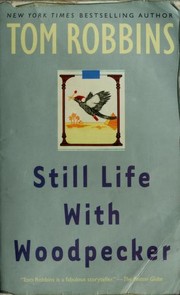
Still Life with Woodpecker
An environmentalist princess and an outlaw bomber fall in love, then argue about freedom, sacrifice, and a pack of Camel cigarettes.
2,061-word summary · 9 min read

Soul Music
A harpist from Llamedos brings rock music to Ankh-Morpork, and a primordial force takes hold of the city, pulling Susan Sto Helit and Death into a fight over…
2,406-word summary · 11 min read
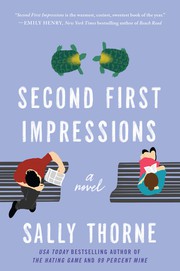
Second First Impressions
A risk-averse retirement-villa manager and the developer's tattooed son are thrown together at work, where her fear of the outside world meets his relentless…
2,073-word summary · 9 min read

Rachel's Holiday
Rachel Walsh calls her cocaine use recreational until an overdose and a stay at a Wicklow rehab clinic force her to hear what her family and boyfriend have…
2,792-word summary · 12 min read

Nick and Norah's Infinite Playlist
Rachel Cohn and David Levithan trade chapters as two music-obsessed teenagers spend one long New York night together, from a five-minute fake date to something…
2,355-word summary · 10 min read
My Friends
A dying artist sends an eighteen-year-old stranger a painting, pulling her into the story of four teenagers and one summer on an abandoned pier.
2,219-word summary · 10 min read
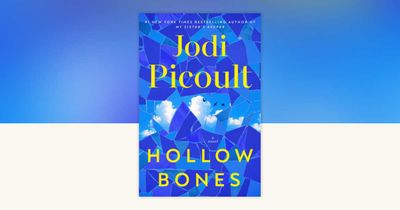
Hollow Bones
On 11 September 2001, two-month-old Molly Fitzgerald loses her mother at the World Trade Center. She grows up planning for disasters, until a crisis in her new…
2,703-word summary · 12 min read

Everyone Worth Knowing
A young woman quits her banking job after a friend's engagement and lands in a New York PR firm where everyone is paid to know everyone.
2,360-word summary · 10 min read

Endling
A Ukrainian scientist breeds endangered snails from her van and funds the work by posing as a mail-order bride, until a kidnapping plot meets the outbreak of…
3,041-word summary · 14 min read