
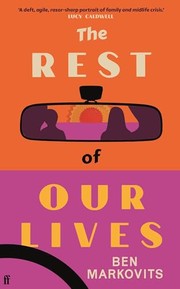
The Rest of Our Lives
2,238-word summary 10 min read 256 pages in the book
- First published
- 2025
- Publisher
- Faber
- Pages
- 256
- ISBN
- 9780571388547
Reading options
What's inside (9 sections)
The decision not to turn home
I started The Rest of Our Lives expecting a road novel and got something quieter and stranger. Ben Markovits published it with Faber in 2025, it runs 256 pages in the hardback, and it was shortlisted for the Booker Prize. The premise is almost aggressively simple. Tom Layward, a fifty-five-year-old law professor in New York, drives his younger daughter Miri to university in Pittsburgh. When he gets there, instead of turning east toward home and his wife Amy, he points the car west and keeps going. There is no dramatic announcement, no note left on the kitchen table. The book is built around the question of whether he will ever go back.
That question hangs over everything because Tom has made a private promise to himself. Twelve years earlier Amy had an affair, and he decided then that he would leave her once the children were grown. The children are grown now. Miri is settled at university and his son Michael is out in California. The arrangement has the shape of a plan, but Tom is the only person who knows he made it, and the further he drives the less certain he seems about keeping it. What I liked immediately is that Markovits refuses to make this a midlife crisis in the usual comic mold. There is no new car, no younger woman waiting in a motel, no speech about reinvention. Tom just drives, and talks to his wife in his head.
The shortlisting felt deserved to me, though the book is an odd candidate for a prize in some ways. It has no grand historical canvas and no formal tricks to admire. What it has is a voice. Tom is funny without meaning to be, and his complaints arrive in the flat, careful prose of a man who has spent his career writing legal opinions. I read the first fifty pages in one sitting, mostly because I wanted to know whether he was going to turn the car around. He does not, and the longer the book goes on the less that question seems to be the point.
A C-minus marriage
The phrase that everyone who reviewed this book seized on is Tom's description of his marriage. He calls it a C-minus marriage, and then reasons that a marriage like that makes it hard to earn more than a B in life. It is a funny line, and it is also the book's engine. Tom is a lawyer, used to grading things and being graded, and he has turned his own life into a report card. The joke curdles as the novel goes on, because a C-minus is still a passing grade. He is not describing a disaster. He is describing something that has settled into mediocrity, which is harder to leave than a clear catastrophe.
Amy is not a villain in this story. That is one of the more interesting choices. The affair happened twelve years ago and Tom has clearly been carrying it ever since, but he also talks about her with a fondness that keeps breaking through his resentment. He will not phone her on the road, because the real woman, as he puts it, does not like him much these days and would argue. So he argues with a version of her in his head instead, and those imagined conversations are among the best things in the book. They let him say the cruel things he would never say aloud and then immediately hear the reasonable reply. Philip Womack, writing in the TLS, called Markovits a master of family dynamics, and this is the part of the book that proves it. A second Guardian reviewer, Alex Preston, thought Amy was finely observed, and I think that is right even though we spend almost no time in her company.
The C-minus grade also tells us something about Tom's sense of fairness. He has decided that a decade of resentment is proportionate to what happened. He has not asked Amy whether she sees it the same way, and he has not considered that a marriage might be graded differently by the two people in it. The book never scolds him for this. It simply shows the arithmetic he has been doing alone for twelve years, and lets the reader notice how much of it is invented.
A professor on leave and a body that will not settle
Tom's professional life is in ruins at the same time as his marriage is being quietly audited. His university has put him on leave after two incidents. He refused to put preferred pronouns in his email signature, and he gave legal advice to an NBA owner who had made racist and sexist remarks. Students petitioned for his removal. Markovits reports all of this in Tom's flat, aggrieved voice, and this is the part of the book I found hardest to sit with. Tom is not presented as a man learning anything about why these things cost him his job. He is presented as a man who has been unfairly treated, and the narrative mostly leaves it at that. A reader looking for a moral reckoning will not find one here. A reader looking for an honest portrait of a certain kind of injured professional will find plenty.
There is also an illness. Tom has palpitations, fatigue, and spells where his face swells, and no doctor in the book can tell him what is wrong. The undiagnosed condition works well as a piece of atmosphere. Every time he feels his heart race, the reader wonders whether this is the trip that kills him, and the uncertainty gives the drive a low hum of danger. It also functions as another thing Tom refuses to deal with directly. He mentions the symptoms, notes that they are unexplained, and keeps driving. The book is full of people who have stopped asking questions, and Tom is the most accomplished of them. His legal training makes this worse rather than better, because he knows exactly what a proper investigation would look like and declines to conduct one on himself.
The people along the road
The novel is episodic. On the road Tom visits old friends, an ex-girlfriend, a former business partner, and strangers, and each visit releases a piece of his past. The structure could have felt like a string of anecdotes, and at times it does. Some stops linger longer than their importance warrants. But the best of them are excellent. The ex-girlfriend is the one who delivers the book's most damning judgment. She tells him that he does not really care about anything, and the line is hard to shake because Tom has spent the whole journey insisting, in his head, that he cares about a great deal. Markovits lets the accusation sit there without answering it. Tom does not argue with her, and neither does the book.
The former business partner opens another window onto the same problem. Tom has a habit of walking away from arrangements that require him to be generous, and the people he meets are often the ones left holding the bill. Markovits never turns these encounters into lessons. Nobody delivers a speech about how Tom should be a better friend. The scenes simply accumulate, and by the time the reader reaches the West Coast there is a weight of small disappointments behind him that the road trip has not escaped so much as displayed.
Basketball is the other thread that keeps the book alive. Tom was a gifted player as a young man, and the pick-up games he joins on his travels are the most luminous scenes in the novel. For a few minutes his old instincts come back, and his body remembers what his mind has been avoiding, and he is not the closed, disappointed professor who has been narrating the trip. These games are not a comeback and they do not fix anything. They are brief returns to a self he liked better, which is exactly what the book is about. I kept waiting for him to say as much and he never quite did, and that restraint is both the book's strength and its occasional frustration.
In California Tom sees his son Michael and makes plans to visit the grave of his father, who abandoned the family when Tom was young. That planned visit is the nearest the novel gets to an explicit theme. A man who was left by his father is considering leaving his own family, and the book is canny enough never to spell out the connection. Tom does not make the link, or if he does he keeps it to himself. Whatever happens at the grave matters less than the fact that he intends to go. The journey west is circling a very old wound, and the circle is still open at the end.
What he says and what he refuses to say
The book's great trick is that Tom talks to Amy constantly and never speaks to her. He imagines her responses with such precision that she becomes more present in his head than any of the people he actually meets. This is a device that could have been precious in lesser hands. Here it feels like the only honest way to render a long marriage. You learn that he knows exactly which arguments she would make and exactly which of his own excuses would not survive them. He refuses to call because, as he says, she would argue, and the refusal is both cowardice and a kind of mercy. He would rather preserve the argument in his head, where he can control it.
That withholding is what makes him difficult to love as a narrator. He is frank about small things and silent about large ones. He can describe a pick-up game in vivid detail and then skim over the moment that actually hurt him. Critics noted this tension between his plain-spoken surface and the subtlety of the prose underneath. Marcel Theroux in the Guardian compared the book to a quieter, male version of Miranda July's All Fours and admired what he called relaxed precision writing. That phrase seems exactly right. The sentences are plain, even casual, and the feeling arrives sideways, after you have put the book down. The Booker judges described it as an unforgettable book about the challenges of marriage, which sounds like praise for a much louder novel. This one earns the description by being so quiet.
Where the book loses me
I should be honest about the parts that did not work for me. Tom's grievances about his university can read like a rehearsal of a familiar complaint rather than a felt experience. The book gives us the facts of the pronouns dispute and the NBA owner, but it never lets anyone make the case against him in person, so he gets to win by default. That is a real gap, and it made me distrust the narrator at exactly the moments when the story wanted me to sympathize. The illness, too, is introduced with such ceremony and resolved with so little that it sometimes feels like a device the author forgot to pay off. The reader is left to decide whether it matters.
The episodic structure has its price. A few of the people Tom meets on the road felt to me like they existed to deliver one line and then step aside. The trip covers a lot of ground, and the book is short, so the stops go by quickly. Anyone hoping for a deep immersion in a particular place will not get it. There is also the question of what Tom actually wants. He says he wants to leave, he behaves like a man who wants to be forgiven, and he talks like someone who wants to be caught. The book declines to choose among these, which is a defensible artistic position and also a way of avoiding a hard decision about the character. Readers who want a firm verdict on the marriage will leave unsatisfied.
The end of the road
Without giving away the last page, the trip does not resolve the marriage in any tidy way. Tom gets to the coast, he has seen his son, and the question of whether he keeps his old promise stays open much longer than a reader might expect. That openness is the point. A book called The Rest of Our Lives that offered a clean answer would be a different, and probably lesser, book. What it offers instead is a man who has spent decades being competent at the surface and is now discovering that competence is not the same as a life.
I closed it thinking about the C-minus line. Tom has graded his marriage and found it adequate, and he has graded his life by that grade, and he has decided the result is not good enough. The road west is his attempt to find a better number. Markovits is too good a writer to tell us whether that is courage or excuse. He gives us the palpitations, the basketball, the imagined arguments, and the father's grave, and lets the reader do the marking. That is a generous way to end a novel about a lawyer who cannot stop grading.
FAQ
Was The Rest of Our Lives shortlisted for the Booker Prize?
Yes. Faber published the novel in 2025, and it was shortlisted for the Booker Prize.
Who is Tom Layward?
He is a fifty-five-year-old New York law professor who drives west after taking his daughter to university instead of returning to his wife.
Does the novel resolve Tom's marriage?
No. The trip leaves his promise to leave Amy open, and the ending refuses to give a tidy verdict.
Similar books
The Vacationers
A New York family's two-week stay in Mallorca turns into a comedy of exposed secrets when a magazine editor's affair and a son's debts come to light.
2,324-word summary · 10 min read
Only Son
A brief, funny, melancholy debut about a boy whose father dies in 1982 Florida, and the man he becomes, still trying to read the mystery of that loss.
2,170-word summary · 10 min read
Three Days in June
A Baltimore mother loses her job, and her ex-husband turns up with a rescue cat, in Anne Tyler's short, funny novel about the three days around her daughter's…
2,867-word summary · 13 min read

American Fantasy
Newly divorced and feeling replaceable at work, Annie takes a Boy Talk reunion cruise alone and finds buried feelings stirring.
2,403-word summary · 11 min read
The Mermaid Chair
Jessie Sullivan returns to her childhood home on Egret Island to care for her agoraphobic mother, then finds her marriage, her faith, and a monk's vow thrown…
2,237-word summary · 10 min read

A Spool of Blue Thread
Four generations of the Whitshank family in Baltimore, and the silences, resentments and quiet love they hand down without ever saying so.
2,408-word summary · 11 min read
Freedom
A St. Paul couple and their grown children strain marriage, loyalty, and ideals in 2000s America.
2,678-word summary · 12 min read

The Wilderness
Four Black women move through twenty years of friendship in Angela Flournoy's discontinuous, widely praised second novel.
2,141-word summary · 10 min read
The Nix
A stalled novelist and community college professor goes looking for the mother who left him and finds a radical activist whose rock thrown at a governor made…
2,214-word summary · 10 min read
Our Souls at Night
A widow asks her widower neighbor to lie beside her at night, not for sex but for company, and two lonely people in a small Colorado town begin again.
2,582-word summary · 11 min read
The Rachel Incident
A funny, sharp novel about two twenty-somethings in recession-era Cork whose bookshop friendship, tangled romance and a married professor's lie leave a secret…
2,346-word summary · 10 min read
The Correspondent
A retired lawyer in Annapolis writes letters across a decade to family, literary heroes, and one recipient she never mails. Evans's debut turns correspondence…
2,296-word summary · 10 min read
Second First Impressions
A risk-averse retirement-villa manager and the developer's tattooed son are thrown together at work, where her fear of the outside world meets his relentless…
2,073-word summary · 9 min read
Rachel's Holiday
Rachel Walsh calls her cocaine use recreational until an overdose and a stay at a Wicklow rehab clinic force her to hear what her family and boyfriend have…
2,792-word summary · 12 min read
Hollow Bones
On 11 September 2001, two-month-old Molly Fitzgerald loses her mother at the World Trade Center. She grows up planning for disasters, until a crisis in her new…
2,703-word summary · 12 min read
Black and Blue
A nurse leaves her abusive police-officer husband and vanishes into small-town Florida with her son, where a new name buys years of peace and a fear that never…
2,456-word summary · 11 min read

Audition
Kitamura's Booker-shortlisted fifth novel tells the same lunch twice, with a young film student who believes he is the actress narrator's son. Two versions…
2,315-word summary · 10 min read
American Pastoral
Roth's Pulitzer winner follows a Newark glove maker's son whose perfect family life is broken by his daughter's antiwar bombing, retold by a narrator who…
2,660-word summary · 12 min read
Winter Street
Kelley Quinn's Nantucket inn is ready for Christmas until he finds his wife kissing the man hired to play Santa. The whole family comes apart in the best way.
2,340-word summary · 10 min read
Watermelon
A woman left by her husband on the day their daughter is born retreats to her chaotic Dublin family, then slowly learns to stop believing his version of the…
2,295-word summary · 10 min read
Oona Out of Order
Each New Year's Eve, Oona Lockhart wakes up in another year of her own life, with the mind of the woman she was and no memories to match her new body.
2,429-word summary · 11 min read

Howards End
Forster's 1910 novel follows two families, a house in Hertfordshire, and a burned note, asking whether money and feeling can ever be connected.
2,187-word summary · 10 min read
Eligible
Austen's Bennet sisters move to modern Cincinnati, where marriage is a reality show and the house is losing its value.
2,293-word summary · 10 min read

Big Swiss
A transcriptionist for a sex coach falls for one of his clients, the tall Swiss gynecologist she calls Big Swiss, in a funny novel about work and secrets.
2,523-word summary · 11 min read

2 States: The Story of My Marriage
A Punjabi boy from Delhi and a Tamil Brahmin girl from Chennai meet at IIM Ahmedabad, and turn a love marriage into a campaign to convince two families.
2,634-word summary · 12 min read
Olive, Again
Elizabeth Strout returns to Crosby, Maine, as Olive Kitteridge marries Jack Kennison, confronts her son, and faces old age, grief, and small-town judgment.
2,333-word summary · 10 min read
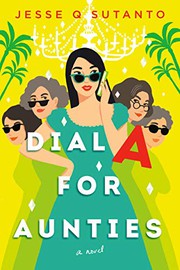
Dial A for Aunties
A wedding photographer accidentally kills her blind date, and her mother and three aunties help her hide the body during the biggest wedding of their careers.
2,076-word summary · 9 min read
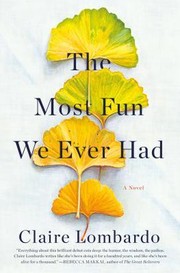
The Most Fun We Ever Had
Four Sorenson sisters orbit perfect parents hiding old cracks.
2,590-word summary · 12 min read
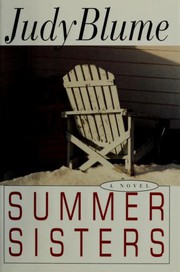
Summer Sisters
Vix and Caitlin share Martha's Vineyard summers from age twelve into adulthood, through first love, grief, marriage, and a disappearance that still haunts Vix.
3,633-word summary · 16 min read
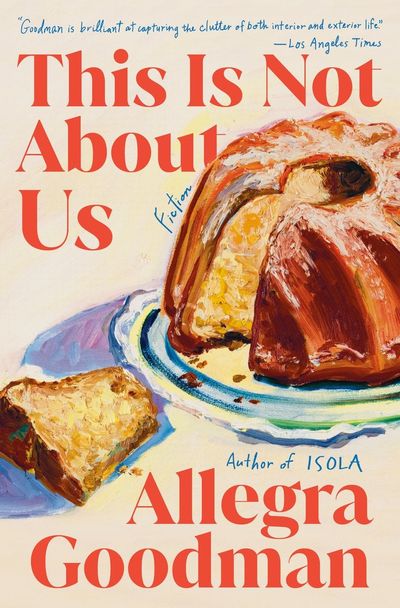
This Is Not About Us
Sisters Sylvia and Helen Rubinstein feud over apple cake in linked stories spanning divorces, bat mitzvahs and three generations of family life.
2,064-word summary · 9 min read