
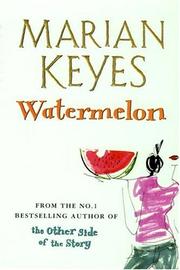
Watermelon
2,295-word summary 10 min read 614 pages in the book
- First published
- 1995
- Publisher
- Poolbeg
- Pages
- 614
- ISBN
- 9781853715082
- Series
- Walsh Family (#1)
Reading options
What's inside (9 sections)
I put off Watermelon for years because the word "chick lit" sounded like a warning label. Then a friend said it was the funniest book she had ever cried over, which is exactly the sort of recommendation I cannot ignore. It is Marian Keyes's first novel, published in 1995 by Poolbeg in Dublin, and it introduced the Walsh family, the clan she kept writing about for decades. My copy is the original 614-page Irish paperback. People either love that bulk or complain about it, and after finishing I understand both reactions. The book is a comedy written from inside a collapse. Claire Walsh tells her own story, and she is wry, vain, scared and often very annoying, which I have come to think is the point.
The opening has stayed with me since I first read it. Keyes does not ease you in:
February fifteenth is a very special day for me. It is the day I gave birth to my first child. It is also the day my husband left me.
That is the whole premise in two sentences. Claire is twenty-nine, living in London with a husband she adores, a flat she loves and a job that pays the bills. She has just given birth to a daughter. James comes into the recovery room and tells her he is leaving her for someone else. He does not even wait until they are home. The baby is barely hours old. From there the book follows Claire back to Ireland, through a long, messy stretch of grief and drinking, and eventually to a decision about what kind of life she wants now. Spoilers from here, including the ending.
The flight home with a nameless baby
Claire packs up the baby and goes to Dublin, to the house she grew up in. She does not really have another plan. Her mother and father take her in, and her sisters are already there in various states of chaos. Helen is the glamorous one, sharp-tongued and dangerous with men. Anna is practical and slightly worn. Rachel is the youngest, still finding her way and already heading toward the trouble that gets her own book later. There is also Maggie, the "good" sister, who barely appears here. Five daughters in one house, and a father who looks permanently outnumbered.
What struck me first was how little the family does to fix things. Nobody sits Claire down with a chart. They argue about food, soap operas, who drank what from the liquor cabinet, and whether the baby is feeding properly. Claire's mother watches television and dispenses advice in the form of headlines. Her father retreats. Yet the noise is protective. The house is chaotic enough that Claire's own disaster does not have to be the only thing in the room. She can be a wreck without being the family's only wreck.
Keyes takes her time over the physical business of going home. There are buses, bags, a taxi ride where Claire worries about what the driver is thinking, and the slow realisation that she cannot go back to her old flat. London becomes a place she thinks about in flashes: the lift, the supermarket, the neighbour she cannot look in the eye. Dublin is all noise and questions and people standing in doorways. The contrast does a lot of work. Claire is not simply sad; she is displaced, a woman who has lost the setting that made her life make sense. Even the baby's things, bought in a hurry and carried across the country, feel like evidence of a future she never agreed to.
The baby spends a long time without a name. That detail bothered some readers I know, and I understand why. A newborn is a person, not a prop. But in Claire's mind at this stage the baby is still tangled up with James, with the hospital room, with the moment her life split. Naming her would mean admitting the child is here to stay. When the name Kate finally settles, it arrives quietly, almost as an afterthought. Keyes is writing a state of mind here, not a manual for new parents.
Bed, bottles and the exercise bike
The middle of Watermelon is Claire at her lowest, and it is longer than most books would dare. She takes to her bed. She drinks wine, sleeps, feeds the baby when she must, and lies awake replaying the last months of her marriage. Her body is a source of fresh humiliation. She keeps referring to herself as round, soft, a watermelon, and the title comes from that private cruelty she practises on herself in front of the mirror. Postpartum body image is not treated as a dainty subject here. Claire is brutal about her own reflection, and the jokes are funny until you notice how much self-hatred is underneath them.
Her family finally gets her moving by accident. There is an old exercise bike in the house, gathering dust in the way exercise bikes do. Claire starts pedalling in a rage, and then keeps going. The weight comes off. She starts going out. The book links weight loss and emotional recovery more tightly than I was comfortable with. Claire feels better as her body changes, and the novel does not do much to question whether feeling better has anything to do with the number on the scale. Read that part with your own head on, especially if weight and mood are live issues for you.
The drinking is handled more honestly. Claire is not a glamorous alcoholic having poetic thoughts. She is a woman using wine to make the afternoon shorter, and when the family finally talks to her about it, the conversation is awkward and incomplete. Keyes came to this material from her own life, and Watermelon has a rawness that some of her later, smoother books sand away. The hangovers, the secrecy, the small negotiations with yourself about one more drink, all of it is here without a lecture attached. Nobody in the Walsh house delivers a diagnosis. They just keep leaving the kettle on.
Adam, and being looked at properly
Adam arrives through Helen. He is a friend of hers, younger than Claire, and he runs a bar. He is kind to the baby, which matters more than any of his other qualities, and he looks at Claire as if she is still a person worth knowing. The romance builds slowly and awkwardly. Claire is suspicious of kindness by now. She assumes every compliment has a price, because the last man who complimented her turned out to be rehearsing an exit. Adam's patience with her is the quiet pleasure of the book. He does not try to rescue her. He turns up, makes her laugh, holds Kate, and lets her come to him.
There is an age difference, and Claire makes jokes about it. Adam is in his late twenties at most, and Claire is twenty-nine with a child and a failed marriage behind her. On paper that is not a scandal, but the power balance is awkward in places because Adam is also her sister's friend and knows the whole family. Keyes handles it lightly, as comedy, and I went along with it. Still, the relationship works less because of the age gap than because Adam is the first person in the book who treats Claire's feelings as information rather than as a nuisance.
Their scenes are the warmest thing here. A drink after closing time. A disastrous attempt at a proper conversation that turns into an argument about nothing. Adam making a fuss over Kate and being repaid with sick-up on his jacket. These are small domestic moments, and Keyes lets them breathe. I did not believe for a second that Claire and Adam would ride off into a perfect future, and I do not think the book asks me to. What it offers is the simpler idea that a person can be desirable again after being discarded.
James slithers back
James returns in the second half, and this is where the book gets its teeth. He has been having an affair with a woman from downstairs, and now that the novelty has worn off he wants his old life back. His version of events is extraordinary. He suggests, more or less, that Claire's pregnancy and her neediness drove him into another woman's arms. He barely asks after his daughter. He forgets her name. He turns up, turns on the charm, and expects Claire to remember how much she loved him.
Keyes writes manipulation brilliantly. James never shouts. He sighs, he looks wounded, he suggests Claire is exaggerating. Claire knows, somewhere, that he is lying. But she also remembers the man she married, and she wants the story where he comes to his senses and they all live together again. For a while she nearly accepts his version. The scenes where she apologises for things she did not do are painful precisely because they are so ordinary. Gaslighting had not entered the vocabulary when this book was written, but the behaviour is unmistakable.
The family's reaction is wonderfully unsubtle. Helen wants to peel him off the doorstep. Anna is brisk. Claire's mother sees through him almost immediately and, in one of the book's best moments, tells him where Claire is when she knows perfectly well she should not. The Walsh sisters close ranks. Their loyalty is messy and loud and occasionally embarrassing, but it is the force that pulls Claire out of James's orbit. She does not get there entirely on her own, and I would not want her to. People who have been talked out of their own judgement often need a chorus of other voices to talk them back into it.
The ending Keyes actually wrote
Claire does not take James back. That is the payoff, and it is handled with less fanfare than you might expect. There is no grand speech at a train station. She sees him clearly, understands that his remorse is mostly about losing a convenient home, and chooses a life where she and Kate are not at the centre of his moods. The final movement is gentle rather than triumphant. Keyes is interested in the moment someone stops waiting for permission to leave.
Adam is still around, and the ending leaves the door open without promising a fairy tale. I liked that. The book has earned a little hope, but not the kind where every wound closes and everyone gets a medal. Claire has learned to notice when she is being managed. She has also learned that her family, for all their noise, will not let her disappear. That is a modest place to land, and after six hundred pages of watching her flinch, it felt right.
There is a 2003 television adaptation that changes the story substantially, including the question of who fathered the baby. If you have only seen that, the book will surprise you. Here the child is James's, and his abandonment is entirely his own doing. The novel is also much darker than the film's lighthearted reputation suggests.
What drags
Watermelon is long. At 614 pages in the Irish edition, it has room for tangents that a firmer editor would have cut. Claire's inner monologue runs away with whole chapters. There is a passage about her parents' liquor cabinet that has nothing to do with anything, and Keyes keeps returning to Claire's private vocabulary of insults for herself long after the joke has gone stale. I found myself skimming a few stretches, then slowing down again whenever Adam or James entered. The book is at its best in dialogue and at its worst when Claire is alone with her own head.
The dated bits are harder to shrug off. Claire calls other women fat, makes an assumption about a taxi driver's sexuality because he is short and does not interest her, and generally treats the early 1990s as a free pass for casual cruelty. Some readers will find this funny period detail. Others will find it exhausting, and I am closer to the second group. There is also the question of the baby, who is oddly passive for a novel about new motherhood. Kate is a source of guilt and later delight, but she has very little presence on the page compared with the adults' feelings about her.
None of that makes Watermelon a bad book. It makes it an early one, written fast and published before Keyes learned to trim. The voice is already unmistakable: direct, comic, furious on behalf of women who have been talked down to. You can feel her finding it in real time.
Who it is for
If you want a tidy romance with a neat conclusion, this will frustrate you. The love story is secondary to Claire's slow reacquaintance with her own judgement, and the ending offers a chance rather than a guarantee. If you want a big, talky, funny novel about a woman rebuilding among relatives who drive her mad and love her anyway, it works. It is the first door into the Walsh books, so the family dynamics pay off again in Rachel's Holiday, Angels and the later novels if you choose to continue.
I closed it thinking about the exercise bike more than the romances. A woman pedalling furiously in her parents' front room because rage is the only energy she has left is a better image for this book than any cover with a cartoon high heel. Keyes is often sold as a comic writer, and she is one. But Watermelon is funny the way a person is funny at a bad party, because they cannot stop talking and you cannot look away.
FAQ
Is Watermelon the first Walsh Family book?
Yes. Marian Keyes published it in 1995 through Poolbeg, and it introduces Claire Walsh, the oldest of the five sisters, before Rachel's Holiday and the rest of the series.
Does Claire get back together with James?
No. He returns and tries to talk her round, but she sees that his remorse is mostly about losing a convenient home and chooses to raise Kate without him.
Is this the same story as the 2003 TV adaptation?
No. The film changes who fathered the baby, while the novel makes James's abandonment entirely his own doing. The original Poolbeg edition runs 614 pages.
Similar books
More from Walsh Family first, then related titles.
Rachel's Holiday
Rachel Walsh calls her cocaine use recreational until an overdose and a stay at a Wicklow rehab clinic force her to hear what her family and boyfriend have…
2,792-word summary · 12 min read
The Rest of Our Lives
A law professor drives his daughter to college, then heads west instead of home, testing a private promise he made twelve years ago.
2,238-word summary · 10 min read
The Nix
A stalled novelist and community college professor goes looking for the mother who left him and finds a radical activist whose rock thrown at a governor made…
2,214-word summary · 10 min read
When Life Gives You Lululemons
Emily Charlton leaves Runway for Hollywood and ends up in Greenwich, where a supermodel's DUI and a senator husband's ambitions draw three women into a…
2,028-word summary · 9 min read
The Vacationers
A New York family's two-week stay in Mallorca turns into a comedy of exposed secrets when a magazine editor's affair and a son's debts come to light.
2,324-word summary · 10 min read
The Rachel Incident
A funny, sharp novel about two twenty-somethings in recession-era Cork whose bookshop friendship, tangled romance and a married professor's lie leave a secret…
2,346-word summary · 10 min read
Second First Impressions
A risk-averse retirement-villa manager and the developer's tattooed son are thrown together at work, where her fear of the outside world meets his relentless…
2,073-word summary · 9 min read
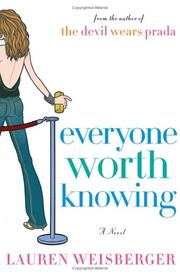
Everyone Worth Knowing
A young woman quits her banking job after a friend's engagement and lands in a New York PR firm where everyone is paid to know everyone.
2,360-word summary · 10 min read
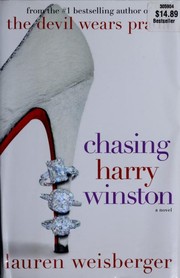
Chasing Harry Winston
Three friends turn thirty in Manhattan and make a wild pact: Emmy will sleep her way around the world, Adriana will settle down, and Leigh watches from the…
2,185-word summary · 10 min read
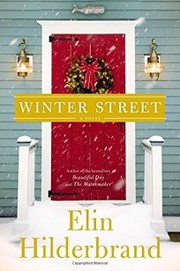
Winter Street
Kelley Quinn's Nantucket inn is ready for Christmas until he finds his wife kissing the man hired to play Santa. The whole family comes apart in the best way.
2,340-word summary · 10 min read

Size 12 Is Not Fat
Former teen pop star Heather Wells investigates two dorm elevator deaths while juggling her ex, her crush, and a size-12 wardrobe.
2,805-word summary · 12 min read
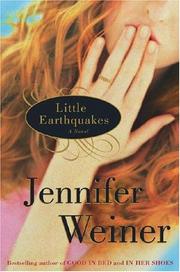
Little Earthquakes
Four Philadelphia women meet during pregnancy and discover that new motherhood is nothing like the plan, while friendship becomes the thing that holds them…
1,997-word summary · 9 min read
Mr. Maybe
Libby Mason wants a rich husband, but the wealthy man who proposes is dull and the broke writer she cannot forget is not offering forever.
2,322-word summary · 10 min read
Wedding Night
Lottie marries an old flame days after a breakup, then flies to a Greek island while her sister quietly works to sabotage the honeymoon. A farce about memory,…
2,213-word summary · 10 min read
Dial A for Aunties
A wedding photographer accidentally kills her blind date, and her mother and three aunties help her hide the body during the biggest wedding of their careers.
2,076-word summary · 9 min read
Bridget Jones: The Edge of Reason
Bridget doubts Mark, takes a job with Daniel, and lands in trouble in Thailand.
2,198-word summary · 10 min read
Jemima J
Overweight London journalist Jemima Jones invents a slim online self for a California lover, starves to match the photo, then faces betrayal and learns to…
2,883-word summary · 13 min read
The Guncle
A sitcom star takes his niece and nephew for a summer and learns presence beats punchlines.
2,779-word summary · 12 min read

The Bean Trees
Taylor Greer flees Kentucky, inherits Cherokee toddler Turtle, and roots with Tucson strays.
2,082-word summary · 9 min read
Twenties Girl
Dumped and flailing, Lara Lington is haunted by her great-aunt Sadie, a 1920s ghost who wants her lost necklace back.
2,938-word summary · 13 min read
Get a Life, Chloe Brown
A chronically ill woman recruits her gruff handyman neighbor to help her finish a bold Get a Life list.
2,147-word summary · 10 min read
The Kiss Quotient
Stella Lane hires escort Michael Phan to practice dating and learns logic fails where touch and family press in.
2,716-word summary · 12 min read
Can You Keep a Secret?
Emma blurts every secret to a stranger on a turbulent flight, then finds him running her company.
3,114-word summary · 14 min read
Divine Secrets of the Ya-Ya Sisterhood
Sidda Walker, a theater director, fights with her mother Vivi after a New York Times interview, then learns Vivi's past through the Ya-Ya scrapbook from…
2,611-word summary · 12 min read

The Wilderness
Four Black women move through twenty years of friendship in Angela Flournoy's discontinuous, widely praised second novel.
2,141-word summary · 10 min read
The Long Haul
Greg Heffley's summer road trip goes sideways with a towed boat, a live pig, and a family in a purple van.
2,311-word summary · 10 min read
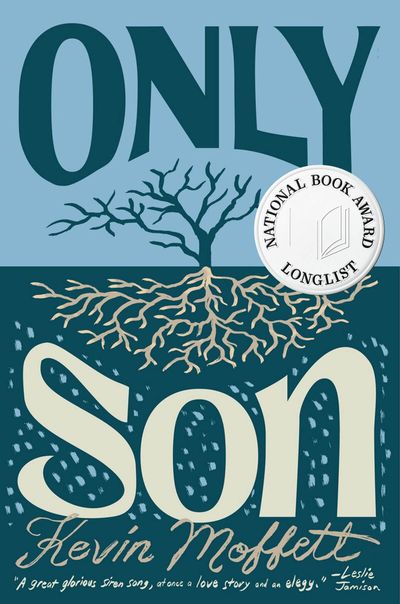
Only Son
A brief, funny, melancholy debut about a boy whose father dies in 1982 Florida, and the man he becomes, still trying to read the mystery of that loss.
2,170-word summary · 10 min read
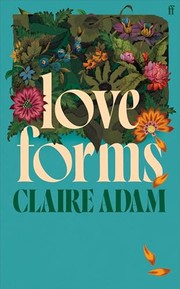
Love Forms
A Trinidadian mother sent away at sixteen returns to the loss of her daughter forty years later, in Claire Adam's quiet, longlisted novel.
2,153-word summary · 10 min read
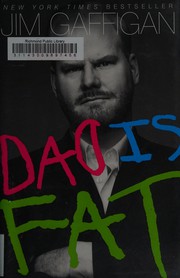
Dad Is Fat
A comic essay collection about raising five kids in a two-bedroom New York apartment, delivered in Gaffigan's dry, deadpan voice.
2,196-word summary · 10 min read