
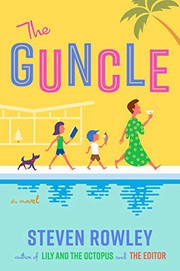
The Guncle
2,779-word summary 12 min read 336 pages in the book
- First published
- 2021
- Publisher
- G.P. Putnam's Sons
- Pages
- 336
- ISBN
- 9780525542285
- Series
- The Guncle (#1)
Reading options
What's inside (8 sections)
- I Picked This Up Expecting Fluff and Got Hit in the Feelings
- Maisie and Grant Move In and Palm Springs Has to Adjust
- The Guncle Rules and Why They Actually Work
- Sara, Greg, and the Story Behind the Summer
- Joe, Patrick's Past, and Grief He Never Finished
- Saying Goodbye When You Just Learned How to Stay
- Key takeaways
- FAQ
I Picked This Up Expecting Fluff and Got Hit in the Feelings
I grabbed this book because a friend said it was funny and light, and I wanted something easy after a heavy month. That description is only half true. Yes, it is funny. But it also sits with loss in a way that caught me off guard. The setup is simple. Patrick O'Hara, who everyone still calls Patrick, or Gay Uncle Patrick, or GUP for short, is a former sitcom star living in Palm Springs. He had his big run on television, he has money, he has a beautiful mid-century house with a pool, he has a best friend named Emory who keeps him honest, and he has a past that still aches when he thinks about it.
Patrick is gay, single in his late forties, and mostly content to be a little removed from the world. He does the awards show circuit when asked. He drinks. He judges. He loves hard but keeps people at arm's length. Then his brother Greg calls, or rather his life blows up, and suddenly Patrick is asked to take his niece Maisie, who is nine, and his nephew Grant, who is six, for the summer. Their mother Sara, Greg's wife and Patrick's sister-in-law and close friend, has died after a long fight with cancer. Greg is going into rehab for pills and drinking and needs time to get steady. There is no one else who can step in right away.
What I liked immediately is that Rowley does not make Patrick a natural caregiver. He is not. He burns toast and knows a lot about vintage caftans and very little about school lunches. He calls himself the Guncle, the gay uncle, with a mix of pride and self mockery, and at first he treats the job like a guest appearance. He plans outings and jokes and photo ops. The kids arrive with suitcases, stuffed animals, grief they cannot name, and a lot of questions. Maisie is sharp, watchful, almost adult in how she tries to hold things together. Grant is younger, softer, still asking when Mom is coming back in the way that breaks your chest.
My one small criticism this early is that Patrick can sound a bit sitcom quippy on every page, like he is always on. But it fits. That is his armor. And Rowley lets the armor crack in small moments, like when Patrick finds Sara's handwriting on a lunchbox note or hears Grant crying through a bedroom door and does not know whether to go in. I recognized that freeze. I have felt it around grieving kids. You want to fix it and you cannot.
You can love people and still be bad at knowing what they need right after they lose someone.
That line is mine, not the book's, but it sums up where Patrick starts. He loves these kids fiercely. He just has no idea how to carry their sadness alongside his own.
Maisie and Grant Move In and Palm Springs Has to Adjust
The middle of the book is basically one long, messy summer in Palm Springs, and Rowley paces it like episodes that slowly stop being funny. Patrick sets up bedrooms, figures out bedtimes, learns that six year olds have very strong opinions about breakfast. He hires help, leans on neighbors, argues with Greg on the phone. He tries to keep the house calm while his own memories keep surfacing. Palm Springs in summer is brutally hot, which works as pressure. Everyone is stuck inside together, by the pool, in air conditioning, with nowhere to hide.
Maisie is the one who fascinated me most. She is nine going on thirty. She corrects Patrick's grammar. She worries about her dad. She keeps a journal. She asks blunt questions about death that adults dodge. Is Mom in heaven. Can Dad die too. Why does everyone whisper around us. Patrick tries jokes first, then learns to give straighter answers. One scene that stayed with me is Maisie asking if she caused her mother's cancer by being difficult. Patrick stops cold. He tells her no, clearly and flatly, no hedging, no cute story. It is one of the first times he drops the performance and just parents.
Grant is quieter but he steals scenes. He is six, so grief comes out sideways. He wets the bed. He clings to a blanket. He gets angry over small things like the wrong cup. He asks Patrick to check for monsters, and Patrick realizes the monster is the empty chair where Sara used to sit on FaceTime. Patrick starts sleeping with the hallway light on. He learns the names of teachers, pediatricians, and the specific brand of chicken nuggets that will prevent a meltdown. Domestic detail sounds boring but Rowley makes it feel like love in action.
Emory, Patrick's best friend, is a great foil. She is blunt, funny, older, and she calls Patrick out when he makes the summer about himself. There is also a neighbor contingent, pool boys, Hollywood friends who drop by with wine and opinions. The best parts are not the cameos. They are the small routines. Morning swims. Evening movies. Patrick reading aloud and doing all the voices. The kids slowly starting to laugh again and then feeling guilty for laughing, which Patrick names out loud so they do not carry it alone.
If I have a fair criticism here, it is that some supporting characters feel a little thin, written to deliver a punchline and leave. But Maisie and Grant never feel thin. They feel specific and observed, down to how Maisie folds her clothes and how Grant hums when he is nervous.
The Guncle Rules and Why They Actually Work
The most famous part of the book is Patrick's Guncle Rules, and I went in expecting cheese. They are a little cheesy, but they earn it. Patrick starts inventing rules for the kids the way he used to invent rules for himself to survive Hollywood and heartbreak. Things like always have a signature cocktail, or mocktail for kids, never let them see you sweat, learn how to make an entrance and an exit, protect your privacy but tell the truth about big things. At first the rules are jokes. He prints them, jokes about them, tests them at parties.
Then something shifts. The rules become a shared language. Maisie starts quoting them back to him. Grant asks for a new rule when he is scared. What looks like camp becomes structure, and structure is exactly what grieving kids need. Bedtime is a rule. Breakfast is a rule. We talk about Mom every day is a rule. We are allowed to be mad is a rule. I loved that turn because it felt honest about how chosen family works. You make up rituals until they hold you.
Patrick also starts breaking his own rules. He has a rule about not falling in love with unavailable men, and then he meets a younger handsome guy and a kinder steady guy and has to face why he keeps picking the first type. He has a rule about never going back to Connecticut for family drama, and he has to decide whether to show up for Greg in a harder way than writing checks. He has a rule about keeping grief private, learned after losing his longtime partner Joe years earlier to AIDS complications, and the kids force him to talk about Joe out loud for the first time in years.
There is a pool party scene where Patrick tries to be the old Patrick, charming everyone, drink in hand, kids parked with a sitter, and Maisie gets upset and he chooses to leave the party to sit with her. No speech. He just leaves. That choice is the book in miniature. The old rule was image first. The new rule is people first. Rowley does not hammer it. He just shows Patrick dripping wet in a good shirt, sitting on the edge of a bed, listening.
I will say the romance subplot is the weakest thread for me. It sometimes pulls focus from the kids. But it also shows why Patrick is stuck, so I forgave it. He cannot teach the kids how to love after loss if he will not do it himself.
Sara, Greg, and the Story Behind the Summer
We only meet Sara in memory, flashback, letters, and stories, but she feels present the whole time. She was Patrick's sister-in-law, married to his brother Greg, mother to Maisie and Grant, and also Patrick's close friend from his New York and Los Angeles years. She was warm, organized, funny in a drier way than Patrick, and the person who always smoothed things between the brothers. Her death from cancer was not sudden. It was long, exhausting, medical, hopeful then not. By the time summer starts, everyone is already tired from grieving.
Greg is harder to like at first, and Rowley does not force you to like him. He is a successful guy who fell apart. Pills after Sara's illness, drinking, checked out parenting, now in rehab in Connecticut. He loves his kids but he was not safe to be around them for a while. His phone calls with Patrick swing between gratitude, control, and shame. He wants updates and photos but also wants Patrick not to replace him. He criticizes screen time and bedtime while missing visits. It is frustrating and very real.
What I appreciated is that Rowley gives Greg space to be a person, not a villain. Through old emails and stories from Sara, we learn Greg was a good father before the illness wore him down. He read bedtime stories. He coached. He showed up. Then Sara got sick, the house became a hospital, the kids got scared, and Greg numbed himself instead of asking for help. Rehab is his attempt to come back. Patrick does not trust it at first. He has seen Greg promise things before. Maisie does not trust it either, which hurts more.
There is a painful scene where Greg asks Maisie on the phone if she is being good, and Maisie hears it as blame, like if she is not good Dad will disappear too. Patrick has to translate between them. He tells Greg to stop grading and start listening. He tells Maisie her dad is sick in a different way than Mom was sick and getting help is how he shows love now. It is clumsy. Patrick gets it half wrong. But he tries again the next day, which is kind of the whole point Rowley is making about family repair.
Sara's letters, which Patrick finds and rations out, are the emotional spine. She wrote to the kids for birthdays and hard days. She wrote to Patrick too, asking him to be exactly who he is for them, not a replacement parent but a steady uncle who tells the truth. I cried at the one where she tells Maisie it is okay to forget small details like the sound of her voice and love her anyway. That is such a specific fear for kids who lose a parent young, and Rowley nails it.
Joe, Patrick's Past, and Grief He Never Finished
About two thirds in, the book stops being just about the kids and turns to face Patrick's older loss. Years before this summer, Patrick lost Joe, the love of his life, during the worst years of AIDS. They were young, building a life in a city that was losing men every week. Joe got sick. Patrick cared for him. Joe died. Patrick survived and never really dealt with it. He moved to Palm Springs, worked, partied, joked, dated wrong people, and kept Joe in a locked box.
The kids pick the lock without meaning to. Grant asks if Patrick ever lost someone. Maisie finds a photo. Patrick starts talking, a little at first, then more. He tells them Joe was kind, funny, a terrible dancer, a great cook. He tells them about hospital hallways and friends who showed up with food and friends who stopped calling. He tells them he was angry for a long time, at doctors, at God, at himself for living. Maisie listens like she has been waiting for an adult to admit that grief lasts.
This is where Rowley is strongest for me. He does not compare losses like grief is a contest. Sara's death and Joe's death are different, decades apart, different illnesses, different families left behind. But Patrick's unfinished grief is getting in the way of helping the kids finish nothing, because grief does not finish, but carry it better. He has to model what he never learned. How to say I miss him. How to keep photos out. How to laugh at a memory without apologizing.
There is a quiet scene I keep thinking about. Patrick takes the kids to a local shop and Grant picks out a cheap frame for a picture of Sara. Patrick buys a second frame and finally prints a photo of Joe he has kept in a drawer. He puts it on his dresser. No big speech. Maisie notices and squeezes his hand. That small action does more than any monologue about healing. It shows the kids that adults also keep going, also remember, also make room.
My fair criticism is that the Joe chapters can feel a bit rushed compared to the present day summer. I wanted more time there, more texture of those years. But maybe restraint is right. Patrick spent years not talking about it. He would not suddenly tell everything in one week. The glimpses feel true to someone opening a door an inch at a time.
Saying Goodbye When You Just Learned How to Stay
The last part of the summer is about endings that are not really endings. Greg is doing better and wants the kids back. The plan was always temporary. Patrick knew that. The kids knew that. Knowing does not make it easy. Maisie starts acting out, testing whether Patrick will send her away if she is difficult. Grant regresses, more clinginess, more nightmares. Patrick wants to beg Greg for more time and also knows Greg needs to parent again to stay sober. It is a no win ache, and Rowley lets it be messy.
Patrick handles it better than the old Patrick would have. He does not bribe them with trips or promise they can live with him forever. He tells the truth in kid sized pieces. Dad is healthier. Dad misses you. You will live with Dad. I will always be your guncle. You can call me. I will visit. Mom would want you with Dad. He repeats it, because kids need repetition when everything changes. He also lets himself cry in front of them, which feels huge for a man whose whole career was about timing jokes to avoid tears.
The goodbye scenes at the airport and back at the house are simple and specific, which is why they land. Maisie leaves Patrick a note with a new Guncle Rule she invented. Grant leaves a stuffed animal for Patrick so he will not be lonely. Patrick gives them Sara's letters for the plane. He cleans their rooms and leaves them ready, not stripped, so they know they can come back. He stands in the quiet house and hears the pool filter and the fridge and nothing else. I felt that silence.
Then Rowley gives us an epilogue that is hopeful without being fake. Patrick goes back to work with clearer eyes. He calls Greg more kindly. He visits Connecticut and does the boring dad brother stuff like school pickup and grocery runs. He keeps dating, more honestly. He keeps Joe's photo out. He keeps being the guncle, which now means showing up for recitals over FaceTime, remembering allergies, sending books. It is not a grand transformation. He is still sharp tongued, still loves a caftan, still Patrick. But he is less afraid to stay.
What I will remember is not the plot twist, because there is not really one. It is the tone. Warm without being sugary. Funny without mocking grief. Rowley trusts that readers can hold laughter and loss at once, the way kids do. If you want a perfect parenting manual, this is not it. If you want a story about a man who learns to parent by learning to mourn, told with specific summer light, chlorine, late night talks, and love that keeps revising its own rules, this summer in Palm Springs will stay with you.
FAQ
Is The Guncle sad or funny?
It is both, with sharp jokes around tender scenes of grief, parenting fails, and slow repair.
Do I need the sequel to enjoy it?
No, this first book stands alone with a complete summer arc and a hopeful open ending.
Similar books
More from The Guncle first, then related titles.

Sam's Letters to Jennifer
A grieving journalist reads her grandmother's letters and finds a decades-long love affair that changes how she sees her family.
2,310-word summary · 10 min read

We Are Okay
Marin fled San Francisco after her grandfather vanished and stopped answering anyone. When Mabel visits her college dorm, she has to say what happened.
2,253-word summary · 10 min read

Big Swiss
A transcriptionist for a sex coach falls for one of his clients, the tall Swiss gynecologist she calls Big Swiss, in a funny novel about work and secrets.
2,523-word summary · 11 min read

A Spool of Blue Thread
Four generations of the Whitshank family in Baltimore, and the silences, resentments and quiet love they hand down without ever saying so.
2,408-word summary · 11 min read

Delilah Green Doesn't Care
Delilah returns to Bright Falls to photograph her stepsister's wedding and falls for Claire, a bookstore owner and single mother, while a cruel bet threatens…
2,315-word summary · 10 min read
Maame
Maddie Wright, 25, has spent years as the responsible one in her Ghanaian British family, and the year she finally tries to live for herself is the year…
2,108-word summary · 9 min read
Dial A for Aunties
A wedding photographer accidentally kills her blind date, and her mother and three aunties help her hide the body during the biggest wedding of their careers.
2,076-word summary · 9 min read
The Switch
A burned-out consultant and her 79-year-old grandmother swap London and Yorkshire homes for two months, facing grief, dating apps, and village politics.
2,782-word summary · 12 min read
Tell the Wolves I'm Home
A grieving fourteen year old secretly befriends her late uncle's boyfriend in 1980s New York, testing family loyalty and love.
3,014-word summary · 13 min read
Transcendent Kingdom
A neuroscientist studies addiction in mice while mother prays at home.
2,020-word summary · 9 min read
The Last Anniversary
A single woman inherits island house and unknots a vanished baby story.
2,158-word summary · 10 min read
Home Front
A Guard pilot deploys, comes home wounded, while husband and daughters fight to heal together.
2,091-word summary · 9 min read

Golden Girl
A dead novelist watches her three kids for one summer with three nudges to help.
2,052-word summary · 9 min read
Forever, Interrupted
Elsie elopes in May, loses Ben nine days later, and learns grief beside the mother in law she never met.
2,051-word summary · 9 min read
For One More Day
A ruined ballplayer spends an impossible day with his dead mother.
1,989-word summary · 9 min read
Life's Too Short
A travel YouTuber facing possible ALS takes in baby Grace and falls for Adrian, the lawyer next door.
2,913-word summary · 13 min read
Get a Life, Chloe Brown
A chronically ill woman recruits her gruff handyman neighbor to help her finish a bold Get a Life list.
2,147-word summary · 10 min read
Still Me
Lou spends a year in New York working for the Gopniks, torn between Josh, distant Sam, and the life she wants.
2,939-word summary · 13 min read
My Grandmother Sends Her Regards and Apologises
Seven-year-old Elsa loses her granny and best friend, then delivers apology letters to neighbours while holding onto fairy tales of Miamas and the Land of…
2,311-word summary · 10 min read
The Kiss Quotient
Stella Lane hires escort Michael Phan to practice dating and learns logic fails where touch and family press in.
2,716-word summary · 12 min read
Just for the Summer
Emma and Justin date to break a matching curse, then face sudden guardianship and illness on Lake Minnetonka.
3,090-word summary · 14 min read
Reminders of Him
Kenna returns after prison to meet the daughter she lost, facing the family that blames her.
2,168-word summary · 10 min read

What Happened to Goodbye
Mclean has reinvented herself in four towns since her parents divorced. In Lakeview she uses her real name, and for the first time staying put becomes a choice.
2,796-word summary · 12 min read
Size 12 Is Not Fat
Former teen pop star Heather Wells investigates two dorm elevator deaths while juggling her ex, her crush, and a size-12 wardrobe.
2,805-word summary · 12 min read
This Winter
On one difficult Christmas Day, Tori, Charlie, and Oliver Spring try to hold their family together while Charlie's eating disorder makes every tradition a test.
2,034-word summary · 9 min read
Little Earthquakes
Four Philadelphia women meet during pregnancy and discover that new motherhood is nothing like the plan, while friendship becomes the thing that holds them…
1,997-word summary · 9 min read

Mrs. Everything
Two Jewish sisters in Detroit grow up, apart and together, across seven decades of American life, from the 1950s to the 2016 election.
2,362-word summary · 10 min read
Hard Luck
Rowley has a girlfriend, so Greg turns to a Magic 8 Ball, a family Easter hunt and the school yearbook for answers.
2,586-word summary · 11 min read
Mr. Maybe
Libby Mason wants a rich husband, but the wealthy man who proposes is dull and the broke writer she cannot forget is not offering forever.
2,322-word summary · 10 min read
I Kissed Shara Wheeler
Shara Wheeler kisses her rival Chloe Green at prom and disappears, leaving a scavenger hunt that forces Chloe to rethink everything she knew about her.
2,083-word summary · 9 min read