
Reading options
What's inside (8 sections)
- How I found this slim book and why it surprised me
- The grey town, the bus, and the bright country
- George MacDonald and the ghosts who will not stay
- Pride, pity, and possession in everyday clothes
- Style, limits, and why the ending still moves me
- Reading it beside Lewis life and other books
- Key takeaways
- FAQ
How I found this slim book and why it surprised me
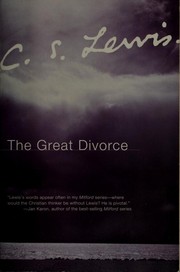
I found The Great Divorce in a used bookstore, wedged between thicker Lewis books, and I bought it because it was short. The edition I read is the HarperOne 2001 revised edition, 160 pages, ISBN 9780060652951, though Lewis first published the story in 1945 after serializing it in a religious paper. I expected a essay about divorce. It is not that at all. The title means the divorce, the separation, between Heaven and Hell, and the argument that you cannot keep one foot in each and call it honesty.
I read it in two sittings on a porch, which felt right because much of the book happens outdoors in strange light. The narrator, a lot like Lewis himself, boards a bus in a grey, drizzly town and rides up to bright foothills where everything is more solid than he is. Ghosts from the town meet shining people who knew them on Earth, and each ghost is offered a chance to stay. Most refuse. Watching why they refuse is the whole point, and it stung more than any sermon I have heard.
My background matters here. I am not a theologian. I came for story, and Lewis gives story first. Funny lines, sharp dialogue, odd images like a man with a lizard on his shoulder or a woman carrying a dwarf on a chain. Only after do you notice the ideas underneath about pride, possession, and pity. I liked that order. It let me argue with characters before I realized I was arguing with myself.
The grey town, the bus, and the bright country
The book opens in a joyless town that feels like Hell but looks like a rainy suburb after closing time. Streets go on forever. Houses are empty because residents keep moving farther apart to avoid each other. Everyone quarrels about bus queues. The narrator joins a line of ghosts waiting for a bus that will take them on an excursion. The driver is stern, the bus glows, and as it rises the town shrinks to a crack in the ground.
Passengers include a poet who wants reputation, a businessman who wants to exploit Heaven, a grumbler who wants rights, a young man with an artist friend, a motherly woman, a bishop who lost faith, and others Lewis sketches fast. The bus lands in a meadow where light hurts ghost eyes and grass pierces ghost feet. The solid people, called Spirits, come to meet them. Waterfalls, trees, lions in the distance. Joy is heavy here. Ghosts are thin, almost transparent, because they have thinned themselves through years of choosing self over love.
Lewis explains the rules through conversation, not lecture. You can stay if you let go of what chains you. You cannot bring Hell with you as a vacation home. The town folk keep asking for exceptions. Can I just visit. Can I bring my prestige. Can my husband come but leave his new wife. The Spirits say no, kindly but firmly. Heaven is not smaller to fit grudges. You must grow larger, which will hurt at first, like ghosts growing feet that can walk on real grass.
One image stayed with me. A ghost apple picker tries to steal shining apples and finds they weigh too much to lift. Greed fails not because guards stop him, but because Heaven is too real for him to carry. I thought about times I tried to carry an old argument into a new friendship and wondered why my arms ached.
You cannot take Hell with you and call it Heaven, a Spirit says, and the whole bus trip turns on that refusal to mix.
George MacDonald and the ghosts who will not stay
Halfway through, the narrator meets his guide, George MacDonald, the Scottish writer Lewis admired. MacDonald is gentle, plain spoken, and patient with questions. He explains that the grey town is Hell, or one part of it, and that its people chose distance until distance became place. He also explains time. Choices make us more Heavenly or more Hellish until we become the kind of creature who belongs in one. That is why small decisions matter. A grumble fed daily becomes a grumbler.
Then come the encounters, each a small play. A possessive mother meets her brother, now bright, who tells her she must love God more than her son to truly love her son. She refuses, calling it cruel, and returns to the bus. A man with a red lizard on his shoulder, lust or anger made visible, begs a burning Spirit to quiet it without killing it. The Spirit offers to kill the lizard, warning it will hurt. After screams and struggle, the man consents, the lizard dies, and turns into a shining stallion the man rides away. That scene is famous, and it earned it. I felt both disgust and hope.
Other ghosts include an artist who cares more about reputation than beauty, a cynic who must stop sneering to see, a nagging wife carrying her husband like a dwarf tragedian on a chain, a bishop who prefers honest doubt to embarrassing faith, a man who wants Heaven to approve his wartime predictions. Each Spirit offers a clear path. Give up control. Forgive. Stop using pity as a leash. Most ghosts argue brilliantly and leave miserably. Lewis lets them sound smart, which makes their refusal sadder. They are not stupid. They are unwilling.
My fair criticism is that some portraits feel stacked. The intellectuals, especially the liberal bishop and the modern poet, get less sympathy than the simple lustful man or the angry wife. Lewis was arguing with trends in his own church and culture, and at times the Spirits sound like him winning debates he lost in life. A reader who shares those bishops views may feel caricatured rather than invited. I wished for one ghost skeptic who stays, to show that doubt can walk into light without ceasing to think.
Pride, pity, and possession in everyday clothes
What makes the book last is how ordinary the sins look. Lewis is not interested in spectacular evil. He is interested in the mother who says, I lived for my boy, and means, My boy must live for me. The husband who says, I only want my rights, and means, I want to be miserable on my terms. The woman who says, No one knows what I suffered, and uses suffering as a pass to punish everyone. The man who says, I am too reasonable for this joy, and uses reason as a lock.
Pity can become a chain when we nurse wounds to control others. Possession can pose as love when we call jealousy devotion. Pride can wear humility when we say we are too small for Heaven while refusing to grow. Lewis names these moves with uncomfortable precision. I recognized my own version. I keep old slights ready, like receipts, to win arguments with people I claim to forgive. Reading the wife with the dwarf made me put those receipts down, at least for a week.
MacDonald gives the theological frame without jargon. Hell is not a torture chamber run by a cruel God. It is the end of saying, I want my way apart from others. Heaven is not a bribe. It is reality, solid and bright, where love is not needy. Purgatory, for those who will accept it, is the pain of becoming solid enough to stand it. Lewis, an Anglican, borrows freely from Catholic and Orthodox images here, and he admits in his preface that this is imagination, not doctrine. That humility helps. He is not mapping the afterlife. He is picturing what choice feels like from inside.
I also valued how Lewis treats memory. Ghosts remember selectively to protect themselves. Spirits remember fully and are free. One Spirit tells a ghost, You remember your son as yours to keep, I remember him as Gods to love. Same past, different sight. That line made me call my brother after finishing, just to talk without keeping score.
Style, limits, and why the ending still moves me
The style is plain, quick, and often funny, which suits 160 pages. Lewis writes dialogue like a stage play and description like a watercolor. Morning in the bright country, dew too heavy for ghosts, light coming through leaves like music, mountains that invite without threatening. The grey town, by contrast, is all drizzle, quarrels, and closed shops. You can read it in an afternoon, but you will think about it for weeks.
Limits are real. Women appear mostly as mothers, wives, or seductresses, with fewer inner lives than the men. The one great female Spirit, Sarah Smith, is wonderful, famous for loving many without possessing any, but she speaks briefly through others praise rather than long dialogue. Some jokes about class and modern art feel dated to 1945 Britain. The books universal claims sit inside a very English, very male, very Christian frame. Readers from other faiths or no faith may admire the psychology while rejecting the theology, and Lewis would probably accept that trade. He says himself this is a dream, not a report.
The ending moved me anyway. Without giving away every beat, the narrator watches a great procession, learns what love without clutching looks like, then wakes to find himself still at a desk in wartime Oxford, with dawn coming. The dream logic holds. He, and we, must choose in daylight what ghosts refused in brightness. I closed the HarperOne edition, with its helpful preface and quiet type, feeling both rebuked and welcomed. Rebuked because I saw my own excuses in the bus line. Welcomed because the Spirits never mock. They plead, they wait, they offer a hand that burns only what needs burning.
If you read it, read slowly and argue aloud. Ask which ghost is you on a bad day. Mine is the grumbler who wants Heaven to fix paperwork while leaving my temper intact. Yours may be the artist, the mother, the bishop. The point is not to pass. The point is to notice the lizard on your own shoulder and to imagine, even for a page, letting it die so something stronger can carry you.
Reading it beside Lewis life and other books
I found it helped to remember where Lewis was when he wrote it. It is 1945, the war ending, Oxford tired, Lewis already known for broadcast talks and for the Screwtape Letters. He had lost his mother young, served in trenches, come back to books and friendship with Tolkien and others, and returned to Christian faith as an adult. The Great Divorce carries all of that without naming it. A scholar who knows loss, a teacher who loves debate, a friend who argues over beer and walks, trying to picture mercy that does not cancel choice.
It also talks to his other books in useful ways. If you read the Space Trilogy, you will hear the same idea that worlds have weight and that evil thins things out. If you read Till We Have Faces later, you will see him return to possessive love and the hard work of seeing clearly. Even the Narnia image of Aslan breath fits here, a presence that is kind and not tame. I did not catch all of that on first read. On second pass, the bus queue felt less strange because I had met Lewis habit of putting big ideas into small talk among ordinary men.
For new readers, pairing helps. Read two ghost chapters, then put the book down and take a walk. Ask what each ghost wanted to keep. A reputation, a grievance, a love that controlled, a clever doubt. Ask what the bright Spirit offered instead. Usually it is the same life without clutching. Work without vanity. Marriage without ownership. Intellect without scorn. Those swaps sound simple and feel hard, which is why the dialogues run long. Lewis lets each ghost argue well, so charity never feels cheap. I liked one ghost who kept score of kindness received, and the Spirit who told him to stop counting and start giving. I thought about that while answering mail I had avoided for weeks.
FAQ
Is it a long theology book?
No, it is a short dream fable. You can finish it in one sitting and revisit chapters slowly.
Does Lewis meet his teacher in the story?
Yes, MacDonald guides Lewis the narrator, echoing Virgil guiding Dante upward.
Similar books
The Screwtape Letters
A senior devil advises his nephew Wormwood on tempting an ordinary Englishman away from faith and attention.
2,489-word summary · 11 min read
Ubik
A psychic agency crew dies in a blast and reality decays unless a spray called Ubik saves them.
2,674-word summary · 12 min read
Calvin and Hobbes
Bill Watterson's first collection introduces Calvin and Hobbes, a wild six-year-old and his tiger friend, in strips full of imagination and mischief.
2,972-word summary · 13 min read
The Divine Comedy
Lost, guided by Virgil then Beatrice, Dante crosses Hell, climbs Purgatory, and rises to light.
2,199-word summary · 10 min read
Anthem
A sweeper finds a tunnel, builds light, flees with Liberty, and rediscovers the lost word I.
2,256-word summary · 10 min read
Inferno
Dante, lost at thirty-five, follows Virgil down through nine circles of Hell, from Limbo to the ice, and climbs back toward the stars.
3,131-word summary · 14 min read
Franny and Zooey
Two Glass family siblings wrestle with faith, phoniness, and breakdown across a weekend visit and a long phone call home.
2,286-word summary · 10 min read
The Prophet
A prophet delayed twelve years answers his city on love, work, sorrow and freedom before his ship sails.
2,852-word summary · 13 min read
The Holy Bible: King James Version
The 1611 King James Bible in a 1,472-page Thomas Nelson edition: from Genesis to Revelation, law, prophets, Gospels, and letters.
2,904-word summary · 13 min read
The Fountainhead
An architect who will not copy faces a rival who pleases everyone, a lover who fears the world, and a trial over dynamite.
2,988-word summary · 13 min read
Meditations
Marcus Aurelius, Roman emperor, reminds himself in Greek on campaign: mind your thoughts, do your work, accept nature, face death calmly.
2,827-word summary · 13 min read
Don Quixote
A poor gentleman maddened by knight romances rides out as Don Quixote with Sancho Panza, until the world answers back.
3,785-word summary · 17 min read
Candide
Voltaire's Candide follows a sheltered boy across earthquakes, wars, and Eldorado as his tutor's sunny optimism falls apart. Short, savage, and still funny.
2,614-word summary · 12 min read
Out of the Silent Planet
A Cambridge philologist is kidnapped and taken to Mars, where the natives are civilized and the humans are the dangerous invaders.
2,612-word summary · 12 min read
The Last Battle
Lewis ends Narnia: Shift ape false Aslan, King Tirian last stand, Jill and Eustace at Stable Hill, and a morning beyond the world.
3,037-word summary · 13 min read
Prince Caspian
The Pevensies return to ruins at Cair Paravel and help Caspian take back Narnia from Miraz.
2,304-word summary · 10 min read
Mere Christianity
C. S. Lewis builds a plain case for Christian belief from morals, faith, and habit.
2,923-word summary · 13 min read

The Courage to Be Disliked: The Japanese Phenomenon That Shows You How to Change Your Life and Achieve Real Happiness
A philosopher and an angry young man argue over five nights about Adlerian psychology, trauma, approval, and the freedom to be disliked.
2,054-word summary · 9 min read
Rosencrantz and Guildenstern Are Dead
Stoppard's 1966 play retells Hamlet from the wings, where two minor courtiers wait, joke, and walk toward a death they cannot see.
2,021-word summary · 9 min read
Foundation's Edge
Exiled councilman Golan Trevize hunts for the Second Foundation and the lost world of Earth, and finds a planet with one mind waiting to change the galaxy.
2,335-word summary · 10 min read

Fathers and Sons
Arkady brings the nihilist Bazarov home to his father's estate, and a generational argument turns into love, a duel, and an early death.
2,192-word summary · 10 min read
Love Does
A lawyer and activist tells stories of saying yes, showing up, and loving people through ordinary, often ridiculous actions.
2,411-word summary · 11 min read

Four Thousand Weeks: Time Management for Mortals
Oliver Burkeman turns the whole productivity project on its head, arguing that a human lifespan of roughly four thousand weeks is not a problem to optimize…
2,447-word summary · 11 min read
The Dharma Bums
Ray Smith rides freight trains, climbs Matterhorn Peak and argues about Zen with the poet Japhy Ryder in Kerouac's 1958 road novel.
2,729-word summary · 12 min read
The Road Less Traveled: A New Psychology of Love, Traditional Values and Spiritual Growth
M. Scott Peck argues that maturity begins with accepting difficulty, then builds discipline, love, and spiritual growth through honest, often painful work.
2,200-word summary · 10 min read
Ishmael: An Adventure of the Mind and Spirit
A gorilla named Ishmael teaches a disillusioned man that civilization is a story, and that humans may compete but must not wage war on other species.
2,015-word summary · 9 min read
Exhalation
Ted Chiang's second collection contains nine stories about time, memory, free will, and artificial minds, told with clarity and moral seriousness.
2,075-word summary · 9 min read
A Voice in the Wind
A young Christian slave in Rome serves a spoiled patrician daughter and catches the eye of her brother, while a captured German gladiator fights for freedom.
2,322-word summary · 10 min read
Letters to a Young Poet
Rilke's ten letters to a young officer cadet refuse easy criticism and ask whether he must write, offering patience and solitude as a way of life.
2,530-word summary · 11 min read
Beyond Good and Evil: Prelude to a Philosophy of the Future
A guide to Friedrich Nietzsche's Beyond Good and Evil: its attack on moral prejudice, the will to power, master and slave morality, and the philosopher of the…
2,597-word summary · 12 min read