
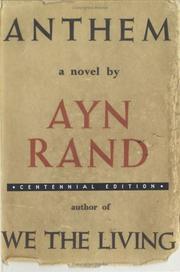
Anthem
2,256-word summary 10 min read 256 pages in the book
- First published
- 1938
- Publisher
- NAL
- Pages
- 256
- ISBN
- 9780452286351
Reading options
What's inside (8 sections)
Growing Up Where I Is Forbidden and We Is Law
I came to Anthem late, after hearing it dismissed as a thin warm up for bigger books, and I was surprised by how fast and strange it felt, like a fable told in a whisper that keeps getting louder. The story is set in a future city after some great collapse, where the word I has been erased and people speak only as we. Our narrator was born as Equality 7-2521, a tall curious boy in a society that assigns every child a job at fifteen and punishes difference as sin. He loved science and wanted to be a Scholar, but the Council of Vocations gave him the job of Street Sweeper because he was too smart and too tall, and that tells you everything about how this world works.
Life is run by councils, the Council of the Home, the Council of Scholars, the World Council, all repeating the Great Truth that men are one and all men are brothers and all men exist only for each other. Children are raised in Homes, sleep in dormitories, eat in halls, work to bells, and are taught that to be alone is evil and to think for yourself is the worst transgression. Equality 7-2521 tries to obey, but he cannot stop asking why the light bulbs flicker, why iron rusts, why the sky is blue in a way no slogan explains. His best and only real friend is Union 5-3992, a dull sweet boy, and later International 4-8818, an artist who laughs loudly and draws things no one asked for. Rand uses those friendships to show that even in total sameness, people still leak out around the edges.
What hooked me was the voice. Equality writes on stolen paper in a stolen tunnel, calling himself we even when he means I, apologizing for his crimes of thinking. He describes washing streets, bowing to duplicates, watching the Scholars recite approved truths. It is creepy not because of torture chambers but because of smiles and songs about brotherhood. My fair criticism is that Rand paints the society so flatly evil and stupid that it sometimes feels like a straw man, with no believable reason anyone would stay loyal except fear. But as a mood piece about a bright kid suffocating, it works. You feel his hunger to know, his shame at hungering, and his secret pride when he figures something out.
The Secret Tunnel and the Light No Council Made
The heart of the first half is Equality's secret, and I loved how physical Rand makes it. While sweeping near the edge of the city, he finds an old subway tunnel from the Unmentioned Times, the lost world before, with rusted rails and a metal grate. He starts sneaking there for three hours each night during the daily Social Recreation hour, telling himself he is resting while he actually experiments. He steals candles, wire, chemicals, paper, teaching himself from salvaged books. Union 5-3992 once followed him and he threatened him to keep quiet, which haunts him because hurting a brother is sin, but curiosity wins.
In that damp dark, Equality rediscovers electricity. He builds a glass box with wires that glows when current runs through it, basically a light bulb, and he is ecstatic in a way that feels almost religious. He names it the power of the sky, and he imagines bringing it to the Council of Scholars to earn forgiveness and become a scientist. There are great tactile details, burnt fingers, cracked glass, the smell of copper, the way the light looks greenish on wet stone. He writes about cradling the box like a child. For a short book, Rand slows down here nicely and lets invention feel joyful rather than just ideological.
He also uses the tunnel to write his confession, which is the book we are reading. He admits he stole, lied, thought alone, and he expects punishment but cannot stop. The tension is simple and effective. Every night he risks being missed at roll call, every day he sweeps with his hands raw while dreaming of filaments. A criticism I have is that his scientific progress is absurdly fast for a street sweeper with scraps, and Rand skips how he learned so much so quickly. Still, I forgave it because the tunnel is less a lab and more a symbol for a mind allowed three hours of freedom. Anyone who has ever stayed up late to work on something forbidden while the house sleeps will recognize that buzzing tired happiness.
Liberty 5-3000 and Learning to Look Straight
No retelling of Anthem works without Liberty 5-3000, the girl Equality nicknames the Golden One, and from his eyes she is less a full person at first than a shock of aliveness. He sees her working in the fields, tall with golden hair and defiant eyes, and she looks back without lowering her gaze, which is a crime of its own because women must not look at men except at mating time. They meet at a hedge, exchange few words, and fall into a silent understanding. He calls her beautiful and proud, she calls him Equality 7-2521 in a voice that sounds like disobedience.
Their courtship is wonderfully odd because they have no language for desire except slogans. They cannot say I love you, so they say we think of you, we wish to be with you. They meet in the woods at dusk, touch hands, learn each other's scars. Equality gives her a new name in his head, the Golden One, and later she gives him a name too, the Unconquered. It is romantic and also sad, because you see two people trying to invent intimacy with a vocabulary designed to prevent it. Rand, for all her cold reputation, writes these scenes with real heat, the wheat bending, the sweat, the fear of being seen.
My criticism, and it is a big one, is that Liberty stays mostly an ideal rather than a person for much of the book. She is brave and beautiful and loyal, but we learn little about what she thinks when Equality is not around. She follows him into exile without much debate, which can read as devotion or as thin characterization depending on your patience. I lean toward seeing it as intentional in a fable about awakening, but I wished for one scene of her alone, angry or curious on her own terms. Still, the image of her standing straight while others bow stuck with me. In a world that demands bowed heads, eye contact becomes revolution.
Rejection by Scholars and Flight Into the Forest
The turning point Equality hoped would save him destroys his hope and frees him, and I found this stretch both satisfying and a little rushed. He finally carries his glass box to the World Council of Scholars, interrupting their meeting in the great hall. He begs them to see, demonstrating how the wire glows, explaining how this light could end candles and toil. He expects awe and pardon. Instead the Scholars react with horror and rage. They say his invention would ruin the Candle Department and cause unemployment, that it is not in the approved plans for the next thousand years, that a single man must not presume to invent. They vote to destroy the box and punish him. One Scholar tries to claim the discovery for the collective, which tells you Rand's view of committees in one ugly beat.
Equality smashes a window and runs, stealing food, sprinting past the city edge into the Uncharted Forest, where no one goes because legend says monsters and death wait. The chase is brief, the Councils send searchers who will not enter deep woods, and then he is alone for the first time in his life. The forest descriptions are some of the best writing in the book, green light, moss, birds that do not sing in unison, spiders building single webs. He expects to starve and instead feels joy so large it scares him. He laughs out loud, sleeps without a bell, drinks from a stream with his hands. For a man taught that solitude is death, discovering that solitude is life lands hard.
Liberty follows him, having left the city on her own, cutting through fields and thorns to find him. Their reunion is fierce and awkward, two rule breakers with no rules to replace the old ones. He worries he has doomed her, she says she would rather die with him than live caged. They agree to keep walking deeper, away from bells and lists. A fair criticism is that Rand makes escape look too easy, with no real pursuit or survival struggle, which lowers stakes. But I think she cares less about realism than about the inner flip. The forest is not just trees. It is the first place where no one watches, and that is enough to start remaking a soul.
The Old House and the Word That Was Lost
Lost in the forest, Equality and Liberty stumble on a house from the Unmentioned Times, and this is where the book shifts from escape story to mystery solved. The house is small, made for one family, with mirrors, books, strange clothes, a bathroom with running water that puzzles them. They explore room by room, touching a table made for two, a bed made for two, wondering why anyone would need so much space for so few people. Equality finds a library with books in a forbidden language, and because he has taught himself to read old script, he stays up nights sounding out words while Liberty hunts and cooks and guards.
Here he makes the discovery that gives the book its famous lift. He learns the word I, singular, first person, the word that was erased. He puzzles over books that say I think, I will, I love, and slowly understands that those ancients knew something his world denied, that each person is separate and whole. He practices saying I in the mirror, watching his own face move, feeling terror and delight. He reads about individual rights, invention, art made for joy. He realizes the Great Truth was a lie and the small word was the key. Rand stages this as pure euphoria, pages of him repeating I, my, mine, mine to own the sky and the earth.
Liberty gets her own renaming here too. He names her Gaea, after a mother of gods in old books, and she names him Prometheus, after the bringer of fire. They vow to build a new life and have children who will never be numbered. I love the house scenes because they are concrete, opening drawers, striking matches, laughing at a toaster, and they let ideas live in objects. My criticism is that Rand treats the past as uniformly glorious and the present as uniformly dark, with no curiosity about why the old world fell or what its flaws were. It is history as moral cartoon. Yet as Equality reads by candlelight and whispers I to himself, I felt the thrill anyway, like watching someone remember how to breathe.
Prometheus, Gaea, and the Promise of Ego
The ending is short, loud, and divisive, and I want to be honest about both why it thrilled me and why it bothered me. Equality, now calling himself Prometheus, writes a final manifesto declaring that he will rebuild civilization on the principle of the ego, the sacred I. He says he will steal back other outcasts, especially other thinkers, and raise a new city with electric lights, with homes for single families, with work chosen not assigned. He imagines future wars against the old city and is confident his free men will win because they will love their own lives too much to surrender them. He ends by praising the ego as god, as holy, as the source of all good.
As rhetoric, it soars. Lines like I am, I think, I will hit with drumbeat force after a whole book of we. Rand means ego not as cruelty but as self ownership, the right to think and create and love without permission. Prometheus vows that Gaea will be free too, that their son will be taught to say I and to bow to no council. There is real power in that promise after watching them starve for names. I underlined passages about owing nothing to men except through choice, because even if I do not buy Rand's whole system, the hunger for consent feels human.
As philosophy, it is stark and lonely in ways Rand does not examine. Prometheus shows little interest in kindness except as trade, little grief for the decent people left behind like International 4-8818, little wonder about how a society of pure egos would handle the sick or the slow. Gaea mostly smiles and agrees. The final pages repeat ego many times, which can feel hectoring after such a delicate start. Still, I closed the book moved rather than converted. Anthem works best for me not as a manual but as a cry from someone who felt erased. Prometheus raising his light in the woods, with Gaea beside him and a baby coming, is an image of beginning, not a finished city. I can hold both thoughts, that the book is unfair to community and that its joy in thinking alone is real and worth protecting.
I am. I think. I will.
FAQ
Why is the word I forbidden?
Councils erased it to enforce collectivism, teaching that selfhood is sin and only we exists.
Who is Liberty 5-3000?
She is the brave field worker Equality loves, later renamed Gaea, who follows him into exile.
Similar books
Do Androids Dream of Electric Sheep?
Bounty hunter Rick Deckard retires escaped androids in ruined San Francisco while doubting what empathy still means.
2,841-word summary · 13 min read
The Fountainhead
An architect who will not copy faces a rival who pleases everyone, a lover who fears the world, and a trial over dynamite.
2,988-word summary · 13 min read
Atlas Shrugged
Railroads strain under rules as Dagny fights to keep trains running and find a missing inventor.
2,001-word summary · 9 min read
Ubik
A psychic agency crew dies in a blast and reality decays unless a spray called Ubik saves them.
2,674-word summary · 12 min read
Calvin and Hobbes
Bill Watterson's first collection introduces Calvin and Hobbes, a wild six-year-old and his tiger friend, in strips full of imagination and mischief.
2,972-word summary · 13 min read
The Great Divorce
A bus from Hell to Heaven tests whether ghosts will trade pride and habit for joy.
2,045-word summary · 9 min read
Inferno
Dante, lost at thirty-five, follows Virgil down through nine circles of Hell, from Limbo to the ice, and climbs back toward the stars.
3,131-word summary · 14 min read
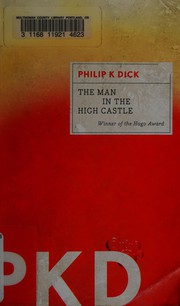
The Man in the High Castle
In a 1962 America split between Japan and Germany, an antiques dealer, a craftsman, and a judo teacher cross paths over a banned novel claiming the Allies won,…
2,317-word summary · 10 min read
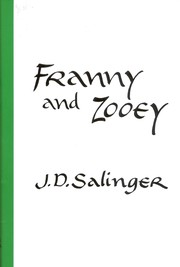
Franny and Zooey
Two Glass family siblings wrestle with faith, phoniness, and breakdown across a weekend visit and a long phone call home.
2,286-word summary · 10 min read
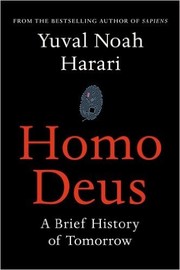
Homo Deus
After ruling the world, humans chase upgrades and delegate feeling to systems that know patterns.
2,013-word summary · 9 min read
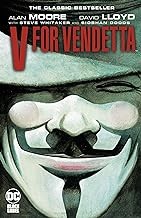
V for Vendetta
A masked rebel stalks fascist London while lost girl Evey finds her nerve, in Alan Moore and David Lloyd's 1988 DC graphic novel.
2,991-word summary · 13 min read
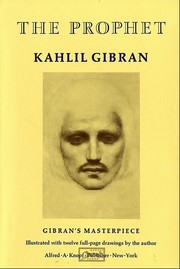
The Prophet
A prophet delayed twelve years answers his city on love, work, sorrow and freedom before his ship sails.
2,852-word summary · 13 min read
The Holy Bible: King James Version
The 1611 King James Bible in a 1,472-page Thomas Nelson edition: from Genesis to Revelation, law, prophets, Gospels, and letters.
2,904-word summary · 13 min read
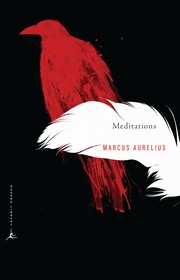
Meditations
Marcus Aurelius, Roman emperor, reminds himself in Greek on campaign: mind your thoughts, do your work, accept nature, face death calmly.
2,827-word summary · 13 min read
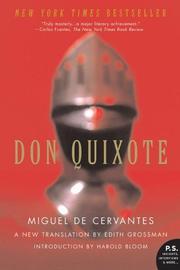
Don Quixote
A poor gentleman maddened by knight romances rides out as Don Quixote with Sancho Panza, until the world answers back.
3,785-word summary · 17 min read
Candide
Voltaire's Candide follows a sheltered boy across earthquakes, wars, and Eldorado as his tutor's sunny optimism falls apart. Short, savage, and still funny.
2,614-word summary · 12 min read
Brave New World
Huxley's Brave New World retold: hatcheries, soma, Bernard and Lenina, John the Savage, and the lighthouse.
2,513-word summary · 11 min read
The Hunger Games Tribute Guide
The official 2012 companion to the first Hunger Games film profiles all twenty-four tributes and walks through the reaping, training, and interviews.
2,092-word summary · 9 min read

The Courage to Be Disliked: The Japanese Phenomenon That Shows You How to Change Your Life and Achieve Real Happiness
A philosopher and an angry young man argue over five nights about Adlerian psychology, trauma, approval, and the freedom to be disliked.
2,054-word summary · 9 min read
Rosencrantz and Guildenstern Are Dead
Stoppard's 1966 play retells Hamlet from the wings, where two minor courtiers wait, joke, and walk toward a death they cannot see.
2,021-word summary · 9 min read
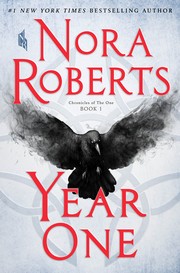
Year One
A plague released in Scotland kills most of humanity, and the survivors discover magic, build a town, and wait for a child who may save them.
2,029-word summary · 9 min read
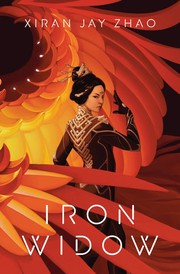
Iron Widow
Wu Zetian enlists to avenge her sister, kills her pilot, and becomes an Iron Widow in a mecha Huaxia where the machines are built to kill women.
2,444-word summary · 11 min read
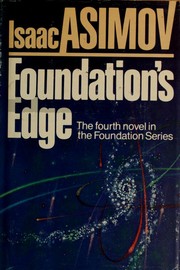
Foundation's Edge
Exiled councilman Golan Trevize hunts for the Second Foundation and the lost world of Earth, and finds a planet with one mind waiting to change the galaxy.
2,335-word summary · 10 min read

Fathers and Sons
Arkady brings the nihilist Bazarov home to his father's estate, and a generational argument turns into love, a duel, and an early death.
2,192-word summary · 10 min read
The House of the Scorpion
A clone raised in a drug lord's poppy fields learns what he was made for and chooses what to do with the life he was given.
2,527-word summary · 11 min read
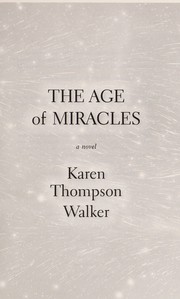
The Age of Miracles
A California girl grows up while the Earth's rotation slows, and ordinary adolescence continues alongside slow catastrophe.
2,417-word summary · 11 min read

Four Thousand Weeks: Time Management for Mortals
Oliver Burkeman turns the whole productivity project on its head, arguing that a human lifespan of roughly four thousand weeks is not a problem to optimize…
2,447-word summary · 11 min read
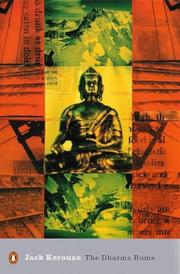
The Dharma Bums
Ray Smith rides freight trains, climbs Matterhorn Peak and argues about Zen with the poet Japhy Ryder in Kerouac's 1958 road novel.
2,729-word summary · 12 min read
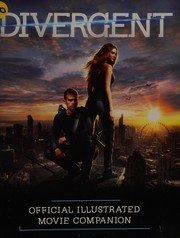
Divergent: Official Illustrated Movie Companion
An oversize behind-the-scenes guide to the 2014 Divergent film, with casting stories, costume and set design, and scores of photos.
2,524-word summary · 11 min read
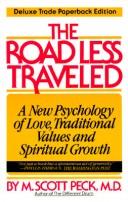
The Road Less Traveled: A New Psychology of Love, Traditional Values and Spiritual Growth
M. Scott Peck argues that maturity begins with accepting difficulty, then builds discipline, love, and spiritual growth through honest, often painful work.
2,200-word summary · 10 min read