
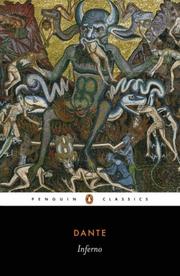
Inferno
3,131-word summary 14 min read 576 pages in the book
- First published
- 1320
- Publisher
- Penguin Classics
- Pages
- 576
- ISBN
- 9780140448955
Reading options
What's inside (8 sections)
I put off reading Inferno for years because it sounded like homework dressed up as a poem. A fourteenth century Italian writer walks through Hell with a Roman poet and meets people I never heard of. That was my picture. Then a friend lent me the Robin Kirkpatrick translation, the Penguin Classics paperback from 2006 with Italian on one side and English on the other, all 576 pages of introduction, poem, and notes. I told myself I would read a few cantos. I finished the whole descent in about a week, a bit each night, and kept going back to the notes the next morning.
Some context helps before the wood. Dante Alighieri wrote in Italian in the years around 1308 to 1320, shortly before his death in 1321. The section called Inferno is the first part of his long poem, the Comedy that later readers named the Divine Comedy. The other two parts, Purgatorio and Paradiso, follow the climb after this book ends. Scholars still argue about exact dates for each section, and the poem circulated in parts before any printed edition, which came much later in 1472. I treat Inferno here as a book you can read alone, because the journey down has its own shape and its own exit back to the stars. The facts in this retelling follow the Kirkpatrick Penguin Classics edition, ISBN 9780140448955.
The poem is set in the year 1300, when Dante the character is thirty-five, halfway through the biblical span of seventy years. That is the famous opening situation. He wakes to find he has wandered from the true path and stands before a dark wood. He tries to climb a sunlit hill and is blocked. That is where the story starts moving.
Lost in the wood
Dante describes himself as lost, frightened, and ashamed. He sees a hill with light on it and walks toward it, hoping for a simple way out. Three animals cut him off. A spotted leopard circles him. A lion comes on with hunger in its face. A thin she-wolf drives him back down with the others behind her. Readers have argued for centuries about what each beast stands for, and Kirkpatrick lays out the main views without forcing one. Lust, pride, greed. Florence, France, the papacy. The poem lets them work as fear itself too, the way trouble arrives in threes when you are already lost.
Then Virgil shows up. Not a symbol at first, just a man in the waste. Dante recognizes him as the Roman poet whose lines he studied, the author of the Aeneid. Virgil says he was sent. A lady called Beatrice saw Dante struggling from above and asked for help. She in turn was asked by Saint Lucy, who was moved by the Virgin Mary. That chain matters. Dante is not saved by his own cleverness. He is noticed, pitied, and sent a guide.
Virgil warns that the she-wolf will keep blocking the hill. The only way past is a longer way down. They must go through Hell and then up the mountain of Purgatory before Beatrice herself can lead Dante higher. Dante agrees at once, then doubts himself two pages later, which felt honest to me. He asks what makes him worthy of such a trip. Virgil answers with patience rather than flattery. He tells Dante to stop hesitating. They set off as evening falls.
I found these first two cantos slower than expected and then, on rereading, the best written. The fear is physical. Dante sweats, backtracks, talks himself out of courage, and needs a firm hand. If you have ever agreed to a hard thing at night and woken up scared, you know the mood.
The gate, the crowd, and the quiet field
The gate of Hell carries an inscription Dante reads with dread. In paraphrase it says that this place was made by justice, power, and love working together, and that anyone entering should give up hope. Virgil takes his hand. He tells him not to be afraid, that fear shows he has understood the weight of the place, and leads him inside.
The first region is not one of the nine circles. It holds the people who never chose at all, the ones who in life would not stand for good or evil but looked out only for themselves. They chase a blank banner now, stung by wasps and flies, weeping and bleeding while worms drink the blood at their feet. Dante recognizes no one here with joy. Virgil says to look and pass on. That short command sets the tone for much of the book. Look closely, feel something, keep walking.
Then comes the river Acheron and the ferryman Charon, white haired and furious, who tries to turn Dante back because he is alive. Virgil silences him with the line he will repeat all through Hell. This journey is willed where will cannot be questioned. Charon gives in. A great wind and flash of light knock Dante out, and he wakes on the other side.
Circle one is Limbo. It is green, almost calm, with a castle and light. Here are the unbaptized and the virtuous who lived before Christ, plus great poets and thinkers. Homer, Horace, Ovid, and Lucan walk together and welcome Virgil back as one of their own. Dante feels honored to be counted sixth in that group for a short stretch. He sees Aristotle and Plato, Saladin, and many others. There is no torture here, only sighing and the absence of the light they longed for. I read Limbo as the saddest easy punishment in the book. Nobody screams. The loss sits in the air.
Circle two drops the calm. Minos the judge sits at the entrance, wrapping his tail to show each soul which circle it must fall to. Inside, a black storm drives the lustful around without rest. Here Dante meets Paolo and Francesca. She was married to one man and loved his brother, and the two were killed together. She tells how reading a romance about Lancelot loosened their restraint, and how love brought them to one death. Dante faints from pity. Teachers often point to this scene as the moment Dante the pilgrim still feels too much with sinners, and Virgil will correct that softness later. On a first read I simply felt the wind. Two young people clinging together in noise, trying to speak.
Mud, stones, anger, and a walled city
Circle three punishes gluttony. The rain never stops, cold and filthy, mixed with hail and black water. Souls lie in mire under the paws of Cerberus, the three headed dog who barks and claws. Dante talks with a Florentine called Ciacco, whose nickname means pig. Ciacco predicts trouble for Florence, divided between rival factions, and asks Dante to remember him above. Dante promises he will. The canto mixes low comedy and civic grief in a way that repeats through the book. Food becomes mud. Appetite becomes weather.
Circle four holds the avaricious and the wasteful. They roll huge stones at each other, crashing and shouting insults about spending and hoarding. A horned figure called Plutus barks nonsense at the poets. Virgil answers him sharply and leads Dante on. Few modern readers linger here. The image is clear enough. People who measured life by money now push weight forever.
Circle five is the river Styx, a marsh of black water. The wrathful strike each other above the surface while the sullen gurgle below it, choked on mud. Dante meets Filippo Argenti, a proud Florentine enemy of his family side, who grabs the boat. Dante surprises me here by turning hard. He tells Virgil he wants to see Filippo punished, and Virgil praises him for it. The gentle pity of circle two has shifted toward approval of justice. That change bothered me more than the mud. I kept asking whether Dante the writer wants me to approve too, or to notice how fast disgust turns into cruelty.
Then the city of Dis rises ahead, with minarets glowing red and walls guarded by fallen angels. The demons shut the gate. Virgil tries words and fails. The Furies appear on the tower and threaten to call Medusa to turn Dante to stone. Virgil covers Dante's eyes with his own hands. Just in time, a messenger from Heaven crosses the marsh, touches the gate with a wand, and walks in without looking back. The door swings open.
Circle six lies inside Dis. It is a field of burning tombs where heretics suffer, especially those who denied that the soul lives on. Dante speaks with Farinata, a great Florentine commander from the opposing party, who rises from his tomb with pride intact. While they talk, another soul, Cavalcante, asks after his son, who was Dante's friend and fellow poet. Dante's hesitant answer makes the father think the son is dead, and the father falls back weeping. Farinata then predicts Dante's own exile. This scene stayed with me longer than the monsters. Two fathers in fire, one proud of his city, one sick with love for his son, both fixed in place while politics roars around them.
Three kinds of violence
Virgil pauses on a cliff and explains the shape of lower Hell, because the smell rising up is strong and Dante needs the map. Fraud, he says, is worse than violence because it corrupts trust, so the lowest circles will hold cheats and traitors rather than brawlers. Then they walk down.
Circle seven divides into three rings. The outer ring holds those violent against others. They boil in a river of blood called Phlegethon, guarded by centaurs with bows. Dante sees tyrants and murderers lifted by depth according to guilt. A centaur named Nessus carries Dante across one stretch. The image is blunt and hard to forget. Blood they spilled becomes the bath they keep.
The middle ring holds the violent against themselves. Suicides have become gnarled trees in a wood, fed on by Harpies that tear leaves and make them bleed words. Dante talks with Pier della Vigna, once a trusted minister of the emperor Frederick II, who killed himself after falling from favor and being blinded and imprisoned. He explains that at the final judgment these souls will not rejoin their bodies but will hang them on the trees, since they threw life away. Around them run the violent against property, chased by dogs. I found this ring painful in a different way from the others. The theology is strict. The human story underneath, shame and service and a fall from court favor, keeps breaking through.
The inner ring holds the violent against God, nature, and work. Blasphemers lie on burning sand while fire falls like snow. Among them is Capaneus, who fought against Thebes and still shouts defiance at heaven. Virgil calls his stubbornness its own punishment. On the same plain walk those violent against nature, moving without rest. Here Dante meets his old teacher Brunetto Latini, who taught him how to write and how to live in the city. The meeting is tender and strange. Brunetto runs alongside while Dante bends down to speak, and they talk of Florence and of Dante's future. Dante shows him deep respect even as the poem leaves him in Hell. Scholars debate what exactly put Brunetto here, and the poem does not clear it up in plain terms. I read the scene as Dante holding two truths at once. Love for a teacher. Refusal to excuse him.
At the edge the poets find the monster Geryon, with the face of an honest man and the body of a serpent marked like a carpet. Fraud wears a kind face here. Virgil sends Dante on alone for a short stretch to see the usurers, who sit under the rain of fire with purses around their necks stamped with family crests. Then Dante returns, and they ride down on Geryon's back into the great ditch below. The flight is one of the few moments of open wonder. Wind in the face. The beast swimming through air in slow circles.
The long ditch of fraud
Circle eight is called Malebolge, the evil pouches. Picture a vast funnel cut into ten concentric trenches joined by rock bridges. Here are those guilty of fraud against people who had no special reason to trust them. This is the longest stretch of the poem, full of noise, jokes, and horror. Dante the writer clearly enjoys the inventiveness and also wants the reader to feel tired by the end. Cheating takes many forms, so the punishment keeps changing shape.
The first trench holds panderers and seducers, driven by horned demons with whips. Dante names men who sold women into lust, including Jason of the golden fleece story. The second holds flatterers sunk in filth, a crude image for words that once sounded sweet. The third holds simoniacs, churchmen who bought and sold holy offices. They hang upside down in baptismal fonts with fire on their feet. One pope, Nicholas III, mistakes Dante for his successor Boniface VIII and then learns his error. He predicts that Boniface and later Clement V will join him. Dante gives a fierce speech here against greed in the church. Virgil looks pleased and carries him on.
The fourth holds sorcerers and diviners, walking with heads twisted backward because they tried to see too far ahead. Dante weeps at their twisted bodies. Virgil rebukes him. Pity for just punishment, he says, is not kindness. That rebuke lands hard if you, like me, had been weeping along with Dante for several cantos.
The fifth holds barrators, sellers of public office, stewing in boiling pitch while demons with hooks, the Malebranche, guard them. This is the most comic section, almost a play. The demons argue, tell lies about bridges, and fight among themselves. Dante and Virgil escape when two demons brawl and fall into the pitch. The sixth holds hypocrites in heavy lead cloaks painted gold outside, trudging forever. Caiaphas, who advised the execution of Jesus, lies staked to the ground while the rest step on him. The seventh holds thieves among snakes, in transformations that shocked me. Men catch fire and fall to ash, then rise again. Bodies merge with serpents, split, change color, lose shape. Identity itself becomes unstable, which fits theft. The eighth holds counselors of fraud inside tongues of flame. Here Dante meets Ulysses, the Odysseus of Greek story, who tells of his last voyage past the limits set for men until the sea closed over him. The speech is grand and sad. Curiosity carried him. It also sank his crew.
The ninth holds sowers of division, cut open by a demon's sword as they walk, healing only to be cut again. Among them is Bertran de Born, carrying his severed head like a lantern because he turned father against son. The tenth holds falsifiers, sick with fever and thirst, scratching scabs and quarreling. Master Adam, who counterfeited coin, burns with thirst and trades insults with a liar. The noise is ugly on purpose. Words, like coins, were debased.
Fair criticism belongs here because this circle tests patience. The inventiveness is real, but the pattern repeats. Walk, meet sinner, hear name and city, hear prophecy about Florence, move on. Modern readers may also feel the weight of old hatreds. Dante settles scores with living enemies and rival towns. The notes help, but nobody reads 10 trenches without skimming somewhere. I found it best in two sittings with the map in front of me, treating each trench like a short story rather than pushing straight through.
Ice at the bottom and the way back to light
After fraud comes the well of giants. Huge figures stand waist deep in stone, including Nimrod, whose speech no one can parse, and Antaeus, who lifts Dante and Virgil down to the last circle. The poets thank him the way travelers thank a dangerous ride. Then the bottom opens.
Circle nine is not fire. It is the frozen lake Cocytus, where traitors sit in ice. The cold grows with the depth of betrayal. In Caina, named for Cain, those who betrayed kin stand frozen to the neck. In Antenora, betrayers of country and party sit deeper. Dante meets Bocca, who betrayed Florence, and refuses to name himself until another soul shouts it out. Dante grabs his hair in anger. The pilgrim who fainted for lovers now pulls hair from a traitor. The poem wants you to notice the hardening.
In the same region Dante finds Count Ugolino gnawing the head of Archbishop Ruggieri. In life Ruggieri locked Ugolino and his sons in a tower to starve. Ugolino's story of watching his children die is one of the most quoted passages, and Kirkpatrick's notes track the historical record against the poem's version. I read it slowly. Horror sits beside grief here without easy moralizing.
In Ptolomea, betrayers of guests lie on their backs with tears freezing over their eyes. Dante meets Friar Alberigo, whose body, he learns, is still alive above while his soul already fell here, a grim idea the poem offers for the worst betrayals. Then Judecca, named for Judas, holds those who betrayed masters and benefactors, sealed fully in ice.
At the center stands Lucifer, huge and silent, waist deep in ice, with three faces and three mouths. In each mouth he chews one sinner. Judas the betrayer of Christ in the middle, Brutus and Cassius, betrayers of Caesar, at the sides. His wings beat and freeze the lake further. This is the farthest point from warmth and love.
Virgil tells Dante to climb. They grip Lucifer's frozen hair and turn at the center of the earth, so that down becomes up. They follow a hidden path beside the river Lethe, the stream of forgetting, and climb through darkness until they come out under open sky. The last line looks up. After all that weight, Dante sees the stars again.
Should you read it now? I would say yes, with conditions. Read it for the people, not the system. Remember Francesca in the wind, Farinata rising in his tomb, Brunetto running beside you, Ugolino with his terrible hunger, and the sudden quiet when ice replaces fire. Forgive yourself for skipping some political passages on a first pass. Use the notes when names pile up. Dante can be harsh, repetitive, and bound to his own century's judgments about faith, cities, and desire. He is also direct about fear, pity, anger, and hope in ways that still feel present. I closed the book thinking less about Hell as a place and more about habits. Small choices practiced daily become the road. That idea followed me out, past the gate, under the same stars.
FAQ
When was Inferno written and which edition does this summary follow?
It was written in Italian around 1308 to 1320 and is the first part of the Comedy, later called the Divine Comedy. This summary follows the Robin Kirkpatrick Penguin Classics translation of 2006, a 576-page paperback with facing Italian and English text.
Is Inferno a standalone book or part of a series?
No. It is the first of three parts, followed by Purgatorio and Paradiso. It reads on its own because the journey down and back out has a clear ending, but the larger story continues upward.
What is written on the gate of Hell?
The gate inscription warns those who enter to give up hope. You meet it in the opening cantos before Charon ferries souls across Acheron.
Similar books
The Divine Comedy
Lost, guided by Virgil then Beatrice, Dante crosses Hell, climbs Purgatory, and rises to light.
2,199-word summary · 10 min read
The Epic of Gilgamesh
Gilgamesh loses Enkidu, then seeks endless life past the flood.
2,246-word summary · 10 min read
God Emperor of Dune
Worm god Leto II rules 3500 years to force humanity free through his Golden Path.
2,006-word summary · 9 min read
Franny and Zooey
Two Glass family siblings wrestle with faith, phoniness, and breakdown across a weekend visit and a long phone call home.
2,286-word summary · 10 min read
The Prophet
A prophet delayed twelve years answers his city on love, work, sorrow and freedom before his ship sails.
2,852-word summary · 13 min read
The Holy Bible: King James Version
The 1611 King James Bible in a 1,472-page Thomas Nelson edition: from Genesis to Revelation, law, prophets, Gospels, and letters.
2,904-word summary · 13 min read
The Secret of the Nagas
Shiva hunts the Naga who attacked Sati, discovers her hidden twin sister and lost son, and follows the trail to the Naga capital of Panchavati.
2,442-word summary · 11 min read

Foundation's Edge
Exiled councilman Golan Trevize hunts for the Second Foundation and the lost world of Earth, and finds a planet with one mind waiting to change the galaxy.
2,335-word summary · 10 min read
Letters to a Young Poet
Rilke's ten letters to a young officer cadet refuse easy criticism and ask whether he must write, offering patience and solitude as a way of life.
2,530-word summary · 11 min read
By the River Piedra I Sat Down and Wept
Pilar, 29, meets her childhood friend again in Madrid and finds a rumored miracle worker. One winter week through the Pyrenees to the river Piedra, and the…
2,845-word summary · 13 min read
Ubik
A psychic agency crew dies in a blast and reality decays unless a spray called Ubik saves them.
2,674-word summary · 12 min read
Leaves of Grass
Free verse songs of self, America, bodies and democracy.
2,240-word summary · 10 min read

God Is Not Great
Hitchens argues religion poisons life across history and texts.
2,545-word summary · 11 min read
A Canticle for Leibowitz
After nuclear war, monks save books across centuries while the world rebuilds and falls again.
2,381-word summary · 11 min read
Sonnets & Poems
154 sonnets plus Venus and Adonis and other poems on time, love, and fading beauty.
2,341-word summary · 10 min read
A Column of Fire
Spies and lovers cross Tudor England as Mary and Elizabeth fight for the crown and faith.
2,029-word summary · 9 min read

The Night Before Christmas
A father watches St Nicholas arrive with reindeer on Christmas Eve in classic poem.
1,986-word summary · 9 min read
The Aeneid
Trojan Aeneas flees burning Troy for Italy, losing Dido and friends before warring to found a line that becomes Rome.
2,080-word summary · 9 min read
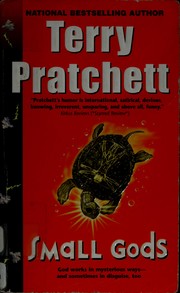
Small Gods
God Om trapped as a tortoise must convince novice Brutha to save Omnia from its own church.
2,063-word summary · 9 min read
Contact
A radio astronomer catches prime numbers from Vega, helps build a strange machine, and returns with no proof but static.
2,763-word summary · 12 min read
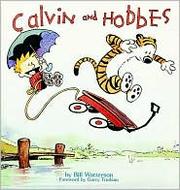
Calvin and Hobbes
Bill Watterson's first collection introduces Calvin and Hobbes, a wild six-year-old and his tiger friend, in strips full of imagination and mischief.
2,972-word summary · 13 min read

Thus Spoke Zarathustra
A prophet comes down from ten years alone to preach the overman after the death of God.
1,983-word summary · 9 min read
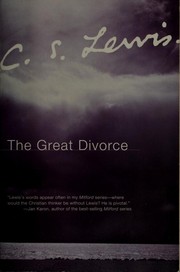
The Great Divorce
A bus from Hell to Heaven tests whether ghosts will trade pride and habit for joy.
2,045-word summary · 9 min read
Anthem
A sweeper finds a tunnel, builds light, flees with Liberty, and rediscovers the lost word I.
2,256-word summary · 10 min read
Paradise Lost
Blind Milton's epic of Satan's revolt, Adam and Eve's fall, and their hard walk out of Eden.
2,963-word summary · 13 min read
The Canterbury Tales
Pilgrims riding to Canterbury trade bawdy, holy, and sly tales while the Host keeps score at the Tabard Inn.
2,002-word summary · 9 min read
The Tell-Tale Heart and Other Writings
Mad narrators, Dupin puzzles, mournful poems, and Pym in one Bantam collection.
2,333-word summary · 10 min read
The God Delusion
Dawkins argues a personal God almost certainly does not exist, then traces religion and morals to evolution.
3,426-word summary · 15 min read
The Fountainhead
An architect who will not copy faces a rival who pleases everyone, a lover who fears the world, and a trial over dynamite.
2,988-word summary · 13 min read

The Complete Works of Edgar Allan Poe
The full Poe shelf in one volume: mad narrators, rotting houses, Dupin, and the Raven.
2,183-word summary · 10 min read