
Reading options
What's inside (8 sections)
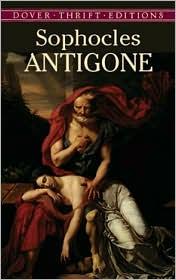
I read this one straight through on a couch with rain hitting the windows, the Dover Publications 1993 edition which is only 64 pages (ISBN 9780486278049) and fits in a jacket pocket. It was first performed around 441 BC in Athens, and it still feels short and fast for something that old. No slow build. You open after a war, with two brothers dead in front of the palace gates, and a new king already making speeches. I expected something distant and formal. It was more like walking into a family fight that had already started.
To get oriented you need the backstory Sophocles assumes his audience knew. Antigone and Ismene are daughters of Oedipus, the king who unknowingly killed his father and married his mother. After Oedipus fell, his sons Eteocles and Polyneices agreed to share Thebes year by year. Eteocles refused to step down. Polyneices brought an Argive army to take the city back. In one day of fighting the two brothers killed each other. That is where the play starts. The city is saved but bleeding, the palace is in shock, and their uncle Creon has taken power because the male line has wiped itself out.
What struck me right away is how little mourning there is allowed to happen. There is no quiet time to bury everyone. Politics fills the space immediately. Creon has to prove he is in control, and he does it with a burial law. That decision drives everything after.
The City After the Battle and Creon's First Speech
Thebes is supposed to feel relieved in the opening chorus, but it reads more exhausted than joyful. The chorus is made up of older Theban men, elders who survived the siege. They sing about the Argive attack breaking apart, about the dust and shouting and shields clashing at the seven gates. It gives you the scale. This was not a small skirmish. An entire foreign army just tried to burn the city.
Then Creon walks in and acts like a man who has been waiting to give this speech. He says a king can only be known by how he rules in hard times, which sounds reasonable until you hear the order attached to it. Eteocles, who fought for Thebes, will get full burial rites with everything due a hero. Polyneices, who brought the enemy, will be left unburied where he fell. No mound, no washing, no prayers. Birds and dogs can take him. Anyone who tries to bury him will be stoned to death in public.
On paper Creon frames this as loyalty to the city. He keeps repeating that he will never put a friend or family member above Thebes. He wants the elders to back him. The chorus mostly nods along, though you can feel them hedging. They say, in effect, you have the power, do what you want. That passivity matters later.
My honest criticism here is that Creon comes on too polished and too rigid at once. Sophocles wants him to sound like a statesman and a frightened new ruler. Sometimes the statesman part wins and he sounds almost sensible about keeping order after civil war. Sometimes he just sounds like he is daring anyone to disobey. I found myself wishing for one private moment where he admitted fear. Without it, his later change of mind feels a little abrupt, even if the plot needs it.
Antigone and Ismene Outside the Palace
Before Creon even finishes settling in, Antigone pulls her sister Ismene aside in the early morning dark. This is the scene that sets the sisters against each other, and it is painful because you can see both sides. Antigone has heard the decree. She tells Ismene plainly that she means to bury Polyneices herself, with her own hands if she has to, and asks for help.
Ismene says no, and her reasons are not cowardly in the simple sense. She reminds Antigone that their family is already ruined, that their mother hanged herself, that their father died blind and exiled, that their brothers just killed each other. She says they are women in a city run by men and they cannot fight the law head on. She will keep the secret but she will not help break it. She begs Antigone not to throw her life away.
Antigone answers with a coldness that surprised me. She calls Ismene's caution betrayal. She says she would rather die loved by her brother for doing the holy thing than live by pleasing Creon. She even says Ismene can tell everyone what she plans, that she is not afraid to be caught. The love between them is real, but Antigone draws a line fast and does not soften it.
I kept turning this over because neither sister is written as a villain. Ismene is thinking about survival and obedience in a world that gives young women almost no protection. Antigone is thinking about unwritten laws that she believes are older and higher than any king's order, duties to family and to the gods of the dead. If the play has a flaw here, it is that Antigone leaves Ismene no room to be scared and still loyal. That harshness makes Antigone heroic but also hard to fully embrace. She decides, in one conversation, that moral purity matters more than keeping her last living kin close.
Dust on the Body and the Frightened Guard
The next movement belongs to a guard, and the tone shift is jarring in a way I actually liked once I sat with it. A guard arrives at the palace to report that someone has covered Polyneices with a thin layer of dust and poured funeral drink offerings. Not a full burial, just enough to count in religious terms. The body is still exposed, but the ritual has been started. Someone risked death for a handful of dust.
Creon explodes. The guard is terrified, stammering, saying he did not do it and does not know who did. He describes how the guards drew lots to decide who had to bring the bad news, because no one wanted to face Creon. That small detail tells you everything about the atmosphere in Thebes. People are more afraid of their own king than of the enemy they just defeated.
Creon immediately assumes bribery. He cannot imagine anyone acting from conscience, so he insists someone was paid to defy him. He threatens the guards with torture and death if they do not find the culprit. The chorus tries to float another idea, that perhaps the gods had a hand in it, and Creon snaps at them too. He will not hear that the gods might disagree with him.
Later the same guard comes back, this time dragging Antigone, and his relief is almost comic. He talks fast about how they brushed the dust away, sat waiting, and then saw her during a dust storm sent by the wind, wailing like a bird over the corpse and covering it again and pouring wine three times. The poetry of that image sits oddly next to his chatty self congratulation about escaping blame. Some readers find this guard scene too long and too funny for a tragedy. I see the point. Yet I think the humor does useful work. It shows ordinary people caught under a grand moral clash, just trying not to get killed for doing their jobs.
The Trial in the Palace
This is the core of the play and the reason it is still taught. Creon asks Antigone directly if she did it. She says yes without hiding. She does not beg, she does not lie, she does not say she did not know the law. She knew it and she says the law itself was wrong.
Her argument is famous and still clear after more than two thousand years. Creon is a mortal man. His edict was proclaimed yesterday. The customs about burying the dead come from the gods and have lived as long as humans have. No king can cancel those. To leave a brother unburied is pollution, shame, and impiety. She would rather face death than face the dead with that guilt.
Creon hears only defiance. He calls her proud, wild, like an untamed horse. He says if she gets away with it, then he is not a man and she is. That line reveals how much of this is about status for him. He brings Ismene out too, suspecting she helped, and Ismene, weeping, tries to claim a share of the act. Antigone cuts her off harshly and refuses to let her die for something she did not do. It is generous in one sense and cruel in another, because Ismene is left alive but rejected.
Creon settles on a punishment meant to dodge direct blood guilt. Antigone will not be stoned in public. She will be shut alive in a stone vault outside the city, with a little food, so she can die slowly and the city can claim it did not kill her. The legal trickery is chilling. He wants the result of an execution without the stain of one.
One fair complaint about this section is that Sophocles stacks the deck. Antigone gets the great moral language while Creon gets bluster about discipline and manhood. That makes for thrilling theater but it can make Creon feel less like a person and more like an obstacle. I wished the play gave Creon one strong scene where his fear of another civil war sounded fully human instead of mostly angry. As written, you understand his position but you are not tempted to agree with it for long.
Haemon Argues for the City
Creon's son Haemon enters next, and this is where the private cost starts to show. Haemon is engaged to Antigone. At first he is respectful. He tells his father he will stand by him. Then, carefully, he reports what he hears in the streets. The people of Thebes pity Antigone. They think she did a glorious thing and does not deserve death for it. He urges Creon to bend, to listen, to remember that a tree that never bends in a flood gets torn up by the roots.
Creon hears this as a son lecturing a father and a lover parroting a woman. The argument turns ugly fast. Creon asks if the city tells him how to rule. Haemon answers that a city owned by one man is no city at all. Creon calls him a woman's slave. Haemon says every word Creon speaks is wrong. Creon threatens to have Antigone killed in front of him. Haemon leaves saying Creon will never see him again. It is not a calm debate. It is a father and son breaking in public.
The chorus tries to calm things with a song about love and desire blinding judgment, which is beautiful but also sidesteps the political point Haemon raised. Then Teiresias arrives, the blind prophet led by a boy, and the temperature changes again. Teiresias says the signs are bad. Sacrifices will not burn. Birds are screaming and tearing each other. Dogs and birds have tasted blood from Polyneices left in the open, and now every altar in the city is polluted. The gods are refusing Thebes.
Teiresias tells Creon plainly that he is the cause, that he has kept the living below with the dead by entombing Antigone and kept the dead above with the living by exposing Polyneices. He warns that Creon will pay with a death in his own house if he does not yield and bury the body and free the girl. Creon first accuses Teiresias of being bought, just as he accused the guards. Then Teiresias leaves after predicting grief, and for the first time Creon wavers. The chorus presses him, and the old man who was so sure suddenly asks what to do. They tell him to free Antigone and bury Polyneices at once.
I found this the most believable turn in Creon's arc, even if it happens quickly. He is not persuaded by pity or by his son. He is persuaded by fear of divine punishment and by the one counselor he cannot bully. That feels true to a certain kind of ruler. Arguments about mercy bounce off. A warning that the gods have closed their ears gets through. My criticism is only that Sophocles rushes it. One scene of anger, one prophecy, and Creon grabs a shovel. A little more hesitation would have made his panic more earned.
The Vault, the Noose, and Two More Deaths
The end moves like a nightmare after all that talk. A messenger arrives with news, and the final sequence is reported rather than shown, which makes it feel heavier. Creon went first to bury Polyneices, washing what was left and raising a mound with proper rites. Then he hurried to the sealed tomb to free Antigone, with servants breaking open the stones.
Inside they found Antigone hanged with a linen cord made from her own dress, dead by her own hand rather than by slow starvation. Haemon was there clinging to her, weeping and shouting at his father. When Creon pleaded with him, Haemon spat, drew his sword, lunged at Creon and missed, then turned the blade on himself and died holding Antigone. The messenger describes blood on her white cheek, which is a horrible and tender image at once.
That is not the last blow. Eurydice, Creon's wife and Haemon's mother, hears the news from inside the palace. She comes out, listens in silence, goes back inside without a word, and then kills herself with a knife at the household altar. Before dying she curses Creon as a killer of sons. When Creon returns carrying Haemon's body, he learns his wife is dead too. He finally breaks and begs for death, saying his pride and folly destroyed him. The chorus does not comfort him much. They close with the thought that wisdom and respect for the gods matter most, and that proud words are paid for with suffering, especially late in life.
What stayed with me is how avoidable it all was. If Creon had listened to Haemon an hour earlier, if Antigone had waited or compromised, if Ismene had been heard, three people might have lived. But the play insists that character is fate. Antigone could not live with herself if she obeyed. Creon could not bend until terror forced him. That symmetry is the tragedy.
If I have a lasting complaint, it is that Eurydice gets so little space. She appears, mourns, vanishes, dies offstage. Her suicide doubles the horror, but she feels more like a final penalty for Creon than a person. Ismene also fades after her brave attempt to share guilt. I wanted one more scene where the survivors had to reckon with what obedience and defiance each cost. Instead the light goes out on Creon alone, which is powerful but narrow.
Still, for a 64 page play, the density is remarkable. Every scene pushes toward the vault. There is no wasted subplot, no messenger bringing news from another town, no comic suitor to fill time. Reading it felt less like studying a classic and more like watching a fuse burn.
FAQ
Why does Antigone bury Polyneices if she knows she will die?
She believes burial rites come from the gods and outlive any mortal decree, so leaving her brother exposed would be deeper guilt than death.
Does Creon change his mind?
Yes, after Teiresias warns that the gods reject Thebes he buries Polyneices and rushes to free her, but Antigone has already hanged herself.
Similar books
Oedipus the King
A king hunting a murderer learns the killer is himself, blind to the truth until he blinds himself.
2,012-word summary · 9 min read
King Lear
An old king divides his realm by flattery, and learns too late which daughter loved him in silence.
2,123-word summary · 9 min read

The Story of Edgar Sawtelle
A mute boy on a Wisconsin dog-breeding farm relives Hamlet as his uncle returns, his father dies in the barn, and the dogs inherit what is left.
2,392-word summary · 11 min read
We Were the Mulvaneys
After a rape following a school dance, the Mulvaneys, a family that believed it was blessed, comes apart over fifteen years. Narrated by the youngest son.
2,094-word summary · 9 min read
The Tenth Circle
After Trixie accuses Jason of rape and he dies off a bridge, parents Daniel and Laura hide guilt and grace in Alaska flight.
2,164-word summary · 10 min read

Handle with Care
Parents of brittle bone daughter Willow sue best friend OB for wrongful birth, splitting marriage and friendships.
2,231-word summary · 10 min read
We Need to Talk About Kevin
In letters to her dead husband, Eva reconstructs how her son Kevin grew from a cold child into a school killer.
2,041-word summary · 9 min read

To the Lighthouse
On a Scottish island, the Ramsay family and their guests circle one postponed trip to a lighthouse across ten years of loss.
2,548-word summary · 11 min read

The Sound and the Fury
A ruined Mississippi family seen through three brothers across four days, closing on Easter Sunday with their servant.
2,226-word summary · 10 min read

Franny and Zooey
Two Glass family siblings wrestle with faith, phoniness, and breakdown across a weekend visit and a long phone call home.
2,286-word summary · 10 min read
Death of a Salesman
Willy Loman unravels as sons Biff and Happy return home, while Linda holds on and old Ben calls, toward a Requiem after a night in Boston.
2,343-word summary · 10 min read

Because of Winn-Dixie
Lonely Opal names a stray Winn-Dixie and finds ten friends, plus a way to ask her preacher father hard things.
2,024-word summary · 9 min read
The God of Small Things
Twins Rahel and Estha grow up in Kerala in 1969, where family rules and caste lines shape a loss that follows them into adulthood.
2,646-word summary · 12 min read

Tess of the D'Urbervilles
Tess Durbeyfield seeks work and love in Wessex, but assault and harsh judgment follow her from Marlott to Stonehenge.
3,726-word summary · 17 min read

Nineteen Minutes
Sterling High student Peter Haddon commits a school shooting and lawyer Jordan McAfee defends him while Josie Cormier hides truth.
2,267-word summary · 10 min read

Where the Red Fern Grows
Billy earns two hounds and hunts raccoons in the Ozarks with love and loss.
2,990-word summary · 13 min read

What Happened to Goodbye
Mclean has reinvented herself in four towns since her parents divorced. In Lakeview she uses her real name, and for the first time staying put becomes a choice.
2,796-word summary · 12 min read

The Long Winter
Dakota Territory, 1880: seven months of blizzards cut a town off from the railroad, and a family survives on twisted hay, ground wheat, and a dangerous wheat…
2,210-word summary · 10 min read

The Japanese Lover
A Polish refugee and the son of a Japanese gardener fall in love in San Francisco in 1939, then keep the affair secret for nearly seventy years.
2,286-word summary · 10 min read
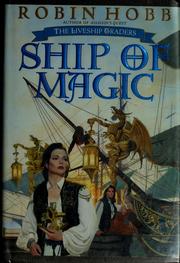
Ship of Magic
A sentient ship wakes when her captain dies, and the family that owns her starts to come apart over who gets to sail her.
2,026-word summary · 9 min read

Revolutionary Road
A Connecticut couple who believe they are too good for the suburbs plan to move to Paris, and the plan slowly exposes everything they cannot say to each other.
2,085-word summary · 9 min read
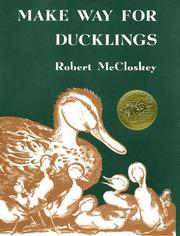
Make Way for Ducklings
A pair of mallards raise eight ducklings on the Charles River and lead them across Boston to the Public Garden, with a little help from a friendly policeman.
2,044-word summary · 9 min read

Brown Girl Dreaming
Jacqueline Woodson retells her childhood in verse, moving from Ohio to South Carolina to Brooklyn while the civil rights movement reshapes the world around her.
2,727-word summary · 12 min read

This Winter
On one difficult Christmas Day, Tori, Charlie, and Oliver Spring try to hold their family together while Charlie's eating disorder makes every tradition a test.
2,034-word summary · 9 min read

The Shadow Sister
Star D'Apliese steps out of her sister's shadow and follows a bookshop clue into the Edwardian life of Flora MacNichol, a woman who gave up love for duty.
2,260-word summary · 10 min read

Little Town on the Prairie
In the spring after the Long Winter, fifteen-year-old Laura sews shirts, studies for a teaching certificate, and helps send her blind sister Mary to college.
2,071-word summary · 9 min read

Little Earthquakes
Four Philadelphia women meet during pregnancy and discover that new motherhood is nothing like the plan, while friendship becomes the thing that holds them…
1,997-word summary · 9 min read

Too Much and Never Enough: How My Family Created the World's Most Dangerous Man
Mary L. Trump's 2020 memoir traces how a cold, zero-sum Queens household shaped her uncle, and uses family tax documents to challenge his self-made story.
2,059-word summary · 9 min read

Mrs. Everything
Two Jewish sisters in Detroit grow up, apart and together, across seven decades of American life, from the 1950s to the 2016 election.
2,362-word summary · 10 min read

Howards End
Forster's 1910 novel follows two families, a house in Hertfordshire, and a burned note, asking whether money and feeling can ever be connected.
2,187-word summary · 10 min read