
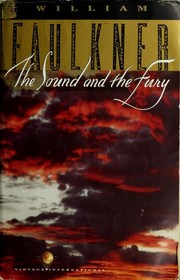
The Sound and the Fury
2,226-word summary 10 min read 326 pages in the book
- First published
- 1929
- Publisher
- Jonathan Cape and Harrison Smith
- Pages
- 326
- ISBN
- 9780679732242
Reading options
What's inside (7 sections)
The first time I tried this novel I bounced off it in under thirty pages. The narrator seemed to be thinking in broken glass, scenes cut into each other without warning, and I had no idea who anyone was. I put it down for a year. The second time, warned about what was coming, I read it slowly and it rearranged something in my head. Published in October 1929 by the brand-new firm of Jonathan Cape and Harrison Smith, after Faulkner's old publisher turned it down, The Sound and the Fury is famously hard and famously worth it. The modern Vintage paperback runs 326 pages. Almost every one of them demands attention.
The setup is simpler than the reputation suggests. In Yoknapatawpha County, Mississippi, the Compson family is coming apart: a widowed-feeling household with an invalid mother, a drinking father, and four children, one of whom left years ago in disgrace. Three sections of the book are narrated by the three surviving brothers, each covering a single day. The fourth follows the family's Black servant on Easter Sunday. The same events keep recurring from different angles, so the book reads less like a story told once than like a house you walk through four times, noticing new cracks each pass. The title comes from Macbeth, the speech about a tale told by an idiot, full of sound and fury. Faulkner meant you to hear that echo.
Benjy's day: April 7, 1928
The opening section belongs to Benjy Compson, the youngest brother, who is intellectually disabled and experiences time as a single churning present. He is thirty-three on this Saturday, his birthday, and a boy named Luster is minding him. They stand by a fence watching golfers on the pasture that used to belong to the Compsons. When a golfer calls for his caddie, Benjy hears the name Caddy and starts bellowing, because Caddy is his sister, the one person who ever truly cared for him, and she is gone.
That is the whole engine of the section. Benjy cannot order his memories, so the past keeps flooding in, marked in the text by shifts into italics. One moment he is in 1928, the next he is a child again. Through these flashes we assemble the family history. Their grandmother, Damuddy, dies. Their uncle Maury drinks and drifts. Their mother, Caroline, is cold and forever unwell in spirit if not in body. Their father sells Benjy's pasture to pay for Quentin's year at Harvard, a transaction the children understand as a theft. And Caddy climbs a pear tree to spy on the funeral gathering, while her brothers look up and see her muddy drawers, an image Faulkner later said was the seed of the entire book.
Caddy is the center of Benjy's world and of the novel, though she never narrates a word. We watch her grow through his uncomprehending eyes: playing in the branch, comforting him when he cries, later coming home smelling of perfume, which Benjy hates because it means she is changing. She becomes pregnant by a young man named Dalton Ames, marries another man hastily, and is cast out when the truth surfaces. Benjy loses her. That loss is the wound the whole novel keeps pressing.
I will be honest: this section is disorienting by design, and some readers will hate it. Faulkner gives you no dates, no exposition, almost no help. You have to hold fragments and wait for them to cohere. But once they do, the effect is devastating, because Benjy loves without judgment in a house where everyone else judges constantly. His section is the moral baseline of the book. Everything the other brothers say and do gets measured, silently, against Benjy's grief.
Quentin's day: June 2, 1910
The second section jumps back eighteen years to the eldest brother, Quentin, a Harvard freshman, on the day he kills himself. If Benjy's mind has no order, Quentin's has too much: he is drowning in codes of honor, family pride, and guilt, mostly about Caddy. He cannot bear that she gave herself to Dalton Ames. He tells and retells a story in which he and Caddy committed incest, a lie he prefers to the truth, because shared damnation would at least keep them together and punish him enough to match how he feels. Their father sees through it. Mr. Compson is a gently corrosive nihilist, a lawyer who drinks and dispenses bleak philosophy, and he hands Quentin his grandfather's watch with a speech about time.
I give you the mausoleum of all hope and desire. I give it to you not that you may remember time, but that you might forget it now and then for a moment and not spend all of your breath trying to conquer it.
Quentin spends the day wandering Cambridge with the watch ticking in his pocket. He argues with his roommate Shreve. He gets drawn into a confrontation with a crude young townsman named Gerald Bland. He meets a small Italian immigrant girl who follows him around silently, and he tries, clumsily, to find her family, which ends with him being hauled before a local justice on suspicion of kidnapping. The episode is comic and awful at once. Nobody, not the judge, not the girl's brother, can understand what Quentin is trying to do, because Quentin barely understands it himself. He is trying to be decent in a world that reads decency as guilt.
Late in the day he buys two flatirons, the heavy kind used for pressing clothes. He packs his trunk, writes his goodbyes, breaks the hands off his grandfather's watch, and walks to the Charles River bridge. Faulkner does not stage the death as a climax. Quentin simply stops narrating, and the silence does the work. It is one of the most carefully built suicides in fiction, and one of the most pitied. Quentin is not a villain. He is a boy raised on stories about honor that the modern world has stopped honoring, and Caddy's fall breaks the one story he cannot live without.
Jason's day: April 6, 1928
Then comes Jason, and the temperature of the book drops to freezing. Jason is the third brother, and his section, set on the Friday before Benjy's birthday, is the only one told in something like plain English. He runs the household now. His father is dead. Quentin is dead. His mother whines and doses herself. And Jason is, to put it mildly, a miserably bitter man. He works in a farm supply store, a job he considers beneath him, and blames everyone, his family, the town, fate, for the life he has.
Jason's great scheme is theft from his own blood. Caddy, divorced and disgraced, sends money each month for the support of her daughter, little Quentin, who lives in the Compson house and is named for her dead uncle. Jason intercepts the checks, pockets most of the money, and shows his mother forged smaller amounts to keep her quiet. He hoards the cash for years while playing the cotton market and nursing his grievances. He also keeps a mistress of sorts in Memphis, a woman he visits on business trips, one of the few places he spends freely.
Little Quentin, now seventeen, is the wild card. She sneaks out at night, climbs down a tree to meet a carnival worker, steals and lies with a casual skill that horrifies her grandmother and infuriates Jason. She knows Jason is robbing her, or senses it, and the house simmers toward a break. Jason chases her, bullies her, locks her up, and she slips every leash. The section ends with Jason's control cracking. He has spent years telling himself he is the only responsible Compson, the one holding everything together. What Faulkner shows is a man holding on so tightly that he is strangling the last living thing in the house.
Readers tend to find Jason the easiest section to follow and the hardest to like. That is the point. After two brothers lost in feeling, Jason is lost in calculation, and his clarity is its own kind of blindness. He understands prices and other people's weaknesses. He understands nothing about love, grief, or forgiveness. His competence is real and worthless at once.
Dilsey's Easter: April 8, 1928
The final section shifts, with enormous relief, out of the brothers' heads. It is told in the third person and centers on Dilsey, the Black woman who has kept the Compson house running for decades. It is Easter Sunday. Dilsey, monumental in her patience, gets the diminished household to church: herself, her family, Benjy, and little Quentin, who would rather be anywhere else. At the service a visiting preacher delivers a sermon on resurrection and judgment that moves the whole congregation, and Dilsey weeps because she has seen the beginning and now sees the end. She outlasts them all, and she knows exactly what the Compsons have come to.
What happens after church is the novel's payoff. Little Quentin, who has found Jason's hoarded money, takes it and runs off with her carnival man, climbing out before dawn. Jason wakes to the loss and explodes into pursuit. He races to a nearby town where the carnival is showing, convinced he can catch them, but everything goes wrong: his car troubles, his migraines, his own bullying, which turns everyone against him. He comes home empty-handed, robbed of years of stolen savings by the girl he robbed. There is a rough justice in it that Faulkner does not underline. He just lets it happen.
The book's last scene belongs to Benjy. Luster is driving him in a wagon around the town square, and takes a wrong turn, breaking the route Benjy expects. Benjy begins to howl, that wordless bellow that has run through the novel like a siren. Only when the wagon is turned back onto the familiar path does he fall silent. It is a strange, quiet ending: no moral, no reconciliation, just order restored for a mind that cannot bear disorder. Some readers find it cold. I found it honest. The Compsons cannot be healed. The best anyone gets is one calm circuit around the square.
A note on the appendix, since your edition likely includes it. Years later, in 1945, Faulkner wrote a supplement about the Compsons for an anthology of his work, summarizing the family history in compressed form. Modern editions often print it at the back. Read the novel first. The appendix explains a great deal, and explanation is the one thing this book rations on purpose.
Should you read it, and how
Fair criticism first. The Sound and the Fury is genuinely difficult, not in a show-off way but in a way that asks for patience many readers cannot spare. The first section will confuse you. The second will exhaust you. Jason will repel you. Faulkner offers no guide, no kindly narrator, no recap. The book sold poorly at first, and no wonder: it arrived in the autumn of 1929, days before the stock market crash, from a tiny new publisher, with an explanatory booklet by another writer tucked into early copies to help baffled buyers. Difficulty was baked in from day one.
There are also passages a modern reader may flinch at. The novel's Black characters are drawn with genuine respect, Dilsey is arguably its moral center, but they are still seen from outside, through a white author's lens of the 1920s. And the book's sympathy for the fallen white aristocracy can curdle if you let it. Faulkner mourns the Compsons without excusing them, but the line between mourning and nostalgia gets thin in places, especially around Quentin's obsession with Caddy's purity. Go in clear-eyed.
So how to read it? Slowly, and twice if you can. Do not stop to solve every time shift in Benjy's section; let the images accumulate and trust the pattern to surface. Keep a simple family list on a scrap of paper: who is who, who is dead, which Quentin is which. There are two, the brother and the niece, and mixing them up is the classic beginner's error. Read Quentin's section in one sitting if possible, since its power is cumulative. And when you finish, sit with the last scene before reaching for commentary. The wagon going around the square is the whole book in miniature: a broken family, a fixed route, and one moment of peace that has to be earned turn by turn.
I keep thinking about the gamble Faulkner took. Harcourt Brace, which had published his earlier novel Sartoris, turned this manuscript down. It was rescued when Harrison Smith, an editor there, moved to the newly formed house of Jonathan Cape and Harrison Smith, which brought the book out in October 1929. An unknown writer from Mississippi handed the world a book about idiocy, suicide, and theft, told in three fractured voices plus one steady one, and trusted readers to assemble it. That trust was repaid slowly. The novel's reputation grew through the following decades, and Faulkner lived to see it taught, argued over, and crowned as his masterwork, twenty years before the Nobel confirmed what his admirers already knew. Difficult books usually meet you halfway. This one makes you walk the whole road. The road is worth it.
FAQ
When was The Sound and the Fury published?
Jonathan Cape and Harrison Smith published it in 1929. The Vintage corrected-text paperback runs 326 pages with ISBN 9780679732242.
Why is the first section so confusing?
It is narrated by Benjy, who experiences time as one continuous present. The italics mark memory intrusions, and the pattern coheres on a slow read.
Should I read the appendix first?
No. Faulkner wrote it in 1945 for an anthology, and it explains a great deal the novel deliberately withholds. Read it after.
Similar books
To the Lighthouse
On a Scottish island, the Ramsay family and their guests circle one postponed trip to a lighthouse across ten years of loss.
2,548-word summary · 11 min read
As I Lay Dying
A poor Mississippi family hauls Addie Bundren's coffin to Jefferson through flood and fire, told by fifteen voices. Faulkner's 1930 novel is strange, bleak,…
3,544-word summary · 16 min read

Howards End
Forster's 1910 novel follows two families, a house in Hertfordshire, and a burned note, asking whether money and feeling can ever be connected.
2,187-word summary · 10 min read

Fathers and Sons
Arkady brings the nihilist Bazarov home to his father's estate, and a generational argument turns into love, a duel, and an early death.
2,192-word summary · 10 min read

Unaccustomed Earth
Lahiri’s second story collection follows Bengali families in America and abroad, tracing the quiet distances between parents and children, spouses, and the…
2,333-word summary · 10 min read

The Age of Miracles
A California girl grows up while the Earth's rotation slows, and ordinary adolescence continues alongside slow catastrophe.
2,417-word summary · 11 min read
Peace Like a River
An asthmatic boy in the early 1960s narrates his family's search for his older brother, who is accused of two killings and has escaped custody.
1,969-word summary · 9 min read

We Are Okay
Marin fled San Francisco after her grandfather vanished and stopped answering anyone. When Mabel visits her college dorm, she has to say what happened.
2,253-word summary · 10 min read

The Chosen
A shattered pair of glasses in a 1944 Brooklyn softball game starts a friendship between a Hasidic boy and his Orthodox neighbor, and their fathers pull them…
2,443-word summary · 11 min read

A Spool of Blue Thread
Four generations of the Whitshank family in Baltimore, and the silences, resentments and quiet love they hand down without ever saying so.
2,408-word summary · 11 min read

This Is How You Lose Her
Yunior cycles through love affairs and betrayals in nine linked stories, tracing the damage he does and the family history behind it.
2,195-word summary · 10 min read
Flight Behavior
Dellarobia Turnbow is stuck in a Tennessee farm marriage until a valley full of monarch butterflies, and the scientist who comes to study them, force her to…
2,051-word summary · 9 min read

And Every Morning the Way Home Gets Longer and Longer
An elderly grandfather, his son, and his grandson share memories and fears as the old man's mind begins to fade, in a short novel about grief and love.
2,078-word summary · 9 min read

The Tiger's Wife
A young doctor in a war-scarred Balkan country chases the stories her grandfather left behind, including a deathless man and a deaf girl who loved an escaped…
2,232-word summary · 10 min read

The Story of Edgar Sawtelle
A mute boy on a Wisconsin dog-breeding farm relives Hamlet as his uncle returns, his father dies in the barn, and the dogs inherit what is left.
2,392-word summary · 11 min read
Olive, Again
Elizabeth Strout returns to Crosby, Maine, as Olive Kitteridge marries Jack Kennison, confronts her son, and faces old age, grief, and small-town judgment.
2,333-word summary · 10 min read
We Were the Mulvaneys
After a rape following a school dance, the Mulvaneys, a family that believed it was blessed, comes apart over fifteen years. Narrated by the youngest son.
2,094-word summary · 9 min read
Foster
A girl spends a summer with relatives on a Wexford farm and is cared for properly for the first time. A spare novella about family and what children notice…
2,043-word summary · 9 min read
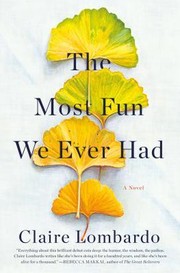
The Most Fun We Ever Had
Four Sorenson sisters orbit perfect parents hiding old cracks.
2,590-word summary · 12 min read
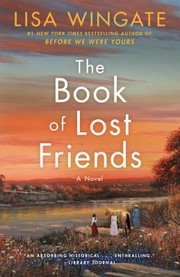
The Book of Lost Friends
Three women trace Lost Friends ads from 1875 to find stolen sons.
2,368-word summary · 11 min read

The Accidental Tourist
Grieving Macon writes travel guides for haters of travel, then Muriel intrudes.
2,252-word summary · 10 min read

Kitchen
Orphan Mikage finds home in a kitchen with Yuichi and Eriko after loss.
2,597-word summary · 12 min read
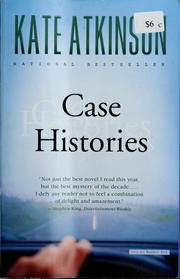
Case Histories
A Cambridge PI takes three cold cases that tangle with his own loss.
2,465-word summary · 11 min read
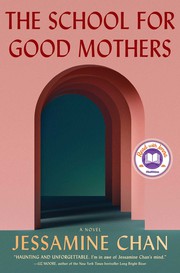
The School for Good Mothers
A mother sent to a reform school fights to keep her daughter under cold surveillance and strict rules.
2,114-word summary · 9 min read

The Perfect Nanny
A trusted nanny kills two children, and the book traces how love and class hid warning signs.
2,200-word summary · 10 min read
The Heart is a Lonely Hunter
A deaf man becomes the quiet center for lonely souls in a small Georgia mill town.
2,000-word summary · 9 min read
Song of Solomon
Milkman Dead leaves Michigan to hunt for family gold and finds instead the old song of his ancestor Solomon.
2,465-word summary · 11 min read
White Noise
Jack Gladney teaches Hitler studies, flees a chemical cloud with his family, and chases a drug for dread in DeLillo's funny and bleak 1985 novel of…
2,768-word summary · 12 min read
The Signature of All Things
Botanist Alma Whittaker grows up in Philadelphia trade wealth, studies mosses, marries distant Ambrose Pike, and sails to Tahiti seeking how species change.
2,535-word summary · 11 min read