
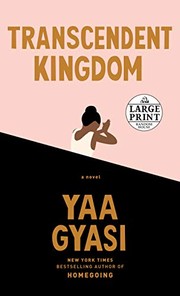
Transcendent Kingdom
2,020-word summary 9 min read 294 pages in the book
- First published
- 2020
- Publisher
- Alfred A. Knopf
- Pages
- 294
- ISBN
- 9780593318881
Reading options
What's inside (4 sections)
I had loved Homegoing for how it braided generations without losing intimates, so Transcendent Kingdom, first published in 2020 by Alfred A. Knopf, 294 pages in hardcover, ISBN 9780593318881, felt both familiar and new. It follows Gifty, a Ghanaian American Stanford neuroscientist studying addiction in mice, who returns to Alabama to care for her depressed mother while remembering her brother Nana, a basketball star who died of overdose. It is quiet, brainy about faith versus science, sad about the opioid crisis and evangelical certainty in turns, and it understands that understanding mechanisms does not heal grief. I finished it in three sittings and thought about it for weeks, mostly about prayer as experiment with no control group.
Gifty narrates in present tense lab work braided with past tense childhood. In lab she runs mice through reward tests, records lever presses for Ensure versus cocaine water, watches addicted mice choose drug over food until dying. She is brilliant and brittle, sleeping little, eating less, jogging to manage. Her mother, once a nurse who worked double shifts and prayed loudly, now lies in bed unresponsive after Nana's death broke what immigration and racism cracked. Gifty brings her to California? Actually cares for her while running experiments that should explain her family and do not. Why did Nana, beloved athlete with scholarship, try Oxy after injury and spiral. Why does mother pray to a God who allowed. Why does Gifty, who knows dopamine pathways intimately, still crave sleep and God alternately. Those questions structure chapters that move between cage data and kitchen memories without forcing parallels. Mice press levers. Brother pressed pills. Mother presses prayer. Gifty presses pipettes. All seek relief that does not last. That symmetry could feel schematic. Gyasi keeps it human through specific detail. Which mouse bit her. What song Nana played pregame. How mother seasoned stew before depression stole taste. Particulars save theme from thesis.
Nana, mother, and Alabama church
Nana as remembered older brother glows without saintliness, which makes loss sharper. He protected Gifty from bullies, taught her basketball footwork, teased about her reading during games. After ankle injury and Oxy prescription, he changed in increments the family missed while working. Skipped meals. Borrowed money. Nodded at church. Gifty, young and admiring, noticed but lacked adult categories. Now scientist, she replays signs with professional vocabulary that helps not at all emotionally. Tolerance. Dependence. Overdose risk with heroin after pills ran out. Knowing terms does not return brother. That gap between knowledge and rescue drives the book's ache more than any single scene. She can save mice by adjusting doses. She could not save Nana who hid use out of shame learned at church where addiction equals sin. Those church chapters, with evangelical certainty about sin and healing through prayer, show faith as comfort and cage at once. Congregants loved loudly and judged silently. Nana felt both. After death, mother prayed harder while Gifty stopped. Their split about God after loss feels true to families divided by grief styles. One clings. One releases. Both love the dead boy fiercely. Neither converts the other, which is honest. Books that resolve faith debates neatly lie. Gyasi lets laboratory and altar stand side by side without reconciliation. Gifty attends church once with mother and feels nothing, then runs an experiment that works beautifully and feels empty. Both efficacies fail to fill. Sit with that emptiness rather than solve. That sitting is the book's spiritual practice, scientific and religious at once. Attention without demand for answer.
Mother's depression gets pages of rare accuracy about immigrant mothers and mental illness. She worked, prayed, cooked, then stopped all after Nana died. Not dramatic breakdown but slow stillness. Stays in bed. Eats if fed. Answers in monosyllables. Gifty, trained to intervene, tries schedules, church, doctors. Mother refuses medication from distrust rooted in real medical racism and in faith that prayer suffices. Those refusals frustrate readers wanting fix and teach patience. Depression does not yield to schedules. Gifty learns to sit on bed edge reading papers while mother sleeps, presence without treatment plan. That companionship matters more than interventions that fail. A scene where mother suddenly cooks an old stew and eats with appetite, then retreats next day, captures recovery as wave rather than line. Celebrate wave without expecting tide turned. Those small mercies sustain caregivers better than progress charts. Gyasi writes with authority that never exploits. Mother remains person, not case. Prayers quoted fully, not mocked. Work history honored. When mother finally speaks at length late, about Ghana, about choosing America for kids, the monologue lands because withheld so long. Listen fully when silence breaks. Do not interrupt with solutions. That lesson applies to lab mice too. Watch behavior before intervening. Record first. Act humbly.
For craft, Gyasi's sentences are clear and lyrical without purple. Short paragraphs for lab. Longer for memory. If you like dense metaphor, this is plainer. Dialogue carries pages with Ghanaian English rhythms and Alabama church cadences. If you want plot twists, look elsewhere. Nothing happens after Nana's death except care and experiments. That stillness is point and test. Readers needing events may skim mouse chapters. Do not. Lever press counts show Gifty's mind working through grief by counting. Numbers as rosary. Data as prayer that sometimes answers with significance stars and mostly does not. Those significances and nulls teach more than story. Science progresses through nulls that still matter. Grief progresses similarly. Days without crying count even if no one publishes. Keep counting. Keep pressing levers of care. Results may not show in mother rising, but in Gifty staying to witness. Witness as result worth recording.
Faith, science, and what remains
The book's central debate never resolves, which will frustrate readers wanting verdict. Is addiction disease or sin. Is depression chemical or spiritual. Gifty holds both vocabularies without merging. She prays once experimentally, noting heart rate, then feels foolish and moved at once. She runs experiment with perfect controls that yields clean data about mice and zero comfort about brother. Those parallel failures to heal through either system could read as nihilism. Instead they read as humility. No system saves alone. People save in parts through presence that systems enable but do not guarantee. Lab funding lets Gifty stay near mother. Church meals feed when she cannot cook. Both institutions help practically while failing cosmically to explain why Nana. Accept practical help without demanding cosmic answers. That acceptance is maturity the book traces from Gifty's youthful contempt for mother's faith to adult respect without conversion. She will not pray regularly. She will drive mother to church without mocking. That drive matters more than belief statements. Show up for others' practices. That showing up is transcendence the title promises, not kingdom beyond but attention within. Small and enough.
The lab mice as mirror that does not simplify deserve emphasis. Each mouse has quirks technicians note. Bold lever presser. Timid corner sitter. Gifty names them privately against protocol, then feels unprofessional and continues because names help her care enough to do careful work. That tension, attachment improving attention while threatening objectivity, runs through science memoirs rarely this honestly. She knows naming biases handling. She names anyway to stay human inside protocol that deadens. When a favorite mouse dies of overdose design, she grieves disproportionately and hides tears from postdocs who would judge. Those hidden tears cost more than data. Later, presenting results, she omits names and quirks for professional audience. That omission feels like betrayal she notes without fixing. Science requires distance that care forbids. Living inside that contradiction without resolving defines researcher life better than eureka stories. Most days are lever counts and cage cleaning with grief underneath about brother no protocol addresses. Keep cleaning cages. Keep counting presses. Let meaning accrue in repetition rather than revelation. That patience is method and mourning at once.
For criticism, the book runs quiet to a fault. No real-time stakes beyond mother eating and mice pressing. Readers who need plot may find 294 pages slow despite short length. Two lab meetings in a row follow similar beats, discuss data, question translatability. I skimmed one because pattern, mice are not people, was clear. Also, Gifty's romantic life gets brief pages that feel obligatory. A fellow scientist flirts. She deflects. That thread neither develops nor matters except to show isolation. Cut or expand. As is, it distracts. And Ghana memories, while beautiful, stay thin compared to Alabama. Given Homegoing richness, more Accra pages would deepen mother choice context. Still, at 294 pages it reads fast for depth. I finished in three evenings with tea, which suited contemplative pace. No cliffhangers about plot, only about whether mother will eat today. That small suspense sustains because love makes porridge matter as much as overdoses. Care as stakes. Notice who eats. Celebrate bites.
For who this is for. If you liked Homegoing for generations, try this intimate single consciousness with science. If you are new to Gyasi, start here for accessibility, then Homegoing for scope. If you want answers about addiction or God, look elsewhere. This asks better questions without solving. Why do we press levers knowing costs. What does prayer measure. How to love depressed mother without fixing. I closed it thinking about my own lever presses, phone checks for dopamine hits while grieving small losses. Watch presses. Count. Ask what need drives. That self observation, scientific and spiritual at once, is the book's gift beyond story.
The lab mice as individuals who complicate protocol deserve emphasis because Gyasi uses naming against rules to show care improving science. Each mouse has quirks technicians note in margins. Bold lever presser who works for praise pats. Timid corner sitter who needs coaxing with extra Ensure. Gifty names them privately against protocol, then feels unprofessional and continues because names help her handle gently enough for clean data. Rough handling spikes stress hormones that confound results. Gentle handling from affection yields cleaner baselines. That feedback loop, care improving data quality, justifies what rules forbid. Later, presenting results, she omits names and quirks for professional audience. That omission feels like betrayal she notes without fixing given norms. Science requires distance that care forbids. Living inside that contradiction without resolving defines researcher life better than eureka stories. Most days are lever counts and cage cleaning with grief underneath about brother no protocol addresses. Keep cleaning cages. Keep counting presses. Let meaning accrue in repetition rather than revelation. That patience is method and mourning at once. Colleagues who mock attachment miss how attachment sustains attention through null results that end careers. Love mice enough to count honestly even when counts disappoint funders. That honesty keeps science truthful when incentives reward positive spins. Spin kills more reliably than nulls disappoint. Choose nulls with names remembered.
Ghana memories as counterweight to Alabama lab sterility also need fuller weight. Accra markets with fabrics, aunties who pray loudly over phones, father who left and calls rarely with money that helps and guilt that harms. Those chapters, brief against lab bulk, explain mother choice context that Alabama alone cannot. Why she trusts prayer over pills. Ghanaian churches healed community rifts that American hospitals billed. Both true at once. Neither sufficient alone after Nana. Gifty, American raised, translates between systems without belonging fully to either. Lab mates find faith talk embarrassing. Church aunties find lab talk cold. She code switches with fluency that exhausts. At home she nods to prayer requests. At work she cites pathways. Alone in car between, she sits in silence that is neither. Those car sits, engine off in driveway, unable to enter lab or home, capture bicultural fatigue better than essays about identity. Belonging everywhere partially means resting nowhere fully. Except, perhaps, in precise pipetting where hands know next step without translation. Lab bench as third country with citizenship through competence. Stay there longer than healthy because nowhere else fits without switching. That overwork reads as ambition to advisors and refuge to self. Both true. Name both to understand Gifty without reducing to driven stereotype. She works to belong somewhere complete, even if that somewhere smells of cage bedding and ethanol.
FAQ
Who is Gifty's family?
Gifty, Stanford neuroscientist, her depressed mother, and memory of brother Nana who died of overdose after injury and Oxy prescription.
When was Transcendent Kingdom published?
Alfred A. Knopf published it in 2020. The hardcover runs 294 pages with ISBN 9780593318881.
Similar books

Sam's Letters to Jennifer
A grieving journalist reads her grandmother's letters and finds a decades-long love affair that changes how she sees her family.
2,310-word summary · 10 min read

A Spool of Blue Thread
Four generations of the Whitshank family in Baltimore, and the silences, resentments and quiet love they hand down without ever saying so.
2,408-word summary · 11 min read
Maame
Maddie Wright, 25, has spent years as the responsible one in her Ghanaian British family, and the year she finally tries to live for herself is the year…
2,108-word summary · 9 min read
The Switch
A burned-out consultant and her 79-year-old grandmother swap London and Yorkshire homes for two months, facing grief, dating apps, and village politics.
2,782-word summary · 12 min read
The Last Anniversary
A single woman inherits island house and unknots a vanished baby story.
2,158-word summary · 10 min read
The Guncle
A sitcom star takes his niece and nephew for a summer and learns presence beats punchlines.
2,779-word summary · 12 min read

Home Front
A Guard pilot deploys, comes home wounded, while husband and daughters fight to heal together.
2,091-word summary · 9 min read

Golden Girl
A dead novelist watches her three kids for one summer with three nudges to help.
2,052-word summary · 9 min read
Forever, Interrupted
Elsie elopes in May, loses Ben nine days later, and learns grief beside the mother in law she never met.
2,051-word summary · 9 min read
For One More Day
A ruined ballplayer spends an impossible day with his dead mother.
1,989-word summary · 9 min read

Life's Too Short
A travel YouTuber facing possible ALS takes in baby Grace and falls for Adrian, the lawyer next door.
2,913-word summary · 13 min read
Still Me
Lou spends a year in New York working for the Gopniks, torn between Josh, distant Sam, and the life she wants.
2,939-word summary · 13 min read

Just for the Summer
Emma and Justin date to break a matching curse, then face sudden guardianship and illness on Lake Minnetonka.
3,090-word summary · 14 min read
Reminders of Him
Kenna returns after prison to meet the daughter she lost, facing the family that blames her.
2,168-word summary · 10 min read

What Happened to Goodbye
Mclean has reinvented herself in four towns since her parents divorced. In Lakeview she uses her real name, and for the first time staying put becomes a choice.
2,796-word summary · 12 min read
Little Earthquakes
Four Philadelphia women meet during pregnancy and discover that new motherhood is nothing like the plan, while friendship becomes the thing that holds them…
1,997-word summary · 9 min read

Amy & Roger's Epic Detour
Amy Curry has not driven since the crash that killed her father. With Roger at the wheel and a box of maps between them, a cross-country trip becomes a slow…
3,034-word summary · 13 min read

Peace Like a River
An asthmatic boy in the early 1960s narrates his family's search for his older brother, who is accused of two killings and has escaped custody.
1,969-word summary · 9 min read

We Are Okay
Marin fled San Francisco after her grandfather vanished and stopped answering anyone. When Mabel visits her college dorm, she has to say what happened.
2,253-word summary · 10 min read

Two by Two
Sparks's twentieth novel turns from first love to a marriage breaking up: Russell Green loses his wife and his job, then rebuilds his life around his…
2,192-word summary · 10 min read

The Chosen
A shattered pair of glasses in a 1944 Brooklyn softball game starts a friendship between a Hasidic boy and his Orthodox neighbor, and their fathers pull them…
2,443-word summary · 11 min read
Between Sisters
Estranged sisters Meghann and Claire reunite in Washington when Claire announces a rushed wedding, then face their mother's desertion and a medical crisis.
2,467-word summary · 11 min read

The Magnolia Story
How Chip and Joanna Gaines met, closed their first shop, nearly lost everything in a housing development, and built Fixer Upper.
2,994-word summary · 13 min read
The House We Grew Up In
The Bird family of the Cotswolds breaks apart after a suicide and spends twenty years not talking about what happened.
2,198-word summary · 10 min read

Saving Noah
A seventeen-year-old swimmer confesses to molesting two girls he coached, and his mother must decide what unconditional love is worth.
2,976-word summary · 13 min read

At First Sight
Jeremy and Lexie are married and expecting a baby when anonymous emails tell him the child may not be his.
2,317-word summary · 10 min read
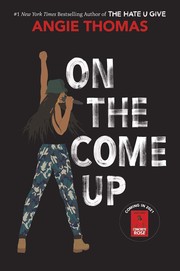
On the Come Up
Bri Jackson, a sixteen-year-old rapper in Garden Heights, chases a record deal while a viral song turns her into a symbol she never wanted to be.
2,034-word summary · 9 min read
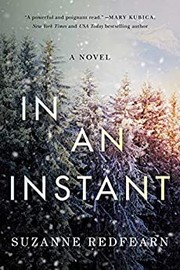
In an Instant
After a family camper crashes down a snowy mountain, sixteen-year-old Finn watches from the afterlife as survivors make impossible choices and try to live with…
2,130-word summary · 9 min read

Flight Behavior
Dellarobia Turnbow is stuck in a Tennessee farm marriage until a valley full of monarch butterflies, and the scientist who comes to study them, force her to…
2,051-word summary · 9 min read

Delilah Green Doesn't Care
Delilah returns to Bright Falls to photograph her stepsister's wedding and falls for Claire, a bookstore owner and single mother, while a cruel bet threatens…
2,315-word summary · 10 min read