
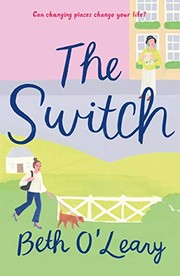
The Switch
2,782-word summary 12 min read 336 pages in the book
- First published
- 2020
- Publisher
- Flatiron Books
- Pages
- 336
- ISBN
- 9781250769862
Reading options
What's inside (8 sections)
I picked up The Switch because The Flatshare had been the kind of read I press on people. A friend told me the second book was softer and sadder, which made me put it off for a bit. Then I had a heavy week at work and wanted something with older people being funny and young people being honest, and this fit. Beth O'Leary published it in 2020 with Flatiron Books, 336 pages in the edition cited here. It was her second novel, and it became a Sunday Times bestseller in the UK.
The idea is simple enough to explain in one breath. Leena Cotton, a consultant in her twenties living in Shoreditch, London, burns out and melts down at work. Eileen Cotton, her 79-year-old grandmother in a Yorkshire village, is newly single and facing eighty with very few dating options nearby. They trade homes for two months. Eileen gets Leena's London flat and a shot at city dating. Leena gets Eileen's cottage and a forced rest. I expected a light swap comedy. Parts are light. The grief underneath surprised me.
A breakdown and a birthday with nobody to date
Leena opens the book as someone who has been running on fumes for a year. Her younger sister Carla died of cancer, and Leena never really stopped to grieve. She threw herself into consulting instead. Long hours. Constant travel. A performance culture where being tired reads as commitment.
Her boyfriend Ethan works at the same company, which tells you a lot about how narrow her life has become. They share deadlines more than they share anything tender. When Leena freezes and botches a big presentation, her boss does something decent. She orders Leena to take a two-month paid sabbatical and actually rest. Not work from home. Rest.
Eileen's problem sits at the other end of life. Her husband has left her after decades of marriage, and she is not particularly heartbroken about him. She is restless. She is about to turn eighty. She looks around Hamleigh, her small Yorkshire village, and counts the single men her age on very few fingers. She even makes a private list of the local possibilities, with frank notes on who might still be fun in bed. I laughed out loud at that list. It is bold without being crude, and it sets up who Eileen is. She is not waiting to be looked after. She wants another chapter.
Leena visits Yorkshire for what she thinks will be a short recovery stay. Eileen's cottage is the opposite of London. Small garden. Quiet lanes. Cats named Ant and Dec who run the house. Neighbours who notice everything. Leena's mother Marian lives close by, and that is a problem, because Leena and Marian have barely spoken since Carla died. Eileen loves them both and feels caught between them. Over tea, Leena floats the plan. Eileen will take the London flat, live with Leena's flatmates, and try dating in the city. Leena will stay in the cottage, keep up Eileen's village duties, and avoid her laptop. Eileen takes Leena's laptop back to London with her to enforce the point.
Two months. That is the deal.
Arrival days in two different Englands
Leena's first days in Hamleigh are clumsy in a way I recognized. She tries to help and mostly creates work. The cottage has its rhythms. The heating. The garden. The cats. The neighbours who drop by with opinions disguised as casseroles. Eileen has her fingers in several village projects, including the Neighbourhood Watch and planning around the May Day event, and Leena inherits all of it. She walks into meetings expecting efficiency and finds something else. Long memories. Old feuds. People who talk over each other and then make tea.
London, meanwhile, absorbs Eileen fast. Leena shares a flat with Martha and Fitz, and Eileen moves into Leena's room with the confidence of someone who has hosted decades of guests. Fitz is young and scattered and fun, the kind of flatmate who loses keys and charms his way out of trouble. Martha is steadier. Leena's close friend Bee becomes Eileen's guide and then something closer, a co-conspirator. Bee sets Eileen up on a dating app and teaches her the etiquette. Swipe. Chat. Meet for coffee. Do not send money to anyone. Eileen takes to it with the energy of a woman making up for lost time.
The contrast O'Leary builds here is doing real work. In London nobody knows their neighbours, so Eileen starts learning names in her building, including an older resident named Letitia, and begins pulling people together. In Yorkshire everybody knows each other, or thinks they do, so Leena starts learning how little she knows about her own family. Both places have kindness. Both have gossip. The swap does not fix anyone right away. It just moves each woman somewhere her usual excuses stop working.
I liked how O'Leary handles the phones and distance in this stretch. Ethan is bad at long distance in the specific way busy boyfriends are bad at it. Short replies. Missed calls. Promises to visit that drift. Leena tells herself work pressure explains it. You can see her defending him while the evidence piles up that he liked the office version of her more than the grieving one.
Leena and the village that grades her
If the book has a slow education plot, it belongs to Leena in Hamleigh. She takes over Eileen's committee roles with consultant energy and promptly annoys people. She makes lists. She suggests improvements. She tries to run a village meeting like a client workshop. Jackson, a local school teacher, watches this with open amusement and very little mercy.
Jackson is the kind of man romance novels love to place in small towns. Handsome in an ordinary way. Good with kids. Patient with difficult parents. Embedded in the place. He keeps showing up where Leena is failing, not to rescue her exactly, but to outdo her at the local version of competence. He knows which classroom needs paint and who can actually get it done. He knows which neighbour needs a visit rather than a form. At one point he tells Leena, in so many words, that she is acting out a city visitor fantasy where a newcomer charms a village in a fortnight. It stings because he is right.
The neighbours fill out around them. Betsy is sharp and funny and knows where every body is buried. Arnold is gruff and prickly, the man who complains about everything and still shows up. There are others who drift through meetings and garden gates, Roland and Penelope and Nicola and Basil, plus a dog named Hank who seems to belong to the whole lane. O'Leary gives them enough room that the village stops feeling like scenery. Arnold in particular grows on you. He snaps at Leena early on, then lets slip that he respected Eileen's blunt way of running things, and you start to see the shape of a man who covers care with complaint.
Leena's work here is physical and social rather than strategic. She helps with paint. She carries things. She listens to stories about Eileen that complicate the grandmother she thought she knew. She also spends time near Marian without quite talking to her, which is its own kind of ache. Marian lost a daughter. Leena lost a sister. They grieve at different speeds and have mistaken that difference for blame. Eileen, calling from London, tries to nudge them toward each other without forcing it. She has lived long enough to know that grief makes people unfair.
My favorite small beat in this middle is how Leena handles the May Day planning. She starts by trying to optimize it and ends by just doing the unglamorous tasks nobody wants. Stacking chairs. Washing cups. Sitting with an older neighbour who talks too long. It sounds boring on paper. On the page it reads as the moment her nervous system finally drops out of office mode.
One short paragraph for honesty. I got a bit tired of Leena falling over things. There is a streak of physical slapstick to her chapters, tripping and spilling and misreading rooms, that felt pushed. A little goes a long way with that device.
Eileen takes London and London says yes
Eileen's London chapters were the reason I kept picking the book back up. She approaches online dating the way she approaches village committees, with curiosity and zero shame. Bee helps her write a profile that sounds like an actual person. Messages come in. Some men are dull. Some are rude. One is a handsome actor who offers something casual and fun, and Eileen, to her own surprise and Bee's delight, says yes to a no-strings fling. O'Leary writes this with warmth and plain respect for a woman near eighty wanting pleasure. It never reads as a joke. It reads as Eileen deciding her body still belongs to her.
She also does what she always does. She organizes. She learns that several older people in Leena's building are lonely behind closed doors, so she starts a small community group for them. Tea. Chairs in a circle. Someone brings cake. Letitia becomes a regular. What starts as Eileen filling time becomes a small institution, the kind of thing buildings need and nobody starts. I believed this completely, because Eileen is the person in every family who starts things.
Back at the flat, she mothers Fitz a little and befriends Martha. Fitz needs direction more than discipline, and Eileen gives him chores and praise in equal measure. With Bee, the dynamic flips. Bee is younger and savvier about city dating, and Eileen defers to her, then returns the favor by matchmaking with grandmotherly focus. When Betsy's grandson visits London, Eileen vets him over lunch with funny thoroughness, asking about his job and politics and manners, then nudges him toward Bee. It could have felt meddling. It felt loving, because Bee is clearly lonely under her jokes and Eileen sees it.
There is a lovely thread where Eileen and Bee trade dating stories like friends rather than mentor and student. Eileen reports back on bad first dates. Bee reports on men who text too much and say too little. They laugh. They compare notes on red flags. Age stops mattering in those scenes. I have rarely read an intergenerational friendship that felt this easy.
If I have a criticism of the London plot, it is that Eileen succeeds almost everywhere. Neighbours adore her. Dates want her. Flatmates rely on her. Even her stumbles turn charming within pages. I enjoyed the wish fulfillment, but part of me wanted one London failure that actually cost her something, to balance how hard Leena has to work for every inch in Yorkshire.
Grief, Marian, and the men question
About two thirds in, the book stops being about the swap mechanics and becomes about Carla. Leena has been circling her sister's death for a year, staying busy so she does not have to feel the size of it. Yorkshire slows her down enough that the feelings catch her. She visits places tied to Carla. She remembers specific things, like how Carla laughed at Leena's bossiness and how their mother hovered. She starts to see Marian not as the woman who grieved wrong but as a mother who lost a child and handled it badly, which is different from handling it coldly.
Marian gets relatively few scenes, but they count. One conversation between mother and daughter, awkward and interrupted and then honest, did more for me than several dating scenes. Marian admits she leaned on routine because she did not know what else to do. Leena admits she stayed away because coming home meant picturing Carla's empty room. Neither apologizes in a grand speech. They just start calling more. They eat together without performing okayness. Eileen, hearing about it from both sides, cries on the phone in London and pretends she has something in her eye. I believed her and I believed them.
The romantic choices clarify in this stretch too. Ethan visits or calls with the air of a man checking a box, and Leena finally hears it. He liked her competent and unruffled. He has no patience for the version of her that cries in a garden or spends a morning painting a classroom. Jackson, by contrast, has seen her incompetent and kept showing up, teasing her but also trusting her with real tasks. He argues with her. He asks about Carla and listens to the answer. The book does not pretend this is simple. Leena feels guilty for pulling away from a long relationship while living in her grandmother's house. But the gap between what Ethan offers and what Jackson notices keeps widening until she cannot ignore it.
Eileen's romantic future points back toward Yorkshire as well, though O'Leary keeps it gentle. Arnold's gruffness starts reading as attention. He asks after her in ways that sound like complaints. Eileen, who has been enjoying London attention, finds herself comparing quick city flattery with the slower knowledge of a man who has known her for years. The actor fling runs its course without bitterness. It was fun and it mattered and it ends. What lingers is the idea that being wanted is nice, but being known is rarer.
I want to note the content here plainly. Carla's death from cancer shapes the whole book. There are scenes of panic and burnout at work, frank talk about grief and strained family, an older couple's split after a long marriage, and open discussion of sex later in life. None of it felt graphic to me. The grief thread may hit hard if you have lost a sibling or a child.
What works, what drags, and who should skip it
The strongest choice O'Leary makes is splitting the voice between two Cottons. Eileen's chapters carry the comedy. Leena's carry the ache. That balance keeps the book from turning into pure comfort or pure sorrow. Eileen's dating app education, her building tea circle, her interrogation lunch for Bee's sake, all land. Leena's slow change from fixer to neighbour earns its payoff because O'Leary makes her fail first. Jackson calling out her city savior act is the hinge the whole Yorkshire plot needed.
The village ensemble is the second strength. Betsy could have been a stereotype and instead feels like someone's actual sharp grandmother. Arnold's shift from obstacle to possibility is paced well. The May Day machinery gives everyone a reason to be in the same room, which lets conflicts surface without forced confrontations. And the cats, Ant and Dec, plus Hank the dog, add texture without turning cute for its own sake.
Now the wobbles, because there are a few. The middle repeats itself. Committee scenes start to blur, with another meeting and another misunderstanding and another rescue by Jackson, before Marian's story resets the stakes. Ethan is thin as a character. That may be deliberate, since he represents Leena's old life, but he reads more like a placeholder than a person, which makes her long hesitation about leaving him slightly puzzling. The ending ties things with a neat bow. Couples pair off. Family members reconcile. The community project succeeds. I felt warmed and also slightly unconvinced, the way I feel at the end of films where every extra gets a happy closeup. Readers who liked The Flatshare's tidiness will not mind. I minded a little.
Who should skip it. If you want high heat or high plot, this is low on both. The romance builds through conversation and shared tasks rather than tension that crackles. If alternating viewpoints bother you, the jump between London and Yorkshire every few chapters may grate. If grief about a sibling feels too close right now, wait on this one, since Carla's absence drives Leena's whole arc.
A practical note for readers who care about editions. The facts I cite match the Flatiron Books edition, 336 pages, first published in 2020. Some UK copies come from Quercus with different pagination. The story is the same. If you pick it up, I suggest reading Eileen's chapters slowly. She is the star, and the book knows it.
I finished it on a train and sat there a minute after closing it. Not because of a twist. Because I kept thinking about my own grandmother's phone calls, short and practical, and how much lives inside them. I lent my copy to my sister with a note about which chapters made me laugh. That is the best test I have for this kind of book. I wanted someone else to meet Eileen.
FAQ
Is The Switch part of a series?
No. It is a standalone novel from 2020, separate from The Flatshare apart from sharing the same author.
Who are Leena and Eileen?
Leena Cotton is a London consultant in her twenties, and Eileen Cotton is her 79-year-old grandmother from a Yorkshire village. They swap homes for two months.
Does the book deal with grief?
Yes. Leena is grieving her younger sister Carla, who died of cancer, and the rift with her mother Marian shapes much of the Yorkshire stretch.
Similar books

Just for the Summer
Emma and Justin date to break a matching curse, then face sudden guardianship and illness on Lake Minnetonka.
3,090-word summary · 14 min read

Sam's Letters to Jennifer
A grieving journalist reads her grandmother's letters and finds a decades-long love affair that changes how she sees her family.
2,310-word summary · 10 min read

At First Sight
Jeremy and Lexie are married and expecting a baby when anonymous emails tell him the child may not be his.
2,317-word summary · 10 min read

Delilah Green Doesn't Care
Delilah returns to Bright Falls to photograph her stepsister's wedding and falls for Claire, a bookstore owner and single mother, while a cruel bet threatens…
2,315-word summary · 10 min read

The Longest Ride
A stranded widower relives his marriage while a Wake Forest student and a bull rider test new love in North Carolina.
2,488-word summary · 11 min read
Forever, Interrupted
Elsie elopes in May, loses Ben nine days later, and learns grief beside the mother in law she never met.
2,051-word summary · 9 min read

A Bend in the Road
Widowed sheriff Miles loves teacher Sarah while her family's secret touches his wife's death.
2,182-word summary · 10 min read

Life's Too Short
A travel YouTuber facing possible ALS takes in baby Grace and falls for Adrian, the lawyer next door.
2,913-word summary · 13 min read
Still Me
Lou spends a year in New York working for the Gopniks, torn between Josh, distant Sam, and the life she wants.
2,939-word summary · 13 min read

Message in a Bottle
A divorced mother finds a grieving widower's letter and seeks him in North Carolina.
2,113-word summary · 9 min read

Things We Left Behind
Lucian Rollins returns to Knockemout to bury his father's past and collides with librarian Sloane Walton.
2,777-word summary · 12 min read

Part of Your World
ER doctor Alexis Montgomery falls for carpenter Daniel Grant in Wakan while her surgeon family presses duty.
3,078-word summary · 14 min read

Things We Never Got Over
Naomi runs from her wedding to help her twin in Knockemout and clashes with Knox Morgan.
3,358-word summary · 15 min read

Reminders of Him
Kenna returns after prison to meet the daughter she lost, facing the family that blames her.
2,168-word summary · 10 min read

The No-Show
Three women are stood up on Valentine's Day by the same man, but the timeline is not what it seems. O'Leary's warmest book with a knife in it.
2,127-word summary · 9 min read

What Happened to Goodbye
Mclean has reinvented herself in four towns since her parents divorced. In Lakeview she uses her real name, and for the first time staying put becomes a choice.
2,796-word summary · 12 min read

Amy & Roger's Epic Detour
Amy Curry has not driven since the crash that killed her father. With Roger at the wheel and a box of maps between them, a cross-country trip becomes a slow…
3,034-word summary · 13 min read

Act Your Age, Eve Brown
Eve Brown crashes into a Lake District bed and breakfast, breaks the owner's arm, and talks her way into his kitchen. A grumpy-sunshine romance about work,…
2,474-word summary · 11 min read

Two by Two
Sparks's twentieth novel turns from first love to a marriage breaking up: Russell Green loses his wife and his job, then rebuilds his life around his…
2,192-word summary · 10 min read
Between Sisters
Estranged sisters Meghann and Claire reunite in Washington when Claire announces a rushed wedding, then face their mother's desertion and a medical crisis.
2,467-word summary · 11 min read

A Spool of Blue Thread
Four generations of the Whitshank family in Baltimore, and the silences, resentments and quiet love they hand down without ever saying so.
2,408-word summary · 11 min read

The Storm Sister
Ally D'Aplièse loses her father and her lover within weeks, then follows a brass frog and a Norwegian biography into Anna Landvik's music and the world of…
2,376-word summary · 11 min read

Someone Like You
Halley and her best friend Scarlett face a summer of grief, a surprise pregnancy, and Halley's dangerous first romance in Sarah Dessen's 1998 young adult novel.
2,218-word summary · 10 min read

Maame
Maddie Wright, 25, has spent years as the responsible one in her Ghanaian British family, and the year she finally tries to live for herself is the year…
2,108-word summary · 9 min read
How to Walk Away
Margaret Jacobsen has the job, the fiance, and the future mapped out, until a small-plane crash on Valentine's Day takes almost all of it in one afternoon.
2,012-word summary · 9 min read

Garden Spells
Two sisters reunite in their family home in Bascom, North Carolina, where an apple tree shows anyone who eats from it the biggest event of their life.
2,030-word summary · 9 min read

Every Breath
Two strangers share one week at Sunset Beach in 1990, part for duty, and reunite decades later at the mailbox that started it all.
2,357-word summary · 10 min read

Dial A for Aunties
A wedding photographer accidentally kills her blind date, and her mother and three aunties help her hide the body during the biggest wedding of their careers.
2,076-word summary · 9 min read

True Colors
Three Grey sisters split over love and duty after their father judges them.
2,596-word summary · 12 min read

The Identicals
Twin sisters swap Nantucket and Martha Vineyard lives for a summer.
2,556-word summary · 11 min read