
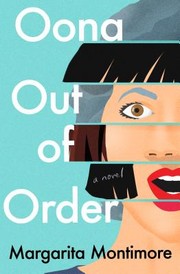
Oona Out of Order
2,429-word summary 11 min read 338 pages in the book
- First published
- 2020
- Publisher
- Flatiron Books
- Pages
- 338
- ISBN
- 9781250236609
Reading options
What's inside (8 sections)
The pitch sounds like a gimmick built for a book club: a woman wakes up in a different year of her own life every New Year's Eve. I nearly skipped it for that reason. What kept me reading was how little the novel cares about explaining the trick. Margarita Montimore published it with Flatiron Books in 2020, and the first hardcover runs 338 pages with ISBN 9781250236609. It arrived with a Good Morning America Book Club sticker and a comparison to The Time Traveler's Wife, which prepared me for a romance. What I got instead was a story about a woman meeting the consequences of choices she cannot remember making, told with real warmth and a stubborn refusal to hand her a clean lesson.
Oona Lockhart is nineteen on New Year's Eve 1982, standing at the edge of a life she thinks she can plan. She is in Brooklyn, at a party thrown by her mother, with her boyfriend Dale D'Amico and a band called Early Dawning. There are two futures in front of her. She can go to London to study economics with her friend Pam, or stay and follow the music, which mostly means following Dale's version of the music. At midnight, instead of simply turning nineteen, she faints. When she comes to, she is fifty one years old, in the year 2015, inside a body she does not recognize and a house she has never seen.
The night the sequence broke
The first rupture is physical before it is philosophical. Oona looks in a mirror and sees an older face. Her mind is still nineteen, full of the argument she was about to have with Dale about the tour, and her body says she has lived three decades she has no memory of. A young man named Kenzie is in the house, trying to explain that this has happened before. From Oona's point of view it is the first time. From his point of view she has been arriving in pieces for years.
Kenzie hands her a letter from a version of herself she has not yet met. The letters become the book's quiet architecture. Oona has built a system for her own condition: notes, instructions, money set aside, a brownstone, and a small circle of people who know enough to guide her and not enough to fix anything. She learns that she used knowledge of future years to invest well, which is why ordinary survival pressure is off the table for most of the story. The book does not linger on the ethics of that windfall, and it should. It uses the money to clear the stage for the emotional premise.
The first true grief arrives as news about Dale. The boy she kissed hours ago did not grow old with her. He died at twenty of a stroke. For the rest of the world he has been gone for decades. For Oona he was alive at midnight. Montimore is good at this kind of double timing, where a fact lands as both ancient and fresh. Oona has to mourn a life she never got to live in order, with memories that do not support the loss. Her mother, who has aged normally, becomes the one constant, receiving whatever version of her daughter shows up that year, younger or older, angry or calm, informed or terrified. She is mother and keeper of secrets at once, and the strain of that role is the best thing in the book.
Young again, and making it worse
If the 2015 year is about adjustment, the next jump is about the seduction of youth. Oona lands in 1991, twenty seven years old, on a dance floor, intoxicated and thrilled to have her body back. After being trapped in a stranger's middle age, the return feels like rescue. She has all the knowledge of a fifty one year old packed inside a club kid's life, and she assumes that will be enough.
It is not. She flirts with and sleeps with a stranger before realizing she has a boyfriend named Crosby. A warning note was waiting for her, but she was too overwhelmed and too delighted to follow it carefully. Crosby finds out and leaves. The scene matters because it keeps Oona from becoming only a victim of her condition. She is under impossible pressure, and she is also careless, impulsive, and capable of hurting people who have done nothing to her. Montimore gives her an explanation for her instability without offering an excuse.
What follows is a slow, believable spiral. Oona parties, takes drugs, drifts through sex, and calls it living in the moment. She spends time with a lively crowd that includes Cyn, a transgender performer whose sharper edges give the 1991 section a social texture the rest of the novel sometimes lacks. Her mother warns her about addiction and about a family vulnerability Oona cannot yet understand, and Oona resists being managed. From the outside the reader can see the difference between presence and escape. She is not inhabiting the year. She is numbing her way through it. By the end of that stretch she begins to grasp that a younger body can still carry an older wound, and that a party can be another form of denial.
Love in reverse
The strongest invention in the book is the way it lets Oona meet a relationship backward. In 2004 she is forty, waking on a subway with names she cannot place: Edward and Peter. When she gets home, Edward Clary is waiting outside. He tells her he is her husband. He is English, charming, good looking, and absorbed in a restaurant project called Clary's Pub. Oona has left herself instructions to make the marriage work, even though she has no emotional memory of falling in love with him. She is married by evidence rather than feeling, and she tries anyway, because some other version of herself chose this.
The marriage frays in a way that is painful precisely because it is ordinary. Edward is defensive about the restaurant's failure, dismissive in private, and increasingly harsh as the project sinks. Oona has money invested in his dream and very little say in it. Into this comes Peter Han, her guitar teacher, and with him the return of music as something that belongs to her rather than to a band or a boyfriend. Oona starts playing again, performs publicly, and tells Edward she wants a divorce. She leaves after proving to herself that she can make sound with her own hands. Then, in a small cruel twist, she asks Peter out and he tells her the timing is wrong. She ends that year with a failed marriage, a missed chance, and a wish to go backward.
She gets exactly one year. In 2003 she is thirty nine and determined to avoid Edward before the marriage, before the restaurant, before the betrayal she already knows is coming. She flees to Egypt. Edward is seated next to her on the plane. This section is the novel at its smartest, because Oona has to fall for a man after watching him fail. He is funny here, frightened of flying, alive with possibility. The marriage will still collapse, but the romance is not fake. That is harder to handle than if he had been empty from the start. She chooses the happiness anyway, with full knowledge of the damage ahead, and supports the restaurant a second time. The book leaves that decision morally unsettled, which is the right call. Her reasoning fits her condition even if it makes no sense to anyone else: she has already felt the heartbreak, so why refuse the good part.
The year darkens in stages. During a blackout the brownstone is robbed and she loses two prized guitars and Dale's watch, one of the few objects linking her to the life she was torn from. She tells her mother too much about a future relationship, a warning that is factually useful and emotionally violent, because it steals her mother's right to live her own present. The scene is the clearest argument the book makes for Oona's no spoiler system. She also encounters a younger Kenzie outside a Suzanne Vega concert, grieving the deaths of his mothers in a car crash, and offers him work as an assistant when he returns from traveling in Asia, unknowingly setting up the guide she will need later. On the next New Year's Eve she finds evidence of Edward's affair with Francesca, and then Dale's stolen watch, and realizes Edward was involved in the robbery to cover gambling debts. He has taken money, trust, safety, and the object that connected her to Dale.
The name on her wrist
After that intensity, 1995 in Vietnam with her mother acts as a healing interval. Oona travels through Asia, faces an old fear of drowning, and begins to understand that moving through pain requires feeling it rather than outrunning it. Her mother stops being only the keeper of secrets and becomes a woman with her own desires, losses, loneliness, and compromises. Their relationship repairs in a way the plot badly needs, because almost every other bond in the novel is either broken or doomed.
Then comes 1999 and the largest hidden truth. Oona wakes in the brownstone and learns what the initials on her wrist, M.D.C.R., actually stand for: McKenzie Dale Charles Ray. Kenzie is her son. She gave birth to him after Dale died and arranged for his adoption because the jumps made stable motherhood impossible. The reveal reorders everything that came before. His patience in 2015, his grief in 2003, his distant anger in 2004, all of it changes charge. He has not simply been helping a strange employer. He has been circling the mother who could not raise him.
Oona is furious, at her mother and at the versions of herself who made the arrangement. That contradiction is central to the book. She resents the consequences of decisions she cannot remember making. Warned not to contact Kenzie, she goes to Boston, invents an identity, and takes a job in the coffeehouse he visits. She bonds with him over music and then loses him when the truth comes out. The deception is understandable and wrong at the same time, and Montimore does not soften it. Oona wants to know her son, but she chooses her need over his stability. The secret meant to protect him becomes another betrayal, and this time she cannot tell herself the damage is hers alone. Her life may be out of order, but everyone else experiences her actions in sequence.
What the years finally cost
In 2017 Kenzie knows the truth and welcomes her back, but the year brings a loss she cannot leap away from. Her mother is dying of cancer. She has been the book's true constant, the person who received Oona again and again through every body and mood, and now Oona has to sit with her instead of solving anything. She apologizes, listens, and arrives at a humility that the earlier years could not produce. After her mother dies, Oona encourages Kenzie to travel and pursue his own connections rather than staying close as proof that she can still have a family. The earlier possessiveness gives way to something like love. She also meets Peter Han again, playing guitar for children in a library, a small sign that not every missed chance is a permanent punishment.
The last chapter sends her back to 1983, to the party just after the first rupture. She is nineteen again, but she carries all the years the reader has watched. She kisses Dale with an attention the first Oona could not manage, and she insists on playing guitar rather than accepting the role the band had assigned her. She chooses the year with Dale knowing he will die, knowing Kenzie will be born, knowing her mother will die, knowing Edward will betray her and that the jumps will continue. The ending does not undo any of that. What changes is that she no longer wants life to choose for her. Love does not become meaningless because it ends, and a year is not wasted because it contains future pain.
What the machine refuses to explain
The book never says why this happens to Oona. There is no scientific cause, no rule about what happens at the year of her death, no test of whether she can change fixed events. The unanswered questions are clearly deliberate. Montimore is writing about the feeling of being out of sequence with your own life, not building a puzzle box, and readers who want mechanisms will finish unsatisfied. I found that restraint mostly welcome, though it also lets her off the hook. Without rules, the condition can arrive exactly when a scene needs it, and a few coincidences, the Egypt flight above all, ask a lot of tolerance.
The wealth from future knowledge is the other soft spot. Being rich removes rent, jobs, and bills from a novel about growing up, which keeps the focus tight but makes Oona's world narrower than it should be. A few of the jumps read as vignettes attached to a theme rather than lives she fully inhabits, and the 1991 stretch in particular feels shortened just as it gets interesting. There is also a risk in the marketing message, the idea that life can be out of order and still be fine. Oona's disorder causes real harm to other people, and the novel is better when it admits that instead of coaching her toward a gentle slogan about presence. The softer reading, that she simply needs to live in the moment, does not survive what she does to Crosby, to her mother, and to Kenzie.
I closed it thinking about how little control any of us has over the order in which we understand ourselves. Most people get the comfortable version of Oona's problem: enough continuity to pretend they are the same person from one birthday to the next. She gets the facts without the sequence, and the book keeps asking whether knowledge is worth anything when it arrives without the wisdom to use it. Her answer, slowly and with plenty of mistakes, is that it is worth something only when she stops treating every other version of herself as a stranger. She does not defeat time. She becomes less dangerous inside it, which is a smaller and more honest outcome than the cover implies, and the better book for it.
FAQ
When was Oona Out of Order published, and by whom?
Flatiron Books published it in 2020. The first US hardcover runs 338 pages with ISBN 9781250236609.
Does the book explain why Oona jumps through time?
No. Montimore gives no scientific or supernatural mechanism, and the novel leaves open what happens at the year of Oona's death and whether she can change fixed events.
Is it mainly a romance?
Romance is a major thread through Dale, Edward, and Peter, but the book is primarily about identity, family, grief, and the consequences of choices. Readers expecting only a love story will find more.
Similar books
The Rest of Our Lives
A law professor drives his daughter to college, then heads west instead of home, testing a private promise he made twelve years ago.
2,238-word summary · 10 min read
Little Earthquakes
Four Philadelphia women meet during pregnancy and discover that new motherhood is nothing like the plan, while friendship becomes the thing that holds them…
1,997-word summary · 9 min read

Days at the Morisaki Bookshop
Heartbroken Takako moves into her uncle's tiny secondhand bookshop in Jimbocho, and the shop and its regulars slowly give her back her life.
2,011-word summary · 9 min read
Olive, Again
Elizabeth Strout returns to Crosby, Maine, as Olive Kitteridge marries Jack Kennison, confronts her son, and faces old age, grief, and small-town judgment.
2,333-word summary · 10 min read
True Colors
Three Grey sisters split over love and duty after their father judges them.
2,596-word summary · 12 min read

The Identicals
Twin sisters swap Nantucket and Martha Vineyard lives for a summer.
2,556-word summary · 11 min read

Heart of the Matter
Two Boston mothers collide after a burn injury puts a single mom in the orbit of another woman's surgeon husband.
2,585-word summary · 11 min read
Freedom
A St. Paul couple and their grown children strain marriage, loyalty, and ideals in 2000s America.
2,678-word summary · 12 min read
The Corrections
An aging Midwestern couple tries to gather three troubled adult children for one last Christmas at home.
2,094-word summary · 9 min read
The Measure
Small wooden boxes arrive for every adult, each holding a string that shows life length. Eight people decide if they will open theirs.
2,374-word summary · 11 min read
The Pact
After Emily Gold dies from a gunshot, her boyfriend Chris Harte says it was a suicide pact and faces trial for murder.
2,873-word summary · 13 min read
My Sister's Keeper
Thirteen-year-old Anna sues her parents for medical emancipation so she can refuse to give her dying sister Kate a kidney.
2,332-word summary · 10 min read

The Wilderness
Four Black women move through twenty years of friendship in Angela Flournoy's discontinuous, widely praised second novel.
2,141-word summary · 10 min read

The Nix
A stalled novelist and community college professor goes looking for the mother who left him and finds a radical activist whose rock thrown at a governor made…
2,214-word summary · 10 min read
The Midnight Train
An eighty-one-year-old bookshop magnate dies and wakes young again aboard a train that carries him back through the moments that mattered most.
2,299-word summary · 10 min read

Perfect Match
A Maine prosecutor shoots the priest she believes abused her son, then faces a trial that questions what justice can mean.
2,241-word summary · 10 min read
Our Souls at Night
A widow asks her widower neighbor to lie beside her at night, not for sex but for company, and two lonely people in a small Colorado town begin again.
2,582-word summary · 11 min read
Left Neglected
A busy mother suffers left neglect after a car crash, forcing her family and her own attention to rebuild a slower life.
2,201-word summary · 10 min read
Barefoot
Three women spend a summer on Nantucket facing chemotherapy, a lost career and a pregnancy shadowed by affairs.
2,323-word summary · 10 min read

Yellow Crocus
In 1837 Virginia, an enslaved wet nurse is separated from her own son to raise a planter's daughter, and the two women build a love the law says cannot exist.
2,094-word summary · 9 min read

Theft
Gurnah traces three linked lives in Tanzania, where a servant's accusation of theft opens a family history of love, duty and quiet betrayal.
2,454-word summary · 11 min read
The Vacationers
A New York family's two-week stay in Mallorca turns into a comedy of exposed secrets when a magazine editor's affair and a son's debts come to light.
2,324-word summary · 10 min read
The Correspondent
A retired lawyer in Annapolis writes letters across a decade to family, literary heroes, and one recipient she never mails. Evans's debut turns correspondence…
2,296-word summary · 10 min read
The Bookstore Sisters
A short, warm story about a woman who returns to her family's failing Maine bookstore and the sister she has spent years avoiding. Books, baking and old…
2,335-word summary · 10 min read
Second First Impressions
A risk-averse retirement-villa manager and the developer's tattooed son are thrown together at work, where her fear of the outside world meets his relentless…
2,073-word summary · 9 min read
Release Me
A guarded engineering graduate newly arrived in Los Angeles is used as bait at an art gala, then offered a million dollars to pose for a powerful man's private…
2,070-word summary · 9 min read
Rachel's Holiday
Rachel Walsh calls her cocaine use recreational until an overdose and a stay at a Wicklow rehab clinic force her to hear what her family and boyfriend have…
2,792-word summary · 12 min read

Lone Wolf
A wolf expert lies in a coma after a crash, and the son who left home years ago returns to end his life support while his sister fights to keep him alive.
2,761-word summary · 12 min read
King of Ashes
A Virginia crematorium, a debt owed to the Black Baron Boys and a family secret pull Roman Carruthers back into a war where everything burns.
2,229-word summary · 10 min read
Hollow Bones
On 11 September 2001, two-month-old Molly Fitzgerald loses her mother at the World Trade Center. She grows up planning for disasters, until a crisis in her new…
2,703-word summary · 12 min read