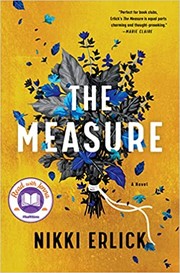
The Measure
2,374-word summary 11 min read 353 pages in the book
- First published
- 2022
- Publisher
- William Morrow
- Pages
- 353
- ISBN
- 9780063204201
Reading options
What's inside (8 sections)
I picked up The Measure because a friend left it on my kitchen table after book club and said it made her call her sister. That is a strong claim for a first novel, and I am usually wary of books that come with homework for my feelings. Nikki Erlick published it in 2022 with William Morrow, 353 pages in the US hardcover, and it was a Book of the Month pick that summer. I read it across three evenings, mostly on the couch with a pencil nearby, and I did text my sister halfway through. Not because I was crying. Because I wanted to ask if she would open the box.
The setup is simple and hard to shake. One March morning, every person on earth who is twenty two or older finds a small wooden box on their doorstep. Inside each box is a piece of string. The length of the string shows how long that person will live. Short string means a short life. Long string means a long one. No note explains who sent the boxes. No science explains how they work. People test them. They try burning the string or stretching it. They compare strings inside families. The strings do not lie, or at least no one can prove that they do.
I liked that Erlick does not spend much time on where the boxes came from. The book follows eight people whose lives cross in loose ways, and it stays close to their choices about work and love and family. Some open right away. Some refuse. Some wish they had refused. The pleasure of the book is watching ordinary plans bend around one strange fact.
The morning the boxes arrive
The opening chapters move fast through confusion. News anchors hold up boxes on live TV. Parents hide boxes from teenagers who have not yet turned twenty two. Couples fight in kitchens about whether to look together. Erlick captures the group chat energy of that first day, the jokes and the fear mixed together, and she keeps the focus on small rooms rather than press conferences.
The rules settle quickly. The strings cannot be altered by cutting or pulling. Scientists study them and confirm a link between length and lifespan, though no one can say what counts as the end or whether choices can shift it. Governments try to stay calm and fail. Employers start asking, quietly at first, if job applicants are long string or short string. Dating apps add filters. Insurance companies panic.
What I found believable was how fast ritual forms. People hold opening parties. They post photos of long strings. They hide short ones. Teenagers count down to their twenty second birthday with dread instead of excitement. One early scene that stayed with me shows a mother measuring her sleeping son's string against her own, then putting both back before her husband wakes. It is tender and wrong in a way that felt true to how families handle scary news.
Erlick also shows the holdouts. Some people throw the unopened box in a closet. Some bury it. Some give it to a partner for safekeeping. The book treats refusal as a choice with costs, not as wisdom. If you do not open, other people will still guess. They will watch how you act. They will ask why you will not say.
Nina and Maura have to decide together
Nina is a Manhattan physician, practical and tired, used to giving bad news in calm language. Maura is her partner, a nurse who works close to patients and feels things openly. They have a steady apartment life, Sunday routines, friends who assume they will marry soon. The boxes land in the middle of that steadiness and split it.
Nina opens. Maura does not. I will not spoil the exact lengths here because the tension of who knows what drives half their story, but the gap in knowledge matters more than the strings themselves. Nina, who spends her days around illness, thinks facts help. If she knows, she can plan. Maura thinks the string would sit between them at dinner and in bed, changing every touch into math.
Their chapters include some of the best medical scenes in the book. Nina sees patients who bring strings to appointments and ask what a two inch difference means. She has no good answer and hates that. Maura sits with older patients who are angry that a box has told them what their bodies already knew. At home, the couple stops telling each other small truths. Nina checks Maura's closet for the box. Maura pretends not to notice.
I recognized something here from real life, the way couples handle test results or job offers or family news when one person wants to talk and the other needs time. Erlick writes their fights without villains. Nina pushes because she is scared. Maura withholds because she is scared. Friends take sides. One dinner party scene, where another couple asks them point blank if they opened, made my stomach tighten. You can feel how quickly curiosity turns into pressure.
Their story also asks a fair question about work. Should a doctor with a short string keep working long shifts in an emergency room. Should a nurse with an unknown string take extra night shifts. The hospital where they work starts sorting staff in quiet ways, and both women have to decide if they will accept labels they did not choose.
Amie and Ben write letters
Amie teaches elementary school in Louisiana. She is warm with her class and lonely outside it, living with routines that feel safe after a hard few years. Ben drifts through New York, sleeping on a friend's couch, working odd jobs, trying to stay out of trouble. They become pen pals through a support forum for people who are unsure what to do with their boxes, and their letters become my favorite thread.
Amie opens her box early and gets a short string. Ben does not say at first whether he opened. Their letters start careful. Favorite books. Classroom stories. Bad subway stories. Then they get honest. Amie admits she stopped dating because she did not want to explain her string on a first date. Ben admits he has been coasting for years and the box feels like an excuse to keep coasting.
The letter format lets Erlick slow down. Amie describes measuring her string against a ruler on her kitchen counter, then folding it back like it might bite. She describes telling her sister, who cries and then tries to plan a trip to Italy as if fun can fix it. Ben describes carrying his unopened box in his backpack for weeks because leaving it at home felt like leaving a stove on.
One scene I liked a lot has Amie reading Ben's letter aloud to her class as an example of friendly writing, with the personal parts cut out, and the kids ask if the friend is sad. She says he is thinking. That line landed for me. A lot of this book is about people who are thinking rather than acting, and Erlick allows that quiet state without mocking it.
Their connection also shows how class shapes the choice. Amie cannot afford to quit and travel. She has rent and a classroom that needs her. Ben has less to lose on paper and still feels stuck. When people talk about short strings as freedom, to quit and paint and sail, these two chapters push back. Freedom costs money. Courage is easier with savings.
I kept thinking about Amie's ruler on the counter, how ordinary tools turn strange when you ask them to measure a life.
Jack, Hank, and the Congressman
Jack is a husband and father in his forties who has built his identity around showing up. School pickup. Weekend projects. Care for his aging parents. He opens and gets a long string, which should be good news, and it unsettles him in ways he did not expect. If he has decades, why does he feel guilty for feeling relieved while friends grieve. If time is ample, why is he still impatient at home.
Hank is older, a former soldier and now a physician who has seen sudden death up close. He served overseas, lost friends, came home with habits that helped him cope and hurt the people near him. He opens and gets a short string. For Hank, the news lands less as shock than as confirmation. He has lived as if time were short for years. Now a box agrees with him. His chapters deal with veterans groups, hospital work, and a slow effort to repair ties with his sister.
Anthony Carroll is the public face of the book, a Congressman from a famous family who decides to run for president on a platform tied to the strings. He argues that short string people need protection while also suggesting they should be treated as risks. He supports limits on military service for short string recruits. He backs school tracking proposals. He talks about responsibility in ways that sound caring until you hear who pays.
Erlick is good at showing how decent people hear Anthony differently. Jack hears a leader making hard calls. Hank hears a man who never carried a pack telling soldiers when they can serve. Nina hears a politician practicing medicine without training. Amie hears a threat to her students, some of whom will be sorted before they can read well.
The campaign scenes are among the liveliest. A town hall where a mother asks Anthony if her short string son should still try out for firefighter training. A debate where an opponent asks if Anthony opened his own box.
What a short string changes
The middle of the book follows the spread of string status into daily life. Schools ask parents to report strings on forms meant for allergies. The Army sets new rules about deployment for short string volunteers. Hospitals shift schedules. Employers find coded ways to ask. Landlords do too. Couples break up. Some marry fast.
Erlick handles this through small moments rather than big speeches. A principal tells Amie she cannot take her class on an overnight trip because parents worry. A hiring manager tells Ben the job went to someone else after seeing a photo of his open box on social media. A bride asks Nina to be a bridesmaid and then uninvites her after learning her result, saying she wants happy energy at the wedding.
The strongest idea in these chapters is that knowledge does not settle people. It stirs them. Long string people delay care, assuming they have time. Short string people either rush or freeze. People who refused to open get treated as suspicious by both sides, as if privacy means bad news.
There is also a quiet thread about faith and protest. Churches fill. Some preachers call the boxes a gift. Others call them a test and urge followers to burn them unopened. One march scene, where Hank walks beside teenagers who joke to hide fear, moved me more than the campaign scenes because it felt ground level.
I appreciated that Erlick shows kindness alongside bias. Neighbors cook for a family with two short strings. A bookstore owner, who becomes important through Ben, offers him steady work and a room without asking about his box. Nina's colleague covers shifts without questions. The world in this book feels tired and improvising, which felt honest.
If you want hard science about how the strings work, you will not get it. The book never explains the mechanism, and it never tries to. That choice will bother some readers. I accepted it because the story is about response, not cause. Still, a few plot turns rely on characters accepting test claims quickly, and I would have liked one skeptical chapter that stayed skeptical longer.
Where the book wobbles for me
The Measure tries to hold eight points of view plus a national story, and at times the seams show. Amie and Nina feel fully drawn, with habits and speech you can hear. Jack and Anthony feel a bit thinner, built to carry themes about fatherhood and power. Hank sits between, vivid in war memories and a little vague at home. When chapters are short, I sometimes needed a page to remember whose head I was in.
The premise is also bigger than the plot. The arrival of the boxes promises a mystery, and Erlick wisely refuses to solve it, but that leaves the last third searching for drive. A trip Amie plans, a decision Hank faces about treatment, a vote Anthony pushes, these carry weight, yet none has the snap of a thriller turn. Readers who want reveals may feel the pace sag around page two hundred and fifty. I did, briefly, before the letters pulled me back.
The tone stays hopeful, almost stubbornly so, and that is both its charm and its limit. People grow kinder. They choose love over sorting. They build schools and clinics and bookshops that welcome all strings. I found the final gatherings moving, especially a late scene where strangers share tables and talk openly about what they did with their boxes. But the neatness is real. Cruel systems soften fast. The Congressman's arc resolves a touch too cleanly for the harm his campaign caused.
Still, I closed the book glad I had read it. Erlick writes about attention, how we spend days when days feel counted, and she does it with clear sentences and generous humor. A scene where Ben learns to shelve books by feel while the shop radio plays made me put the book down and sit still for a minute.
Who should pick it up. If you liked ensemble stories where strangers orbit one event, or if you enjoy what if setups that stay close to kitchens and classrooms, this will suit you. If you need hard answers about the boxes or sharp satire that bites, you may want something colder. For me, the question that lingers is not would I open. It is who would I tell first, and whether I could live with their face after I said the words out loud.
FAQ
When was The Measure published?
William Morrow published the US first edition in 2022. It runs 353 pages with ISBN 9780063204201.
Do the boxes get explained?
No. Erlick never names a sender or mechanism. The story follows eight people responding to short and long strings.
Similar books
More like The Measure →
Wish You Were Here
Diana goes to the Galapagos alone when Covid keeps her boyfriend in New York, and being stranded there forces her to rethink her job and relationship.
2,178-word summary · 10 min read

The Storyteller
Baker Sage Singer is asked by old Josef Weber to kill him for his SS past, while her grandmother Minka's war story weighs on her.
2,174-word summary · 10 min read

Olive Kitteridge
Thirteen linked stories orbit blunt Crosby teacher Olive, husband Henry and son Christopher through love, aging and Maine small-town life.
2,385-word summary · 11 min read

My Grandmother Sends Her Regards and Apologises
Seven-year-old Elsa loses her granny and best friend, then delivers apology letters to neighbours while holding onto fairy tales of Miamas and the Land of…
2,311-word summary · 10 min read

The Pact
After Emily Gold dies from a gunshot, her boyfriend Chris Harte says it was a suicide pact and faces trial for murder.
2,873-word summary · 13 min read
Still Alice
Harvard professor Alice Howland faces early onset Alzheimer's and her family must adapt as memory fades.
2,477-word summary · 11 min read