
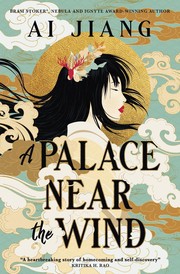
A Palace Near the Wind
2,304-word summary 10 min read 192 pages in the book
- First published
- 2025
- Publisher
- Titan Books
- Pages
- 192
- ISBN
- 9781803369402
Reading options
What's inside (8 sections)
A bride walks into her husband's palace intending to kill him on the wedding day. That is the clean, sharp premise of A Palace Near the Wind, a 2025 science-fantasy novella from Titan Books that runs 192 pages, and Ai Jiang does not waste much time getting her there. What stays with you is not the assassination plot so much as the detail of the wedding feast. The meat set before the bride is an abomination to her people, who live in the forest and take no part in that kind of eating. In a single meal Jiang shows you the whole distance between the two worlds in the book, and how little either side understands the other.
I should say at the outset that this is a short book, and it wears that shortness proudly. There is no tried-and-true epic build here, no long road of chapters before the real story begins. Jiang drops you into Lufeng's situation almost immediately and trusts you to keep up. I read it in a single sitting and came away wanting more, which the reviews suggest is a common reaction. It is the first volume of her Natural Engines duology, so some of that hunger is presumably meant to be fed by the sequel. Even so, the novella has a complete arc of its own, and it ends at a decision rather than a cliff-hanger.
A people made of the forest
The Feng are tree dwellers. They have faces of bark, arms of braided branches, and hair like needle-threads, and they live in a kind of symbiosis with the forest around them. Their lives are bound up with the trees in a way that is physical, not decorative. Jiang takes care to make that physicality felt rather than simply stated. When you picture a Feng person, the details arrive together: the rough face, the limbs that are branches, the hair like threads drawn from pine needles. This is a people who have grown into their surroundings, and their bodies tell you so before anything else does.
Opposed to them are the human Land Wanderers, who are expanding into Feng territory, clearing and building and treating the forest as something to be used. The threat they pose is not a single dramatic invasion. It is a steady pressure, the sort of thing that advances a little each year until the ground under a way of life has been quietly taken away. Jiang sets the novella as the first volume of her Natural Engines duology, and the tension between these two ways of living drives everything that follows. The Land Wanderers have numbers and power on their side. The Feng have the forest, and a history that turns out to be more complicated than anyone in the palace suspects.
Into this world comes Princess Liu Lufeng, the eldest daughter of Feng royalty. She has watched her sisters married off as bridewealth to the human king, sent away to his palace and never seen again. The marriages are a transaction that buys peace, or at least a pause, and each sister disappears into the human world without a word back. Lufeng has had to stand beside that process year after year, attending the ceremonies and saying the proper things while one sister after another is handed over. You can feel the toll it takes on her, a slow accumulation of grief and helplessness that turns into something harder. When it becomes clear that her beloved younger sister Chuiliu is next in line, she stops being a bystander.
Taking her sister's place
Lufeng takes Chuiliu's place and travels to the human palace as the king's new bride, carrying an intention her captors never guess at. She means to assassinate the king on her wedding day and end the cycle of sacrificial marriages for good. It is a bold plan and a desperate one, and Jiang keeps the pressure on it from the moment Lufeng arrives. The journey itself is a passage out of everything she knows. She leaves the living forest and its familiar textures for a world of walls and thresholds, and each step takes her further from the people who might have helped her.
The palace is cold, built of stone, and completely alien to someone whose whole life has been spent in the living forest. Even the food is an affront. The wedding feast's meat is something a Feng person cannot accept, and Lufeng has to sit through it while pretending to be a willing bride. I liked how quickly the book makes the palace feel like a trap. It is a place built out of the very materials and habits that the Feng are not part of. Stone instead of bark, meat instead of what the forest provides, human ceremony instead of Feng custom.
Lufeng is surrounded by people who assume she will be grateful, and she has to smile through a meal she finds repellent while she looks for a way to kill the king. The horror of her perspective, which Catherine Berridge of the British Fantasy Society singled out in her review, comes from that enforced politeness as much as from anything supernatural. There is a particular kind of dread in being the only person in a room who understands what is actually happening, and Jiang holds on to that feeling. Lufeng cannot speak plainly to anyone, cannot ask the obvious questions, cannot show the disgust she feels. She has to perform contentment while counting the days to a murder.
What the palace hides
Once inside, Lufeng starts uncovering the truth her people have kept buried. The origins of the Feng are not what she was taught, and the suppressed history of her people begins to surface in the palace where she least expected to find it. The irony is neat: she came to this place to kill a man, and what she finds instead is her own people's past, preserved in the one location she was sure would be hostile to it. That discovery shifts the whole book. Lufeng had thought she understood who she was and what her sisters were being sacrificed for. The palace shows her that the story she was raised on is incomplete.
What she learns changes the shape of her mission. The Feng cannot be safe as long as human industrial expansion continues. This is the hinge of the novella, because it means that killing the king, even if she succeeded, would not fix the underlying problem. The danger is not one person on a throne. It is the whole advance of the Land Wanderers into the forest, the ongoing conversion of a living place into territory and resource. That realization is what makes the book more than a revenge story. Lufeng came intending to remove a single man, and she discovers that the cycle of bridewealth is a symptom of something larger and harder to fight.
Jiang is interested in the difference between a personal enemy and a system that keeps producing enemies. The palace, with its cold stone and its strange feasts, becomes the place where Lufeng learns to see that difference. I found this the most persuasive part of the novella, the moment when a fairy-tale setup grows teeth and starts asking a real political question. It also raises the stakes of her personal situation. If the true threat is industrial expansion, then her family is not safe even if she walks away from the wedding alive, and her sisters are not avenged by a single death. Everything she thought she was fighting for has to be rethought.
Choosing allies in a strange place
From there Lufeng has to abandon duty and tradition and decide for herself what loyalty means. She cannot simply follow the role she was born into, as her sisters did, and she cannot trust the people who now call her family by marriage. Every person in the palace has a reason to want her compliant, and the customs she was raised to honor are the very ones that delivered her here. Abandoning them is not a light choice for her. It means accepting that the elders who taught her those duties were working with incomplete knowledge, and that obedience would only carry her further into the trap.
She has to choose her allies carefully in a place where everyone has a reason to use her, and gamble on the unknown to save her family and shape her own fate. That last part matters. This is a story about rescuing Chuiliu and avenging her sisters, but it is also about Lufeng deciding that she will be the one who chooses, rather than the one who is given away. The gamble is the point. She has no reliable map of this place and no guarantee that the allies she picks will hold, so she acts on partial information and accepts the risk. Watching her work that out is the quiet pleasure of the book.
The novella is only 192 pages, and that brevity is both a strength and a limitation. Jiang moves fast, and there is no wasted motion in the descent into the palace and the unravelling of the Feng origin story. Berridge, writing for the British Fantasy Society, praised the claustrophobic, paranoid feel, the crisp prose and the horror of Lufeng's point of view, while wishing the book were a longer novel. I felt the same pull. There is a version of this story that could have stretched into several hundred more pages, and the concision sometimes reads as a door shut just as the room beyond it gets interesting. Still, the compact scale suits a story about a woman who has to make a single, irreversible choice quickly.
Where the story came from
Jiang has said the novella began as a meditation on the climate crisis and on the tension between the environmental damage tourism causes and the money it brings in. That tension is a real one, and it is to her credit that she refuses to flatten it into a simple lesson. The forest in the book is both a home and a resource, something people live inside and something people want to profit from. Jiang has described industrialism as Blue Beard and nature as the wives, a comparison that makes the human king's marriage customs feel like a figure for a much older pattern of consumption. Once you see that, the bridewealth marriages stop looking like an arbitrary fantasy cruelty and start looking like a way of writing about who gets used and who gets counted.
The story grew into something about diaspora and cultural loss, inspired by the demolition of her grandmother's village in Fujian. Once you know that, the bridewealth marriages read differently. They are a way of writing about what happens when a culture is taken apart and its people are scattered. The sisters sent to the human king never come back, and that permanent severance is the emotional core of the premise. Jiang is writing about a specific kind of grief, the kind that comes from knowing the place and the people you belong to are being dismantled and that there is no return address.
Read this way, the book is a Chinese-inflected fable about nature against extractive capitalism. The Feng live inside the forest and understand it as a relation; the Land Wanderers see it as territory to be taken. Jiang does not stop there, though. The question of what the Feng actually are, and where they came from, turns the simple opposition into something harder. Martha Wells called the novella lush, inventive and original, and those words fit the way Jiang takes a familiar structure and bends it toward her own preoccupations. The result resists being reduced to its message, which is why the suppressed history matters as much as the politics.
A short book with a long shadow
The reception has been strong. Berridge's review in the British Fantasy Society praised the claustrophobia and the prose, Wells praised the invention, and the book arrived with Jiang's Bram Stoker, Nebula and Ignyte awards already behind her. A sequel, A River from the Sky, followed in 2026, which confirms that the Natural Engines duology was planned as more than a single story. Reading the two books in sequence, you can see how much of the first one is a setup of questions rather than answers. A Palace Near the Wind is content to leave Lufeng at the point of decision, with the forest and the palace both still dangerous and her family still not safe.
That openness is a deliberate part of the design. Lufeng has learned the truth about her people and made her choice about who to trust, but the world around her has not changed. The Land Wanderers are still expanding, the king is still on his throne, and the fate of her sisters is still bound up with a bargain she now understands too well to accept. The novella ends with the work ahead of her rather than behind her. If you want a story that ties everything up, you will likely find this one unsatisfying on its own.
What I keep returning to is the image of the wedding feast. A young woman in an alien palace, surrounded by people who think the afternoon is a celebration, looking at a plate of meat she cannot bring herself to touch. That is the whole book in miniature: someone who knows the cost of things sitting at a table where nobody else is counting it. Jiang writes that scene without raising her voice, and it is the quietest, most unsettling moment in the novella. For a short book, it leaves a surprisingly large amount behind.
FAQ
Who are the Feng in A Palace Near the Wind?
They are tree-dwelling people with bark faces, braided-branch arms and needle-thread hair who live in symbiosis with the forest, and whose land is being taken by the human Land Wanderers.
Is A Palace Near the Wind part of a series?
Yes. It is the first volume of Ai Jiang's Natural Engines duology, followed by A River from the Sky in 2026.
What inspired Ai Jiang to write the novella?
Jiang has said it began with the climate crisis and tourism's environmental cost, grew into a story of diaspora and cultural loss, and was shaped by the demolition of her grandmother's Fujian village.
Similar books
The Salt King
Sent back to the salt-mining town he fled, a Jesuit priest investigates miracles that turn pilgrims into pillars of salt. Pulley adds a slow-burning queer…
2,214-word summary · 10 min read

Saga, Volume 4
Book Two opens with Alana and Marko trying to raise Hazel in hiding on Gardenia, while a vengeful robot kidnaps Prince Robot IV's newborn son.
2,003-word summary · 9 min read
Saga, Volume 3
Marko, Alana, and Hazel hide on the planet Quietus with the reclusive author who inspired their romance, while assassins and a prince close in.
1,989-word summary · 9 min read
The Time Keeper
Mitch Albom's 2012 fable follows Dor, the first measurer of time punished in a cave, as he returns to guide a heartbroken teen and a dying businessman toward…
2,466-word summary · 11 min read
A Wind in the Door
Meg must save Charles Wallace from a cosmic sickness by naming and loving what she fears, helped by a cherubim called Progo.
2,214-word summary · 10 min read
Perfect Match
A Maine prosecutor shoots the priest she believes abused her son, then faces a trial that questions what justice can mean.
2,241-word summary · 10 min read
Left Neglected
A busy mother suffers left neglect after a car crash, forcing her family and her own attention to rebuild a slower life.
2,201-word summary · 10 min read

Yellow Crocus
In 1837 Virginia, an enslaved wet nurse is separated from her own son to raise a planter's daughter, and the two women build a love the law says cannot exist.
2,094-word summary · 9 min read
Wild Magic
A thirteen-year-old orphan in the kingdom of Tortall learns to live with the gift of speaking to animals, and discovers that the creatures she loves are not…
2,056-word summary · 9 min read
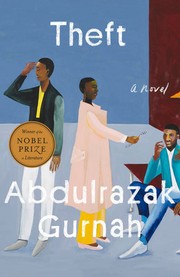
Theft
Gurnah traces three linked lives in Tanzania, where a servant's accusation of theft opens a family history of love, duty and quiet betrayal.
2,454-word summary · 11 min read
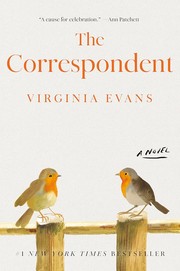
The Correspondent
A retired lawyer in Annapolis writes letters across a decade to family, literary heroes, and one recipient she never mails. Evans's debut turns correspondence…
2,296-word summary · 10 min read
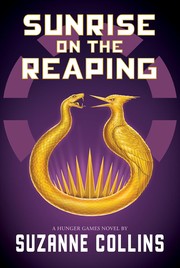
Sunrise on the Reaping
Twenty-four years before Katniss, sixteen-year-old Haymitch Abernathy is swept into the fiftieth Hunger Games, where District 12 must send four tributes and…
2,198-word summary · 10 min read

Nightmares and Dreamscapes
King's 1993 collection runs from a man buried alive in a Cadillac to a town of dead rock stars, mixing horror, science fiction and dark humor across 816 pages.
3,232-word summary · 14 min read
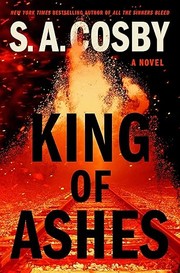
King of Ashes
A Virginia crematorium, a debt owed to the Black Baron Boys and a family secret pull Roman Carruthers back into a war where everything burns.
2,229-word summary · 10 min read
Death of the Author
Okorafor's Africanfuturist novel follows a disabled Nigerian American writer whose blockbuster novel and its robot characters force her to ask who really owns…
2,468-word summary · 11 min read
Beauty: A Retelling of the Story of Beauty and the Beast
Robin McKinley's debut retells Beauty and the Beast through a plain, book-loving girl whose nightly refusals of the Beast's proposals slowly become something…
2,100-word summary · 9 min read
The Long Dark Tea-Time of the Soul
Dirk Gently links a burning Heathrow counter, a dead songwriter, and Odin's unpaid power bill to the old gods living rough at St Pancras.
2,244-word summary · 10 min read
Oona Out of Order
Each New Year's Eve, Oona Lockhart wakes up in another year of her own life, with the mind of the woman she was and no memories to match her new body.
2,429-word summary · 11 min read
Ship of Magic
A sentient ship wakes when her captain dies, and the family that owns her starts to come apart over who gets to sail her.
2,026-word summary · 9 min read
Little Earthquakes
Four Philadelphia women meet during pregnancy and discover that new motherhood is nothing like the plan, while friendship becomes the thing that holds them…
1,997-word summary · 9 min read

The Diamond Age: Or, A Young Lady's Illustrated Primer
A stolen nanotech primer raises a poor girl in 22nd-century Shanghai, and Neal Stephenson turns her education into an argument about class, freedom, and who…
2,055-word summary · 9 min read

Iron Widow
Wu Zetian enlists to avenge her sister, kills her pilot, and becomes an Iron Widow in a mecha Huaxia where the machines are built to kill women.
2,444-word summary · 11 min read

Archenemies
Nova steals for the Anarchists while Adrian hides his Sentinel identity, and a serum that erases prodigy powers puts them both at risk.
2,485-word summary · 11 min read
The First Fifteen Lives of Harry August
Harry August dies and is born again into the same life, again and again, until a warning from a child tells him the world is ending faster with each pass.
2,189-word summary · 10 min read

The Age of Miracles
A California girl grows up while the Earth's rotation slows, and ordinary adolescence continues alongside slow catastrophe.
2,417-word summary · 11 min read

Tales from the Café
Four more visitors to a Tokyo café travel through time under strict rules, each hoping to say the thing they could not say before.
2,242-word summary · 10 min read
Summer Island
A radio advice host hides a scandal, and the estranged daughter hired to write about it agrees to care for her at the family's island house.
2,325-word summary · 10 min read

We Are Okay
Marin fled San Francisco after her grandfather vanished and stopped answering anyone. When Mabel visits her college dorm, she has to say what happened.
2,253-word summary · 10 min read

The Borrowers
A family of tiny people live under the floorboards of an English house, borrowing what they need until a lonely boy and a suspicious housekeeper change…
2,164-word summary · 10 min read

The Bone Clocks
A teenage runaway, a Cambridge con artist, a war reporter and a dying novelist circle a hidden war between immortals across sixty years, with Holly Sykes at…
2,125-word summary · 9 min read