
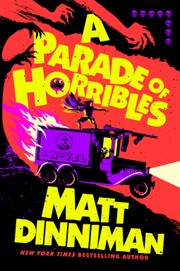
A Parade of Horribles
2,670-word summary 12 min read 704 pages in the book
- First published
- 2026
- Publisher
- Ace Books
- Pages
- 704
- ISBN
- 9798217190065
- Series
- Dungeon Crawler Carl (#8)
Reading options
What's inside (9 sections)
I came to this one as someone who has been along for most of Carl's run, and I will say up front that it is not a friendly place to start. This is the eighth book in the Dungeon Crawler Carl series, published in 2026 by Ace Books, and it assumes you already know why a man and his cat are famous inside a killing dungeon. If you have not met Princess Donut or learned how the system talks to its captured audience, the opening chapters will feel like walking into a conversation halfway through. That is a choice the book makes on purpose, and I think it is the right one, even if it closes the door on casual readers. What I wanted, coming in, was to see how Dinniman follows up Faction Wars, and whether a series this far in can still surprise me.
It can. It also runs to 704 pages in the hardcover, which is a lot of book to carry around, and it leans hard on jokes that have been building since the first novel. Both of those things are part of the experience, for better and worse. By the end I had laughed more than I expected and felt the weight of a story that keeps getting bigger in ways that are hard to write about without spoiling.
The world after Faction Wars
The book opens in the aftermath of Faction Wars, and the dungeon is not the only place in trouble. Out on the surface, beyond the walls of the whole terrible game, chaos and mass panic are spreading. This is one of the things I like about where the series has landed: the dungeon was never sealed off from the rest of the world, and the damage now leaking outward is impossible to ignore. The crawlers down below are still running for their lives, but there is a sense that the stakes have escaped the arena and started to touch everyone watching.
Carl and Princess Donut are on the tenth floor when we rejoin them. For anyone who has followed the series, that cat is not a pet in any ordinary sense. She is Carl's partner, his conscience, his comic foil, and the source of a great deal of the book's humor. Their back and forth is one of the engines that keeps these novels moving, and it is in full working order here. The dynamic works because the two of them genuinely need each other. Carl can be reckless, Donut can be vain and monstrously funny, and together they make a team the dungeon has never quite figured out how to break.
The surface panic and the tenth floor races are happening at the same time, and the book moves between them without much ceremony. That parallel structure gives the story a wider frame than earlier entries had. I found myself caring about what was happening outside the dungeon almost as much as what Carl was facing inside it, which is a fairly new feeling for this series. The system has always been a show, broadcast to an audience, and this book takes that idea further by letting the audience's world come apart at the edges.
A floor that plays at being ordinary
Here is the part that caught me off guard. The tenth floor's rules force the crawlers to compete in a set of tasks that are, by dungeon standards, almost mundane. They race. The rule is simple: get from point A to point B without coming in last. After each race, the crawlers pick an upgrade for their vehicle, and the track grows more challenging. That is the whole premise of the floor, at least on paper.
I kept waiting for the other shoe to drop, because in most books this would be the calm before something awful. In a way it is, but Dinniman's trick is to let the ordinary setup sit there and be ordinary for a while. The races have a rhythm to them. You get a course, you get a vehicle, you get an upgrade, and the bar rises a little each time. There is something almost sporting about it, and that is strange in a story where coming in last can mean death. The banality is the point. The dungeon knows exactly how to dress a horror up as a game show, and the narration treats the whole thing with the dry, practical voice of a producer explaining the rules to a studio audience.
That voice is one of the reasons the series works. The system AI speaks in the tone of an excited host, cheerful and detached from the suffering it describes. On this floor it even seems to be steering readers, telling us to ignore the strange glitches that are popping up with increasing frequency, and to pay no attention to the whispers about the mysterious eleventh floor. The instruction is delivered so casually that it took me a moment to register how sinister it was. When a narrator tells you not to worry about something, you start watching for it.
The vehicle upgrades gave me some of the book's best moments of invention. Dinniman has always been good at taking a video-game idea and pushing it one step past where it stops being funny and starts being genuinely tense, and the same instinct is at work with these races. A small improvement to a car or a cart becomes a decision about who you are willing to outpace, and who you are willing to leave behind. Underneath the joke is a real question about how far someone will go to avoid finishing last.
Glitches and the floor nobody understands
The whispers about the eleventh floor are not idle gossip. The system AI has given that next floor a name, and the name is the book's title: A Parade of Horribles. It has described the place as "a coming-out party for the ages." That phrase appears early and hangs over everything that follows, because nobody, not even the showrunners, knows what it means.
That last detail is what got me. The showrunners are the people supposedly running this spectacle, the ones who should understand the rules better than anyone. If they are in the dark about the eleventh floor, then the crawlers are not just outmatched; the entire structure is heading somewhere untested. Dinniman uses that uncertainty well. He does not answer the question of what the parade actually is, at least not in any way I could pin down, and the not knowing is more effective than any reveal would have been. A monster you can imagine is worse than one you can see.
The glitches feed the same feeling. They show up more and more often as the book goes on, little failures in the system that the narration keeps telling us to disregard. I read them as cracks in the show, signs that whatever is coming next is putting pressure on the dungeon itself. The surface panic fits the same pattern. Everything outside the intended story is starting to leak in. By the time Carl and Donut are deep into the races, the sense of a carefully managed contest has started to feel like a thin shell over something much less stable.
This is where the book's title earns its place. A parade is a public performance, a thing put on display for an audience, and a coming-out party is a debut. Put those together and you get the dungeon's favorite idea: a spectacle that introduces something to the world. The horror is in the not knowing who or what is being introduced, and in the suspicion that the audience itself might be part of the guest list. I finished the book with that image still rattling around, which is more than I can say for most series villains.
Carl's refusal, and the party he plans
The heart of this book is not the racing or the glitches. It is Carl's reaction to the rules. He hates that this floor has stripped away his agency. He has spent the whole series fighting a system that tells him where to go and what to do, and now he is being handed a tidy set of tasks that tell him exactly how to survive. He is supposed to run, upgrade, and stay ahead of the pack, grateful for the clarity of it. He is not grateful.
That refusal is what drives the plot. Carl starts planning a party of his own, a scheme so dangerous and so unhinged that he cannot bring his friends in on it. The reason he gives himself is practical and awful at the same time: the AI would put a stop to it if it knew. So he works alone, keeping the plan from the people who would normally be the first to hear it. Watching him carry that secret was the most tense thing in the book for me, because the series has trained us to expect Carl and Donut to solve problems together. Splitting them, even over one scheme, changes the shape of the story.
The stakes, as the book keeps reminding us, are higher than they have ever been. If Carl's plan goes wrong, the cost is not just the end of Carl and Donut. The phrasing matters. This is a series that has spent seven books raising the price of failure, and now it is suggesting that the bill could come due for far more than two crawlers. I felt that weight in the scenes where Carl weighs whether to trust his own idea. He is not simply trying to win a race anymore. He is trying to answer a system that has cornered him, and he is doing it on a clock he cannot see.
Donut's role in all of this is hard to talk about without giving too much away, but her bond with Carl is what keeps the scheme from turning into a grim solo mission. Even when he is keeping secrets, the book stays a two-hander. Their arguments, her Reactions to his plans, and the way they read each other after all these floors are the glue that holds the emotional side together. The design only works because the series has earned that relationship over eight books. A newcomer would see a man and a cat bickering; a regular sees two survivors who know exactly which buttons to push.
Built for people who already know the rules
I want to be straight about who this book is for. It offers almost no hand-holding. It assumes you are familiar with the talking-cat duo, the dungeon system, and a large cast of crawlers and showrunners, and it throws names and histories at you as though you have been keeping score all along. There are moments when a joke lands because of something that happened in an earlier book, and others where a character's entrance clearly expects a reaction I could only approximate from memory. That is not a flaw in the writing so much as a consequence of where the series is in its life. Eighth books are written for the people who stuck around.
The comedy and the gore are deliberately over the top, and I mean that as both a description and a warning. Dinniman does not dial anything back here. The jokes arrive fast, some of them built on running gags that have been circulating since the first novel, and the violence sits right alongside them without apology. If you have ever bounced off this series because the humor and the carnage seemed to be competing for the same page, this book will not change your mind. The tone stays comic even as the body count climbs and the cosmic stakes rise, and that combination is either the whole appeal or the whole problem, depending on your taste.
One thing that does help is the audiobook. Jeff Hays's narration is something fans bring up constantly, and after spending time with this story I understand why. A book this dependent on voices, on the system's announcements and Donut's delivery and the timing of a punch line, benefits enormously from a performance that knows when to speed up and when to let a silence sit. The glitches and the show-runner chatter especially gain something in audio, where the cheerfulness of the machine can sound genuinely wrong. If you are on the fence about the format, this is a good entry point to try.
The cast is another reason regulars will feel at home and newcomers will feel lost. Crawlers, showrunners, and the machinery of the dungeon all return, and the book assumes you can keep them straight. I appreciated that it did not stop to reintroduce everyone, but I also caught myself flipping back mentally to remember who was who. That is the trade you make with a long-running series at book eight.
What holds it back, and why I kept reading
Let me be fair about the things that did not fully work for me. The length is the first one. At 704 pages, this is a big commitment, and there are stretches where the racing structure repeats itself enough that I felt the pattern before I felt the story. The upgrades come, the track gets harder, the joke about the absurdity of it all gets another turn. Dinniman has a real talent for inventive floor concepts, and that talent is on display, but the middle of the book has a few laps that could have been cut without losing anything.
The reliance on running jokes is the second. Some of these gags have been around for eight books now, and a few of them have started to feel less like a payoff and more like a reflex. I laughed at plenty of them, so I am not saying the well is dry. I am saying that a book this long asks those jokes to carry more weight than they can always bear. When a running bit shows up for the fifth time in a chapter, it stops being a surprise and starts being a familiar face, which is pleasant in its way but not the same as being funny.
And yet I kept reading, and I would read the next one. The reason is the same reason I have stayed with the series: nobody else is building floors like this. The idea of a dungeon that turns survival into a broadcast, complete with hosts and upgrades and an audience whose own world is coming apart, is a strong one, and Dinniman keeps finding new angles on it. The tenth floor races are a smart piece of design because they are boring on the surface, which makes the horror underneath them land harder. The eleventh floor, with its parade and its party and its unknowns, is a genuinely unsettling hook even without a clear explanation.
My read on it
I would hand this book to someone who already loves Carl and Donut and wants to see what happens when the series takes its biggest swing yet. I would not hand it to a curious newcomer, and I would warn anyone who dislikes long books built on recurring jokes that this one leans into both. It is loud, it is funny, it is violent, and it is far more interested in where the dungeon is heading than in making things easy for the reader.
What stayed with me was not any single race or gag. It was Carl sitting with the fact that the rules have boxed him in and deciding, anyway, to throw a party nobody asked for. That is the series in miniature: a person who refuses to be a contestant even while the whole world insists he is one. The parade may be a coming-out party for the ages, but Carl's own little celebration is the one I will remember.
FAQ
Do I need to have read the earlier Dungeon Crawler Carl books first?
Yes. This eighth installment offers little hand-holding and assumes you already know Carl, Princess Donut, the dungeon system, and its large cast of crawlers and showrunners.
What is A Parade of Horribles?
It is the name the system AI has given the mysterious eleventh floor, described as 'a coming-out party for the ages.' Nobody, including the showrunners, knows what it means.
Is the book more comedy or horror?
It stays comic even as the body count and cosmic stakes climb, with deliberately over-the-top gore and running jokes. Fans also point to Jeff Hays's audiobook narration as a major draw.
Similar books
More from Dungeon Crawler Carl first, then related titles.

Babylon's Ashes
Three months after the Free Navy's strikes, the Rocinante crew returns as Earth, Mars, and the Belt unite to retake the Ring station of Medina.
2,245-word summary · 10 min read
Starsight
Spensa Nightshade goes undercover aboard the Superiority space station Starsight to steal a hyperdrive, and finds a frightened bureaucracy where she expected…
2,568-word summary · 11 min read
Saving the World and Other Extreme Sports
Max and the flock split in two to take down the lab behind their lives, one half in California and the other in Europe.
2,175-word summary · 10 min read
Heir to the Empire
Grand Admiral Thrawn returns from the Unknown Regions and outmaneuvers the New Republic while Luke, Leia, Han and smuggler Talon Karrde race him toward…
2,323-word summary · 10 min read
We Are Legion (We Are Bob)
A dead software engineer wakes up as a self-replicating space probe, clones himself into a squabbling fleet of Bobs, and tries to keep a ruined Earth alive.
2,357-word summary · 10 min read
A Connecticut Yankee in King Arthur's Court
Hank Morgan, a Connecticut factory man, wakes in King Arthur's England, rises to chief adviser, and rebuilds the kingdom until his own inventions turn on him.
2,193-word summary · 10 min read
Cibola Burn
Settlers and a company fight over a new world while Holden tries to stop a war.
2,011-word summary · 9 min read

Warcross
Emika Chen glitches into the Warcross Tokyo championship, joins the Phoenix Riders to hunt the masked Zero, and must face Hideo Tanaka's plan to read minds for…
2,826-word summary · 13 min read
School's Out - Forever
The bird kids try normal school under FBI guard until hunters crash class and chase them to Itex in Florida.
2,584-word summary · 11 min read
An Absolutely Remarkable Thing
Hank Green's An Absolutely Remarkable Thing follows artist April May after she and Andy film a giant Carl robot in New York that appears in cities worldwide…
2,699-word summary · 12 min read
Armada
Gamer Zack learns Armada game trains real defense against alien Europans.
2,004-word summary · 9 min read
Ready Player Two
Wade finds the ONI headset and seven new shards, reuniting the High Five against Anorak for the OASIS future.
2,157-word summary · 10 min read
Ready Player One
In 2045 Wade Watts hunts Halliday's three keys inside the OASIS, racing IOI with Art3mis, Aech, Daito and Shoto for the Jade Key onward.
1,971-word summary · 9 min read
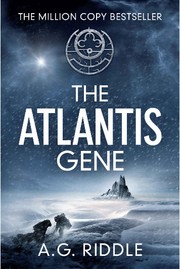
The Atlantis Gene
A geneticist and an intelligence operative chase two kidnapped boys through a global conspiracy about human evolution and a weapon built to cull humanity.
2,369-word summary · 11 min read
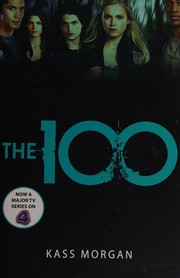
The 100
Three centuries after a nuclear war, a hundred teenage prisoners are sent from a failing space colony to test whether Earth is livable again.
2,152-word summary · 10 min read

When the Moon Hits Your Eye
The Moon turns into cheese, and a loose collection of stories follows how institutions, billionaires, pastors and ordinary people respond to the impossible.
2,002-word summary · 9 min read
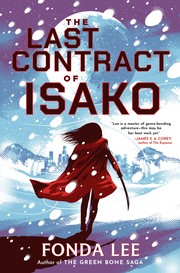
The Last Contract of Isako
On a planet where your job is your worth, a legendary corporate samurai is offered one last contract that turns personal when her worst apprentice sits at its…
2,099-word summary · 9 min read
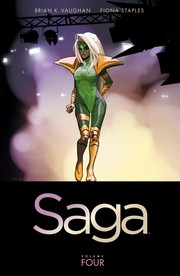
Saga, Volume 4
Book Two opens with Alana and Marko trying to raise Hazel in hiding on Gardenia, while a vengeful robot kidnaps Prince Robot IV's newborn son.
2,003-word summary · 9 min read
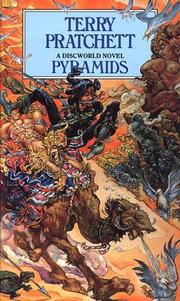
Pyramids
A prince raised by assassins comes home to a desert kingdom where the high priest rules and a spitefully huge pyramid starts bending time.
2,441-word summary · 11 min read

Opposition
In the Lux finale, Katy and Daemon face a fractured species, a government that hunts them, and a choice between their love and the future of mankind.
2,513-word summary · 11 min read
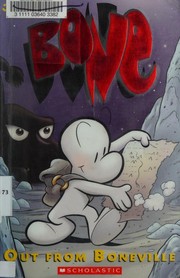
Bone, Vol. 1: Out from Boneville
Three cartoon cousins are run out of Boneville, separated by locusts, and dropped into a valley where rat creatures and an old grudge are waiting.
2,155-word summary · 10 min read
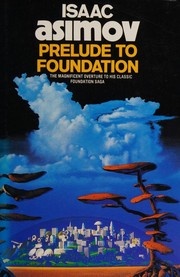
Prelude to Foundation
A young Hari Seldon arrives on Trantor with a theory he cannot yet prove, and a hunt through the planet-city forces him to turn psychohistory into a real…
2,013-word summary · 9 min read

Archenemies
Nova steals for the Anarchists while Adrian hides his Sentinel identity, and a serum that erases prodigy powers puts them both at risk.
2,485-word summary · 11 min read
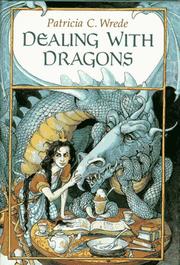
Dealing with Dragons
A princess who hates embroidery runs away to become the cook and librarian for a dragon, then has to outthink wizards, knights, and a plot against the dragon…
2,563-word summary · 11 min read
Carve the Mark
On a planet divided between conquered and conqueror, the tyrant's sister and a kidnapped oracle's son discover that their gifts make them useful to everyone…
2,340-word summary · 10 min read
Leviathan
In an alternate 1914, a prince on the run and a girl disguised as a soldier meet aboard a living airship.
2,406-word summary · 11 min read

Heist Society
A teenage art thief gets expelled from boarding school, then has two weeks to steal five paintings back from a London museum and clear her father.
2,781-word summary · 12 min read
Consider Phlebas
The first Culture novel follows a spy for the opposing side, a man hired to hunt a fugitive through a war between an anarchist post-scarcity utopia and a…
2,350-word summary · 10 min read
Nettle & Bone
Marra, a princess in a convent, leaves to save her abused sister, but first she must finish three impossible tasks: a bone dog, a nettle cloak, moonlight in a…
2,061-word summary · 9 min read
Network Effect
Murderbot's contract job turns into a rescue mission when a hijacked research ship and a colony of corrupted colonists appear.
2,256-word summary · 10 min read