
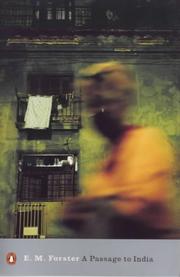
A Passage to India
2,332-word summary 10 min read 322 pages in the book
- First published
- 1924
- Publisher
- Edward Arnold
- Pages
- 322
- ISBN
- 9780141183107
Reading options
What's inside (8 sections)
I came to this one expecting a polite old novel about manners and empire, the sort of book that gets assigned and then skimmed. What I found was stranger and less comfortable. Forster published it in 1924, when the British Raj was still very much in place, and he set it in a fictional Indian city at a moment when the people running that city were starting to sense that their time was limited. The book won the James Tait Black Memorial Prize that same year and later found its way onto Modern Library's and Time's lists of the best novels of the century, which is a fair measure of how highly it is regarded. It is also a book that a lot of readers find baffling in the middle, and I was one of them the first time through. This is a novel built around an event that may never have happened, and much of its power comes from that refusal to say.
Let me set out the facts of its making briefly, because they matter to how it reads. Forster knew India at first hand. He spent 1912 and 1913 there, and later served as private secretary to Tukojirao III, the Maharajah of Dewas Senior, in 1921 and 1922. He dedicated the novel to his friend Ross Masood. The title comes from a Walt Whitman poem, "Passage to India," in Leaves of Grass, which is a curious choice for a book so suspicious of grand claims about the East. The caves at the centre of the story are fictional, but they were modelled on the Barabar Caves in Bihar. All of that is to say the book is not a fantasy written by someone who had never left England. It is a novel by a man who had seen a great deal and still could not decide what he thought.
Chandrapore, and two women who want to see India
The story opens in Chandrapore, a fictional city on the river, with the usual British apparatus of clubs and bungalows, of courts and resident magistrates, sitting above an Indian town. Into this place come two Englishwomen. Adela Quested is a young schoolmistress who has come out to decide whether she wants to marry Ronny Heaslop, the city magistrate and the son of her friend. Mrs. Moore is Ronny's mother, an elderly woman with a habit of seeing more than the people around her expect. Both of them say they want to see the real India, which in the early pages sounds like a noble enough ambition. The trouble, as Forster shows it, is that the machinery of colonial life is built to make sure they see almost nothing of it.
Ronny is a small, tired man doing a job that has made him hard. He loves Adela, or thinks he does, and he is genuinely pleased she has come. But he is also a magistrate, and the habits of his office follow him home. When Mrs. Moore and Adela mention wanting to meet Indians, the response is practical and a little patronising. Mr. Turton, the city collector, arranges a gathering at his house. The Indians who come are timid, the Britons are stiff, and nobody says what they mean. Forster writes this scene with a kind of pained politeness. You can feel everyone trying and failing to cross a gap that has been deliberately kept open.
Around them is the hospital, where Dr. Aziz works. Aziz is a young Muslim physician, one of the few Indian doctors in a British-run institution, and he is good at his job. He is also a man with a large, warm, rather theatrical inner life. He dreams of romance and friendship and poetry, and he has a habit of imagining scenes that then fail to happen. On the evening we first meet him he has been dining with friends when Major Callendar, his superior at the hospital, summons him. Aziz sets off, gets delayed, and arrives to find Callendar gone. He wanders off and, on impulse, goes into his favourite mosque.
The mosque, the tea party, and a promise
This is where the novel quietly changes gear. In the mosque Aziz sees Mrs. Moore, an Englishwoman standing in a place of Muslim worship, and he shouts at her not to profane it. It is an odd first greeting. But the anger drains out of the exchange, and the two of them end up talking and parting as friends. When Mrs. Moore tells Ronny about it later, he is indignant that a native should have spoken to her so presumptuously. That small difference in interpretation is the whole book in miniature. One person sees a human encounter; another sees a breach of order.
The women's wish to meet Indians leads to another attempt, this time at the house of Cyril Fielding, the headmaster of the small government college for Indians. Fielding is about forty-five, unmarried, and more willing than most of his countrymen to treat the people he teaches as equals. At his tea party he has Professor Narayan Godbole, a Hindu Brahmin with a gift for saying very little in a very beautiful way, and at Adela's request he invites Aziz too. This is the scene where Aziz and Fielding become friends, and Forster lets it happen naturally, through ease and jokes rather than a speech. It is one of the genuinely happy passages in the book.
Ronny arrives and finds Adela sitting there with Aziz and Godbole, unaccompanied by any proper chaperone, and he breaks the party up with a rudeness that embarrasses everyone. Aziz goes away with a mistaken idea in his head. He thinks the two women were offended because he failed to follow through on a promise he made to show them the Marabar Caves. So he arranges the expedition, spending far more money than he can comfortably afford, and somehow manages to make it sound like a grand occasion. Fielding and Godbole are meant to come too, but both miss the train. That absence matters more than it appears to at the time.
The caves and what happens inside one
I remember reading this section and genuinely not knowing what Forster wanted me to think, which I now believe is the point. Aziz takes Mrs. Moore and Adela up to the Marabar Hills with a guide. They visit the first cave, a low, dark place where the echo turns every sound into the same flat noise. Mrs. Moore is overcome by claustrophobia and disturbance and decides she cannot go on. Aziz and Adela climb higher, to the upper caves, still accompanied by the guide.
Aziz asks Adela whether she has more than one wife. It is a blunt question, and it flusters him as much as it surprises her. He ducks into a cave to pull himself together. When he comes out, the guide tells him Adela has gone into a cave on her own. Aziz quarrels with the guide, then notices Adela's field glasses broken on the ground and puts them in his pocket, meaning to return them. Looking down the hill, he sees Adela talking to Miss Derek, an Englishwoman who works for a Hindu royal family and freely borrows their car. Miss Derek has arrived with Fielding. Aziz runs down to greet them, but Miss Derek and Adela drive away, leaving the others to come back by train.
What happened in that cave is never settled. Adela's account is that Aziz followed her in and that she struck him off with her field glasses. Aziz, confused and later terrified, cannot give a clean account of his own movements. The echo, the heat, the darkness, and Adela's own unsettled state of mind all sit in the gap between those two versions. Forster refuses to fill it. That refusal is the boldest thing in the novel, and also the thing that makes the middle so hard to read. The book asks you to live with not knowing, and most of us would rather it picked a side.
The trial and the collapse of a friendship
Aziz is arrested as soon as the party gets back to Chandrapore and is charged with assaulting Adela. The run-up to the trial brings every buried tension to the surface. The British community closes ranks and treats the accusation as proof of what they have always believed about Indians. The Indian community does the same in the opposite direction. Adela says Aziz followed her into the cave and that she fended him off with the field glasses, and the broken glasses now in Aziz's pocket look like the only hard evidence in the case.
Fielding makes the decision that costs him. He says plainly that he believes Aziz is innocent, and the British community turns on him, calling him a blood-traitor. He is ostracised. This is the point at which the novel stops being a story about a legal case and becomes a story about what a person risks by siding with the wrong people. Meanwhile Mrs. Moore, whose health has been failing since the caves, decides to leave India for England. She dies on the voyage. Her death is reported with a flatness that took me aback, and then the novel folds it back into the lives of the people she left behind.
At the trial, Adela does something that surprises even the people who have been urging her on. Pressed about what she saw, she admits that the echo of the cave left her disoriented and that she is no longer sure who or what attacked her. The crowd wants her to hold to the accusation. She withdraws it. The case is dismissed and Aziz is free, but the victory is a bitter one. Ronny breaks off the engagement, and Adela, who has nowhere else to go, stays at Fielding's house until she can return to England.
After the verdict, and everything it costs
The aftermath is where the novel earns its reputation for honesty about friendship. Aziz is acquitted, but he is furious with Fielding for being kind to Adela, the woman who nearly destroyed him. Fielding, acting on what he thinks is the gentlemanly thing to do, talks Aziz out of seeking money from the authorities. The two men remain fond of each other, and the friendship still fails. Fielding leaves for England, and Aziz, convinced that Fielding is going home to marry Adela for her money, swears he will never again befriend a white person. There is no dramatic break, just a slow realisation that the gap between them is larger than either man's good will.
Two years pass. Aziz has moved to Mau, a Hindu-ruled state, and is now the Raja's chief physician. Fielding comes back to India married to Stella, Mrs. Moore's daughter from a second marriage, and the two men meet again. They are drawn to each other still. But Aziz understands something by then that he did not understand at the tea party: they cannot be friends while India is ruled by the British. The novel ends with them riding together, the horses uneasy, and a sense that the answer has been postponed rather than found. It is an ending that refuses consolation, and I think that is why it has lasted.
The echo, and the book's blind spots
It is hard to talk about this novel without talking about the echo in the caves. Everything that happens there reduces to a single sound, and everything that follows is a dispute about what that sound means. Forster seems to be saying that India, or at least the parts of it that the British encounter, resists being understood. Mrs. Moore hears something in the echo that changes her, and Adela hears something that unravels her certainty. Aziz, who belongs there, is just as lost. The echo is a way of saying that no one in these caves is at home.
That idea has made the book famous and also controversial. Edward Said wrote about it in Orientalism and Culture and Imperialism, and his criticism is hard to shrug off. He argued that Forster subverted the usual colonial certainties without ever fully condemning colonialism itself, and that the novel separates Muslims and Hindus in a way that connects Islam to Western values while treating Hinduism as chaotic and background. The failed friendship between Aziz and Fielding, in Said's reading, becomes a statement about an unbridgeable distance between East and West rather than a failure of politics that might be repaired. There is real force in that argument, even if you love the book.
Other critics have pointed at the treatment of women and of race. Adela's confusion is never entirely her own; it is used to expose the men around her. Aziz is at times presented as an object of desire and fear rather than a full person. Benita Parry complained that the novel pushes India's long histories of science, mathematics and law out of view, replacing them with mystery. I think these criticisms stick in part. Forster's humanism, his belief that people can connect if they simply try, looks thin against the political reality he is describing. He sees the problem clearly and still reaches for a private solution.
And yet the private solution is not nothing. The small talk in the mosque, and the way Fielding keeps his word even when it ruins him, are rendered with such care that the book's limits feel like limits rather than evasions. The novel is not a comfortable read. It asks you to sit with an unresolved crime, a friendship that fails for good reasons, and a country whose people are mostly denied a voice of their own. It also gives you some of the most precise portraits of English self-deception I have read. I finished it admiring the craft and impatient with the silences, which I suspect is roughly the response Forster was after.
FAQ
What happens in the Marabar Caves, and does the book say what really occurred?
The caves are fictional but modelled on the Barabar Caves in Bihar. Adela Quested emerges shaken and says Aziz followed her into a cave and attacked her. Forster deliberately leaves it unclear whether any attack happened, and Adela withdraws the charge at the trial.
Is A Passage to India based on Forster's own experiences?
Yes. Forster spent 1912 and 1913 in India and later served as private secretary to the Maharajah of Dewas Senior in 1921 and 1922. He dedicated the novel to his friend Ross Masood, and took the title from a Walt Whitman poem.
Why is the novel considered controversial?
It won the James Tait Black Memorial Prize in 1924 and is widely admired, but critics such as Edward Said argue that it challenges colonial attitudes without fully condemning empire, and that it treats India as mysterious while giving Indians little political voice.
Similar books

Wide Sargasso Sea
Jean Rhys gives the first Mrs. Rochester a Caribbean childhood, a marriage built on money and suspicion, and a voice that Charlotte Bronte left in the attic.
2,021-word summary · 9 min read

The Bonfire of the Vanities
Tom Wolfe's first novel follows a Wall Street bond trader whose life unravels after a hit-and-run in the Bronx, in a satire of 1980s New York money, race and…
2,268-word summary · 10 min read

Song of Solomon
Milkman Dead leaves Michigan to hunt for family gold and finds instead the old song of his ancestor Solomon.
2,465-word summary · 11 min read
The Bluest Eye
Pecola prays for blue eyes while her parents repeat the racism that broke them, and the town looks away.
2,024-word summary · 9 min read
Things Fall Apart
Proud Igbo wrestler Okonkwo rises in 1890s Umuofia, then loses standing through hard exile, a son's conversion, and British missionaries and courts remaking…
2,518-word summary · 11 min read

Heart of Darkness
Marlow pilots a steamer up the Congo for a trading company and seeks Kurtz, the brilliant agent who stopped sending ivory and started sending reports no one…
2,315-word summary · 10 min read

Howards End
Forster's 1910 novel follows two families, a house in Hertfordshire, and a burned note, asking whether money and feeling can ever be connected.
2,187-word summary · 10 min read

Universality
Natasha Brown's short second novel turns a lockdown fracas over a gold bar into a sharp satire of money, identity and public argument.
2,302-word summary · 10 min read

The Wilderness
Four Black women move through twenty years of friendship in Angela Flournoy's discontinuous, widely praised second novel.
2,141-word summary · 10 min read

The New York Trilogy
Three linked novels turn a wrong-number call into a puzzle about names, authorship, and the stories people tell to stay sane.
2,259-word summary · 10 min read

The Loneliness of Sonia and Sunny
Two Indian families, a failed arranged match, and years between Allahabad and New York shape a slow, sprawling romance.
2,092-word summary · 9 min read
The Tunnel
A painter in a Buenos Aires prison recounts the glance, the woman and the jealousy that led him to murder the only person who understood him.
2,313-word summary · 10 min read
The Reluctant Fundamentalist
In a Lahore cafe, Changez tells a nervous American how Princeton and a New York career gave way to anger after September 11.
2,340-word summary · 10 min read
The Portrait of a Lady
A young American woman inherits a fortune, refuses two suitors, and marries a polished expatriate who makes her independence a trap. James watches her mind at…
2,903-word summary · 13 min read

The Luminaries
Eleanor Catton's Booker-winning novel drops a young prospector into an 1866 New Zealand gold town where twelve men untangle a web of hidden gold, murder and…
2,949-word summary · 13 min read

The Collector
A lonely clerk wins the football pools, buys a Sussex farmhouse, and kidnaps an art student he hopes will love him. Fowles's debut splits the story between…
2,618-word summary · 12 min read
The Antidote
In a Dust Bowl town where a woman stores her neighbors' unwanted memories inside her own body, a storm blows the bank away and leaves a tangle of debts and…
2,707-word summary · 12 min read

Red at the Bone
A girl's coming-of-age ceremony in a Brooklyn brownstone opens a family story shaped by Tulsa, teenage pregnancy, class and a second tragedy on September 11.
2,108-word summary · 9 min read
Possession: A Romance
A London Library discovery sends two scholars chasing a secret Victorian love affair, in a Booker-winning novel of invented letters, poetry and the race to own…
2,394-word summary · 11 min read
Oranges Are Not the Only Fruit
An adopted girl in a strict Pentecostal household learns to read the Bible, preach sermons and love women, then faces her church and mother for it.
2,384-word summary · 11 min read

On Beauty
A Rembrandt scholar and his liberal family collide with a conservative rival's household in a Massachusetts college town, in Zadie Smith's comic, argumentative…
2,869-word summary · 13 min read

Good Dirt
A stoneware jar made by an enslaved potter links a prominent Black New England family across a hundred and fifty years of prosperity, grief and buried history.
2,069-word summary · 9 min read

Flashlight
Susan Choi's Booker-shortlisted novel opens with a father and daughter on a breakwater in 1978, then follows the loss outward through four generations and…
2,849-word summary · 13 min read
Dream Count
Four women narrate the 2020 lockdown in their own voices: a travel writer, a friend in early labor, a banker cousin and a housekeeper assaulted in a hotel room.
2,286-word summary · 10 min read
Behold the Dreamers
A Cameroonian chauffeur and his wife chase the American dream while driving a Lehman Brothers executive through the 2008 crash in Mbue's debut novel.
2,578-word summary · 11 min read
American Pastoral
Roth's Pulitzer winner follows a Newark glove maker's son whose perfect family life is broken by his daughter's antiwar bombing, retold by a narrator who…
2,660-word summary · 12 min read
The Book of Negroes
Aminata Diallo is kidnapped from West Africa at eleven and spends a life crossing the Atlantic, surviving slavery, and fighting to be recorded as free.
2,442-word summary · 11 min read
Last Night in Brooklyn
A copywriter in 2005 Fort Greene trades a scripted engagement for a bar crowd, a rising designer, and a neighborhood being remade around her.
2,540-word summary · 11 min read

Invisible Cities
Marco Polo describes fifty-five impossible cities to Kublai Khan, and each one turns out to be a way of talking about memory, desire and the place we call home.
2,465-word summary · 11 min read