
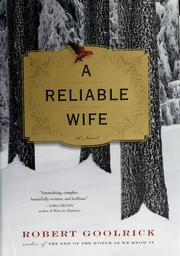
A Reliable Wife
2,300-word summary 10 min read 291 pages in the book
- First published
- 2009
- Publisher
- Algonquin Books of Chapel Hill
- Pages
- 291
- ISBN
- 9781565125964
Reading options
What's inside (10 sections)
The first scene is a man standing alone in the cold. Ralph Truitt, the richest man in a small Wisconsin town, is waiting at the train station for a woman he has never met. He has advertised in a Chicago newspaper for a reliable wife, and he has chosen one woman from the letters and photographs that came back. The town has noticed, of course. Everyone knows he is sending for a stranger. I read the Algonquin first edition, 291 pages in hardcover (ISBN 9781565125964), published in 2009, and it was Goolrick's first novel after a memoir. Before that he had worked as an advertising creative director and copywriter, and he grew up in a small Virginia college town. The book sold millions of copies and found a particularly devoted readership in France. Some catalogs shelve it as a historical romance, but that label is wildly wrong. It is a Gothic novel in a Wisconsin winter, and one reviewer described it as what the Brontë sisters might have written if no one had told them to be discreet about sex.
From the moment the woman steps off the train, the book is about lies, and about the things people will do to escape the lives they have made. It is dark, often brutal, and stranger than the premise suggests. By the end I was not sure whether I had been reading a love story or a cautionary tale about what happens when two people decide that the past can be edited.
The Woman from Chicago
Catherine Land has spent the journey remaking herself. She is a prostitute in Chicago, and she has answered Ralph's ad with a photograph that belongs to someone else, a cousin. She has practiced the voice and the manner of a plain, honest woman, the kind he says he wants. When she arrives she is not the plain woman in the picture. She is beautiful and composed, and anyone paying attention can see that she is performing. Ralph notices. He knows the photograph is not hers, and he knows something about her is off, but the town is watching and the weather is turning, and some part of him does not want to send her back.
I liked this immediately. The novel does not waste time pretending this is a sweet arrangement. Both people are hiding. He wants a witness to his life and she wants his money, and they begin the marriage with a shared understanding that nobody will say the quiet part aloud. The train platform scene sets the terms for everything that follows. Every relationship in this book starts with a performance, and every performance eventually cracks.
The Accident and the House
On the drive from the station a deer startles the horses and the carriage crashes. Ralph is hurt, badly enough to develop a fever, and Catherine has to take charge. She gets him home, stitches his head wound, and helps the housekeeper, Mrs. Larsen, nurse him. While he is out of his head she walks through the house, looking at the rooms and the objects and the kind of life his money buys. She has not come to keep house. She is carrying poison, and her plan is to marry him, make him sick slowly, inherit what he owns, and leave with the man she actually loves.
The carriage crash felt convenient to me the first time through, a neat way to put her in charge of the household. On reflection I think it does something else too. It forces Ralph to depend on the one person in the house who wants him dead. The drama of the book comes from that kind of trap, where the roles people play trap them in rooms they cannot leave. Catherine is calm and capable in the crisis, and Ralph has no choice but to be grateful to her.
Ralph's Story
When he recovers, Ralph tells Catherine why he is the way he is. He grew up under a cruel mother. He went to Chicago and Europe looking for pleasure. He married Emilia, a beautiful and passionate woman, and the marriage fell apart when she had an affair with her piano teacher, Moretti. Ralph's response was rage. He drove Emilia and Moretti out. His daughter Franny died, and his son Antonio ran away after Ralph treated him with the same anger. His mother is ill and difficult, and the house is full of the ghosts of people who left or died.
He has spent years trying to find Antonio. He believes the son is in Saint Louis, and when he sends Catherine to bring him home, you can see what this means to him. To Ralph, Antonio is more than a missing child. He is the last thread connecting Ralph to the family he destroyed, and the one person whose return might let him stop punishing himself.
This section slowed me down in a good way. Goolrick gives Ralph enough history that you understand his cruelty without being asked to forgive it. He suffers, but he has also made other people suffer, and the book never lets him off that hook. There is a mean streak in the way he remembers Emilia, and you can hear the same mean streak in the way he talks to Catherine when he thinks she has failed him.
The House and the Silence
Goolrick spends a lot of time on the physical space Ralph inhabits. The house is large and full of things money can buy, but it feels sealed off from the town. Ralph's mother lives there too, bedridden and sharp tongued, and her presence adds another layer of resentment to the place. Mrs. Larsen moves through the rooms with the practical calm of someone who has seen a family come apart and kept working anyway. Catherine watches all of it, adding it up the way a person does when she is planning to leave.
What I noticed most is how quiet the house is. People in this book rarely say what they mean. Ralph tells stories about the past instead of saying that he is lonely. Catherine smiles and agrees instead of saying what she wants. Tony says almost nothing that is not a demand. Even the violence, when it finally comes, feels like the result of years of things left unsaid. That silence is what gives the novel its claustrophobic weight.
The setting does a lot of work as well. The cold of northern Wisconsin presses in on everything, and the contrast with the heat of Saint Louis is deliberate. One place suppresses desire until it curdles, the other lets appetite run loose. Goolrick is not subtle about this, but I found the pattern convincing. It explains why Catherine is drawn to Tony and why she is slowly undone by Ralph. They are two people who have each built a life around wanting the wrong thing, and the landscape keeps pointing that out.
The Plan in Saint Louis
After the wedding Ralph dresses Catherine in expensive clothes and jewelry and sends her to Saint Louis. The man she finds is not Antonio. He is Tony Moretti, Catherine's lover, tied to Ralph's old humiliation through Emilia and the piano teacher. Catherine and Tony have planned the whole thing. She will marry Ralph, poison him, take the money, and then the two of them will live comfortably. Tony hates Ralph and wants to humiliate him as much as rob him.
In Saint Louis Catherine slips back into Tony's world, and it is a world of appetite and damage. Their relationship is passionate and ugly. She also sees her sister Alice, whose life has gone wrong in poverty and sickness. Alice is the mirror Catherine has been avoiding. Seeing her shakes the certainty out of the plan, because it shows Catherine exactly where a life of desperate choices can end.
The Saint Louis chapters are the most uneven part of the book for me. The melodrama gets loud, and some of the coincidences strain belief. The people Catherine meets sometimes feel like figures in a dream rather than neighbors in a city. But the meeting with Alice stopped me. It is a small, quiet scene compared with everything around it, and it is the moment Catherine stops being only a schemer. Goolrick gives her a past that amounts to more than a series of bad men. There is a sister she left behind, and that fact costs her something.
Arsenic and a Change of Heart
Catherine returns to Wisconsin with Tony, who now presents himself as the lost son. Ralph welcomes him, though the whole arrangement is built on a lie everyone can sense. Catherine starts putting arsenic in Ralph's food and drink. He gets weaker. He also figures out what is happening, and here is the strangest turn in the novel. He does not stop her. He is so tired, and so convinced that he deserves this, that he lets the poisoning continue. Death begins to look like rest.
Then Catherine changes. Living in the house with him, watching him suffer, seeing how much he wants someone to stay, she finds that she cannot go through with it. She stops the poison and starts nursing him with the same stubbornness she used to destroy him. When she finally confesses, Ralph forgives her. It is not a clean or easy forgiveness. It comes from exhaustion and grief and his own long history of betrayal, but it is real.
Ralph's willingness to be poisoned is the hardest thing for me to accept, and also the most revealing. He has spent so long believing that he deserves punishment that a slow death feels familiar, almost welcome. It is not love that keeps him in the chair. It is the conviction that this is what his life has been leading to. Catherine's confession arrives after she has already saved him, which means the forgiveness is not a reward for good behavior. It is a response to someone who came back from the edge and chose to stay.
This is the part of the book that divided me. On one level it is a sentimental turn that arrives after a lot of ugly behavior. On another, it is the only ending that makes sense for these two people. Both of them have spent their lives performing versions of themselves. The moment they stop performing is the moment they can actually see each other. I am not sure I believe that a person could change this fast, but I do think Goolrick understands the hunger that makes someone want to be seen.
Tony on the Ice
Tony cannot accept that Catherine is pulling away. He has come into the house expecting money and power and loyalty, and instead he finds her urging him to accept Ralph's offer of a place in the family. He refuses. He spends Ralph's money carelessly, treats everyone with contempt, and remains obsessed with Catherine. The tension breaks in the conservatory, where he turns violent and attacks her. Catherine fights back and stabs him with sewing scissors.
Ralph walks in and understands everything at once: the affair, the false identity, the poisoning, the scheme. He goes after Tony. The two men fight through the house and out onto the grounds. Tony runs onto the frozen pond, the ice breaks, and he falls into the freezing water. Ralph tries to pull him out but cannot. Tony drowns.
I found the ending hard to swallow in a literal sense. Frozen ponds and dramatic confrontations belong to a different register than the quiet psychological damage that came before. Yet the image works. A man who has spent the whole book consumed by cold rage is swallowed by literal cold, while the father he tried to destroy reaches down to save him. That gesture, more than the forgiveness scene, is what convinced me that Ralph was worth following.
What I Took Away
Catherine is pregnant and gives birth, and she and Ralph stay together. Nobody in this book is innocent and nobody is healed. What they have is the fact that they stayed. That is a modest thing to end on after so much violence, and I think it is the right choice. A neat redemption would have felt like a lie.
The book was a commercial phenomenon on publication and remains Goolrick's best known work. It is easy to see why it travelled. The premise is instantly legible, a lonely man, a deceptive woman, a house full of secrets, and the prose wastes very little time getting to the next revelation.
For a first novel it is striking how sure Goolrick is about the tone. The Wisconsin house is claustrophobic, full of money and silence and old grief. The prose is direct, sometimes blunt, and it moves fast. There are excesses. The sexual violence and the coincidence-heavy climax pushed the book close to melodrama for me, and some reviewers have said the same. But the core idea holds: people who have been damaged keep reaching for other people in the wrong ways, and occasionally they stumble into something like grace.
I also want to say plainly that this is not a romance in the comfortable sense. If that is what you are looking for, the ad in the newspaper and the train platform will mislead you. What you get is a story about the cost of starting over with a lie already in your mouth, and about the strange mercy of being found out and not being left. Goolrick died in 2022, and reading this now it feels like the work of someone who understood how much of a life is made of the stories people tell about themselves in order to keep going.
FAQ
Is A Reliable Wife a conventional romance?
It is not. The book is a dark Gothic novel about deception, arsenic, sexual violence, and an uneasy forgiveness, despite its mail-order bride premise.
Who are the main characters?
Ralph Truitt, a lonely wealthy Wisconsin businessman, and Catherine Land, the Chicago prostitute who answers his newspaper ad. Tony Moretti and Catherine's sister Alice are central as well.
What edition is this post based on?
The Algonquin Books first edition from 2009, which runs 291 pages in hardcover and carries ISBN 9781565125964.
Similar books

The Land in Winter
In the West Country during the Big Freeze of 1962, two young couples are shut in together, and the cold draws out every buried want.
2,265-word summary · 10 min read

The Kitchen God's Wife
Amy Tan's second novel pairs a San Jose speech therapist with her Chinese mother, whose account of war, an abusive husband, and a narrow escape comes out in a…
2,896-word summary · 13 min read
The Antidote
In a Dust Bowl town where a woman stores her neighbors' unwanted memories inside her own body, a storm blows the bank away and leaves a tangle of debts and…
2,707-word summary · 12 min read

My Policeman
In 1999 a retired teacher writes a confession to the dying man her husband once loved, unpacking a 1950s Brighton love triangle that cost three people…
2,450-word summary · 11 min read

Good Dirt
A stoneware jar made by an enslaved potter links a prominent Black New England family across a hundred and fifty years of prosperity, grief and buried history.
2,069-word summary · 9 min read

All Adults Here
A widow in upstate New York reconsiders the parent she was after a neighbor's death, then gathers her three grown children for a season of uneasy truths.
2,171-word summary · 10 min read

Manhattan Beach
A Brooklyn girl works the Navy Yard and dives for warships while chasing the gangster who may know why her father vanished.
2,251-word summary · 10 min read

The Storyteller's Secret
A New York journalist goes to India to learn why her grandmother loved a British officer, and why a family servant kept the truth for forty years.
2,270-word summary · 10 min read
Stones from the River
Trudi Montag is born a dwarf in a small German river town in 1915 and grows up to keep the town's library and its secrets, from the First World War to the…
2,818-word summary · 13 min read

Trust
Four rival accounts of one Wall Street fortune collide: a 1930s novel, a tycoon's memoir, a secretary's story, and a wife's diary.
2,217-word summary · 10 min read
Ethan Frome
In snowy Starkfield, farmer Ethan Frome falls for his wife's young cousin Mattie, and one sled ride ends any hope of escape.
2,558-word summary · 11 min read
Middlemarch
Idealistic Dorothea marries dry scholar Casaubon while ambitious doctor Lydgate marries Rosamond, and a Midlands town watches both marriages strain.
2,883-word summary · 13 min read

The Story of a New Name
Married Lila and student Elena grow apart and collide again across shops, Ischia, and Pisa.
2,523-word summary · 11 min read

The South
A seventeen-year-old moves to his family's failing fruit orchard in 1990s Malaysia, where a summer love affair unfolds as the household and the land around him…
2,903-word summary · 13 min read

The Rest of Our Lives
A law professor drives his daughter to college, then heads west instead of home, testing a private promise he made twelve years ago.
2,238-word summary · 10 min read

Seascraper
In a rain-swept English coastal town, a young shrimp scraper is drawn in by a stranger claiming to be a film director scouting locations.
2,544-word summary · 11 min read

Of Love and Other Demons
In colonial Cartagena, a twelve-year-old girl bitten by a rabid dog is locked in a convent, where the priest sent to exorcise her falls in love.
2,258-word summary · 10 min read

Love Forms
A Trinidadian mother sent away at sixteen returns to the loss of her daughter forty years later, in Claire Adam's quiet, longlisted novel.
2,153-word summary · 10 min read
Wild Dark Shore
On a remote island between Tasmania and Antarctica, a family guards a vast seed bank until a storm washes a stranger ashore and the radios go dead.
2,449-word summary · 11 min read
Three Days in June
A Baltimore mother loses her job, and her ex-husband turns up with a rescue cat, in Anne Tyler's short, funny novel about the three days around her daughter's…
2,867-word summary · 13 min read

Theft
Gurnah traces three linked lives in Tanzania, where a servant's accusation of theft opens a family history of love, duty and quiet betrayal.
2,454-word summary · 11 min read

The Zahir
A bestselling novelist's wife vanishes from their Paris home, sending him on a search that becomes a reckoning with his own marriage and attention.
2,433-word summary · 11 min read
The Wrong Bride
In Catharina Maura's Windsors opener, model Raven Du Pont takes her absent sister's place at the altar beside billionaire Ares Windsor, the man she has…
2,397-word summary · 11 min read
The Vacationers
A New York family's two-week stay in Mallorca turns into a comedy of exposed secrets when a magazine editor's affair and a son's debts come to light.
2,324-word summary · 10 min read

The Shoemaker's Wife
Two young Italians meet in the Alps, are separated by fate, and find each other again in New York before war pulls them apart, in a saga drawn from Adriana…
2,261-word summary · 10 min read

The Pull of the Stars
Over three days in a Dublin maternity ward in 1918, a nurse, a suffragette doctor on the run and a young volunteer face the flu, childbirth and unexpected love.
2,578-word summary · 11 min read
The Portrait of a Lady
A young American woman inherits a fortune, refuses two suitors, and marries a polished expatriate who makes her independence a trap. James watches her mind at…
2,903-word summary · 13 min read
The Paying Guests
A widowed mother and her unmarried daughter take in lodgers in 1922 south London, and a secret affair between Frances and Lilian pulls them into a murder case.
2,661-word summary · 12 min read

The Luminaries
Eleanor Catton's Booker-winning novel drops a young prospector into an 1866 New Zealand gold town where twelve men untangle a web of hidden gold, murder and…
2,949-word summary · 13 min read

The Love of My Life
Emma loves her husband Leo and their little girl. Then Leo, an obituary writer, starts filing the facts of her life, and the woman he thinks he married begins…
2,803-word summary · 12 min read