
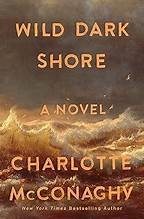
Wild Dark Shore
2,449-word summary 11 min read 320 pages in the book
- First published
- 2025
- Publisher
- Flatiron Books
- Pages
- 320
- ISBN
- 9781250827951
Reading options
What's inside (9 sections)
I picked this one up because I had liked McConaghy's earlier novels and because the setup promised something I keep being drawn to: a small group of people isolated somewhere cold, with a deadline closing in. Wild Dark Shore came out in March 2025 from Flatiron Books, 320 pages, and it is set on a speck of an island called Shearwater, somewhere between Tasmania and Antarctica. The island holds one of the world's largest seed banks. That detail is the whole hook. A family has been left to guard a vault of seeds meant to outlive the rest of us, and then the world starts closing in on them.
What I did not expect was how domestic the book feels at first. Before it becomes a survival story or a mystery, it is a novel about a father and his three children living through the slow collapse of their own routine. I found that more gripping than the thriller machinery, and I think the book is at its best when it stays close to the daily work of keeping a household going at the edge of the map.
A family keeping the last watch
Eight years before the novel opens, Dominic Salt fled Australia's fires and floods and brought his family to Shearwater. He lives there now with his three children, acting as the last caretakers of a research station that is being wound down. The plan is to move the seeds somewhere safer and then leave. Dominic is the adult in charge of a place that is quietly being abandoned, and that fact hangs over every page.
The children are the reason the book has so much texture. Raff is eighteen and nursing a first heartbreak, working it out on a punching bag. Fen is seventeen, sleeps on the beach among the seals, and is the one most at home in the wild parts of the island. Orly is nine, a botanical prodigy who understands the seeds and the station's work better than anyone might guess from her age. McConaghy gives each of them a distinct way of being in the world, and the family conversation has a rhythm I believed. They bicker, they tease, they fall silent. They are a unit that has learned to run on its own.
There is a fourth presence in the house, though she is not alive. Dominic's wife Claire died before the voyage out to Shearwater, and he still talks to her in his mind. This is handled plainly rather than mystically. He is not haunted in a ghost story sense. He is a man who has carried a conversation with his dead wife for eight years, and the habit has become a way of making decisions. At first I read this as a quirk of grief. Later, once the book starts opening its darker compartments, I realised how much it was also hiding.
The station itself is a character. A seed bank is a strange thing to put at the centre of a novel, a place built on the belief that the future might need what the present is busy destroying. McConaghy clearly cares about the real science here. The seeds are not window dressing for a murder plot. They are the reason the family is on the island, the reason the station matters, and the reason the threat at the end of the book carries real weight.
The woman in the storm
The story tips into motion during the worst storm in living memory. Fen, out near the beach, finds a woman who has washed ashore. Her name is Rowan, and she is a survivor of a shipwreck. The Salts bring her in, nurse her back to health, and take her into the middle of their careful, closed routine.
This is where the book becomes a study of how quickly suspicion can soften into something else. At first Rowan is an unknown quantity, a stranger with a story that cannot be checked because the island's radios have been sabotaged and contact with the outside world is impossible. She could be a threat. She could be a victim. The family does not know which, and neither does the reader. As they care for her, that wariness turns into affection, and the family, which had been slowly coming apart, begins to knit itself back together. There is a real warmth in these middle chapters. A shared meal, a argument over a blanket, a small act of trust, and suddenly the house feels fuller than it has in years.
I want to be honest that this is also where the book's weaker tendencies show up. McConaghy writes the growing closeness between Rowan and the family with skill, but the romantic thread that develops alongside it felt more predictable to me than the rest. Publishers Weekly made the same complaint, calling the romantic subplots predictable, and I understood the criticism. The emotional logic of a shipwrecked stranger healing a grieving household is compelling. The particular shape the romance takes is less surprising than it thinks it is.
Still, I stayed with it, because the family scenes around that romance are genuinely good. Raff's heartbreak and Rowan's arrival speak to each other without the book needing to announce the connection. Fen, who sleeps outside with the seals, is the one who found Rowan and the one most comfortable with the idea that the island has its own rules. Orly watches the newcomer with the sharp attention of a child who is used to being the youngest person in every room. The household is the achievement here, even when the love story around it is familiar.
Hank, and the grave in the ground
The mystery side of the novel concerns Rowan's missing husband, Hank. He turns out to have led the research station, which makes him far more than a name from Rowan's past. He is tied to the place the Salts have been guarding, and to whatever happened here before Dominic's family arrived. When Rowan goes searching the island, she finds a freshly dug grave.
That discovery is the pivot the whole book leans on. Up to that point, the danger can be explained as weather and bad luck. A storm, a shipwreck, broken radios. A grave suggests intent. Someone has been on this island recently, and someone has been burying things. The quiet suspicion that has been building around Rowan now has a focus, and the reader is forced to reconsider everything she has said since she came ashore.
McConaghy handles this well for a while. The grave is a strong, plain image, and it arrives at exactly the moment when the family's new closeness is most fragile. It raises the question the book keeps circling: how much can you really know about a person who arrives out of a storm with a convincing story? Rowan's care for the children is real, but it is also a performance the reader cannot fully trust, because the book has told us she is holding something back.
What she is holding back concerns why she set out for Shearwater in the first place. Rowan has not told the whole truth about her reasons for coming. That much the narrative gives away. The specifics are left to unfold as the storm worsens and the island's small stock of trust runs down. I found this strand more interesting than the romance, because it turns the healing of the family into something complicated. The person who is mending them is also the person most likely to break them.
Secrets on both sides
Rowan is not the only one keeping a secret. Dominic is hiding something dark of his own, and the book is careful to let that knowledge press on him throughout. He is a man already carrying the death of his wife and eight years of responsibility for a place no one else wants to run. The addition of a stranger, a grave, and a station with a hidden history pushes him toward a breaking point.
I appreciated that McConaghy does not make the secrets one-sided. It would be easy to write Rowan as the mysterious outsider and the Salts as the innocent family, but Dominic's past is its own locked room. The result is a standoff built on withheld information rather than on a simple disagreement about what to do next. Everyone in the house has a reason to keep quiet, and every silence gives the storm more room.
The children are the ones who suffer most from these silences, and the book knows it. Raff, Fen and Orly are old enough to sense that the adults are lying and young enough to be frightened by it. Their reactions are written with a light touch. McConaghy does not turn them into miniature detectives. They are kids caught in a situation they did not choose, trying to read the faces of the only people they have.
This is where the conservation theme and the family drama finally meet. The seeds in the bank represent a future the adults are trying to protect, but a future is a strange thing to promise children who cannot even trust the people in their own kitchen. The novel never says this outright, and it would be weaker if it did. It lets the situation carry the idea.
The seeds and the closing weather
As the book moves toward its end, the two threats converge. The storm is intensifying, and the precious seeds are at risk. The radios are still dead, which means no rescue is coming and no explanation is available from the mainland. The threat is both human and environmental: the weather outside and the people inside the house are equally capable of doing damage.
This is the part of Wild Dark Shore that works best on its own terms. McConaghy understands that a seed bank is a fragile, specific thing, and that losing it would be a loss felt far beyond one island. The tension comes from the ordinary reality of the situation. There is no army of defenders, no backup generator that will save the day. There is one family, a wounded stranger, and a vault full of seeds, all of them exposed to the same weather. When the book stays on that level, the stakes feel earned rather than declared.
The line I keep coming back to from the story is the idea that trust is the one resource in shorter supply than food. That is the real subject of the novel. Food can be counted and rationed. Seeds can be sealed and stored. Trust cannot be manufactured on demand, and it is exactly what the Salts and Rowan need most when the radios go dead. The storm would be survivable if the people in the house could rely on one another. The fact that they cannot is what makes the situation desperate.
It has to be said that the ending asks a lot of the reader. Publishers Weekly faulted a late twist that strains credulity, and I have to agree that the final reveal asks us to accept a chain of coincidences the book has not quite prepared us for. The twist recontextualises several earlier scenes, which is satisfying in principle, but the machinery behind it feels heavier than the rest of the novel. After a story that has been so careful about the small, physical facts of island life, the leap is noticeable.
What the book is asking, and where it stumbles
McConaghy has said the novel was inspired by a visit to Macquarie Island, and that origin shows in the respect the book has for its setting. This is not a novel that uses a remote island as a convenient stage for a puzzle. The isolation, the weather and the ecological work are all treated as real conditions with real consequences. The conservation message is sobering without being delivered as a lecture, and it is one of the reasons the book stays with you after the last page.
The book drew starred reviews from Kirkus and Booklist, and it is easy to see why. It is a confident piece of storytelling, moving between family drama, survival narrative and mystery with real control. The household of the Salts is drawn with affection, and the arrival of Rowan gives that household both a lifeline and a threat. For long stretches, McConaghy has you fully inside a situation that is frightening precisely because it is so small.
The criticisms are fair, though. The romance is more formulaic than the rest, the late twist leans too hard on coincidence, and the book sometimes signals its own themes a little too clearly for a reader who prefers to find them alone. There is also a sense that the mystery plot and the conservation plot are two good books fighting for space. When the story is about a family guarding seeds through a storm, it is excellent. When it becomes a puzzle about who buried what and why, it is competent but less alive.
I would still recommend it, and with few qualifications. It is a novel with a clear sense of what it is about, and that clarity is rare. The best chapters are the ones where nothing much happens in the usual sense: a family eating together, a child asking an awkward question, a man talking to his dead wife while he works. Those scenes are why the later danger matters. If the book had spent more time there and less on its twists, it might have been a great one.
Who should read it
I would hand this to a reader who likes their novels cold, remote and morally complicated, and who does not mind a book that keeps more than one secret at a time. McConaghy's earlier readers will find familiar ground in the way grief and the natural world are braided together, and the island setting gives that interest a new and sharper form. If you read for atmosphere and for families under pressure, there is a lot to like here.
I would be more careful with a reader who wants a tight, clean mystery. The romantic subplots are predictable, the final reveal stretches belief, and the book is willing to leave some of its emotional threads loose in service of its larger concerns about what we are doing to the planet. That is a choice, not an accident, and it will not work for everyone. For me, the choice mostly paid off. The image of a family keeping watch over a vault of seeds while the weather closes in is a strong one, and the novel earns it.
FAQ
Where is Wild Dark Shore set?
It is set on Shearwater, a remote island between Tasmania and Antarctica that holds one of the world's largest seed banks.
Who are the Salt family?
Dominic Salt and his children Raff, Fen and Orly are the last caretakers of a research station being wound down before its seeds are moved somewhere safer.
Is Wild Dark Shore based on a real place?
The novel was inspired by McConaghy's visit to Macquarie Island, and it draws its sobering conservation concerns from that experience.
Similar books
Migrations
A woman released on parole travels to Greenland to follow the last Arctic terns on a final migration toward Antarctica.
2,296-word summary · 10 min read
Once There Were Wolves
A biologist reintroduces fourteen wolves to the Scottish Highlands while protecting her traumatized twin sister, then finds a body in the snow that could…
2,682-word summary · 12 min read
The Antidote
In a Dust Bowl town where a woman stores her neighbors' unwanted memories inside her own body, a storm blows the bank away and leaves a tangle of debts and…
2,707-word summary · 12 min read
The Beach
A young backpacker follows a dead man's map to a hidden island community, then discovers what the people there are willing to do to keep it secret.
2,067-word summary · 9 min read
The Thirteenth Tale
A dying novelist tells her true story at last to a bookseller's daughter, and the mystery of the Angelfield twins comes into the open.
2,928-word summary · 13 min read
The Yiddish Policemen's Union
An alcoholic detective in an alternate Sitka investigates a murder that leads toward a messianic plot and his own family's past.
2,247-word summary · 10 min read
The South
A seventeen-year-old moves to his family's failing fruit orchard in 1990s Malaysia, where a summer love affair unfolds as the household and the land around him…
2,903-word summary · 13 min read
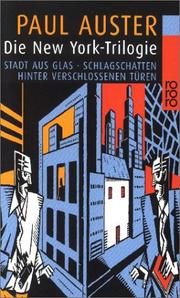
The New York Trilogy
Three linked novels turn a wrong-number call into a puzzle about names, authorship, and the stories people tell to stay sane.
2,259-word summary · 10 min read
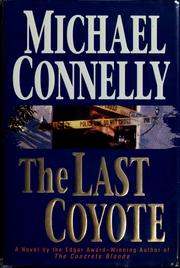
The Last Coyote
On stress leave, Harry Bosch reopens the unsolved murder of his mother, a prostitute strangled when he was twelve, and finds corruption reaching the DA's…
2,069-word summary · 9 min read
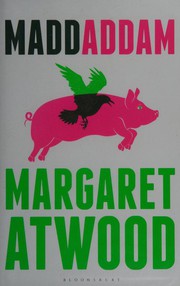
MaddAddam
Toby and Ren rebuild a camp after the plague while Zeb reveals the past and the Crakers invent a religion around Oryx and Crake.
2,201-word summary · 10 min read
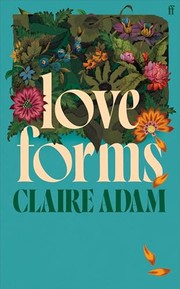
Love Forms
A Trinidadian mother sent away at sixteen returns to the loss of her daughter forty years later, in Claire Adam's quiet, longlisted novel.
2,153-word summary · 10 min read
What We Can Know
In McEwan's eighteenth novel, a lonely scholar in a flooded, diminished Britain chases a vanished poem that could win him the professorship he has long wanted.
2,408-word summary · 11 min read
The Winter People
A century-old ritual for calling back the dead connects a Vermont farmhouse, a girl who came back from the well and a modern investigation into a…
2,037-word summary · 9 min read
The Tunnel
A painter in a Buenos Aires prison recounts the glance, the woman and the jealousy that led him to murder the only person who understood him.
2,313-word summary · 10 min read
The Summons
A law professor is summoned home to find his judge father dead and more than three million dollars hidden in the house.
2,265-word summary · 10 min read
The Paying Guests
A widowed mother and her unmarried daughter take in lodgers in 1922 south London, and a secret affair between Frances and Lilian pulls them into a murder case.
2,661-word summary · 12 min read
The Luminaries
Eleanor Catton's Booker-winning novel drops a young prospector into an 1866 New Zealand gold town where twelve men untangle a web of hidden gold, murder and…
2,949-word summary · 13 min read
The Love of My Life
Emma loves her husband Leo and their little girl. Then Leo, an obituary writer, starts filing the facts of her life, and the woman he thinks he married begins…
2,803-word summary · 12 min read

The Kitchen God's Wife
Amy Tan's second novel pairs a San Jose speech therapist with her Chinese mother, whose account of war, an abusive husband, and a narrow escape comes out in a…
2,896-word summary · 13 min read
The Distant Hours
A letter posted in 1941 reaches Edith Burchill in 1992 and draws her to Milderhurst Castle, where three elderly sisters still guard the secret of a stormy…
2,261-word summary · 10 min read
The Compound
Aisling Rawle's debut follows a bored, shallow contestant through a brutal reality show in a desert compound, where the rules get crueler and the world outside…
2,150-word summary · 10 min read
Possession: A Romance
A London Library discovery sends two scholars chasing a secret Victorian love affair, in a Booker-winning novel of invented letters, poetry and the race to own…
2,394-word summary · 11 min read
On the Island
A Chicago teacher and her teenage student survive a seaplane crash in the Maldives and build a life on an uninhabited island, in a romance that gets harder…
2,171-word summary · 10 min read
Good Dirt
A stoneware jar made by an enslaved potter links a prominent Black New England family across a hundred and fifty years of prosperity, grief and buried history.
2,069-word summary · 9 min read
Drowning Ruth
In 1919 a Wisconsin mother drowns beneath the ice, and her sister insists the little girl who remembers it only dreamed the event. Schwarz unfolds the truth in…
2,386-word summary · 11 min read
Crooked House
A family gathered around a dying patriarch in a twisted old house, and one of Christie's most famous revelations about who killed him.
2,059-word summary · 9 min read

All Adults Here
A widow in upstate New York reconsiders the parent she was after a neighbor's death, then gathers her three grown children for a season of uneasy truths.
2,171-word summary · 10 min read
A Reliable Wife
In a cold Wisconsin town a lonely rich man sends for a mail-order bride, and the woman who arrives has come with poison and a plan.
2,300-word summary · 10 min read
A Guardian and a Thief
Over one week in near-future Kolkata, a mother's flight plan and a homeless young man's hunger collide over a set of stolen travel documents.
2,306-word summary · 10 min read
The Silent Sister
Returning to New Bern to clear out her late father's house, Riley MacPherson finds proof that the sister she believes drowned decades ago is alive under…
2,706-word summary · 12 min read