
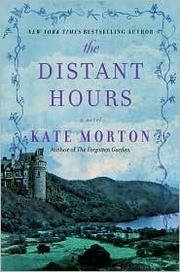
The Distant Hours
2,261-word summary 10 min read 562 pages in the book
- First published
- 2010
- Publisher
- Atria Books
- Pages
- 562
- ISBN
- 9781439152782
Reading options
What's inside (6 sections)
I nearly passed this one by because of the title. The Hours is a book I love, and when I first saw The Distant Hours on a shelf I assumed it was some companion edition or a reissue with a new cover. It is not. This is Kate Morton's third novel, first published in 2010, and the edition I read is the Atria Books hardcover that runs 562 pages. Once I understood the mistake, I picked it up expecting a moody English mystery and found something more patient and more sad than I had planned for. Morton writes about a letter that takes fifty years to arrive, and about a family that spends half a century not saying what happened on one stormy night.
Edie Burchill is the person that letter lands on. She works as an editor at a small family publishing firm in London, and she is visiting her mother Meredith when an envelope turns up, posted during the Second World War and delivered in 1992. Meredith's reaction startles her. Her mother, usually cool and guarded, goes pale and quiet. Edie has always known there is a gap between them, but she has never known its shape. Weeks later, driving back from a client meeting, she finds herself in the village of Milderhurst in Kent and recognizes the castle on the hill. Her mother was evacuated there as a child during the war. Edie decides to stay the night and take a tour the next morning.
The castle turns out to belong to the Blythe family, and to the man who wrote Edie's favorite childhood book, The True History of the Mud Man. The author, Raymond Blythe, is long dead, but three of his daughters still live in the house. Percy and Saffy are twins, stern and watchful. Juniper, the youngest, is fragile in a way the others will not explain; she loses time, drifts off in the middle of a sentence, and seems to live partly in another decade. On the tour, Percy steps away to answer the telephone, and Juniper appears in an old dress, calls Edie "Meredith," and says she has done something terrible. Edie is ushered out quickly. That is the hook, and it works. I wanted to know what a woman could have done that still frightened her fifty years later.
Then Morton cuts backward, to 1941. The twins are in the parlour waiting for Juniper to arrive for dinner with a guest. Saffy realizes the man Juniper is bringing is Thomas Cavill, her own lover, and that this is the night Juniper means to announce their engagement. A storm is building outside. Juniper and Thomas are late. The sisters wait and worry, and a knock at the door ends the chapter. From there the book becomes a braid, alternating Edie's investigation in 1992 with the slow accumulation of 1939, 1940, and 1941.
A child chosen from a crowd
The first wartime thread takes us to the day Meredith is evacuated in 1939. She leaves her family and travels to Milderhurst, where Percy is supposed to collect an evacuee at the town hall. Percy hears a rumor that the housekeeper, Lucy, is about to be married, feels keenly betrayed, and loses several hours wandering in her own thoughts. By the time she gets to the town hall, most of the children are gone. Juniper, who acts on her own agenda and is known for it, picks Meredith out of the small group left behind. That accidental choice is the hinge of the whole book. If Percy had arrived on time, Meredith might have been placed anywhere. Instead she is taken into the one house where her life will be changed.
At Milderhurst, Saffy stays with their father, who refuses to leave his tower and is consumed by a delusion that the Mud Man is coming to kill him. Lucy comes to tell Saffy of her engagement and to announce that she is leaving after nearly twenty years of service. The sisters are both undone by this in different ways, and the reader only learns later how much.
Back in 1992, Edie presses her mother for answers and gets nowhere, so she goes to her Aunt Rita. Rita finds a box of letters Meredith wrote home from Milderhurst. Before Edie can read them, her father suffers a heart attack and she rushes to the hospital. Her investigation of the Mud Man has caught his interest, and while he lies in bed she begins reading the book aloud to him. It is a lovely small detail, this grown man and his daughter bonding over a children's story neither of them fully understands. When Edie finally reads the letters and hands them over, Meredith is furious at the intrusion. Mother and daughter stop speaking properly.
In the 1939 thread, Thomas Cavill is an English teacher checking on his students, making sure evacuees are happy in their surrogate homes. He comes across the pool at the bottom of the Milderhurst estate and goes for a swim. Juniper finds him there and is struck by him. When Meredith arrives, she tells Thomas she has never been happier. He leaves to prepare for his first tour of duty. Juniper and Meredith climb to the roof and watch him walk away, and Juniper confides that her greatest fear is becoming like her father, trapped and deluded. From that moment the two girls become close friends, the kind of friends who share the sort of secret you cannot tell your family. Morton gives their friendship room to breathe, which is why it hurts so much when the past catches up.
The Mud Man in the library
Edie's father, confined to bed, sees more than she thinks. He tells her to patch things up with her mother, and when she does, Meredith reveals she never knew Juniper wrote to her after she left Milderhurst. She had believed the friendship was over. That small misunderstanding sits beside the larger ones the book is built on.
Edie finds an advert placed by Theo Cavill, searching for his brother Thomas. She visits him in a nursing home, and his face falls when he realizes she has come for information rather than news. Thomas, he says, has been missing since 1941. A letter arrived later, supposedly from Thomas, claiming he had eloped with another woman. That letter becomes another piece of the puzzle, and another example of how a few words can steer a life for decades.
Then a publisher approaches Edie about a new edition of The Mud Man. The Sisters Blythe have demanded that she write the introduction, though she has never written a line of literary criticism in her life. It is a strange request, and it pulls her back to Milderhurst. Saffy suggests she be allowed to see Raymond's notebooks, locked away since his death. Percy is visibly uncomfortable but agrees. In the village, the landlady of Edie's bed and breakfast reveals that her mother was Lucy, and that she believes Lucy was having an affair with Raymond. She blames it for Percy's coldness. Saffy, meanwhile, takes Edie aside to insist that Percy, for all her severity, is a good person who feels responsible for Juniper and protects the house and her sisters.
In the muniment room, where Raymond's papers are kept, Edie finds a letter suggesting he plagiarized The Mud Man. She is shaken, and Percy later admits she wrote it. The true story is worse and sadder. The Mud Man came from an incident when the sisters were children. Their mother Muriel was having an affair with an architect named Oliver Sykes. Raymond confronted them one night in the library and attacked Oliver, and the struggle caused a fire that killed Muriel. Saffy saw Oliver fall from the building into the moat and die. After that she had nightmares about a man climbing out of the water to her window to steal her away, and Raymond wrote that figure into his story. Percy had begged him not to publish. His guilt and paranoia grew until he shut himself in the tower, convinced the character he had invented was coming for him.
Percy also tells Edie that she killed Thomas by accident, taking him for an intruder in the storm. Edie returns to the bed and breakfast, where the landlady produces her mother's love letters, signed with what looks like an R. Edie realizes the letter is a P, for Percy. The coldness toward Lucy, the vigil over the house, the control of every corridor, all of it finally has a shape. That night Edie wakes to find flames engulfing Milderhurst Castle.
The 1941 thread has been moving toward this all along. Tom returned from his first tour of duty, met Meredith and Juniper in London, and began a secret relationship with Juniper. By October they were engaged. He gave Meredith a book, The Last Days of Paris, a Journalist's Diary, then traveled to Milderhurst for the dinner, planning to rejoin his regiment the following week. Everything about that night is ordinary until it is not.
The knock at the door
Morton returns to the moment the knock comes. Saffy opens the door to Juniper, soaking wet and unable to say how she got from the bus to the house. Thomas has not arrived. When Saffy takes Juniper's coat, she is covered in blood, and they sedate her to keep her calm. Percy goes out to conceal whatever evidence Juniper may have left along the road, while Saffy waits in the parlour and takes one of the pills meant for Juniper. She slips into her childhood nightmare.
Thomas, delayed by the weather and wartime transport, finally reaches the house. With Percy outside, no one answers the door. He notices a loose window shutter in the room above, where Saffy is half asleep, and climbs up to fix it, eager to make a good impression on his future in-laws. Saffy, still inside the nightmare, sees the Mud Man climbing in and strikes him with a wrench. Percy comes back to find him dead in the moat and buries him in the pet cemetery on the grounds. Juniper watches from the shadows and begins her descent into madness, certain she killed the man she loved.
The epilogue turns the last assumption upside down. Juniper had helped deliver a baby at the roadside that night, which is why she was covered in blood. She was traumatized but not a killer. Percy never told Saffy the truth about Thomas's death. And when Percy's secrets were finally exposed, she drugged her sisters and set fire to the library, the same room where the fire that killed her mother began. The circle closes with terrible neatness.
I found that final reveal satisfying and a little too tidy. Morton arranges the converging confessions so that each sister receives exactly the burden she can no longer carry, and the fire echoes an earlier fire with a precision that feels designed. It works emotionally. It also feels like the hand of the author rather than the accident of life. I noticed the machinery and still cared about the people.
What stays with you
The title, I decided, is about distance in more than one direction. The letter crosses decades. Edie crosses the country to reach a house her mother left behind. Juniper and Saffy live at a remove from the events that made them, and Meredith spends her adult life at a remove from her own daughter. Even Raymond's book is a story about a figure who comes from a place no one can quite reach. Morton is interested in how long it takes for a family to say a thing out loud, and in what the saying costs.
The book is long, and it is slow in places. Edie's 1992 chapters sometimes feel like a checklist of interviews and documents, each one producing the next clue on schedule. The 1941 chapters are stronger, partly because Morton can let a scene breathe, and partly because the reader already knows the shape of the night and is waiting to see how it breaks. The early chapters also lean on the idea that Juniper's instability can be explained by a mysterious illness, which the book later treats more carefully. Some readers will find the pacing patient; others will call it padded. I hovered between the two and kept reading.
What worked for me is the way Morton makes the Mud Man real without making him real. She gives us a children's book, a frightened old man in a tower, a nightmare a child could not shake, and a family that kept a story alive because they could not bury the event behind it. By the time Edie reads the introduction she has been asked to write, the character has become a way of talking about guilt that nobody could name directly. That is the best thing the novel does. It treats a silly-sounding monster as seriously as the people who were afraid of him.
If you like historical fiction with a puzzle to unwrap and a house full of people who each know one piece, this will keep you busy. If you want a tight procedural or a quick answer, it will test your patience. I closed it feeling that I had spent time in a very specific place, which is the highest compliment I can give a book like this. The castle stays with you, and so does the silence that lived inside it.
FAQ
Is The Distant Hours related to Michael Cunningham's The Hours?
No. Kate Morton's 2010 novel is a separate historical mystery about a wartime letter and the Blythe family of Milderhurst Castle. The two books share only a similar title.
What is the Mud Man in The Distant Hours?
It is a children's book written by Raymond Blythe, the recluse father of the Blythe sisters, and the figure in his daughters' nightmares. Morton reveals that the story grew out of a real family tragedy.
How is the story structured?
It moves between 1992, when Edie investigates, and the late 1930s and 1941, when her mother Meredith lived at Milderhurst. The 1941 thread reveals what happened on the night Thomas Cavill died.
Similar books
The Lake House
Detective Sadie reopens 1933 Edevane baby vanishing tied to writer Alice.
2,055-word summary · 9 min read
The Clockmaker's Daughter
A London archivist finds a Victorian satchel holding a photograph, a sketchbook and a letter, then follows them to Birchwood Manor, where a young woman died in…
2,886-word summary · 13 min read
The Secret Keeper
A girl watches her mother kill a stranger in 1961; fifty years later she digs into her mother wartime London past.
2,262-word summary · 10 min read
The Forgotten Garden
A Brisbane woman traces a century old abandonment from an English country house to a Cornish cove and a hidden author.
2,056-word summary · 9 min read

The Echo of Old Books
Barbara Davis's 2023 novel sends a rare-book dealer in 1984 New Hampshire hunting for the authors of two unpublished volumes that tell opposite sides of one…
2,491-word summary · 11 min read
The Tuscan Child
After her father's death, Joanna follows a returned letter to Tuscany and uncovers his wartime love, a hidden painting and a village secret. A dual-timeline…
2,095-word summary · 9 min read

The Buffalo Hunter Hunter
A 1912 diary found in a Montana parsonage recounts a Blackfeet man's unraveling after a dying creature's blood turns him undead, in a novel of history and…
2,731-word summary · 12 min read

Marina
A fifteen-year-old boarder in 1979 Barcelona follows a singing voice into a ruined mansion and finds a girl, a watch, and a mystery the city has kept buried…
2,352-word summary · 10 min read
Drowning Ruth
In 1919 a Wisconsin mother drowns beneath the ice, and her sister insists the little girl who remembers it only dreamed the event. Schwarz unfolds the truth in…
2,386-word summary · 11 min read

Anatomy: A Love Story
In 1817 Edinburgh, a noblewoman who wants to be a surgeon disguises herself to study anatomy and falls for the grave robber who supplies her with bodies.
2,031-word summary · 9 min read

The Shadow Sister
Star D'Apliese steps out of her sister's shadow and follows a bookshop clue into the Edwardian life of Flora MacNichol, a woman who gave up love for duty.
2,260-word summary · 10 min read
Only Time Will Tell
A Bristol dockworker's son wins a scholarship, falls in love with the daughter of the family that owns the shipyard, and learns that his father's death was not…
2,082-word summary · 9 min read
Once Upon a River
A wounded man stumbles into a riverside inn carrying what appears to be a drowned child who is not quite dead, and the story braids the guesses of everyone who…
2,173-word summary · 10 min read

The Storyteller's Secret
A New York journalist goes to India to learn why her grandmother loved a British officer, and why a family servant kept the truth for forty years.
2,270-word summary · 10 min read

Big Lies in a Small Town
A 22-year-old woman leaves prison to restore a 1940 mural, and Edenton, North Carolina, starts talking.
2,187-word summary · 10 min read

Those Who Save Us
A Minnesota professor hunts her mother's hidden wartime past in Weimar, where survival came wrapped in an SS officer's protection. A dual timeline about…
2,345-word summary · 10 min read
Death Comes to Pemberley
P.D. James drops a murder onto the Pemberley estate and sends Wickham to trial, reading Austen's most famous marriage through the machinery of Georgian justice.
2,318-word summary · 10 min read
The Keeper of Happy Endings
Barbara Davis's 2021 standalone braids a Paris dressmaker's wartime losses with a grieving Boston artist who unlocks her family's secrets through an old row…
2,437-word summary · 11 min read
The Prisoner of Heaven
Fermin Christmas past returns with a stranger and a prison debt.
2,388-word summary · 11 min read
The Death of Mrs. Westaway
Broke tarot reader Hal claims a Cornish inheritance and finds attic locks and lies.
3,313-word summary · 15 min read
The Angel's Game
In 1920s Barcelona, a young writer accepts a strange publisher's offer to write an impossible book and finds his life turning into a ghost story.
2,699-word summary · 12 min read
The Thirteenth Tale
A dying novelist tells her true story at last to a bookseller's daughter, and the mystery of the Angelfield twins comes into the open.
2,928-word summary · 13 min read
The Historian
A daughter traces her father's search for Dracula through letters and archives across Europe.
3,237-word summary · 14 min read

Mexican Gothic
In 1950 Mexico, glamorous Noemi Taboada leaves Mexico City for High Place after a desperate letter, to rescue cousin Catalina from the chilling Doyles and…
2,523-word summary · 11 min read
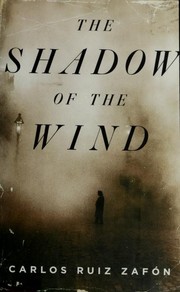
The Shadow of the Wind
In postwar Barcelona, Daniel finds a cursed novel and hunts its vanished author while a burned man watches.
2,000-word summary · 9 min read
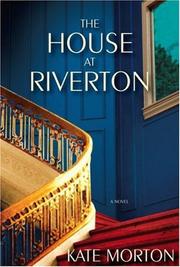
The House at Riverton
In 1999, ninety eight year old maid Grace Bradley tapes the truth about a 1924 shooting at Riverton Manor, poet Robbie Hunter, two sisters and a lie held for…
2,433-word summary · 11 min read
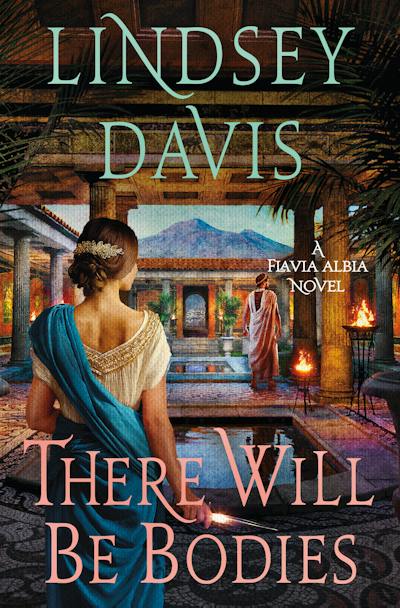
There Will Be Bodies
Digging out a villa buried by Vesuvius, Flavia Albia finds chained corpses and a death someone tried to hide for ten years.
2,152-word summary · 10 min read
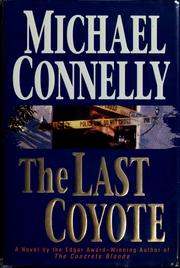
The Last Coyote
On stress leave, Harry Bosch reopens the unsolved murder of his mother, a prostitute strangled when he was twelve, and finds corruption reaching the DA's…
2,069-word summary · 9 min read

The Land in Winter
In the West Country during the Big Freeze of 1962, two young couples are shut in together, and the cold draws out every buried want.
2,265-word summary · 10 min read
The Hangman's Daughter
In 1659 Bavaria, a hangman ordered to torture an innocent midwife instead investigates the deaths of children marked with a strange tattoo.
2,523-word summary · 11 min read