
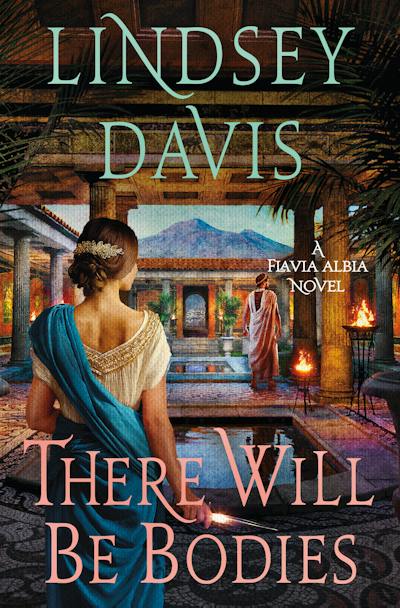
There Will Be Bodies
2,152-word summary 10 min read 368 pages in the book
- First published
- 2025
- Publisher
- Minotaur Books
- Pages
- 368
- ISBN
- 9781250906731
- Series
- Flavia Albia (#13)
Reading options
What's inside (8 sections)
The first line of this book is a joke, and it is a terrible one. Flavia Albia's husband Tiberius Manlius has taken over a building firm that is nearly bankrupt, and he tells his workmen that there will be bodies when they clear out the cut-price villa his uncle has bought. He means bodies in the ordinary building-site sense, the sort that appear in a bad joke at a dinner party. Ten chapters later I realised the joke had been sitting there the whole time, waiting to become literal. That is the trick the whole novel turns on, and it is a good one. Davis has always written dialogue with a dry, almost offhand rhythm, and she uses it here to make the awful things arrive without announcement. A line that sounds like a building-site wisecrack in chapter one turns into a piece of evidence you keep thinking about much later. It is a neat piece of construction, and it made me go back and reread the first pages.
I picked this up because it is the thirteenth Flavia Albia book and the first one to leave Rome. I had grown used to the series as a set of cases conducted among the markets, apartments, and temples of the city. Moving the investigation out to the Bay of Naples changes the temperature of the thing. The city scenes are crowded and quick. This one is slow, hot, and full of ash.
A villa buried under fifty feet of ash
The setting does a great deal of the work. The villa is at Stabiae, and ten years after the eruption of Vesuvius in 79 AD it has to be dug out of roughly fifty feet of compacted volcanic debris. Davis is very good on the sheer labour of that. Nobody is strolling into a sealed Pompeian house and brushing dust off a fresco. They are shifting a hillside, and the men doing it are trying to do it cheaply because the man paying for it does not want to spend money. Davis keeps the workmen in view rather than treating them as background. They are the ones whose hands find the bodies, and they are the ones whose conclusions about those bodies matter, because they have been digging in volcanic ground for weeks while the owners have been drinking Alban wine. There is a quiet argument here about who actually knows a place. The men with the shovels know more about the villa than the people who own it, and the novel keeps returning to that imbalance.
That man is Tullius Icilius, a rich, controlling warehouse owner who keeps his nephew Tiberius on a short leash. He wants the job done on the cheap, and he expects the bodies that come out of the debris to be what everyone assumes they are: eruption victims who suffocated where they stood a decade earlier. The assumption is so natural that the novel barely has to argue for it. When the first corpses appear, chained, the reader and the workers alike file them away as another oddity of a disaster that killed thousands.
The seller, Sextus Curvidius Fulvianus, is elderly and bland in a way that made me distrust him immediately. He turns up for dinner, drinks Alban wine with the family, and lets Flavia play the dutiful matron while she quietly sizes him up. That scene is the nearest the book comes to a drawing-room mystery, and Davis uses it to show how Flavia works. She is watching people while they watch her, and she has learned that the most useful thing a suspect can do is relax.
An informer, not a detective
It helps to know who Flavia is before the bodies start piling up. She is the adopted daughter and professional successor of Marcus Didius Falco, the character Davis wrote about in an earlier series. She works as a private informer in first-century Rome, which is a useful distinction. She is not a magistrate with a warrant and a budget. She is a woman who finds things out, and whose standing in the world is always slightly uncertain because of what she does and who her father was. That uncertainty is the engine of the longer series. Falco was a couldn't-keep-his-mouth-shut sort of investigator with a talent for landing in trouble, and Flavia inherited the trade without inheriting the same freedom to make a mess. She has a household, a husband, and a business to manage, and she works around all three. Watching her balance those obligations is half the pleasure, even when the case itself is slow.
This is the first case in the series set outside the city, and the change of scenery exposes how much of Flavia's method depends on being a Roman among Romans. At Stabiae she is an outsider twice over. She is a city woman in a rural district, and she is a woman doing a man's job in a place where the local hierarchy is not about to make room for her. Davis folds that into a subplot about the friction between urban and rural communities, and it never feels pasted on. The people who own the villa and the people who work the land have different ideas about what a life is worth, and the dead are going to be sorted by those ideas.
There is also a strain of misogyny running through the book, handled in Davis's usual dry way. Flavia is treated as a wife first and an investigator second by nearly everyone she meets, and she uses that assumption when it suits her. When it does not, she is irritated rather than heroic about it. I have always liked that about her. She is a professional, not a crusader, and the books are better for it.
Chains, a locked room, and a death ten years old
The case proper begins when the digging starts turning up things that do not fit the story of a simple eruption. Among the bodies recovered are chained corpses. People do not normally wear chains to their deaths in a volcanic disaster, and once that detail is on the page the reader starts looking at every other assumption again. Then the previous owner of the villa turns up. He has not suffocated in the ash. He has been laid out in a locked storeroom.
From there Flavia is working on a death a decade old while trying to stop another one happening in the present. A large inheritance is in play, which gives several people a reason to want the past to stay buried. The caretakers are suspicious. Friends cannot be trusted. A Sicilian pirate is sniffing around the property, which is exactly the sort of complication that turns a tidy Roman inheritance dispute into something messier. His presence is a reminder that a villa on the Bay of Naples belongs to a world of shipping and money that Rome's courts can only partly control. The case keeps widening in small ways like this. Nobody announces a new thread. It simply appears, and Flavia has to decide whether it matters. Davis keeps several threads going at once, and the pleasure is in watching Flavia separate the ones that matter from the ones that are noise.
I will not pretend the plot is tidy. It is not. The book is more interested in the accumulation of small inconsistencies than in a single clean reveal, and that can make the middle feel slow if you are used to a faster mystery. But the payoff is that the ending grows out of details the reader has already seen. There is no last-minute invention of a culprit nobody has met. Everything has been sitting in the ash from the beginning.
The eruption as a private wound
What lifts the book above a country-house whodunit is the way Davis connects the official history to Flavia's own past. She once searched Campania with her father for relatives after the eruption, and she never found them. That piece of biography is introduced almost casually, and it changes the whole emotional weight of the dig. This is not an abstract archaeological site for her. It is a place where the ground is full of people who disappeared, and she is one of the many who came looking and came back empty-handed.
That connection is what makes the book's treatment of the eruption more than set dressing. Davis writes about the event as a historical fact with a human scale attached to it, and she resists the temptation to turn it into spectacle. There are no grand set pieces here. There is a villa, a team of workmen, a pile of debris, and a woman who knows what it means to search a region for people you will never find. The history and the case comment on each other without either one swallowing the other.
The book also carries one of Davis's more cheerful inventions, a prefatory character chart headed "Characters, mainly alive." It is a small joke, but it tells you how the author wants you to approach the thing. This is a story about people who are mostly still breathing, and about the ones who are not. The chart is funny. The body count is not.
The wider empire and its edges
Kirkus called the result historical fiction of high quality, propelled by an intricate whodunit, and argued that this is arguably Flavia's most complex and layered adventure. That seems fair. The praise for Davis's research is deserved too. The picture she gives of the wider Empire is not the Rome of marble and senators. It is the Rome of building contracts, inheritance law, suspicious neighbours, and men trying to get a job done without paying for it.
That is the series at its best. Davis has always written about ordinary Romans doing ordinary and often shabby things, and she has never mistaken the Empire for its monuments. Stabiae lets her do that with a whole region rather than a single city block. The tensions between the capital and the provinces, between people with money and people with callused hands, sit under the mystery without ever being stated as a theme. Her prose suits this material. The sentences are plain and unshowy, and the jokes arrive in the middle of serious business, which is how they do in real conversation. When she wants to make a point about power, she gives you a contract or a dinner rather than a speech. That restraint is why the book can afford its one grand image of a head in the embers. Everything around it is deliberately ordinary. When Flavia notices something, it is usually because she understands a social arrangement that everyone else takes for granted.
There is a fair criticism to make here. At 368 pages the book has room for more than the case needs, and a couple of the subplots circle back rather than forward. If you came for a tight procedural, you may find the dig sections heavy going. I did not mind, because the slowness is part of the point. Digging is slow. People who want to keep a secret are patient. The book asks you to be patient too.
The cover and the strange business around publication
The British first edition has a cover showing a battered sculptural head half-buried in glowing embers. Davis identified the figure as Tyche, the goddess of fortune and the inventor of dice, wearing a mural crown. Once you know that, the image reads as a neat piece of irony. Fortune is exactly what the people in this book are trying to control, and the dice have already been thrown by a dog bite and a volcanic eruption.
There is an odder footnote to the publication. Two days before the book came out, Davis reported that an AI-generated review misrepresenting the novel had been posted on social media. She later noted that it had been taken down. Nothing about that is in the story, and I mention it only because it is hard to think of a more fitting piece of noise to surround a book about bodies in the ash and the stories people build over them. A fake account of a book is still an account of a book, and it still has to be dug out.
I closed this one with the sense that Davis is still finding new things to do with a character who has been around for thirteen cases. Moving Flavia out of Rome was a risk. It works because the city was never the point. The point was a woman who notices what other people overlook, and a past that does not stay buried no matter how many feet of ash you put on top of it.
FAQ
Is There Will Be Bodies set in Rome?
No. It is the first Flavia Albia novel set outside Rome, taking place at Stabiae on the Bay of Naples about ten years after Vesuvius erupted in 79 AD.
Do I need to have read the earlier Flavia Albia books?
It helps to know that Flavia is the adopted daughter and successor of Marcus Didius Falco, but the mystery stands on its own and introduces its own cast.
When was the book published?
Hodder & Stoughton published it in Britain on 3 April 2025, and Minotaur Books published the 368-page American hardcover on 22 July 2025.
Similar books
More from Flavia Albia first, then related titles.

The Hangman's Daughter
In 1659 Bavaria, a hangman ordered to torture an innocent midwife instead investigates the deaths of children marked with a strange tattoo.
2,523-word summary · 11 min read
The Unquiet Grave
In Dervla McTiernan's fourth Cormac Reilly novel, a body found in a Galway bog turns out to be a missing school principal, and the case opens into something…
2,253-word summary · 10 min read
The Hallmarked Man
A body in a silver vault behind Freemasons' Hall sends Strike and Robin into a world of coded letters, secret societies and a girl whose whole identity may be…
3,084-word summary · 14 min read
Fractured
In Karin Slaughter's second Will Trent novel, a mother kills the wrong man in an Atlanta mansion, and a GBI agent with a hidden reading difficulty finds a…
2,219-word summary · 10 min read

Nightshade
Connelly launches Detective Stilwell on Catalina Island, where a beheaded buffalo and a Jane Doe in the harbor pull a quiet sheriff's post into violence and…
2,272-word summary · 10 min read

3rd Degree
The third Women's Murder Club novel follows a San Francisco terror cell and a three-day killing schedule, and it costs the club a member.
2,685-word summary · 12 min read

The Redbreast
Harry Hole chases an ageing sniper through modern Oslo while two Norwegian volunteers on the Eastern Front carry a fifty-year-old betrayal toward a royal…
2,453-word summary · 11 min read

The Body in the Library
A strange girl found dead in a library pulls Miss Marple into lies about dance halls and film.
2,017-word summary · 9 min read

Maisie Dobbs
A maid turned war nurse opens a London inquiry agency in 1929 and traces a quiet case to a refuge for shattered soldiers.
2,382-word summary · 11 min read

The Last Coyote
On stress leave, Harry Bosch reopens the unsolved murder of his mother, a prostitute strangled when he was twelve, and finds corruption reaching the DA's…
2,069-word summary · 9 min read

The 5th Horseman
Two linked cases pull Lindsay Boxer and the Women's Murder Club into a hospital full of strange deaths and a luxury-car murder spree.
2,609-word summary · 12 min read
Evil Under the Sun
Poirot's Devon holiday turns deadly when a flirtatious actress is strangled at a secluded seaside hotel in this 1941 puzzle.
2,380-word summary · 11 min read

The Word Is Murder
A fictionalised Anthony Horowitz is talked into chronicling a prickly ex-detective's case: a woman murdered hours after planning her own funeral. A clever…
2,296-word summary · 10 min read
The Running Grave
In the seventh Cormoran Strike novel, Robin goes undercover inside a Norfolk cult while Strike digs into a child's death from decades earlier.
2,615-word summary · 12 min read
The Reversal
Mickey Haller prosecutes a child killer's retrial with ex-wife Maggie and half-brother Harry Bosch on his team.
2,056-word summary · 9 min read
The Paying Guests
A widowed mother and her unmarried daughter take in lodgers in 1922 south London, and a secret affair between Frances and Lilian pulls them into a murder case.
2,661-word summary · 12 min read

The Luminaries
Eleanor Catton's Booker-winning novel drops a young prospector into an 1866 New Zealand gold town where twelve men untangle a web of hidden gold, murder and…
2,949-word summary · 13 min read
The Keeper of Lost Causes
Jussi Adler-Olsen introduces Carl Mørck and Department Q, a Copenhagen cold-case unit in a basement, and a missing politician whose file refuses to stay closed.
2,759-word summary · 12 min read

The Ice Princess
Camilla Läckberg's debut follows writer Erica Falck and detective Patrik Hedström as a frozen bathtub in a small Swedish town unravels a secret kept for…
2,321-word summary · 10 min read

The Girl Who Takes an Eye for an Eye
Lisbeth Salander investigates a secret childhood experiment from prison while Mikael Blomkvist uncovers a twin conspiracy behind a wealthy businessman.
2,059-word summary · 9 min read

The Girl in the Ice
A young socialite is found frozen beneath the ice in a south London park, and DCI Erika Foster returns to work to lead the case. Grief, privilege and three…
2,492-word summary · 11 min read
The Brass Verdict
Mickey Haller takes over a murdered lawyer's caseload and a Hollywood double-murder trial, with Harry Bosch circling the edges.
2,672-word summary · 12 min read
The Beekeeper's Apprentice
In 1915 a bookish fifteen-year-old American girl stumbles across a retired Sherlock Holmes keeping bees on the Sussex Downs, and talks him into taking her on…
2,215-word summary · 10 min read
The Beautiful Mystery
In a cloistered Quebec monastery, a chant-singing monk is murdered and Gamache must break a vow of silence to find the killer. Eighth in the Chief Inspector…
2,262-word summary · 10 min read
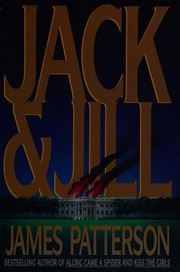
Jack & Jill
A senator is killed with a nursery-rhyme calling card as a child is murdered near Alex Cross's home. The third Alex Cross novel pulls him toward two cases, one…
2,646-word summary · 12 min read
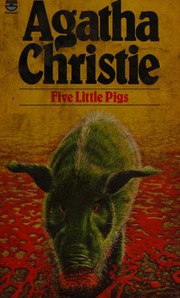
Five Little Pigs
Sixteen years after a painter's murder, Poirot reopens the case at the request of a daughter who believes her dead mother was innocent.
2,027-word summary · 9 min read
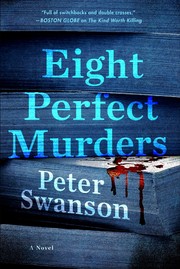
Eight Perfect Murders
A Boston bookseller's old blog post listing eight perfect fictional murders becomes the blueprint for a real killer, and the narrator knows more than he admits.
2,292-word summary · 10 min read

Body of Evidence
Kay Scarpetta investigates the murder of a reclusive romance novelist who opened her door willingly, and finds a missing manuscript and a web of…
2,007-word summary · 9 min read

A Drop of Corruption
Bennett's second Shadow of the Leviathan novel pairs a blindfolded detective and an engraver with perfect recall in a locked-room case during an imperial…
2,333-word summary · 10 min read

The Secret Place
Two Dublin detectives revisit a murder on the grounds of a girls' boarding school, where a bulletin board note and rival cliques hide the truth.
2,271-word summary · 10 min read