
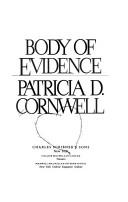
Body of Evidence
2,007-word summary 9 min read 256 pages in the book
- First published
- 1991
- Publisher
- Charles Scribner's Sons
- Pages
- 256
- ISBN
- 9780684192406
- Series
- Kay Scarpetta (#2)
Reading options
What's inside (8 sections)
The woman who opened the door
The central mystery of this book is stated in its first chapters. Beryl Stratton Madison is a wealthy, reclusive bestselling writer of historical romances living in Richmond, Virginia. For months she has received obscene threatening phone calls and has the feeling she is being watched. The Richmond police dismiss her pleas as loneliness and attention-seeking. Terrified, she flees to Key West, but a message scratched into her car forces her to return home.
On the night she comes back, she switches off her burglar alarm and willingly opens the door to her assailant. That is the question Dr. Kay Scarpetta keeps returning to throughout the novel. Why did Beryl, having escaped, come back and let someone in? The answer has to do with the kind of fear that makes a person stop running, and with a manuscript that has gone missing from her house.
Patricia Cornwell published this in 1991 as the second Kay Scarpetta novel, following Postmortem. It was a phenomenon, and it helped establish the forensic thriller as a major form. The book is narrated in Scarpetta's first person, and its great innovation is the way it puts the reader inside an autopsy. Cornwell writes about fibers, wound patterns and ash traces with the same attention other writers give to car chases.
The police response to Beryl's calls is one of the book's sharper pieces of social observation. She is a wealthy woman living alone, and the men she calls dismiss her as a lonely rich woman looking for attention. The fact that she is a bestselling author does not help. If anything, it gives them another reason to treat her complaints as performance. Cornwell is interested in the way a woman's fear is evaluated according to her circumstances rather than her words. Beryl knows what is happening to her, and nobody will treat her as a reliable witness until it is too late.
Her flight to Key West and her return are described with a terrible logic. She leaves because she is frightened. She comes back because the message on her car tells her that running has not changed anything. The assailant knows where she went. At that point staying away would mean living with the certainty that he can find her anywhere, while going home at least offers the illusion of control. When she switches off the alarm and opens the door, it is the end of a long process of being worn down.
The scene
Beryl is brutally stabbed, nearly decapitated, and left in a suggestive pose. The wounds are described as "stab wounds spread open like large red buttonholes," which is the kind of phrase that made Cornwell famous. Scarpetta, Virginia's Chief Medical Examiner, performs the autopsy, catalogs defensive injuries and trace evidence, and is struck both by the savagery of the attack and by the absence of forced entry.
She and Lieutenant Pete Marino examine the still-bloody crime scene. Marino has recently been promoted and is driving a new black LTD Crown Victoria, which he mentions more than once. He and Scarpetta collect microscopic fibers and argue about what they mean. Their partnership is one of the durable pleasures of the series. Marino is blunt, impatient and occasionally wrong; Scarpetta is rigorous and private. They need each other, and neither will admit it.
Cornwell's descriptions of the autopsy are the book's signature. She writes about the body as a text that has to be read carefully, with each wound and trace carrying information about the person who inflicted it. The defensive injuries tell Scarpetta how Beryl held her hands up. The absence of forced entry tells her something about the victim's state of mind. The fibers under the nails and on the floor suggest where the attacker came from. None of this is presented as magic. It is patient, unglamorous work, and the book makes the patience exciting.
That is why the procedural passages hold up better than the plot. Cornwell knows the material, and her confidence comes through on the page. When Scarpetta is in the laboratory, the reader trusts her completely. When the investigation moves into the more conventional territory of stalkers and family secrets, that trust is still there because it has been earned.
The missing manuscript becomes the key to motive. Beryl's latest book is an autobiographical exposé of her early years as the protégé of a legendary novelist named Cary Harper. It has disappeared from the house. Beryl's lawyer and agent, Robert Sparacino, angrily accuses Scarpetta of losing it and pressures her to produce it. His behavior is strange from the start, and the book uses him to bring the world of publishing into the investigation. There is jealousy and betrayal in that world too.
The profile
Scarpetta learns that Beryl was entangled in a legal dispute connected to the firm of her long-lost former lover Mark James, an ex from her Georgetown law-school days. She was Italian-Catholic and poor; he was a wealthy Anglo-Protestant from Boston. The class difference is presented as the reason the relationship ended badly, and as the reason its memory still has power over her.
FBI profiler Benton Wesley is consulted, and the investigation takes Scarpetta to the Behavioral Science Unit at the FBI National Academy in Quantico. The killer is profiled as an obsessive stalker, which fits the phone calls and the sense of being watched. Scarpetta's tech-savvy niece Lucy helps with computer and database work, following clue after clue. Lucy's presence gives the book a second kind of expertise, the digital counterpart to Scarpetta's laboratory.
The investigation produces a suspect in Al Hunt, a mentally unstable man with a history of institutionalization. He fits the profile, but when Scarpetta and Marino reach him he supplies only enigmatic fragments before hanging himself. That is the book's first false resolution, and it is deliberately unsatisfying. The profiling has identified a type, but the person who fits the type is dead and the real killer is still free.
The Harper family
Scarpetta sifts through fireplace ashes and recovers burned remnants of Beryl's missing manuscript, which links the crime to the Harper household. Cary Harper, Beryl's estranged mentor, is then found brutally murdered in his driveway. Sterling Harper, Cary's sister, is an eccentric, bitter, cancer-stricken woman who secretly kept in touch with Beryl against her brother's wishes. She dies suddenly, an apparent suicide, while Scarpetta is stranded at the house in a snowstorm with a dead car.
Sterling is a difficult figure to read. She resented her brother's relationship with Beryl and secretly kept in contact with her anyway, which makes her both jealous and loyal. Her cancer gives the scenes around her a sense of time running out, and her death removes the one person who might have explained the history between the three of them. Cornwell uses that frustration as a source of suspense. The reader knows there is an answer in that house, and then the person who holds it dies.
That sequence is pure gothic. A snowstorm, a broken-down car, a house full of family secrets and a woman dying in suspicious circumstances. Cornwell slows the pace here and lets the atmosphere do the work. It is also where the book's family secret comes into focus. The relationship between Cary and Sterling, and their history with Beryl, turns out to be the hidden structure beneath the murders.
Scarpetta traces Al Hunt's enigmatic clues to the mental institution where Hunt and another unstable man, Frankie Aims, were once patients. The evidence now points to Frankie as Beryl's obsessed killer. A trip to New York to meet Mark ends in disappointment: his cover story proves to be a lie, and Scarpetta is crushed. This is the personal thread of the book, and it runs through the professional one. She is a woman who has built a careful life out of work, and the case keeps exposing the parts of that life that are not as solid as she thought.
The hunt for Scarpetta
Frankie escalates. He stalks Scarpetta by phone exactly as he stalked Beryl, and he blows up Marino's car. The repetition is the point. He is not merely killing; he is reenacting a script, and Scarpetta has been cast in Beryl's role. Refusing to be a victim but fearing the trap, she flees to Key West, the same refuge Beryl ran to. There she manages to obtain Beryl's missing manuscript.
Key West gives the book a change of air, and it is also where Mark James reappears. He reveals the truth: he is an undercover FBI agent working to prove that Sparacino is a mobster. That revelation ties the publishing thread to the criminal one, and it recontextualizes Scarpetta's disappointment in New York. The man she thought had lied to her was lying, but for a reason.
Scarpetta flies back to Richmond, determined to face the killer. A courier delivers her "lost" luggage and she nearly dies in an ambush, but recognizes the ploy at the last instant. She evades Frankie and kills him in self-defense, narrowly avoiding becoming the fifth death in the chain: two murders, two suicides and her own near-murder. The recovered manuscript helps bring down Sparacino. After Christmas, Scarpetta makes plans to meet Mark in Aspen, and the case closes with her personal life tentatively reopened.
I should say something about the title. "Body of evidence" is a legal phrase, and the book uses it in both senses. Beryl's body is the central evidence, and the accumulated physical details are what the case is built on. The phrase also points to Scarpetta's profession. She works with bodies as evidence, and her skill is in making them speak. It is a neat title for a novel that is more interested in method than in mayhem.
What makes it work
The book's great strength is the procedural detail. Cornwell makes forensic science feel like detective work rather than a lecture. When Scarpetta looks at a wound or a fiber or a handful of ashes, the reader understands exactly what she is seeing and why it matters. The autopsy scenes are not there to shock. They are there because the body is the most reliable witness in the case, and Scarpetta knows how to read it.
The supporting cast is well drawn. Marino's gruff loyalty, Lucy's technical confidence, Wesley's professional restraint and Sparacino's oily menace are all established quickly. The book also has a good sense of place. Richmond in winter, with its old houses and its legal and publishing circles, feels like a real city with real power structures. Key West provides a sharp contrast, a place where Beryl tried to hide and where Scarpetta goes to understand her.
The plotting is less tidy. The identity of the killer is telegraphed earlier than the book seems to intend, and some of the clues rely on characters behaving irrationally so that the investigation can proceed. Sterling Harper's death is the weakest link, because it depends on a coincidence that the book does not quite justify. And the undercover plot involving Mark and Sparacino arrives so late that it feels attached rather than integral.
I finished it impressed by the machinery and a little less impressed by the story. That is a fair assessment of the early Scarpetta books. They are extraordinary at what they do technically, and conventional in how they arrange the rest. The thing that lasts is Scarpetta herself: a woman whose competence is her identity, who keeps being pulled into cases that expose the limits of that competence, and who never stops looking at the evidence.
A final note on the publication history. Open Library has the work down as 1990, but the Scribner first edition appeared in February 1991, as the reviews from that time confirm. If you see a different date, it is almost certainly a catalog error. The 1991 hardcover is the edition the facts here describe.
FAQ
Where does Body of Evidence fit in the Kay Scarpetta series?
It is book two, following Postmortem and preceding All That Remains. It was published in 1991 by Charles Scribner's Sons.
What is the central mystery?
Why Beryl Madison, having fled to Key West to escape a stalker, returned home and willingly opened her door to the person who killed her. The missing manuscript helps answer it.
Is the book a reliable account of forensic science?
Cornwell was deeply involved in forensic work and the procedural detail is the novel's great strength. Reviewers have long praised the way it makes autopsy and trace evidence into genuine detective work.
Similar books
More from Kay Scarpetta first, then related titles.
Postmortem
Four Richmond stranglings pull chief examiner Scarpetta into forensics, leaks, and sabotage from inside.
2,422-word summary · 11 min read
Cruel & Unusual
Scarpetta links an execution to a boy's murder while someone steals bodies.
2,533-word summary · 11 min read
The Unquiet Grave
In Dervla McTiernan's fourth Cormac Reilly novel, a body found in a Galway bog turns out to be a missing school principal, and the case opens into something…
2,253-word summary · 10 min read

There Will Be Bodies
Digging out a villa buried by Vesuvius, Flavia Albia finds chained corpses and a death someone tried to hide for ten years.
2,152-word summary · 10 min read
The Hallmarked Man
A body in a silver vault behind Freemasons' Hall sends Strike and Robin into a world of coded letters, secret societies and a girl whose whole identity may be…
3,084-word summary · 14 min read
Fractured
In Karin Slaughter's second Will Trent novel, a mother kills the wrong man in an Atlanta mansion, and a GBI agent with a hidden reading difficulty finds a…
2,219-word summary · 10 min read
Nightshade
Connelly launches Detective Stilwell on Catalina Island, where a beheaded buffalo and a Jane Doe in the harbor pull a quiet sheriff's post into violence and…
2,272-word summary · 10 min read

3rd Degree
The third Women's Murder Club novel follows a San Francisco terror cell and a three-day killing schedule, and it costs the club a member.
2,685-word summary · 12 min read
The Body in the Library
A strange girl found dead in a library pulls Miss Marple into lies about dance halls and film.
2,017-word summary · 9 min read

The Yiddish Policemen's Union
An alcoholic detective in an alternate Sitka investigates a murder that leads toward a messianic plot and his own family's past.
2,247-word summary · 10 min read
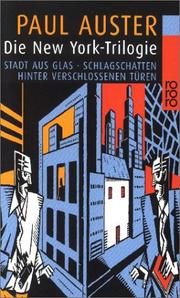
The New York Trilogy
Three linked novels turn a wrong-number call into a puzzle about names, authorship, and the stories people tell to stay sane.
2,259-word summary · 10 min read
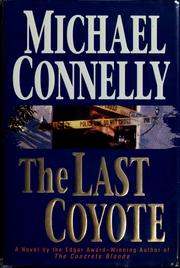
The Last Coyote
On stress leave, Harry Bosch reopens the unsolved murder of his mother, a prostitute strangled when he was twelve, and finds corruption reaching the DA's…
2,069-word summary · 9 min read
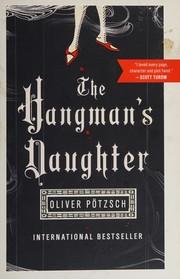
The Hangman's Daughter
In 1659 Bavaria, a hangman ordered to torture an innocent midwife instead investigates the deaths of children marked with a strange tattoo.
2,523-word summary · 11 min read

The 5th Horseman
Two linked cases pull Lindsay Boxer and the Women's Murder Club into a hospital full of strange deaths and a luxury-car murder spree.
2,609-word summary · 12 min read
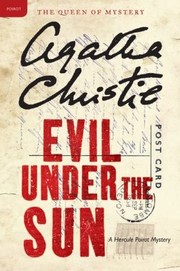
Evil Under the Sun
Poirot's Devon holiday turns deadly when a flirtatious actress is strangled at a secluded seaside hotel in this 1941 puzzle.
2,380-word summary · 11 min read
The Word Is Murder
A fictionalised Anthony Horowitz is talked into chronicling a prickly ex-detective's case: a woman murdered hours after planning her own funeral. A clever…
2,296-word summary · 10 min read

The Secret of the Old Clock
The first Nancy Drew novel: a sixteen-year-old detective follows a clue hidden in a clock to overturn a will and restore a family's inheritance.
2,011-word summary · 9 min read
The Running Grave
In the seventh Cormoran Strike novel, Robin goes undercover inside a Norfolk cult while Strike digs into a child's death from decades earlier.
2,615-word summary · 12 min read
The Reversal
Mickey Haller prosecutes a child killer's retrial with ex-wife Maggie and half-brother Harry Bosch on his team.
2,056-word summary · 9 min read
The Keeper of Lost Causes
Jussi Adler-Olsen introduces Carl Mørck and Department Q, a Copenhagen cold-case unit in a basement, and a missing politician whose file refuses to stay closed.
2,759-word summary · 12 min read

The Ice Princess
Camilla Läckberg's debut follows writer Erica Falck and detective Patrik Hedström as a frozen bathtub in a small Swedish town unravels a secret kept for…
2,321-word summary · 10 min read
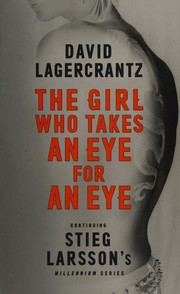
The Girl Who Takes an Eye for an Eye
Lisbeth Salander investigates a secret childhood experiment from prison while Mikael Blomkvist uncovers a twin conspiracy behind a wealthy businessman.
2,059-word summary · 9 min read
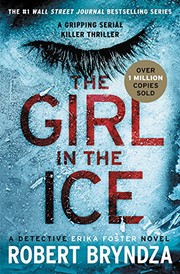
The Girl in the Ice
A young socialite is found frozen beneath the ice in a south London park, and DCI Erika Foster returns to work to lead the case. Grief, privilege and three…
2,492-word summary · 11 min read
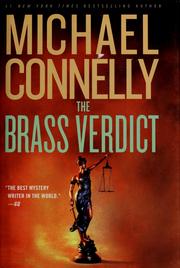
The Brass Verdict
Mickey Haller takes over a murdered lawyer's caseload and a Hollywood double-murder trial, with Harry Bosch circling the edges.
2,672-word summary · 12 min read
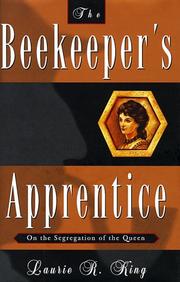
The Beekeeper's Apprentice
In 1915 a bookish fifteen-year-old American girl stumbles across a retired Sherlock Holmes keeping bees on the Sussex Downs, and talks him into taking her on…
2,215-word summary · 10 min read
The Beautiful Mystery
In a cloistered Quebec monastery, a chant-singing monk is murdered and Gamache must break a vow of silence to find the killer. Eighth in the Chief Inspector…
2,262-word summary · 10 min read
Mother-Daughter Murder Night
A grandmother with cancer moves in with her estranged daughter and granddaughter, then turns detective when a body turns up on the family's kayak tours near…
2,762-word summary · 12 min read
Jack & Jill
A senator is killed with a nursery-rhyme calling card as a child is murdered near Alex Cross's home. The third Alex Cross novel pulls him toward two cases, one…
2,646-word summary · 12 min read

Five Little Pigs
Sixteen years after a painter's murder, Poirot reopens the case at the request of a daughter who believes her dead mother was innocent.
2,027-word summary · 9 min read
Falling
A pilot is told his family will be killed unless he crashes his Los Angeles to New York flight. Newman's debut turns one clean premise into a relentless…
2,507-word summary · 11 min read