
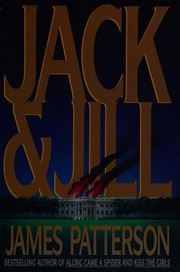
Jack & Jill
2,646-word summary 12 min read 432 pages in the book
- First published
- 1996
- Publisher
- Little, Brown and Company
- Pages
- 432
- ISBN
- 9780316693714
- Series
- Alex Cross (#3)
Reading options
What's inside (8 sections)
I came to this one straight from the first two Alex Cross books, and I could tell within a few pages that Patterson was working with a bigger budget this time. Jack & Jill was first published in 1996 by Little, Brown, the third entry in the series, and the first edition hardcover runs 432 pages. It is the book where the stakes stop being local. The killers in the first two novels went after kidnapped children and abducted women; here the target list reaches all the way to the President of the United States. That escalation is exciting, and it is also where the book starts to creak a little under its own ambition.
What I remember most is the opening move, because it sets up the whole design. Two murders happen at roughly the same moment on opposite sides of Washington. One is polished and theatrical. The other is ugly and close to home. Patterson cuts between them, and for the rest of the novel Cross will be pulled in both directions, trying to work a case that belongs to the neighborhood and a case that belongs to the country.
Two murders, two kinds of horror
The prologue introduces Senator Daniel Fitzpatrick in his Georgetown apartment. A man using the name Sam Harrison lets himself in, and an ash-blond woman greets him with a whisper of "Jack." He answers "Jill." The pair handcuff the senator to his bed, film his last moments, and then Jack shoots him execution style. They leave a note built around the old nursery rhyme, the same kind of doggerel that gives the book its title. It is a bizarre, staged killing, the work of people who want an audience.
Across town in Garfield Park, a different kind of killer is at work. A man disguised as a homeless person lures a six-year-old girl with colorful balloons and beats her to death with a bat. The victim is Shanelle Green, and her body is left at Sojourner Truth Elementary, four blocks from Cross's house and the school his own son Damon attends. There is no audience here, no camera, no clever note. It is the murder of a child, dumped where the people who knew her will find her.
Alex Cross is a deputy chief of detectives in Washington and a trained psychologist. He is also a father raising Damon and his daughter Jannie with the help of his eighty-one-year-old grandmother, Nana Mama, the woman who raised him. His partner and oldest friend, John Sampson, wakes him with the news about Shanelle. From that first phone call, the child case is personal in a way the celebrity case can never be. His son walks the same halls. The school is part of his daily life.
The early investigation goes in a direction that feels, at first, like a tidy solution. A local informant points them toward Emmanuel Perez, a man rumored to molest children. Perez dies in a chase when he falls between two rooftops. Child pornography turns up in his apartment, and on paper the case looks closed. But the real killer is still out there, gloating from a distance that the police have grabbed the wrong man. When a second child, seven-year-old Vernon Wheatley, is found dead with the same pattern of injuries, Cross knows a serial killer is at work. He quietly gathers a small team of detectives to keep pursuing the child murders on their own time, off the official record.
That decision is one of the best things in the book. Cross is not a vigilante exactly, but he understands that the machinery of a police department will not give a case involving poor Black children the same attention it gives a case involving senators and movie stars. He works the child case in the margins, and the book is at its angriest and most clear eyed in those passages.
Jack and Jill go public
The couple who killed the senator are not finished. They murder a television newswoman named Natalie Sheehan in her suite at the Jefferson Hotel and leave another mocking rhyme. Cross builds a profile of the pair: likely white, persuasive, highly organized, and hungry for attention. The profile is smart, but Patterson keeps interrupting the detection with flashes of the killers at work, and those scenes tell us more about their theater than the police ever learn.
There is a moment where Cross loses his temper with his superior, Chief of Detectives George Pittman. Pittman shoves him during an argument, and Cross shoves back, physically, in front of witnesses. He knows the moment it happens that he has probably damaged his career. It is a small, human beat in a book crowded with large ones, and it gives the later suspension real weight.
The killers escalate in ways that feel designed to humiliate the authorities. They send CNN a video manifesto. They execute an actor named Michael Robinson at the Willard Hotel. They kill General Aiden Cornwall at his home in Virginia, and when Cornwall's nine-year-old son sees what happens, the boy is shot too. At the Kennedy Center, a young law student named Charlotte Kinsey is murdered, and it emerges that she was the President's mistress. Jill then calls the White House on a private line and tells President Thomas Byrnes that his assassination is already a done deal. The message is not subtle. The whole point is that they can reach him whenever they want.
This is the stretch of the novel where the pace is most reliable. Patterson keeps chapters short and ends many of them on a new body or a new discovery. It is the technique that made the earlier books so easy to race through, and it works here too, even when the plot mechanics are thin. I kept turning pages because I wanted to know who was behind the rhymes, and because I wanted the child killer caught before another child died.
The White House task force
Cross is pulled onto the Jack and Jill investigation at the FBI's request, over his own objections. His superiors want their best homicide investigator on the case the cameras are watching. He is summoned to the White House, where a crisis team has assembled: Secret Service agent Jay Grayer, Chief of Staff Don Hamerman, CIA Inspector General Jeanne Sterling, and General Cornwall, before his death. Hamerman explains the detail that makes the case explode in scale. "Jack and Jill" is also the Secret Service code name for President Byrnes and the First Lady. After each murder, someone has been calling the Secret Service to say the killers are practicing for the big one.
Cross meets the President, who promises full cooperation, and the investigation shifts into the world of federal agencies. At CIA headquarters, Sterling tells Cross that the Agency keeps a list of freelance contract killers, men it calls ghosts, and that one of them may be Jack. A photojournalist named Kevin Hawkins, a former CIA assassin with extreme right-wing ties, becomes the leading suspect. Hawkins is a convincing red herring for a while, and the chase to catch him, which ends with him slipping away, is staged with the kinetic energy Patterson is known for.
The task force material is the most obviously researched part of the book, and it is also the part that dates fastest. There are meeting rooms, chain-of-command arguments, and long explanations of how the Secret Service plans a route. Some of it is genuinely interesting. Some of it reads like a writer making sure the reader knows he did his homework. I found myself skimming a few of the briefings, then snapping back to attention whenever the killers did something terrible.
Running alongside all of this is Cross's growing attachment to Christine Johnson, the principal of Sojourner Truth. She is smart and direct, and she is married to a lawyer named George. Cross meets her while working the child case, and the attraction is clear almost immediately. This is where the book starts to feel like it is borrowing a subplot from a different, softer novel. Cross is grieving, isolated, and drawn to a woman in crisis, and the circumstances are awkward enough that the romance never quite settles. It gives the ending a place to land, but it also pulls attention away from the cases at the moment the plot needs the most focus.
A boy with a grudge
The child case breaks open through an unlikely piece of period technology. The Prodigy online service alerts Sampson that one of its subscribers has been posting details about the murders that no ordinary member of the public should know. The account leads back to the home of Colonel Franklin Moore, where suspicion falls on the colonel's thirteen-year-old son, Sumner. Cross and Sampson raid the house and find it empty, with Shanelle Green's bloodstained blouse left behind as proof of what has been happening. Then Sumner turns up dead, killed in the same manner as the other children. He had been framed.
The real killer is another thirteen-year-old, a classmate named Danny Boudreaux. Danny has stopped taking Depakote, a medication prescribed for a mood disorder, and the book ties his violence to that decision. He murders his foster parents and vanishes. Later, fixated on Cross as the father he never had, he goes to Christine Johnson's house to force a confrontation. He shoots George Johnson dead and holds Christine at gunpoint, demanding that Cross come to him.
Cross flies back from New York and walks into the house as the boy instructed. What follows is one of the sharper scenes in the novel. Cross arranges himself and Christine on opposite sides of the room so Danny cannot aim at both at once. When the boy fires at Christine, Cross tackles him and tears the gun away. Danny suffers a grand mal seizure and, in the moment before he goes under, whispers that he is afraid and does not know where he is. Cross says he understands. That admission shakes him, because recognizing something of himself in a child who has murdered strangers is not a comfortable place to end a case. The writing here is surprisingly gentle, and it gives Danny a kind of tragic weight the rest of the thriller does not always allow its villains.
The truth about Jack and Jill
The assassination plot reaches its climax at Madison Square Garden, where President Byrnes has decided to speak rather than hide. Sara Rosen, a White House staffer of nine years, is revealed as Jill, the woman who has been feeding Jack information from inside the administration. On the morning of the speech, she meets Sam, her partner in the scheme, at the Peninsula Hotel. After a final intimate encounter, Sam shoots her with a silenced pistol, puts a poem in her hand, and drives back toward Washington, calling his wife and daughter along the way and thinking of himself as a patriot.
At the Garden, Kevin Hawkins, disguised as a female FBI agent, detonates a concussion bomb near the stage. The Secret Service rushes the President into a predetermined escape tunnel, and Hawkins is waiting inside. He fires five shots. Cross had been arguing for a change of route; he arrives to find Byrnes bleeding on the floor. The President dies, and Vice President Edward Mahoney is sworn in. For a moment it looks as though the case is closed, with the killer cut down and Jill dead in a hotel room.
It is not. Searching Sara Rosen's apartment days later, Cross finds an unmarked tape inside a cassette box for Hitchcock's Notorious. The uncut footage of the Fitzpatrick murder shows the killer's face, and it is not Hawkins. The real Jack is Brett Sterling, a decorated former Army colonel and the husband of Jeanne Sterling, the CIA official Cross has been working beside. Cross and Grayer arrest Brett at a suburban stoplight. At the Sterling home, Jeanne explains that she and her husband acted as patriots to stop a foolish amateur of a president from dismantling American intelligence. She shoots Grayer through the pocket of her robe and runs for the garage with her three-year-old daughter as a shield. Cross chases her down and subdues her.
The aftermath is deliberately unsatisfying. Both Sterlings are found dead in their cells at Lorton Prison, apparently poisoned, and there is evidence that Jeanne fought whoever killed her. Their deaths close off the larger conspiracy before anyone can explain who else might have benefited from the President's death. Cross thinks about the Kennedy assassination and concludes that there are too many logical suspects. The truth, he decides, may never be known. It is a bleak note to end on, and it fits a book that has spent hundreds of pages insisting that the people with the most power are the ones best able to disappear.
Cross is suspended over the confrontation with Pittman and goes home. Christine arrives at his door one night, and he lets her in. On Christmas Eve, while he is decorating the tree with his children, Gary Soneji, the kidnapper from Cross's first case, calls from wherever he has been hiding. Soneji tells him he left the family cat at the house months earlier, which means he has been watching them for a long time. Cross hangs up and goes back to the tree. The monsters, the book says plainly, never really leave.
What works and what grates
The great strength of Jack & Jill is its engine. Two cases, two very different kinds of danger, and a detective who cares about both for different reasons. When the book is moving between the celebrity murders and the child murders, it is hard to put down. The short chapters do their job, the discoveries arrive regularly, and the ending of almost every section makes you want one more section.
The weaknesses sit in the same design. The conspiracy is so layered that the reveal depends on a tape turning up in a cassette box, a piece of luck that feels more convenient than earned. The Prodigy subplot and the cassette tape now read as period artifacts, which is charming in a way but also a reminder of how much the book relies on the technology of 1996. The romance with Christine Johnson never fully convinces, and the ethics of Cross's pursuit of a married woman while her husband is about to be murdered are stranger than the book seems to notice.
There is also a problem of scale. The first half of the book is tense because the threat is close to Cross's family and his neighborhood. Once the story widens to include the CIA, the Secret Service, and the President, the child murders, which were the most gripping material, get pushed to the background until the final act. Danny Boudreaux's seizure and confession are powerful, but they arrive after the book has spent a long time asking the reader to care about a federal task force instead. I kept wishing the two plots had been given equal weight for more of the run.
Still, I finished it wanting the next book, which is the main thing a thriller has to accomplish. It is not the cleanest or the most believable of the early Cross novels, and it is not the kind of book that rewards a close reading. It is a fast, often brutal story about a man trying to hold two worlds together while both come apart. For readers who like the series, that is more than enough. For anyone who wants a tight, realistic police procedural, the rhyming notes and the presidential conspiracy may ask for more patience than they deserve.
FAQ
Is Jack & Jill part of a series?
Yes, it is the third Alex Cross novel by James Patterson, following Along Came a Spider and Kiss the Girls, and it uses the same series name as those earlier books.
Who are Jack and Jill in the novel?
The names are used by killers who leave nursery-rhyme notes at the scenes of prominent victims. The figure called Jill is White House staffer Sara Rosen, while the original Jack is eventually revealed to be Brett Sterling.
When was Jack & Jill first published?
It was first published in 1996 by Little, Brown and Company, and the first edition hardcover runs 432 pages.
Similar books
More from Alex Cross first, then related titles.
Along Came a Spider
Detective Alex Cross hunts Gary Soneji after two children vanish from a Washington school and a Lindbergh echo grows.
2,523-word summary · 11 min read
Kiss the Girls
Cross hunts Casanova kidnapping women including niece Naomi.
2,397-word summary · 11 min read
The 5th Horseman
Two linked cases pull Lindsay Boxer and the Women's Murder Club into a hospital full of strange deaths and a luxury-car murder spree.
2,609-word summary · 12 min read

3rd Degree
The third Women's Murder Club novel follows a San Francisco terror cell and a three-day killing schedule, and it costs the club a member.
2,685-word summary · 12 min read

2nd Chance
Lindsay Boxer and the Women's Murder Club hunt the Chimera killer after a church shooting in San Francisco.
2,572-word summary · 11 min read
1st to Die
Lindsay, Claire, Cindy and Jill hunt a honeymoon killer terrorizing San Francisco.
2,536-word summary · 11 min read
The Running Grave
In the seventh Cormoran Strike novel, Robin goes undercover inside a Norfolk cult while Strike digs into a child's death from decades earlier.
2,615-word summary · 12 min read
The Keeper of Lost Causes
Jussi Adler-Olsen introduces Carl Mørck and Department Q, a Copenhagen cold-case unit in a basement, and a missing politician whose file refuses to stay closed.
2,759-word summary · 12 min read
Fractured
In Karin Slaughter's second Will Trent novel, a mother kills the wrong man in an Atlanta mansion, and a GBI agent with a hidden reading difficulty finds a…
2,219-word summary · 10 min read

Rules of Prey
Minneapolis detective Lucas Davenport hunts a killer who leaves a new rule at every scene and treats murder as a game of wits.
1,914-word summary · 9 min read
Troubled Blood
Strike and Robin take a year long cold case: doctor Margot Bamborough vanished in 1974, with a nurse hiding more.
2,211-word summary · 10 min read
Holly
Grieving detective Holly Gibney takes a missing-girl case in 2021 and traces it to two polite retired professors with a basement secret.
2,607-word summary · 12 min read
End of Watch
A dying Bill Hodges and Holly Gibney face Brady Hartsfield again, as rigged game consoles push hurt teens toward suicide.
2,923-word summary · 13 min read
Finders Keepers
A boy finds a murdered writer's notebooks while the killer leaves prison hunting them and Hodges closes in.
2,157-word summary · 10 min read
Mr. Mercedes
Retired Hodges hunts Mercedes killer Brady Hartsfield concert plot.
2,281-word summary · 10 min read

The Beach House
A young valet is beaten to death at a Hamptons party, and his law-student brother spends a year building a case against the family that covered it up.
2,049-word summary · 9 min read

4th of July
Lindsay Boxer shoots two armed teenagers in self-defense, faces a wrongful-death trial, and spends her leave chasing a string of throat-slashing murders in…
2,192-word summary · 10 min read
Make Me
Reacher drifts into a quiet Midwestern town and finds a missing investigator, a trail of killers, and a deep web secret.
2,352-word summary · 10 min read
Zero Day
Army investigator John Puller is sent alone to a West Virginia coal town to solve a colonel's murder, and finds a much larger secret buried nearby.
3,434-word summary · 15 min read
The Word Is Murder
A fictionalised Anthony Horowitz is talked into chronicling a prickly ex-detective's case: a woman murdered hours after planning her own funeral. A clever…
2,296-word summary · 10 min read
The Unquiet Grave
In Dervla McTiernan's fourth Cormac Reilly novel, a body found in a Galway bog turns out to be a missing school principal, and the case opens into something…
2,253-word summary · 10 min read
The Midnight Line
A West Point class ring in a Wisconsin pawnshop sends Jack Reacher across the Midwest, from a biker's lie to a wounded veteran hiding from the opioid trade.
2,590-word summary · 12 min read
The Hard Way
A man Reacher sees drive a ransom-laden Mercedes pulls him into a retired colonel's hunt for his missing wife and stepdaughter.
2,637-word summary · 12 min read
The Girl Who Takes an Eye for an Eye
Lisbeth Salander investigates a secret childhood experiment from prison while Mikael Blomkvist uncovers a twin conspiracy behind a wealthy businessman.
2,059-word summary · 9 min read
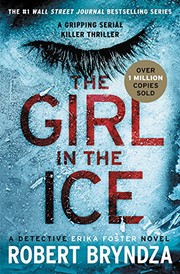
The Girl in the Ice
A young socialite is found frozen beneath the ice in a south London park, and DCI Erika Foster returns to work to lead the case. Grief, privilege and three…
2,492-word summary · 11 min read
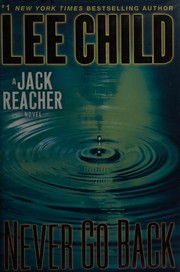
Never Go Back
Reacher returns to his old military unit to find Major Susan Turner jailed and two invented cases hiding an opium smuggling ring.
2,245-word summary · 10 min read

The Secret Place
Two Dublin detectives revisit a murder on the grounds of a girls' boarding school, where a bulletin board note and rival cliques hide the truth.
2,271-word summary · 10 min read
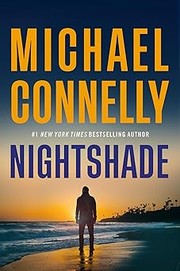
Nightshade
Connelly launches Detective Stilwell on Catalina Island, where a beheaded buffalo and a Jane Doe in the harbor pull a quiet sheriff's post into violence and…
2,272-word summary · 10 min read
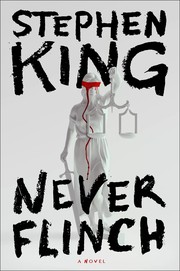
Never Flinch
Holly Gibney works two cases at once: a killer promising fourteen deaths and a threat against a feminist writer's lecture tour. King braids them into a…
2,245-word summary · 10 min read

What She Knew
Rachel lets her eight-year-old son run ahead in a Bristol park, and the nine-day search turns her into a suspect in the public eye.
2,952-word summary · 13 min read