
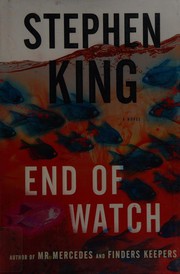
End of Watch
2,923-word summary 13 min read 432 pages in the book
- First published
- 2016
- Publisher
- Scribner
- Pages
- 432
- ISBN
- 9781501129742
- Series
- Bill Hodges Trilogy (#3)
Reading options
What's inside (8 sections)
I finished Finders Keepers on a Sunday night and ordered End of Watch before I went to sleep. That almost never happens with me and trilogies. Usually I take a break, read something short, let the characters cool off for a while. But I had to know how King meant to finish with Brady Hartsfield, because the second book barely mentioned him, and a villain like that does not evaporate. This is the third book in the Bill Hodges Trilogy, published by Scribner in June 2016, 432 pages in the hardcover edition. King first announced it under a different title, The Suicide Prince, which tells you plenty about where the story goes.
Fair warning before anything else. Do not start here. The Mercury News review back in 2016 said the same thing, and it was right. This book assumes you carry the first two around in your head: the Mercedes Massacre, Holly and the Happy Slapper, the Rothstein notebooks. King does give you reminders, but they land like shorthand between old friends. If you have not met these people yet, begin with Mr. Mercedes.
What surprised me is how fast this one turns strange. The first book was almost entirely a police procedural. The second was a crime story about stolen books. This one starts that way and then slides, deliberately, into horror. I resisted it for about a hundred pages. Then a scene in a hospital corridor scared me so badly I had to put the book down and check the locks, and I gave in.
Room 217
Brady Hartsfield is alive. That is the sentence the whole book stands on.
After Holly Gibney struck him down at the Mingo Auditorium, Brady ended up in Room 217 of the Lakes Region Traumatic Brain Injury Clinic, diagnosed as vegetative, fed through tubes, stared at by specialists who all agree that anything like recovery is out of the question. Years pass. His mother is dead. The world moves on. The nurses change his sheets and talk over him like he is furniture.
Only he is not furniture. Behind the drool and the fixed stare, Brady is awake.
King writes these early hospital chapters with real patience, and they are the best stretch in the book. Small wrong things keep happening on the ward. A television switches itself on in the night. A faucet runs full blast in an empty room. A nurse who mocked Brady in front of his bed goes home and does something terrible to herself, and King never quite shows you the hand pushing her. You feel Brady practicing. His body is ruined, but his mind has found a new shape, and it can reach a little way past his skull now. He can nudge small objects. Worse, he can slip inside certain heads. The angry and the heavily medicated. People with cracks in them.
His doctor is a famous neurosurgeon named Babineau, a man with a God complex and a shelf of awards, who has been pumping Brady full of experimental drugs and writing up the impossible test scores. Babineau thinks he is studying a miracle. He does not understand that the miracle is studying him back.
There is a moment, maybe a third of the way in, when Babineau catches himself thinking a thought that is not his. King plays it so quietly. The doctor stands at the sink, washing his hands, and hears something like a voice suggesting he drive home a different way. He laughs it off. I did not laugh at all.
The diagnosis Hodges hides
While Brady practices in his bed, Bill Hodges is falling apart in the ordinary way.
He is pushing seventy, retired from the police, running a little agency called Finders Keepers with Holly as his partner. Business is fine. His stomach is not. What he assumes is an ulcer turns out to be pancreatic cancer, advanced, the kind where the doctor uses words like months instead of years. Hodges hears the news sitting in his car in the clinic parking lot, and King gives him one short paragraph of pure shock before Hodges does the most Hodges thing possible. He decides to keep working and tell almost nobody.
I found this the most moving part of the book, and also the most frustrating, because Hodges keeps making choices that make sense only to a man who knows he is dying. He takes on a case he should hand to the police. He skips rest. He lies to Holly, which is the one thing she cannot stand, people lying to her face. And yet I understood him. He spent the first book afraid of retirement and irrelevance. Now he has a clock ticking where he can hear it, and he wants his last lap to count.
The case finds him through his old life. His former partner Pete calls about a death with Hodges written all over it. Martine Stover, left paraplegic by the Mercedes at the City Center job fair years before, is found dead alongside her mother in what looks like a murder followed by suicide. Pete remembers the massacre the way Hodges does, as a wound that never closed. But the details are wrong for a simple domestic tragedy. Martine had been getting better, or so everyone says. And there is a cheap handheld game console on her nightstand that nobody in the family remembers buying her.
Then a second suicide lands with the same fingerprint. Then a third. Young people, damaged people, people with some thread connecting them back to Brady Hartsfield or the massacre. And near several of them, the same little device.
The Zappits
The console is called a Zappit. In our world it would be a fad toy, the kind of thing sold at drugstores and handed out as promotions. In this book, free ones are circulating around town, preloaded with a simple fishing game called Fishin' Hole, all bright bobbing shapes and flashing numbers that pulse in a rhythm.
Kids love it. That is the horror of it.
Barbara Robinson, Jerome's teenage sister, ends up with one, and King writes her slide with awful precision. She is a good kid having a bad stretch, lonely since her brother left town, fighting with her parents, sensitive in the way bright teenagers are. She plays the game for hours. The flashing symbols seem to rearrange something in her attention. She starts hearing a voice that sounds like her own thoughts, only meaner, telling her she is a burden and everyone would feel relief if she stopped being a problem. When Holly figures out what the console really is, I felt actual dread, because Barbara is maybe the most likable young character King has written in this trilogy, and she is holding the thing to her face every night.
The mechanism, as Hodges and Holly piece it together, is this. Brady cannot reach far on his own. But the game softens minds up, the way a dentist uses gas before the drill. The pulsing screens put susceptible players into a suggestible state, and then Brady climbs in through the static and starts talking. He finds the sore spots. A failed exam here, a breakup there. A mother in a wheelchair who needs constant care. He presses on them with infinite patience, because a man in a hospital bed has nothing but time, and sooner or later some of these kids pick up pills or the car keys.
King is careful here, and I want to give him credit for it. The book never suggests the kids are weak or that games alone do this. Every victim is already hurting. Brady is a predator who can smell hurt the way a shark smells blood in water, and the console is only the door he walks through. It reminded me of the way the first book handled depression, with more respect than most thrillers bother with. The sadness in these chapters feels reported, not invented.
Hodges, meanwhile, is racing two clocks. The cancer is eating him from the inside, and every time he sits down with a victim's family he sees another door Brady has already walked through. He starts taking bigger swings. He leans on people. He breaks a rule or two that the Hodges of book one would never have broken. There is a scene where he interviews a grieving father while fighting off pain so bad his vision narrows, and he keeps smiling through it, and I had to stop reading for a minute. Not because it was gory. Because I have sat in a room like that, watching someone pretend to be fine.
The doctor starts acting strange
The middle of the book belongs to Holly, and thank God for that, because Hodges spends a chunk of it in waiting rooms and scan machines, and somebody has to do the detecting.
Holly notices what nobody else does. Dr. Babineau, the great man of medicine, has started behaving like a different person in small flashes. He gambles. He is cruel to nurses he used to charm. He hums tuneless pop songs in corridors. And he keeps showing up near the edges of the suicide cases, helpful and concerned, and only just wrong enough to trip Holly's alarm. Holly's alarm is the finest instrument in this trilogy. She misses nothing social, ever, because she has spent her life studying people the way other people study maps.
What she works out, with Jerome's help over the phone and a mountain of pharmacy and library records, is that Brady has outgrown his room. He rides Babineau now, the way a driver rides a car, borrowing the doctor's body for errands his own body cannot run. Planting consoles. Visiting the vulnerable. Watching Hodges from across streets. And Babineau, brilliant Babineau, either cannot feel it happening or likes how powerful it makes him feel. King leaves that question open in a way I kept turning over after I finished.
There is also a second pair of hands. A hospital worker who runs errands between the clinic and the town, dull and invisible and exactly the kind of person Brady can wear without anyone noticing. These chapters have a sweaty, paranoid pleasure to them. Holly follows people who seem to feel her following. Cars start when they should not. A computer screen in the agency office flickers with a row of numbers that look, for half a second, like a face. King is good at this register, the spy stuff curdling into ghost stuff, and I tore through these hundred pages faster than any other part of the book.
But I will be honest. This is also where the book first wobbles for me. Babineau as a villain never quite becomes a person. He is arrogance in a white coat, and once Brady is driving him, he is arrogance with an evil passenger. The chapters from inside Brady's head, which were electric in Mr. Mercedes, feel thinner here, because this Brady is more of a force than a man. He gloats. He monologues inwardly about vermin and insects. The lonely IT nobody from the first book, the one who lived with his mother and drank himself brave, is gone, replaced by something closer to a comic book mind controller. Less human means less frightening, at least for me.
And the coincidences start stacking. Consoles land in exactly the right hands. Characters walk into exactly the right rooms. Holly guesses right an awful lot on thin evidence. I went along with it, mostly, because the pages turn so fast. But twice I caught myself thinking that the old Hodges, the one who solved things with door knocking and patience, would have frowned at these leaps.
The concert
Everything points to one night. A huge pop concert in the city, thousands of teenagers in an arena, many of them carrying Zappits, many of them already primed by weeks of the fishing game humming in their pockets. Brady's plan is the mirror image of what he tried years ago at the Mingo, only bigger and crueler. No bomb this time, and no getaway car, only a single command, sent into thousands of softened heads at once, telling them all to end it together, live, in front of each other. And at the center of the crowd, by design, will be the people Hodges loves most.
King crosscuts the buildup beautifully. Hodges, gray and hollowed out, checks himself out of care he should not leave and drives to the arena because there is nowhere else he can be. Holly moves through the screaming crowd with Jerome, who has come home in time, both of them scanning faces, looking for Barbara, looking for Babineau, looking for anything wrong in a place engineered to look like joy. Barbara is there with friends, her console warm in her pocket, the voice louder than it has ever been. The band takes the stage. The lights go down. And Brady, wearing the doctor like a suit, gives the signal.
I will not lay out every beat of the climax, because it earns its surprises, but I will say the confrontation comes down to Holly again, as it had to. The woman who froze through most of the first book, who could barely leave her apartment, stands up in front of thousands of people and does the brave loud thing while Hodges, who can barely stand, backs her play. There is a struggle over the source of the signal. There is a moment with a smashed console that made me gasp out loud on a quiet train. And there is a cost. King does not let anyone walk out of that arena unchanged, and one person our heroes love does not walk out at all in the way they came in.
The supernatural mechanics get loud here, lights and voices pressing in from every screen, and readers who loved the first book for its realism may check out. I nearly did, twice. What kept me was the emotional logic underneath the noise. Every choice in the climax is about who these people have become to each other, Jerome throwing himself between danger and his sister while Holly refuses to freeze and Hodges spends the last of himself on other people's children. Strip away the glowing screens and it is a story about a found family refusing to break, and that part is completely convincing.
What earns its keep, and what creaks
Let me say what I will carry from this book first. Holly Gibney's arc across these three novels is one of the best long character builds I have read in crime fiction. She starts as comic relief with e-cigarettes and anxiety tics and ends as the moral center of the whole story, the person who sees clearest and acts bravest. There is a scene near the end where she talks a terrified kid through throwing a console away, patient and plain, no lecture in it, and it contains more real warmth than most novels manage in full. Whatever King does with Holly next, and he clearly plans to keep her around, I will follow.
Hodges's exit is handled with grace too. King could have cured him with a miracle or killed him for cheap tears, and he does neither. The dying detective gets to be funny and useful right to the end, and wrong about a few things too. His last scenes with Holly are about two coworkers who became family, saying the things people usually leave unsaid, while there is still time. I sat with the final pages for a long while.
Now the complaints, because this book has real ones. The middle third drags through hospital administration and agency paperwork in a way the first two books never did. A subplot about the clinic covering its tracks eats pages without giving much back. Brady, as I said, is thinner as a psychic than he was as a man, and the book misses the queasy intimacy of being inside his ordinary evil. The mind control device, for all its scary scenes, lets King sidestep harder questions about suicide that the early chapters raise so well. And the very end reaches for a touch of the uncanny, a suggestion that Hodges might linger somehow, that felt to me like King winking at his constant readers at the expense of the goodbye he just wrote.
Who should read it? Anyone who finished the first two, obviously, and quickly, before details fade. Fans of King's horror side will enjoy watching him cut loose in the last hundred pages. Readers who want only the procedural pleasures of Mr. Mercedes should brace themselves. This is a hybrid, sometimes an awkward one, a detective story possessed by a ghost story. I closed it missing Hodges like a neighbor who moved away, annoyed at a few of King's shortcuts, and certain Holly Gibney is one of his great creations. That feels like the right mixture for a finale. Not perfect. But finished, in the way that matters.
If you read it, tell me where you land on the genre shift. I argued about it with a friend for an hour. She thought the psychic turn betrayed the series. I think the series was always heading there, from the moment a taxi driver took Mr. Mercedes's cynical advice in book one and history repeated itself. Either way, you will feel something strong. Books that aim this big rarely leave you neutral.
FAQ
Is End of Watch part of a series?
Yes. It is book three of the Bill Hodges Trilogy, after Mr. Mercedes and Finders Keepers, and it resolves the Brady Hartsfield story.
When was End of Watch published?
Scribner published it on June 7, 2016. The US hardcover runs 432 pages and the ISBN is 9781501129742.
Do I need to read the first two books first?
You should. The book assumes you know Hodges, Holly, Jerome, and Brady, and the farewell only lands with that history behind it.
Similar books
More from Bill Hodges Trilogy first, then related titles.
Mr. Mercedes
Retired Hodges hunts Mercedes killer Brady Hartsfield concert plot.
2,281-word summary · 10 min read
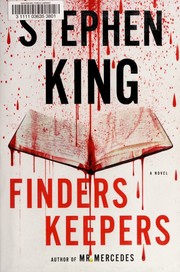
Finders Keepers
A boy finds a murdered writer's notebooks while the killer leaves prison hunting them and Hodges closes in.
2,157-word summary · 10 min read
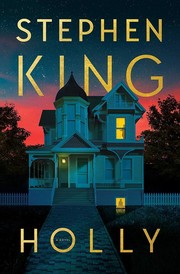
Holly
Grieving detective Holly Gibney takes a missing-girl case in 2021 and traces it to two polite retired professors with a basement secret.
2,607-word summary · 12 min read

Rules of Prey
Minneapolis detective Lucas Davenport hunts a killer who leaves a new rule at every scene and treats murder as a game of wits.
1,914-word summary · 9 min read

3rd Degree
The third Women's Murder Club novel follows a San Francisco terror cell and a three-day killing schedule, and it costs the club a member.
2,685-word summary · 12 min read

2nd Chance
Lindsay Boxer and the Women's Murder Club hunt the Chimera killer after a church shooting in San Francisco.
2,572-word summary · 11 min read
Troubled Blood
Strike and Robin take a year long cold case: doctor Margot Bamborough vanished in 1974, with a nurse hiding more.
2,211-word summary · 10 min read
1st to Die
Lindsay, Claire, Cindy and Jill hunt a honeymoon killer terrorizing San Francisco.
2,536-word summary · 11 min read
Along Came a Spider
Detective Alex Cross hunts Gary Soneji after two children vanish from a Washington school and a Lindbergh echo grows.
2,523-word summary · 11 min read
Billy Summers
A hitman takes one last job in Red Bluff, poses as a writer, and runs when the setup turns on him.
2,882-word summary · 13 min read

What She Knew
Rachel lets her eight-year-old son run ahead in a Bristol park, and the nine-day search turns her into a suspect in the public eye.
2,952-word summary · 13 min read

The Beach House
A young valet is beaten to death at a Hamptons party, and his law-student brother spends a year building a case against the family that covered it up.
2,049-word summary · 9 min read

Six Years
A professor who promised to forget the woman he loved sees her husband's obituary and discovers that the wedding, the marriage, and the woman herself may never…
2,076-word summary · 9 min read

The Trespasser
A Dublin Murder Squad detective investigates a staged dinner-party killing and finds a cover-up that reaches into her own department.
2,051-word summary · 9 min read

The Late Show
Exiled to the LAPD night shift after accusing her supervisor, Renée Ballard keeps two cases that were meant to be handed off at dawn: a brutal assault and a…
2,563-word summary · 11 min read

4th of July
Lindsay Boxer shoots two armed teenagers in self-defense, faces a wrongful-death trial, and spends her leave chasing a string of throat-slashing murders in…
2,192-word summary · 10 min read

61 Hours
A bus crash strands Jack Reacher in a snowbound South Dakota town where a drug gang, a corrupt police force, and a single witness are on a collision course.
2,227-word summary · 10 min read

Still Missing
A realtor is abducted at a Vancouver Island open house and held for more than a year. Told through therapy sessions, the novel follows her escape and the hunt…
2,466-word summary · 11 min read

Bad Luck and Trouble
A deposit of $1,030 summons Jack Reacher back to his old army unit, which is being picked off one name at a time.
2,366-word summary · 11 min read

Worth Dying For
Reacher stops for one night in rural Nebraska and finds a family that runs the county, a missing girl and a shipment worth killing for.
2,021-word summary · 9 min read

Say You're Sorry
A widowed prosecutor defends the teenager accused of killing her babysitter, uncovering a small town's secrets and a killer hiding in plain sight.
2,116-word summary · 9 min read

Echo Burning
Reacher hitches a ride with a Texas woman who wants her abusive husband killed, then has to prove she did not murder him when he comes home.
2,209-word summary · 10 min read

Girl, Forgotten
A rookie US marshal guards a judge with a stalker and ends up reopening the 1982 prom-night murder of the judge's pregnant daughter.
2,111-word summary · 9 min read

The Woods
Twenty years after two teenagers were murdered and two vanished at summer camp, prosecutor Paul Copeland identifies a fresh corpse as one of the missing.
2,490-word summary · 11 min read

The Redbreast
Harry Hole chases an ageing sniper through modern Oslo while two Norwegian volunteers on the Eastern Front carry a fifty-year-old betrayal toward a royal…
2,453-word summary · 11 min read

The Boy from the Woods
Wilde, found feral in a New Jersey forest in 1986, hunts for a missing teenager while a senator's secrets tear a wealthy town apart.
2,270-word summary · 10 min read

Broken Harbor
A family is found slaughtered in a half-built Dublin estate where no one broke in, and star detective Scorcher Kennedy must explain the holes in the walls.
2,308-word summary · 10 min read

Without Fail
Reacher is asked to test vice presidential security by planning to kill.
2,084-word summary · 9 min read

Things We Do in the Dark
A comedian kills her husband, then a podcaster digs up her teen murder past.
2,427-word summary · 11 min read

The Widow
A widow of a suspected criminal faces reporters and police while hiding what her marriage really cost.
2,599-word summary · 12 min read