
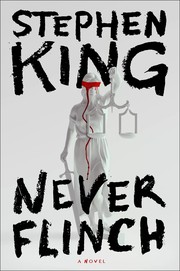
Never Flinch
2,245-word summary 10 min read 448 pages in the book
- First published
- 2025
- Publisher
- Scribner
- Pages
- 448
- ISBN
- 9781668089330
- Series
- Holly Gibney (#4)
Reading options
What's inside (8 sections)
Stephen King's Never Flinch arrived in 2025 from Scribner, running 448 pages with ISBN 9781668089330. It is the fourth Holly Gibney novel, following 2023's Holly, and it brings back a character who has become King's most durable recent creation. I picked it up because Holly has always been the part of King's later work I look forward to. She is not a conventional detective, and the books around her are at their best when they let her strangeness be the point rather than a quirk to be smoothed away.
King has written a great many novels, and Holly has become the figure people most associate with his later work. That is a remarkable thing for a character who started as a supporting player. She works because she is built out of contradictions that feel true. She is brilliant and unsure of herself, observant and awkward, fearless once she has decided something needs doing and timid in ordinary conversation. Never Flinch understands that the appeal is not the cases alone. It is watching this particular person meet them.
Holly runs the Finders Keepers detective agency. King has described her as an obsessive-compulsive with a huge inferiority complex, someone whose odd habits hide savant-like observation skills and a photographic memory. That combination is the engine of the book. She notices what other people miss, and she does it while being convinced she is the least capable person in the room. The novel runs two investigations in parallel and then braids them together, and Holly ends up at the center of both.
Holly Gibney, back at Finders Keepers
It is worth saying what makes Holly work before getting into the plot. She is a grown woman who still hears her mother's voice in her head, a woman whose routines can look fussy until you realize they are how she keeps herself steady. Her habits are not decoration. They are the mechanism by which she observes. A photographic memory and an eye for detail make her formidable, but the inferiority complex means she never walks into a case expecting to be taken seriously.
That matters here because both of her clients in Never Flinch doubt her. Detective Izzy Jaynes calls on her out of rattled necessity, and Kate McKay hires her as a bodyguard while plainly running her own show. Holly has to work with people who underestimate her, and the book gets its satisfaction from watching her quietly prove them wrong. It is a familiar shape for a Holly novel, but it is a satisfying one.
Finders Keepers is a small operation, and the cases that come through it tend to be the kind other people have given up on. Holly's method is patient rather than heroic. She reads, she watches, she notices the detail that does not belong, and then she keeps going long after a more sensible person would stop. Her photographic memory is less a superpower than a kind of burden. She cannot forget what she has seen, which means the worst parts of a case stay with her. King never lets the gift feel clean.
The inferiority complex is what keeps her human. She expects to be dismissed, and when she is, it still stings. That is why the moments when someone finally takes her seriously land with force. They are earned by work the reader has watched her do.
A letter and a promise of fourteen deaths
The first investigation begins when the Buckeye City Police Department receives a letter. The killer announces that he will kill thirteen innocents and one guilty person, in atonement for the needless death of an innocent man. Detective Izzy Jaynes is rattled by the letter and calls on her friend Holly for help. You can feel why. A threat that specific, with a number attached to it, turns a possible crime into a countdown.
The murders that follow are swift, random, and clinical. Victims are chosen almost by chance, and they are found clutching slips of paper bearing the names of strangers. That detail is what makes the scene unsettling. The victims are not connected to one another in any obvious way, and the papers in their hands suggest a logic the police cannot yet see. King keeps the killings short and cold. There is no operatic staging here, just a steady, clinical accumulation of bodies and the growing sense that the count is going to be reached.
Izzy's panic is the human entry point. She is a detective who has seen difficult things, but a letter that names a number and a schedule is different from a case that unfolds on its own. She calls Holly because she knows she needs someone whose mind works differently. That phone call sets the whole thread in motion, and it is a good example of how King builds Holly's cases: not through a fortunate discovery, but through someone recognizing that they need her.
The killer's private arithmetic
As Holly and Izzy dig, the motive emerges. The killer is avenging a man who was framed and convicted on child-pornography charges and then killed in prison. The injustice has curdled into a plan to punish fourteen people in that man's name. It is a motive built on a real wrong, which is what makes it difficult to dismiss, and it is also a motive that has curdled into something monstrous.
In his warning letter, the killer wonders whether his rationale will make sense to anyone else, then concludes that it does to him, and that is enough. That line of reasoning is the most chilling thing in the book. It is a private arithmetic that needs no outside approval. King is interested in the way a person can build a complete moral system around a grievance and then act on it with total conviction. The killer does not see himself as a monster. He sees himself as an avenger, and the victims as entries in a ledger.
The number itself is part of the design. Thirteen innocents and one guilty: the guilty one is meant to be the person who truly deserves punishment, while the thirteen stand in for the injustice he is avenging. It is arithmetic dressed up as justice, and the book is clear that the reasoning does not hold. What makes it frightening is not how clever it is but how complete it feels to the person doing it. Once the count has been set, every murder becomes a step toward a total that only he can see.
I found this thread the more compelling of the two. It has the cold logic of a good procedural, and the slips of paper give it a visual signature that stays with you. It also gives Holly something to do that plays to her strengths, since the pattern only becomes visible to someone willing to look at the small details everyone else steps over.
Kate McKay and the second threat
The second thread concerns Kate McKay, a controversial, outspoken feminist writer and women's-rights activist who is launching a multi-state lecture tour. She draws packed venues of both fans and detractors. That split is important. Kate is not presented as a universally beloved figure. She has people who agree with her and people who come to oppose her, sometimes loudly. That makes the threat more complicated than a simple attack on a sympathetic victim. The antagonist believes he is on the side of right too, and the book keeps both certainties in view.
Kate's young assistant is drawn into the stalking, which is one of the ways the threat becomes concrete. It is not only the famous writer who is targeted. The people around her, the ones with less protection and less public attention, carry risk as well. That detail gives the tour thread a pressure it might otherwise lack, and it is the reason Holly's presence starts to feel necessary rather than decorative.
A member of a violently abortion-opposing church begins disrupting her events, stalking her and her young assistant, and growing bolder. The escalation is the point. What starts as disruption becomes surveillance, and surveillance becomes a threat that Holly is hired to contain. As Kate's bodyguard, Holly faces a problem her detective work does not solve on its own. Her employer is headstrong and resistant to protection, and the adversary is a person convinced of his own righteousness. Those are the worst ingredients for a security job.
King populates this strand with the world-famous gospel singer Sista Bessie, whose appearances become part of the tour's fabric. The singer gives the tour a texture beyond the politics. It is a reminder that these events are spectacles as well as statements, with performers, crowds, and logistics that a threat has to navigate. It also gives King a way to vary the tempo between the stalking scenes and the travel.
The tour structure lets King move the story across states and across kinds of crowd. Each venue is a new room with new tensions, and the stalker's boldness grows as the tour goes on. Holly has to read a room full of strangers each night, watching for the one person whose attention has tipped from interest into intent. That is a different skill from following a serial killer's pattern, and it is interesting to see her use both.
Two cases, one bodyguard
Holly ends up working both cases at once. She coordinates with Izzy on the serial murders and with Kate on the threats around the tour, and the strain of holding two investigations in her head is part of the pressure. This is where the parallel structure earns its keep. Each case has its own rhythm: the murders are quiet and clinical, the tour threats are loud and public. Holly moves between them, and the contrast keeps both fresh.
The two narratives converge in what the publisher calls a chilling, spectacular conclusion. The serial-murder plot and the extremist-threat plot collide, and Holly has to be in the right place with both threads in hand. The meeting of the two cases is the structural payoff the book has been building toward, and it is satisfying to see the private grievance and the public certainty end up in the same space. I won't lay out the mechanics of the collision in detail, because the shape of it matters more than the steps. King is bringing the private grievance and the public conviction together, two different ways of being certain you are right, and letting them meet in one place.
What I liked is that Holly's skills matter in both. She is not rescued by a coincidence or a convenient confession. The photographic memory, the attention to small wrong notes in a room, the willingness to keep looking when others have stopped: these are what move the cases forward. For all her self-doubt, she is the most reliable person in the book.
The mixed verdict
The reception was engaged but mixed. Publishers Weekly gave the book a starred review, praising the elegant structure and Holly as a quirky, lovable beacon of hope amid grisly violence. Kirkus called it a big-screen thriller with vivid settings and well-paced action, while faulting cliched characters, hackneyed dialogue, and motives both convoluted and simplistic. Ainslie Hogarth in The New York Times singled out King's critique of virtue signalling as the thread that pulls the disparate pieces together. The novel was a finalist for the 2026 Locus Award for Best Horror Novel.
That range of response tells you something about the book. It is built to work as a thriller, and the two-case structure gives it momentum. It is also a novel with something on its mind about the way people perform their convictions, and that is the part critics disagreed over. If you want a clean detection puzzle, the murders deliver one. If you want the social argument to match the precision of the plot, you may find the treatment heavier handed.
There is also an afterword in which King reportedly concedes the book is not one of his best, and a Swedish reviewer felt Holly had been flattened into a generic figure. I think that criticism has some bite. At points she becomes the sensible person in a room full of people being foolish, and the distinctive awkwardness that made her compelling gets reduced to a few familiar tics. The dialogue around the tour, especially the exchanges with Kate, can sound like characters delivering positions rather than people talking.
Still, I had a good time with it. The elegance that Publishers Weekly praised is real. Two cases running side by side, with different tones and different kinds of threat, is a structure that keeps 448 pages moving, and the convergence pays off the work put into both threads. The killer's letter alone is a memorable piece of characterization. If you already like Holly Gibney, Never Flinch gives you plenty of her, and if you are new to her, this is a serviceable place to start, even if it is not the best version of what King can do with her. The two cases keep the pages turning, and the portrait of a woman who sees more than she believes in herself is still a pleasure to spend time with. That is the reason this character has lasted, and it is the reason this book works despite its rough edges.
FAQ
Who is Holly Gibney?
She is Stephen King's private investigator, described by him as an obsessive-compulsive with a huge inferiority complex whose odd habits hide savant-like observation skills and a photographic memory. She runs the Finders Keepers agency.
What are the two plots in Never Flinch?
One follows a killer who writes to police promising to kill thirteen innocents and one guilty person. The other follows a threat against feminist writer Kate McKay during her multi-state lecture tour.
Is Never Flinch part of a series?
Yes. It is the fourth Holly Gibney novel, following 2023's Holly, and it was a finalist for the 2026 Locus Award for Best Horror Novel.
Similar books
More from Holly Gibney first, then related titles.
The Girl in the Ice
A young socialite is found frozen beneath the ice in a south London park, and DCI Erika Foster returns to work to lead the case. Grief, privilege and three…
2,492-word summary · 11 min read

Rules of Prey
Minneapolis detective Lucas Davenport hunts a killer who leaves a new rule at every scene and treats murder as a game of wits.
1,914-word summary · 9 min read

3rd Degree
The third Women's Murder Club novel follows a San Francisco terror cell and a three-day killing schedule, and it costs the club a member.
2,685-word summary · 12 min read
Later
Boy Jamie Conklin sees dead people who must answer truthfully, pulling him into NYPD cases and a drug crew's greed.
2,009-word summary · 9 min read
Holly
Grieving detective Holly Gibney takes a missing-girl case in 2021 and traces it to two polite retired professors with a basement secret.
2,607-word summary · 12 min read
End of Watch
A dying Bill Hodges and Holly Gibney face Brady Hartsfield again, as rigged game consoles push hurt teens toward suicide.
2,923-word summary · 13 min read
Finders Keepers
A boy finds a murdered writer's notebooks while the killer leaves prison hunting them and Hodges closes in.
2,157-word summary · 10 min read
The Outsider
Coach Terry Maitland's DNA and witnesses point to an impossible murder, until Ralph Anderson and Holly Gibney trace it to El Cuco.
2,586-word summary · 11 min read
Mr. Mercedes
Retired Hodges hunts Mercedes killer Brady Hartsfield concert plot.
2,281-word summary · 10 min read
The 5th Horseman
Two linked cases pull Lindsay Boxer and the Women's Murder Club into a hospital full of strange deaths and a luxury-car murder spree.
2,609-word summary · 12 min read
The Word Is Murder
A fictionalised Anthony Horowitz is talked into chronicling a prickly ex-detective's case: a woman murdered hours after planning her own funeral. A clever…
2,296-word summary · 10 min read
The Unquiet Grave
In Dervla McTiernan's fourth Cormac Reilly novel, a body found in a Galway bog turns out to be a missing school principal, and the case opens into something…
2,253-word summary · 10 min read
The Running Grave
In the seventh Cormoran Strike novel, Robin goes undercover inside a Norfolk cult while Strike digs into a child's death from decades earlier.
2,615-word summary · 12 min read
The Keeper of Lost Causes
Jussi Adler-Olsen introduces Carl Mørck and Department Q, a Copenhagen cold-case unit in a basement, and a missing politician whose file refuses to stay closed.
2,759-word summary · 12 min read
The Girl Who Takes an Eye for an Eye
Lisbeth Salander investigates a secret childhood experiment from prison while Mikael Blomkvist uncovers a twin conspiracy behind a wealthy businessman.
2,059-word summary · 9 min read
Jack & Jill
A senator is killed with a nursery-rhyme calling card as a child is murdered near Alex Cross's home. The third Alex Cross novel pulls him toward two cases, one…
2,646-word summary · 12 min read
Fractured
In Karin Slaughter's second Will Trent novel, a mother kills the wrong man in an Atlanta mansion, and a GBI agent with a hidden reading difficulty finds a…
2,219-word summary · 10 min read
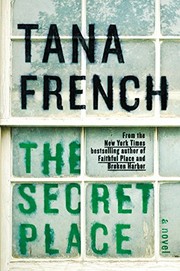
The Secret Place
Two Dublin detectives revisit a murder on the grounds of a girls' boarding school, where a bulletin board note and rival cliques hide the truth.
2,271-word summary · 10 min read
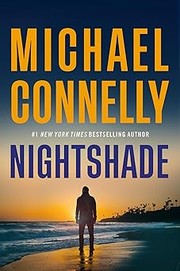
Nightshade
Connelly launches Detective Stilwell on Catalina Island, where a beheaded buffalo and a Jane Doe in the harbor pull a quiet sheriff's post into violence and…
2,272-word summary · 10 min read
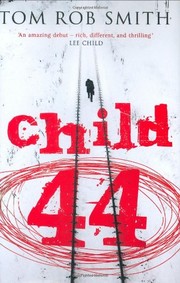
Child 44
Tom Rob Smith's 2008 debut follows Soviet secret policeman Leo Demidov as he hunts a child killer in a country that officially has no crime.
2,428-word summary · 11 min read

The Trespasser
A Dublin Murder Squad detective investigates a staged dinner-party killing and finds a cover-up that reaches into her own department.
2,051-word summary · 9 min read

The Late Show
Exiled to the LAPD night shift after accusing her supervisor, Renée Ballard keeps two cases that were meant to be handed off at dawn: a brutal assault and a…
2,563-word summary · 11 min read
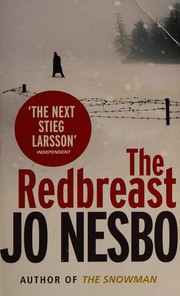
The Redbreast
Harry Hole chases an ageing sniper through modern Oslo while two Norwegian volunteers on the Eastern Front carry a fifty-year-old betrayal toward a royal…
2,453-word summary · 11 min read
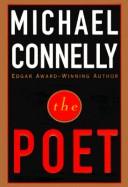
The Poet
A crime reporter investigates his twin brother's apparent suicide and uncovers a killer who leaves Edgar Allan Poe quotes behind, in the novel that took…
2,020-word summary · 9 min read
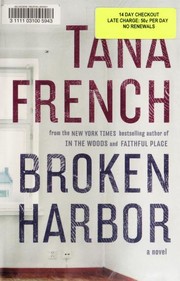
Broken Harbor
A family is found slaughtered in a half-built Dublin estate where no one broke in, and star detective Scorcher Kennedy must explain the holes in the walls.
2,308-word summary · 10 min read
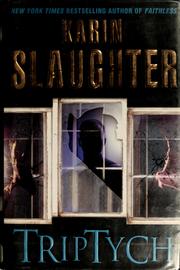
Triptych
A GBI agent with dyslexia hunts a rapist while two Atlanta cops hide pasts.
2,576-word summary · 11 min read
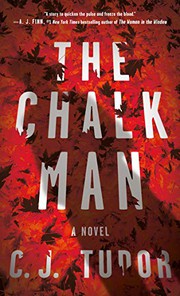
The Chalk Man
Childhood chalk codes lead to a murder that follows friends thirty years later.
2,350-word summary · 10 min read
Notes on an Execution
Ansel waits on death row while three women carry what he broke.
2,527-word summary · 11 min read
Cruel & Unusual
Scarpetta links an execution to a boy's murder while someone steals bodies.
2,533-word summary · 11 min read
Blindsighted
Sara and Jeffrey hunt a killer staging women in small-town Georgia.
2,400-word summary · 11 min read