
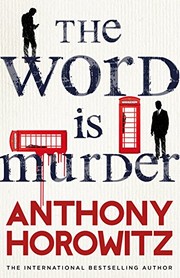
The Word Is Murder
2,296-word summary 10 min read 400 pages in the book
- First published
- 2017
- Publisher
- Century
- Pages
- 400
- ISBN
- 9781780896847
- Series
- Hawthorne & Horowitz (#1)
Reading options
What's inside (10 sections)
- A writer between projects takes a strange phone call
- A case that starts with a funeral and a text message
- The Godwins and the accident at Deal
- The funeral, the coffin, and a second death
- A confession in the autopsy bay
- What Hawthorne had worked out all along
- The ending and what it does to the partnership
- Where it works and where it grates
- Key takeaways
- FAQ
I picked this one up because I had enjoyed Magpie Murders and wanted to see what Horowitz did when he turned the same trick on a modern setting. What I found was a book that is partly a detective story and partly a joke about detective stories, with the author himself walking through the pages as a slightly hapless version of the man who wrote them. The Word Is Murder came out in 2017 from Century in London, a 400 page hardback, and it is the first of the Hawthorne and Horowitz novels. The narrator is a writer called Anthony, a fictionalised Anthony Horowitz, and the puzzle he gets talked into solving is a real curiosity: a woman arranges her own funeral and is murdered six hours later.
A writer between projects takes a strange phone call
The book opens with Diana Cowper, a wealthy widow living in London, sitting down with a funeral director to plan the details of her own service. She picks the hymns, the readings, the whole send off, while she is very much alive. Then the narration jumps forward and a voice tells us that Diana died that same day. That voice belongs to Anthony, who explains that he is telling the story from evidence he gathered later, because he became involved in the case himself.
At the point the call comes, Anthony is out of ideas for his next book. He has just finished a Sherlock Holmes pastiche, The House of Silk, and his agent expects him to deliver something similar. Instead the phone rings and it is Daniel Hawthorne, a former detective inspector who once worked as a consultant on a television series Anthony wrote. The two did not get on. Hawthorne now works privately on difficult murder cases and he has a proposition: let him tell Anthony about a case he is handling, and Anthony writes the book, splitting the advance and the royalties fifty fifty. Anthony says no.
He changes his mind after a literary festival, where a woman in the audience suggests that his work would carry more weight if it were rooted in real events rather than invented ones. The remark needles him, and the chance to be taken seriously as a writer of adult fiction pushes him back toward Hawthorne. That conversation turns out to matter far more than Anthony realises at the time, though the book keeps the reason for that until very late.
A case that starts with a funeral and a text message
The murdered woman is Diana Cowper, mother of the famous British actor Damian Cowper. She has no obvious enemies, which is exactly why Hawthorne is interested. The first odd fact is the funeral she planned hours before her death. The second is a text she sent her son just before she died, saying she had seen the boy who was lacerated and that she was afraid. Hawthorne reads that message as a clue, and Anthony, who is used to inventing clues rather than interpreting them, mostly just watches.
He finds visiting crime scenes far harder than he expected. Fictional murders behave themselves. Real ones leave mess, smells, and awkward silences, and Anthony keeps failing to notice what Hawthorne considers obvious. Hawthorne, for his part, is a poor companion. He is rude, impatient, tight with money, and openly prejudiced, and Anthony repeatedly has to decide whether he can bear to put such a man at the centre of a book. There is a running argument here about whether a detective has to be likeable to be worth reading about, and Anthony keeps threatening to walk away while clearly enjoying himself too much to do it.
Early interviews add texture rather than answers. At the funeral home they meet Robert Cornwallis, a mild, unassuming man who runs the place with his wife. Witnesses mention that Diana was anxious about her missing cat, Mr Tibbs, and that she had lost money in a theatrical production. Hawthorne keeps circling back to the cat, which strikes Anthony as an odd fixation. A note threatening Diana turns up, apparently from a man angry about the past, and the name Alan Godwin starts to surface.
The Godwins and the accident at Deal
Ten years before the murder, Diana was driving near the coastal town of Deal when her car struck two eight year old twins, Timothy and Jeremy Godwin. Timothy was killed and Jeremy was left with permanent brain damage. Diana was not wearing her glasses, but the law at the time did not make that a crime, and the inquiry concluded that the boys had run into the road in a way she could not have avoided. What sticks in people's throats is that she delayed calling the police, apparently because she feared the scandal would damage Damian's career. The boys' mother, Judith Godwin, puts the bitterness plainly when she says that if that is true, the two of them are as bad as each other.
Hawthorne's old colleague, Detective Inspector Charlie Meadows, is assigned to the Diana Cowper case and detests Hawthorne. Meadows tells Anthony that Hawthorne was thrown off the force after injuring a man in his custody, a pedophile, which explains the chip on his shoulder and his refusal to discuss his past. Anthony files the detail away as possible material for the book, never quite able to treat any of this as fully real.
The Godwin lead takes them to Alan Godwin, the twins' father, who admits he loathed Diana, asked her for money, and sent the threatening note, but denies any hand in the cat's disappearance. A witness from the accident recalls a man fleeing the scene. Hawthorne stages a meeting with Godwin and the family's former nanny and reveals that the two were having an affair. On the day of the crash the boys were running toward their father, not away from danger, which makes the tragedy look deliberate in a way it never did before. It is a strong scene and a convincing false lead, and it shows Hawthorne at his best when he is arranging people in a room and watching what they do.
The funeral, the coffin, and a second death
Damian Cowper finally arrives in London a week after his mother's death. Horowitz draws him as a composite of well known British actors, borrowing bits of their screen careers so that the reader knows exactly what kind of star he is without attaching the unpleasant traits to a real person. Damian is vain, self absorbed, and barely able to hide his irritation at being pulled back into his mother's life. Anthony, who had planned to skip the funeral for a meeting about a screenplay with Steven Spielberg and Peter Jackson, is dragged there by Hawthorne, who bursts into the meeting and insists.
The eulogy is all about Damian's own career. Then, in the middle of the burial, music blares from a device hidden in the coffin. It is The Wheels on the Bus, a childish song aimed squarely at Damian, and he storms out in fury. At the wake, Hawthorne suddenly understands that he has missed something important. Diana's house keys are missing from the scene, which means someone intended to get into Damian's flat. He races Anthony across London and they find Damian dead there, brutally killed. The killer's real target, they now realise, was never Diana.
From there the investigation turns toward Damian's past. Grace Lovell, his partner and a successful actress in her own right, explains how he rose at drama school after another student fell ill and he stepped into the role of Hamlet. Anthony goes off on his own, visits a drama instructor, and studies an old cast photograph. His amateur sleuthing leads him to a name from that photograph and to a meeting with Robert Cornwallis, the funeral director from the first chapter.
A confession in the autopsy bay
The meeting is a trap. Cornwallis, it emerges, was once a student at the Royal Academy of Dramatic Art alongside Damian, working under the stage name Dan Roberts, his first and middle names reversed. Anthony realises he cannot move; Cornwallis has slipped him a drug, later identified as Rohypnol. What follows is a long confession delivered while Anthony lies paralysed in an annex of the funeral business, taken there in a wheelchair and eventually stabbed with a scalpel.
Cornwallis blames Damian for ruining his life. Back at drama school, Damian wanted the part of Hamlet and arranged for his then girlfriend Amanda to kiss Cornwallis, knowing she had mononucleosis, so that Cornwallis would be too ill to play Laertes and the production would be recast. Cornwallis lost the role, never recovered as an actor, and ended up back in the family funeral business. He later killed Amanda, using his access to grave plots to hide her body. When Diana Cowper walked in to arrange a funeral, Cornwallis saw a way to reach Damian: kill the mother and the son would come running. The music in the coffin was his own flourish, meant to wound Damian before the main event.
Hawthorne arrives in time to stop the killing but not to take Cornwallis alive. Cornwallis turns the scalpel on himself. Anthony survives, hospitalised and angry with himself for walking into the obvious trap, and Hawthorne finally sits down to explain the reasoning he had been hoarding for the entire book.
What Hawthorne had worked out all along
Hawthorne says he suspected Cornwallis early, chiefly because the funeral director was evasive about his own history. The wider reading of the case is that Diana meant to die. She was lonely, out of money after Raymond Clunes cheated her, estranged from her son, and distressed by the loss of her cat. A large supply of sleeping pills in her bathroom pointed the same way, and the funeral she planned used readings about death and loneliness, including poets who killed themselves. She assumed the threatening note concerned Mr Tibbs and saw no reason to go on.
The clue that everyone misread was the text about the lacerated boy. Diana had recognised Cornwallis from his role as Laertes in Hamlet, and her phone autocorrected the word to lacerated. That sent the investigation toward the Godwin twins instead of the theatre. Hawthorne also points out that the book is threaded with Hamlet quotations, including one on a marble sculpture outside the funeral home, and that Cornwallis used the Godwin lead and the coffin prank to keep everyone looking in the wrong direction. When Mr Tibbs was found alive, Hawthorne was pleased because it confirmed Diana had believed the cat was gone and had planned her death around that belief. The second murder was the planned one; Diana's death was a crime of opportunity that put Cornwallis in reach of his real prize.
The ending and what it does to the partnership
In the final chapters Anthony visits Hawthorne at his flat, a large place full of historical model vehicle kits that he builds himself. He suggests the title, taking it from one of Hawthorne's own remarks that people read mysteries for the plot rather than for the detective. For a moment the two men reach something like a truce, and Anthony admits that having Hawthorne around has become welcome.
Then he spots a photograph. The woman in it is the same one who spoke to him at the literary festival and pushed him into taking the case, and she is Hawthorne's estranged wife. Anthony realises he was steered into the whole arrangement, feels betrayed, and leaves announcing that he will not write the book. As he walks back across the river, though, he changes his mind for a quieter reason: if he stays as the author, he controls how he and Hawthorne are shown on the page. The book stops before he says what he will do, ending on a decision the reader has to infer.
Where it works and where it grates
The pleasure of the novel is in the machinery. Horowitz is very good at making a first person narrator who is genuinely blind to what is under his nose, and the autocorrect clue is the sort of small, unfair trick that makes you want to reread the early chapters immediately. The Godwin false lead is worked out with real care, and the reveal in the autopsy bay is nasty and memorable without needing a chase.
The weakness is Hawthorne himself. He is written to be difficult and offensive, and the book knows it, but a detective who is openly homophobic and contemptuous of most people is a hard companion over four hundred pages. Anthony spends a lot of time announcing that he finds him unsuitable as a protagonist, which becomes a theme the book keeps announcing rather than exploring. The metafictional game can feel smug too, especially when Anthony lectures about the conventions of the genre while depending on every one of them. Readers who want a clean, warm detective partnership may find the ending cold, since the final twist is about manipulation rather than justice.
For all that, I closed it wanting the next one. The puzzle is intricate enough to forgive the posturing, and the book is honest about the fact that its narrator is an unreliable guide to his own story. It is a clever piece of work about how a mystery is built, and it wears that cleverness lightly most of the time. If you like your detective fiction with the seams showing and a narrator who keeps arguing with his own author, this is an easy recommendation. If you want a likeable sleuth and a tidy resolution, Hawthorne and his creator will probably irritate you, which may be the point.
FAQ
Is The Word Is Murder part of a series?
Yes. It is the first novel in the Hawthorne & Horowitz series, which pairs a fictionalised Anthony Horowitz with former detective Daniel Hawthorne as he works private murder cases.
Who kills Diana Cowper and why?
Robert Cornwallis, a funeral director and former drama school classmate of Diana's son Damian, strangles her to draw Damian back to London. He blames Damian for costing him the role of Hamlet years earlier, then kills him too, and dies by suicide when Hawthorne catches him.
What does the 'lacerated' text message mean?
Diana recognised Cornwallis from his role as Laertes in Hamlet, and her phone autocorrected 'Laertes' to 'lacerated'. The misreading sends the investigation toward the family of a boy Diana once hit with her car.
Similar books
More from Hawthorne & Horowitz first, then related titles.
The Running Grave
In the seventh Cormoran Strike novel, Robin goes undercover inside a Norfolk cult while Strike digs into a child's death from decades earlier.
2,615-word summary · 12 min read
Career of Evil
A severed leg delivered to Robin forces Strike to face four men from his past as a London killer stalks, testing the agency and her wedding plans ahead.
2,887-word summary · 13 min read
The Silkworm
A missing novelist and a cruel manuscript pull Strike and Robin into London publishing.
3,583-word summary · 16 min read
The Cuckoo's Calling
Broke detective Strike and temp Robin investigate a supermodel's fatal fall in London.
2,006-word summary · 9 min read
The 5th Horseman
Two linked cases pull Lindsay Boxer and the Women's Murder Club into a hospital full of strange deaths and a luxury-car murder spree.
2,609-word summary · 12 min read
The Unquiet Grave
In Dervla McTiernan's fourth Cormac Reilly novel, a body found in a Galway bog turns out to be a missing school principal, and the case opens into something…
2,253-word summary · 10 min read
The Keeper of Lost Causes
Jussi Adler-Olsen introduces Carl Mørck and Department Q, a Copenhagen cold-case unit in a basement, and a missing politician whose file refuses to stay closed.
2,759-word summary · 12 min read

The Ice Princess
Camilla Läckberg's debut follows writer Erica Falck and detective Patrik Hedström as a frozen bathtub in a small Swedish town unravels a secret kept for…
2,321-word summary · 10 min read
The Hallmarked Man
A body in a silver vault behind Freemasons' Hall sends Strike and Robin into a world of coded letters, secret societies and a girl whose whole identity may be…
3,084-word summary · 14 min read

The Girl Who Takes an Eye for an Eye
Lisbeth Salander investigates a secret childhood experiment from prison while Mikael Blomkvist uncovers a twin conspiracy behind a wealthy businessman.
2,059-word summary · 9 min read
The Girl in the Ice
A young socialite is found frozen beneath the ice in a south London park, and DCI Erika Foster returns to work to lead the case. Grief, privilege and three…
2,492-word summary · 11 min read
Jack & Jill
A senator is killed with a nursery-rhyme calling card as a child is murdered near Alex Cross's home. The third Alex Cross novel pulls him toward two cases, one…
2,646-word summary · 12 min read
Fractured
In Karin Slaughter's second Will Trent novel, a mother kills the wrong man in an Atlanta mansion, and a GBI agent with a hidden reading difficulty finds a…
2,219-word summary · 10 min read
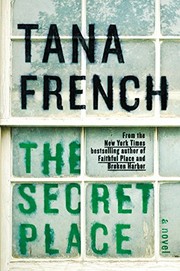
The Secret Place
Two Dublin detectives revisit a murder on the grounds of a girls' boarding school, where a bulletin board note and rival cliques hide the truth.
2,271-word summary · 10 min read
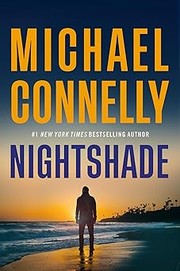
Nightshade
Connelly launches Detective Stilwell on Catalina Island, where a beheaded buffalo and a Jane Doe in the harbor pull a quiet sheriff's post into violence and…
2,272-word summary · 10 min read
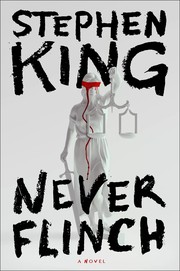
Never Flinch
Holly Gibney works two cases at once: a killer promising fourteen deaths and a threat against a feminist writer's lecture tour. King braids them into a…
2,245-word summary · 10 min read
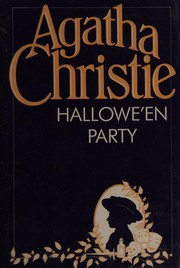
Hallowe'en Party
A girl boasts she once saw a murder, then drowns in an apple-bobbing bucket. Poirot investigates both the claim and the killing.
2,232-word summary · 10 min read

The Trespasser
A Dublin Murder Squad detective investigates a staged dinner-party killing and finds a cover-up that reaches into her own department.
2,051-word summary · 9 min read

Rules of Prey
Minneapolis detective Lucas Davenport hunts a killer who leaves a new rule at every scene and treats murder as a game of wits.
1,914-word summary · 9 min read

The Late Show
Exiled to the LAPD night shift after accusing her supervisor, Renée Ballard keeps two cases that were meant to be handed off at dawn: a brutal assault and a…
2,563-word summary · 11 min read

3rd Degree
The third Women's Murder Club novel follows a San Francisco terror cell and a three-day killing schedule, and it costs the club a member.
2,685-word summary · 12 min read

The Redbreast
Harry Hole chases an ageing sniper through modern Oslo while two Norwegian volunteers on the Eastern Front carry a fifty-year-old betrayal toward a royal…
2,453-word summary · 11 min read
Broken Harbor
A family is found slaughtered in a half-built Dublin estate where no one broke in, and star detective Scorcher Kennedy must explain the holes in the walls.
2,308-word summary · 10 min read
Cruel & Unusual
Scarpetta links an execution to a boy's murder while someone steals bodies.
2,533-word summary · 11 min read
The Man in the Brown Suit
Anne Beddingfeld sees a Tube death in London and chases a paper clue to South Africa, diamonds, and the hidden Colonel.
2,292-word summary · 10 min read

2nd Chance
Lindsay Boxer and the Women's Murder Club hunt the Chimera killer after a church shooting in San Francisco.
2,572-word summary · 11 min read
The Bat
Oslo detective Harry Hole aids Sydney police after a young Norwegian woman is murdered and finds a wider pattern. Grief, drink, and a lost partner shape the…
2,766-word summary · 12 min read
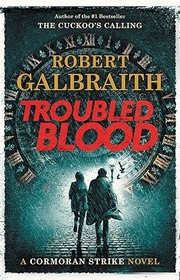
Troubled Blood
Strike and Robin take a year long cold case: doctor Margot Bamborough vanished in 1974, with a nurse hiding more.
2,211-word summary · 10 min read
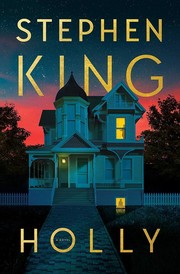
Holly
Grieving detective Holly Gibney takes a missing-girl case in 2021 and traces it to two polite retired professors with a basement secret.
2,607-word summary · 12 min read
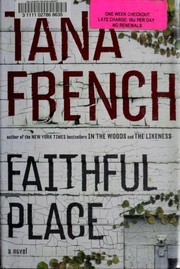
Faithful Place
Undercover Frank Mackey returns to Faithful Place when lost love Rosie suitcase is found.
2,161-word summary · 10 min read