
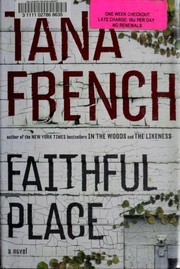
Faithful Place
2,161-word summary 10 min read 416 pages in the book
- First published
- 2010
- Publisher
- Viking
- Pages
- 416
- ISBN
- 9780670021871
- Series
- Dublin Murder Squad (#3)
Reading options
What's inside (8 sections)
I came to Faithful Place after loving In the Woods and The Likeness, and found it the most painful of the three, which is saying a lot. Tana French published it July 13, 2010 with Viking, a 416 page hardcover with ISBN 9780670021871. It is Dublin Murder Squad book three, after In the Woods and The Likeness, centered on Frank Mackey, who was Cassie maddening boss in book two. You can start here. French recaps enough. But you will feel more if you know Frank as others saw him first, charming, reckless, hard to trust.
Frank Mackey grew up on Faithful Place, a cramped Dublin Liberties street where everyone knows who ate what. At nineteen he planned to run to London with Rosie Daly, his girl since childhood. They packed. They set a time. She did not show. He left anyway, thinking she chose family or fear. He did not go back for twenty two years. He became an undercover detective, married, had a daughter Holly, divorced, worked cases where lying is skill. Then Rosie suitcase is found behind a fireplace in a derelict house on Faithful Place, and a body may be with it. Frank, now Undercover, not Murder, pulls rank to get home.
The setup is classic French. A detective returns to a past he rewrote. Present murder forces old story open. Family closes ranks. Memory lies. What makes Faithful Place cut deeper is class and closeness. The Mackeys live within shouting distance. Frank mother, father, brothers, sisters, all still there. Rosie Dailys too. Love and hate share walls. Frank, who lies for a living, must ask truth from people who lie for family.
Going home
Frank homecoming chapters are electric with dread. He parks, walks, notices changed shops and same smells. His mother opens door and cries. His father, an alcoholic bully now shrunken, sneers. Brothers hug too hard. Sisters watch. Shay, his older brother, drinks and glares. Kevin, younger, worships and fears. Jackie, sister, loves him openly and reports everything. Carmel, another sister, keeps peace by smoothing. The house is small, loud, warm and cold at once. French writes kitchens better than anyone. Tea made, biscuits pushed, talk that avoids the thing until it explodes.
Rosie suitcase contents hit hard. Clothes for London, tickets, money, notes. She meant to go. So why did she not show. The derelict house, Number 16, where teens drink and lovers meet, holds more. A body in the basement, preserved by lime, turns out to be not Rosie at first glance, or is it. I will keep mystery intact, but the find forces two questions. Did Rosie run or was she taken. Did Frank leave a living girl or a dead one. He spent twenty two years believing she chose. Now he must face she may have had no choice.
Frank brings his daughter Holly for cover and because he misses her. Holly, nine, sharp, funny, loves her dad without illusions. She charms the Mackeys, plays with cousins, asks blunt questions adults dodge. Where did Rosie sleep. Why does Nana cry. Her presence softens Frank and sharpens stakes. He sees Faithful Place through her eyes, as a kid who could get stuck. He also uses her as shield, which he hates himself for. Their scenes, driving, eating chips, talking about cases in kid terms, are the tenderest in the book.
Work politics complicate. Murder Squad detective Scorcher Kennedy, by the book and ambitious, resents Frank Undercover swagger. Frank must share a case he feels is his. They clash over interviews, leaks, who talks to family. Scorcher wants procedure. Frank wants truth fast, even if he bends. Their rivalry is professional and personal. Both want to be good cops. Both define good differently. French lets Scorcher be right sometimes, which keeps Frank from becoming hero. He breaks rules that matter. He pays.
The Mackeys and the Dalys
Family portraits are the core, not red herrings. Frank father, Mal, a violent drunk who beat boys and belittled girls, now old and needy. He loves in grabs. He hates Frank for leaving because leaving proved escape possible. Frank mother, Rose, holds family with food and denial. She knows more than she says about that night. Shay, who loved Rosie too in a brotherly way, drank himself into bitterness. He resents Frank shine. Kevin, who idolized Frank and Rosie romance, never left and never grew. Jackie, who was Rosie best friend, carries guilt about a fight that night. Carmel keeps photos and secrets.
The Dalys mirror. Rosie mother, quiet and grieving. Rosie brothers, hard men who blame Mackeys. The feud is not Hatfield McCoy. It is two poor families sharing a street and shame. Who got pregnant. Who drank. Who hit. Who told. French shows how poverty narrows choices until leaving feels like betrayal and staying feels like death. Frank and Rosie plan to London was not just romance. It was exit. When she missed, Frank exited alone and became a man who watches people for a living because watching is safer than belonging.
Interviews unfold in kitchens, pubs, cars. Frank uses Undercover tricks, mirroring, silence, false friendship. He lies to his own blood without flinching, then hates the ease. One scene with Shay in a pub, two pints in, nearly confessing, then pulling back, captures brothers who love and cannot speak. Another with Jackie on a wall, sharing cigarettes like teens, gets closer to truth because Jackie wants to tell. She was there that night. She saw Rosie bag. She heard a row. Her memory is cloudy with drink and years. French writes memory as wet cement, shape held but smudged.
Holly subplot matters more than it seems. She befriends a Mackey cousin, hears playground versions of Rosie story, repeats them innocently. Frank realizes kids hear everything adults whisper. He also realizes he parents like his father in small ways, working late, missing calls. Holly calls him on it. Dad, you listen to bad guys better than to me. That line lands because it is true. Frank tries to do better while failing elsewhere. Parenting while investigating home is impossible and he does it badly and lovingly.
What happened to Rosie
I will not spoil fully, but the solution is domestic and devastating, not serial killer twists. Rosie did not simply stand Frank up. Someone in the close circle stopped her that night, out of love twisted into control. The suitcase hid to preserve a story. The body hid to preserve family. Frank, trained to suspect strangers, must suspect his own. The reveal lands in a living room, not a chase. People cry. No one is arrested cleanly. Justice bends around family survival.
French plays fair. Clues about tickets, about who had a key to Number 16, about who limewashed a wall, about who drank where, are all visible. I guessed the who halfway and missed the why fully. The why involves shame about pregnancy, about money, about being left. It involves a parent who thought stopping a girl would save her. That parent was wrong in ways that killed. The book does not forgive because it understands. It understands and still says wrong.
After, Frank does not heal. He returns to Undercover work. He sees Holly more. He calls Jackie. He does not forgive his father. He stops needing him to admit. That restraint feels earned. Some wounds close crooked. French refuses tidy courtroom ends. Scorcher files what he can. The street keeps its story. Frank keeps his suitcase of guilt, lighter but still carried.
Holly, Scorcher, and working home
Holly deserves more pages because she changes Frank more than evidence. At nine she sees clearly. She asks why Nana cries when Frank laughs. She asks why Uncle Shay drinks at lunch. She asks where Rosie would sit if she came back. Adults deflect. Holly files answers. In the car she tells Frank what she learned, that Jackie loved Rosie, that Kevin is scared, that Nana hides photos. Frank, trained to debrief assets, realizes his daughter is his best source because people tell children truth they hide from cops. He hates using her and does it anyway by listening. That compromise stains him in ways he admits in narration. I am using my kid to crack my family. No excuse fixes. He keeps listening.
Scorcher Kennedy rivalry needs detail too. Scorcher is decent, ambitious, procedural. He wears suits. He writes reports. He believes system works if followed. Frank believes system works if bent for truth. They interview the same men and get different answers. Shay talks to Frank because they grew up. He shuts down for Scorcher because Scorcher writes. Kevin talks to Scorcher because uniform feels safe. He lies to Frank because brother shame burns. Together they get full picture neither gets alone. French shows good policing needs both, rule and relationship. Their final scene, sharing a pint without liking, respects that. No hug. Just case closed enough.
Working home as Undercover man breaks Frank tools. On strange streets he can be anyone. On Faithful Place he is Jackie brother, Mal son, Rosie boy. Covers slip. He forgets which lie he told which brother. He dreams of nineteen and wakes reaching for Rosie who is not there. His handler calls and Frank lies to him too, saying he is fine. He is not. The book argues you cannot go home as a role. Home knows your tells. Frank tell is joking when hurt. Family hears jokes and hears hurt underneath because they taught him both. That exposure is why the case costs more than others. He solves it by being Frank Mackey, not a detective, which is both win and loss.
Street, doors, and what remains
Faithful Place itself as street needs a final note because French writes place as fate. Doors painted same, curtains twitching, kids playing ball against walls that heard fights for decades. Number 16 derelict holds suitcase and body because no one watches empty houses closely enough. Neighbors saw teens come and go and said nothing because saying brings guards. That silence is community and complicity together. Frank, who left, sees it clearly. Those who stayed cannot. He tells Jackie the street eats girls who dream. She answers it feeds boys who stay. Both true. Leaving costs. Staying costs. The street keeps ledger.
What remains after truth is not justice but altered living. Shay drinks a little less, or differently. Kevin moves out, finally, with Frank help for deposit. Jackie keeps Rosie photo but stops asking what if aloud. Mrs Mackey cooks for Holly when she visits, a grandmother found late. Mr Mackey sits quieter. Frank visits more, not to live, to father. Holly claims cousins as hers. She belongs in a way Frank never did because she can come and go. That coming and going, unthinkable for Frank at nineteen, is the fragile hope. Doors can open both ways now. Suitcases can be unpacked, not just hidden. Go home carefully, the book says, and go back out to live. Both moves take courage. Frank learns the second matters more.
Fair criticism is needed. At 416 pages, middle interviews repeat. Kitchens blur. Shay drunk scenes circle. Readers wanting fast forensics will fidget. Frank voice, first person and cocky, can tire. He narrates like he talks, fast, funny, defensive. Some will find him too charming for a man who lies to family. Holly, though lovely, sometimes sounds too wise for nine. That wisdom serves theme but strains belief.
The book also demands comfort with unresolved justice. Legal outcome satisfies few. Moral outcome satisfies more. If you need handcuffs to close, look elsewhere. French cares about what families do after truth, not just who did it. That focus is strength and limit.
Still, the street lives. Faithful Place as place, with its doors, prayers, songs, fights, feels real enough to visit and fear. Frank, who left to become someone else, learns he is still a Mackey in how he loves, fights, hides. Holly, who visits, learns she can love Mackeys without living there. That generational shift, leaving without cutting, is hope. Small, smudged, like memory. Enough.
Who should read it
Adults fit best. There is murder, domestic violence, alcoholism, child neglect, strong language, sexual content talk. Teens should wait even if they love mysteries. Fans of Dublin Murder Squad should read in order for Frank background, but this works alone. Fans of character driven crime over puzzles will feel fed. Fans of fast thrillers should adjust. This is slow burn with heat in kitchens.
Pair with Broken Harbour for French best, or with In the Woods for Frank early. Read with tea, near family photos if you dare. Note who pours, who drinks, who washes. In French books, kitchens tell truth. Faithful Place tells it loudest. Go home carefully. Some suitcases should be opened. Some should stay behind fireplaces. Frank learns which too late to save Rosie, just in time to save Holly from his silence.
FAQ
When was Faithful Place published?
Viking published it July 13, 2010. The hardcover runs 416 pages with ISBN 9780670021871.
Is Faithful Place part of a series?
Yes. It is Dublin Murder Squad book three, after In the Woods and The Likeness.
Who should read Faithful Place?
Adults fit best. There is murder, domestic violence, alcoholism, and strong language.
Similar books
More from Dublin Murder Squad first, then related titles.

In the Woods
A detective investigates a girl's murder in the woods where his own friends vanished twenty years earlier.
2,773-word summary · 12 min read
The Likeness
A detective poses as her murdered double and moves in with four graduate students to find the killer.
2,751-word summary · 12 min read
Broken Harbor
A family is found slaughtered in a half-built Dublin estate where no one broke in, and star detective Scorcher Kennedy must explain the holes in the walls.
2,308-word summary · 10 min read

The Trespasser
A Dublin Murder Squad detective investigates a staged dinner-party killing and finds a cover-up that reaches into her own department.
2,051-word summary · 9 min read

Rules of Prey
Minneapolis detective Lucas Davenport hunts a killer who leaves a new rule at every scene and treats murder as a game of wits.
1,914-word summary · 9 min read

The Late Show
Exiled to the LAPD night shift after accusing her supervisor, Renée Ballard keeps two cases that were meant to be handed off at dawn: a brutal assault and a…
2,563-word summary · 11 min read

3rd Degree
The third Women's Murder Club novel follows a San Francisco terror cell and a three-day killing schedule, and it costs the club a member.
2,685-word summary · 12 min read

The Redbreast
Harry Hole chases an ageing sniper through modern Oslo while two Norwegian volunteers on the Eastern Front carry a fifty-year-old betrayal toward a royal…
2,453-word summary · 11 min read
Cruel & Unusual
Scarpetta links an execution to a boy's murder while someone steals bodies.
2,533-word summary · 11 min read
The Man in the Brown Suit
Anne Beddingfeld sees a Tube death in London and chases a paper clue to South Africa, diamonds, and the hidden Colonel.
2,292-word summary · 10 min read

2nd Chance
Lindsay Boxer and the Women's Murder Club hunt the Chimera killer after a church shooting in San Francisco.
2,572-word summary · 11 min read
The Bat
Oslo detective Harry Hole aids Sydney police after a young Norwegian woman is murdered and finds a wider pattern. Grief, drink, and a lost partner shape the…
2,766-word summary · 12 min read
Troubled Blood
Strike and Robin take a year long cold case: doctor Margot Bamborough vanished in 1974, with a nurse hiding more.
2,211-word summary · 10 min read
Holly
Grieving detective Holly Gibney takes a missing-girl case in 2021 and traces it to two polite retired professors with a basement secret.
2,607-word summary · 12 min read
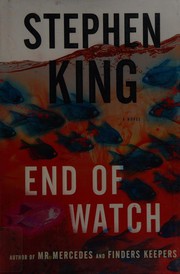
End of Watch
A dying Bill Hodges and Holly Gibney face Brady Hartsfield again, as rigged game consoles push hurt teens toward suicide.
2,923-word summary · 13 min read
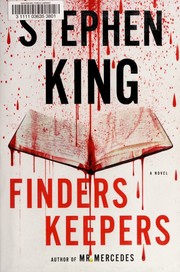
Finders Keepers
A boy finds a murdered writer's notebooks while the killer leaves prison hunting them and Hodges closes in.
2,157-word summary · 10 min read
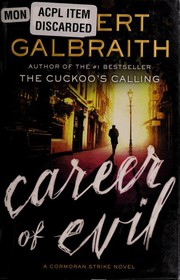
Career of Evil
A severed leg delivered to Robin forces Strike to face four men from his past as a London killer stalks, testing the agency and her wedding plans ahead.
2,887-word summary · 13 min read
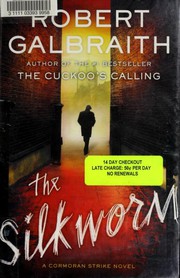
The Silkworm
A missing novelist and a cruel manuscript pull Strike and Robin into London publishing.
3,583-word summary · 16 min read
Mr. Mercedes
Retired Hodges hunts Mercedes killer Brady Hartsfield concert plot.
2,281-word summary · 10 min read
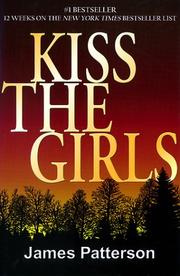
Kiss the Girls
Cross hunts Casanova kidnapping women including niece Naomi.
2,397-word summary · 11 min read
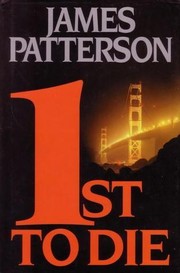
1st to Die
Lindsay, Claire, Cindy and Jill hunt a honeymoon killer terrorizing San Francisco.
2,536-word summary · 11 min read
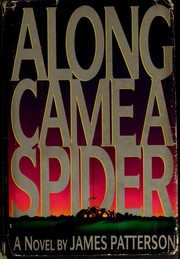
Along Came a Spider
Detective Alex Cross hunts Gary Soneji after two children vanish from a Washington school and a Lindbergh echo grows.
2,523-word summary · 11 min read
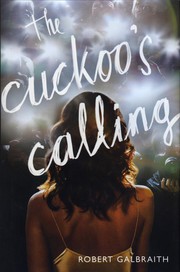
The Cuckoo's Calling
Broke detective Strike and temp Robin investigate a supermodel's fatal fall in London.
2,006-word summary · 9 min read

The Witch Elm
Toby Hennessy has always been lucky, until a beating leaves his memory full of holes and a skull turns up in the garden of the family home. A stand-alone novel…
2,021-word summary · 9 min read
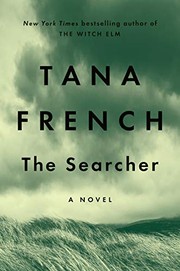
The Searcher
A retired Chicago cop seeks quiet in rural Ireland until a local kid pulls him into the hunt for a missing brother.
2,859-word summary · 13 min read
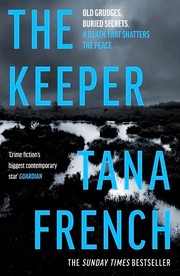
The Keeper
Retired cop Cal Hooper faces one last killing in his Irish village.
2,129-word summary · 9 min read

What She Knew
Rachel lets her eight-year-old son run ahead in a Bristol park, and the nine-day search turns her into a suspect in the public eye.
2,952-word summary · 13 min read

The Beach House
A young valet is beaten to death at a Hamptons party, and his law-student brother spends a year building a case against the family that covered it up.
2,049-word summary · 9 min read

Six Years
A professor who promised to forget the woman he loved sees her husband's obituary and discovers that the wedding, the marriage, and the woman herself may never…
2,076-word summary · 9 min read

How the Light Gets In
Gamache investigates the murder of the last Ouellet quintuplet while the Sûreté he served is dismantled from inside by the man who took his protégé.
2,279-word summary · 10 min read