
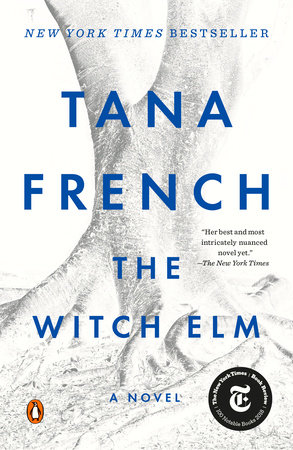
Reading options
What's inside (9 sections)
I came to The Witch Elm as a Tana French reader first and a mystery reader second, which turned out to be the right order. Her Dublin Murder Squad books are detective novels that keep their detectives slightly out of focus. This one removes the detective from the driver's seat entirely. It is a stand-alone, published in 2018, and it tells a crime story from the least reliable place you can tell one from: inside the head of a man who cannot fully remember what he did.
The setup is almost a joke at the expense of its own protagonist, and French knows it. Toby Hennessy has been lucky his whole life, and it shows: good looks, a good job in public relations at a Dublin art gallery, a girlfriend he does not deserve and mostly knows it, a family that has always quietly treated him as the one who would be fine. The novel opens by letting him tell you about this luck at loving length, in a voice so pleased with itself that you start waiting for the floor to open. It does.
The floor opens
Toby is beaten badly during a burglary at his flat. Two men, a hurley or something like it, and by the time it is over he has a hole in his memory, a scrambled language center, a drooping eyelid, and a new relationship with fear. The aphasia scenes are some of the most unsettling writing in the book: a talkative man suddenly unable to get from thought to sentence, flailing in public rooms, covering for himself. French researched the recovery carefully, and it shows in every stammer.
While he is still fragile, he and his girlfriend Melissa move into Ivy House, the big shabby family home where his uncle Hugo lives. Hugo has an inoperable brain tumor, and someone needs to look after him. Ivy House is where Toby and his cousins Leon and Susanna spent their childhood summers, and the novel gives those summers the golden, sun-bleached quality of memory that is about to be shown up as a lie. Melissa, who has no childhood in this house and no sentimental reflexes about it, notices things the family does not. French uses her the way she uses good police in other books: as the outsider whose questions have no social price.
The skull in the tree
At a family gathering, Susanna's children find a human skull in the wych elm at the bottom of the garden. The gardaí arrive, then the forensic people, then the rest of the skeleton. It belongs to Dominic, a teenager who ran with Toby's crowd and who vanished ten years earlier. Everything about the discovery is handled the way French handles the best of her material: the police are competent and unhurried, the family performs cooperation, and the past starts to develop trapdoors.
Dominic, it turns out, was a charmer with a mean streak. He bullied Leon over his being gay. There were rumors about how he treated Susanna. And the murder weapon, a garrote, was made from a drawstring belonging to a sweatshirt of Toby's. Toby cannot explain that. He cannot explain much from that summer at all. The hole in his memory from the beating has met the older hole where something should be, and the novel's engine is the sound those two holes make grinding against each other.
I have never read a crime novel that uses amnesia this well, and I mean that even though amnesia is one of the hoariest devices in the genre. French is not interested in the mystery of whether Toby did it, or not only in that. She is interested in what it means to know that you are the kind of person who cannot prove his own innocence, and in the way a family closes ranks around its most favored member without ever saying so out loud. Melissa, watching it happen, starts to leave in stages before she leaves for good.
The family business
The long middle of the book is where readers divide. Toby drifts, investigates badly, drinks too much, leans on old friends, and tests the patience of everyone around him, including the reader. Some of this is genuinely tedious, and I think French intends the tedium; Toby without his luck is not a compelling man, and the book refuses to make him one. Some of it is just long. The novel runs over five hundred pages, and the armchair detectives who want the skull explained by page three are in the wrong house.
What keeps you in it is the family. Hugo, dying and gentle and slightly elsewhere, is one of French's best creations. Susanna, brittle and furious and holding everything together with her fingernails, and Leon, fragile in a different register, orbiting his own old wounds: the three cousins are a study of what a shared childhood does to people who then spend decades disagreeing about what it was. The Witch Elm is the rare crime novel where the mystery functions as family therapy with a body count.
Two confessions
The revelations arrive in two waves. First Hugo confesses to the killing, calmly, and then dies of a brain hemorrhage soon after being taken into custody, which conveniently means the case can close around a dead man. Then Susanna and Leon tell Toby what actually happened, and Hugo's confession collapses into what it was: one more instance of the family protecting itself, or the truth, depending on which way you turn the prism. The cousins admit they killed Dominic after his harassment of Susanna became intolerable. They also remind Toby of something he has spent the book not remembering: that Susanna asked him for help back then, and that he did nothing. Not malice. Just the negligence of a lucky man to whom nothing bad has ever stuck.
That is the real crime at the center of the book, and French makes sure it lands on Toby rather than on the reader. He is not an innocent man destroyed by the plot. He is a man whose default setting has always been self-preservation, and the plot is the bill coming due all at once.
Rafferty, and after
The last spiral involves Detective Mike Rafferty, who does not believe Hugo's confession and comes at Toby alone. The confrontation is ugly and physical, and Rafferty ends up dead with his head against a stone. Toby claims he thought it was another intruder; the trauma of the burglary, the state of his memory, and the whole shape of his prior life go into the defense. The epilogue that follows is one of the bleakest final chapters French has written: a manslaughter conviction on diminished-responsibility grounds, time at the Central Mental Hospital rather than prison, Ivy House sold to pay for a defense, and Toby out in a world where his luck is finally, visibly used up.
There is one more thread, quieter than the rest. The burglary at the start turns out to have been payback from someone Toby professionally let down, a favor he never helped with because helping would have been inconvenient. It is the smallest fact in the book and somehow the most damning. The novel is full of people who protect the wrong things, and Toby's version of that was always there, before Dominic, before everything.
Where it sits
Reception was strong, including an extraordinary review from Stephen King in the New York Times, and it landed on several 2018 best-of lists, including NPR's. French said in interviews that she wanted to write a crime story from outside a detective's eye and that she drew on the real unsolved case of a woman found in a tree in England in the 1940s, which gives the novel its title and its central image. You can feel the change of gear. The Dublin Murder Squad books are built around detectives who are troubled but effective. This one is built around a man who is neither, and the effect is closer to a slow-motion moral autopsy than a whodunit.
If you like your mysteries brisk, this will frustrate you. It is long, Toby is hard company, and French is much more interested in the sociology of families than in clues. But if you have ever liked the idea of a crime novel as a haunted house, where the ghost is the person you used to be, The Witch Elm is one of the strongest things French has done, and its closing pages know things about luck and guilt that most thrillers never even look at.
French before and after this book
To see what French was doing here, it helps to line the novel up against the books around it. She arrived in 2007 with In the Woods, the first of six Dublin Murder Squad novels, each narrated by a different detective and each standing alone: The Likeness, Faithful Place, Broken Harbour, The Secret Place, The Trespasser. Those books share a method, a murder investigation told in first person by an investigator with something buried, and a conviction that the detective's own history is the real case. Readers who love them do not simply love the puzzles. They love the way French lets a voice carry a whole worldview and then slowly cracks it.
The Witch Elm is the book where she steps outside all of that. There is no murder squad, no seasoned investigator to process the discovery, and no professional distance between the narrator and the crime. French said at the time that she wanted to look at a killing from the outside, from the perspective of the people left holding it, which meant stripping away the two things her series always supplied: competence and procedure. What is left is a man with a hole in his head and a family with a hole in its history, and the reader doing the detective work under conditions the genre almost never imposes.
You can feel the shift in her later books too. The Searcher, from 2020, moves to the west of Ireland and lets a retired American cop learn how much violence a quiet place can hold, and The Hunter, its 2024 sequel, doubles down on the idea that communities enforce their own justice long before the law arrives. French has drifted toward slower, more novelistic crime fiction as her career has gone on, and The Witch Elm is the pivot point, the book where she proved to herself and to readers that she could hold a story together without a Garda badge in the frame.
It also sits, slightly awkwardly, between two markets. Crime readers found it self-indulgent and literary readers found it grim, and the book got filed in different sections on different continents, with the British edition titled The Wych Elm and shelved accordingly. The split is real, and it explains why this is the French novel that divides her fans most sharply. My advice is to read it as a novel that happens to be organized around a body, rather than as a mystery that forgot to hurry. On those terms, the long middle is not a flaw to forgive. It is the sound of a family closing ranks, one comfortable silence at a time, and that is the horror French was actually after.
If you do pick it up, plan for it as a book to live in rather than a book to solve. Two hundred pages in, you will either be inside Toby's voice or you will not, and that is the decision the novel is really asking you to make. The people who love it tend to talk about the atmosphere, the house, the slow dread of a man learning that his memory has been curating his life for him. The people who dislike it tend to talk about the length and the narrator, which is the same complaint from the other side. French wrote a book that cannot be skimmed. That is the price of admission, and the ending is worth the toll.
FAQ
Is The Witch Elm part of the Dublin Murder Squad series?
No. It is a stand-alone novel. French has said she wanted to write a crime story from outside a detective's perspective, so the book stays with Toby Hennessy throughout.
What happened to Toby at the start of The Witch Elm?
He is beaten during a burglary at his flat and suffers brain trauma, including memory loss and aphasia. The novel follows his recovery and the gaps in his memory of the summer his friend Dominic vanished.
Does The Witch Elm have a happy ending?
No. It ends with Toby convicted of manslaughter and committed to the Central Mental Hospital, then released into a family and a future he can no longer pretend are charmed.
Similar books
The Searcher
A retired Chicago cop seeks quiet in rural Ireland until a local kid pulls him into the hunt for a missing brother.
2,859-word summary · 13 min read

The Trespasser
A Dublin Murder Squad detective investigates a staged dinner-party killing and finds a cover-up that reaches into her own department.
2,051-word summary · 9 min read
Broken Harbor
A family is found slaughtered in a half-built Dublin estate where no one broke in, and star detective Scorcher Kennedy must explain the holes in the walls.
2,308-word summary · 10 min read
Faithful Place
Undercover Frank Mackey returns to Faithful Place when lost love Rosie suitcase is found.
2,161-word summary · 10 min read
The Keeper
Retired cop Cal Hooper faces one last killing in his Irish village.
2,129-word summary · 9 min read
The Likeness
A detective poses as her murdered double and moves in with four graduate students to find the killer.
2,751-word summary · 12 min read
In the Woods
A detective investigates a girl's murder in the woods where his own friends vanished twenty years earlier.
2,773-word summary · 12 min read

What She Knew
Rachel lets her eight-year-old son run ahead in a Bristol park, and the nine-day search turns her into a suspect in the public eye.
2,952-word summary · 13 min read

The Beach House
A young valet is beaten to death at a Hamptons party, and his law-student brother spends a year building a case against the family that covered it up.
2,049-word summary · 9 min read
The Art Forger
A disgraced Boston painter agrees to copy a Degas stolen from the Gardner Museum, then begins to suspect the original she is copying is itself a forgery.
2,117-word summary · 9 min read

Six Years
A professor who promised to forget the woman he loved sees her husband's obituary and discovers that the wedding, the marriage, and the woman herself may never…
2,076-word summary · 9 min read

Rules of Prey
Minneapolis detective Lucas Davenport hunts a killer who leaves a new rule at every scene and treats murder as a game of wits.
1,914-word summary · 9 min read

4th of July
Lindsay Boxer shoots two armed teenagers in self-defense, faces a wrongful-death trial, and spends her leave chasing a string of throat-slashing murders in…
2,192-word summary · 10 min read

61 Hours
A bus crash strands Jack Reacher in a snowbound South Dakota town where a drug gang, a corrupt police force, and a single witness are on a collision course.
2,227-word summary · 10 min read

Still Missing
A realtor is abducted at a Vancouver Island open house and held for more than a year. Told through therapy sessions, the novel follows her escape and the hunt…
2,466-word summary · 11 min read

Bad Luck and Trouble
A deposit of $1,030 summons Jack Reacher back to his old army unit, which is being picked off one name at a time.
2,366-word summary · 11 min read

3rd Degree
The third Women's Murder Club novel follows a San Francisco terror cell and a three-day killing schedule, and it costs the club a member.
2,685-word summary · 12 min read

Worth Dying For
Reacher stops for one night in rural Nebraska and finds a family that runs the county, a missing girl and a shipment worth killing for.
2,021-word summary · 9 min read

Say You're Sorry
A widowed prosecutor defends the teenager accused of killing her babysitter, uncovering a small town's secrets and a killer hiding in plain sight.
2,116-word summary · 9 min read

Echo Burning
Reacher hitches a ride with a Texas woman who wants her abusive husband killed, then has to prove she did not murder him when he comes home.
2,209-word summary · 10 min read

Girl, Forgotten
A rookie US marshal guards a judge with a stalker and ends up reopening the 1982 prom-night murder of the judge's pregnant daughter.
2,111-word summary · 9 min read

The Woods
Twenty years after two teenagers were murdered and two vanished at summer camp, prosecutor Paul Copeland identifies a fresh corpse as one of the missing.
2,490-word summary · 11 min read

The Boy from the Woods
Wilde, found feral in a New Jersey forest in 1986, hunts for a missing teenager while a senator's secrets tear a wealthy town apart.
2,270-word summary · 10 min read
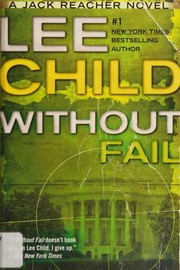
Without Fail
Reacher is asked to test vice presidential security by planning to kill.
2,084-word summary · 9 min read
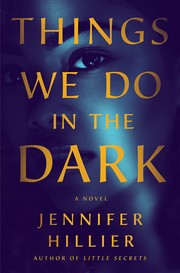
Things We Do in the Dark
A comedian kills her husband, then a podcaster digs up her teen murder past.
2,427-word summary · 11 min read

The Widow
A widow of a suspected criminal faces reporters and police while hiding what her marriage really cost.
2,599-word summary · 12 min read
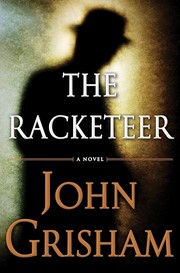
The Racketeer
A jailed lawyer trades a judge murder secret for freedom and revenge.
2,434-word summary · 11 min read
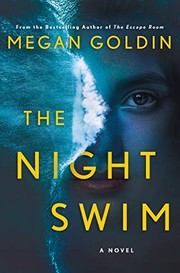
The Night Swim
A true crime podcaster covers a rape trial while probing an old drowning in a small town.
2,260-word summary · 10 min read
The Judge's List
Lacy Stoltz hunts a sitting judge who murders off his list.
2,513-word summary · 11 min read
The Innocent
A government hitman refuses one kill and must protect a teenage girl at the center of a cover-up.
2,403-word summary · 11 min read