
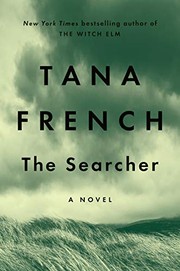
Reading options
What's inside (9 sections)
I picked up The Searcher because a friend told me it was the Tana French book for people who had bounced off Tana French books. I had read In the Woods years earlier and admired it without quite loving it, and then stalled halfway through another one about Dublin detectives talking around each other in interview rooms. She said this one was different. Same writer, same patience with people, but set out in the open, in a damp green corner of western Ireland, with an American retiree trying very hard to mind his own business. That pitch worked on me. French published it in 2020 with Viking, and the edition cited here runs 464 pages. It is the first book about Cal Hooper, though it reads as a complete story on its own, and French later followed it with The Hunter.
What surprised me, right from the first fifty pages, was how quiet it is. Cal Hooper spent twenty five years on the Chicago police force, went through a bruising divorce, and took early retirement to a village called Ardnakelty, where he bought a half ruined house because the photos looked peaceful. He wants to fix the roof. He wants to learn to fish. He wants to sit in the pub and be nobody in particular. French gives him that peace for just long enough that you start to feel protective of it, and then she sends a kid to knock on his door and ruin it. If you want a puzzle that clicks along, fair warning, this is not that book. If you want to watch a decent man talk himself into doing the thing he swore off, it gets its hooks in.
A Chicago cop buys a ruin in Ardnakelty
Cal arrives with money in the bank, a basic toolkit, and no Irish. He is American in the ways that matter out here. Loud by local standards even when he is trying to be quiet. Too direct. Too quick to offer help that nobody asked for. The house he bought needs everything, roof first, and he throws himself at the work the way newly retired people do, as if enough sanding and hauling can stand in for a plan.
His neighbor Mart Lavin adopts him, more or less against both their wills. Mart is an older bachelor farmer, dry and blunt, the kind of man who shows up with tools instead of sympathy. He helps Cal with the roof. He brings fish. He explains, without exactly explaining, how the village works. Who to nod at and who to buy turf from. The subjects to leave alone he mostly lets Cal discover by stepping wrong. Their friendship builds in small practical scenes, mending fences and gutting trout and drinking tea standing up in kitchens, and it became my favorite relationship in the book. No big speeches. Just two lonely men finding a rhythm.
French spends real time on the setting, and I mean real time. Rooks over fields. Rain that comes sideways. The particular silence of a house with no neighbors in shouting distance. Some readers will call this slow. It is slow. But the slowness is doing a job. Cal chose this place because he believed geography could change him, that a man who spent decades around Chicago violence could become someone else if he woke up to mist and sheep instead of sirens. The book keeps testing that belief. Every lovely description of the hills carries a small question underneath. What did he actually leave behind, and did it follow him.
There is also Lena, a local woman Cal finds himself drawn to, and French handles that thread with unusual restraint. No grand romance. Just shopping trips that take a little longer than needed, conversations that hover at the edge of something, two middle aged people circling the idea that they might get one more chance at company. I liked that she lets it stay uncertain for most of the book. Cal is not ready to be known yet, and Lena has her own reasons to be careful.
Trey arrives with a missing brother
Trey Reddy is thirteen, wiry, watchful, and at Cal's house most days before Cal quite understands how it happened. At first the kid just hangs around the work, holding ladders and handing over nails, earning biscuits. Cal, who has no children, is awkward and then charmed. Trey is the kind of kid who asks blunt questions adults dodge. Are you rich. Were you a real cop. Did you ever shoot anyone. Cal answers more honestly than he means to, and somewhere in those afternoons a bond forms that neither of them names.
Then Trey asks for help, and the whole book tilts. Trey's older brother Brendan, nineteen, has been gone for months. The family story, and the village story, is that Brendan took off for work, Dublin maybe, or England, the way young men from places like Ardnakelty do. Money is short in the Reddy house. There are younger kids. A mother stretched thin. A missing son who sends no money and no word gets explained away because the alternative is worse.
Trey does not believe the story. That is the whole engine of the novel, a kid's refusal to accept the comfortable version. Trey has noticed small wrong things, a missing item, a detail about Brendan's plans that never added up, the way certain adults change the subject. Trey has also noticed that Cal used to be police, which in Trey's mind makes him a kind of machine you can feed a problem into. Find my brother. As if it were that simple.
Cal says no, at first, and means it. This is the promise he made to himself. No more cases. No more sticking his nose where it gets people hurt. He has a whole speech ready about how he is retired and how the local guards handle such things and how kids run off all the time. French lets him deliver it, and lets us see it fail in real time, because Trey just keeps looking at him. Anyone who has ever been on the receiving end of a teenager's fixed stare will recognize the scene. Cal agrees to ask a few quiet questions. Just a few. Readers of crime novels will know exactly how that goes.
Questions in a town that answers sideways
This middle stretch is where French is most herself, and where impatient readers may struggle. Cal starts asking around, gently, the way an outsider thinks is gentle. Has anyone heard from Brendan. Did he say where he was headed. Did he owe money. Was he in some kind of trouble. And Ardnakelty responds the way small places do when a stranger starts pulling threads. With smiles that close like doors.
Nobody lies outright, at least not at first. That is what makes it so hard for Cal. People misremember. They were busy that week. They heard something from someone but could not say who. Invitations dry up. Conversations in the pub pause when he walks in and restart a beat too late. Mart warns him, in his sideways fashion, that asking is itself an act with consequences here. In Chicago, Cal had a badge and a partner and backup. Here he has a funny accent and a roof that still leaks. Every question costs him a little of the belonging he moved across an ocean to find.
French is excellent on the mechanics of this. She shows how information moves in a village, through women at shop counters and men leaning on fences, through what gets said at funerals and what does not get said at all. Cal keeps stepping wrong because he reads silence as absence. It takes him a long time to understand that silence here is a statement. People know more than they say, and they say nothing for reasons that feel, to them, like loyalty rather than obstruction.
I found this section gripping in a low flame way, though I will admit the pace tested me around the two hundred page mark. There are scenes of Cal walking fields and fixing skirting boards and turning the same facts over in his head that could have been trimmed by a third. French wants you to live inside his stuck feeling, and she succeeds almost too well. Twice I set the book down and did something else. Twice I picked it back up because Trey's face, as Cal describes it, would not leave me alone.
The pressure builds through money. The Reddys are poor in the grinding, no margin way that shapes every choice. Brendan had no work and no prospects, and someone in the area always has a use for a strong young man with no options. Cal starts to see the shape of an arrangement, older men with standing, cash moving quietly, jobs that are never described directly. He also starts to see why nobody wants it described. In a place with few ways to earn, the person providing one, even a dirty one, collects gratitude along with debts.
What Brendan walked into
I am going to keep this part a little general, because the book works best if you discover the particulars yourself, and because the shape matters more than the details. Brendan did not run off to the city with a plan. He got pulled into a scheme run by people Cal has been sharing a pub with. The kind of scheme that looks, from the outside, almost respectable. Local business, local money, everyone benefiting. The kind that needs, at its edges, young men willing to do things without asking what they add up to.
French lays this out patiently, through Cal's conversations and through Trey's sharper observations. Trey sees things adults miss, partly because adults have trained themselves not to look. There is a painful thread here about how villages raise their poor kids, what gets offered to them, what gets forgiven in them. Brendan was not a saint. French does not write him as one. He was restless and proud and tired of being the boy from the struggling family, and someone offered him a story where he was important. That offer is the oldest trap there is, and Brendan walked in with his eyes half open.
What elevates this above a standard missing person plot is the way French ties Brendan's fate to Cal's history. Cal keeps flashing back to Chicago, to cases where he pushed and someone got hurt, to the specific tiredness that made him retire. He came to Ireland telling himself he was done with other people's damage. Now damage is standing in his kitchen asking for biscuits. The question stops being whether Brendan is alive. It becomes whether Cal can look for him without becoming, again, the man who breaks things by grabbing them.
There is one scene about two thirds through, involving a search of rough ground in bad weather, that I thought was the best thing in the book. No violence. Just Cal and Trey walking, the kid's determination against the man's dread, the hills indifferent to both of them. French writes physical effort well, boots slipping and breath showing, and she uses it to show the gap between them. Trey still believes finding means fixing. Cal already knows that finding is often just the start of losing properly.
A night that settles nothing cleanly
The last hundred pages move faster, though faster for French still means deliberate. Cal finally gets answers, or most of them, and they implicate people he likes. That is the point, and the pain. The men involved are not strangers or monsters. They are neighbors. One of them helped with his house. This is where the western influence French has talked about, the nod to John Ford's film about a loner hunting for a lost young person, stops being decoration and becomes the structure. The outsider rides out. The community watches. Rescue and punishment turn out to be different things.
The confrontation itself happens away from anything official, out where there are no witnesses but the weather, and it goes wrong in the way real confrontations do, fast and stupid and irreversible. I will not spell out who does what. What matters is the position it leaves Cal in. He has knowledge that the law would process one way and the village would process another. Trey is there. Trey is thirteen and has already lost a brother and is watching Cal to learn what a man does when there is no good move.
Cal makes a choice. I found it believable and troubling in equal measure, and I argued about it with my friend for a week. On one reading, he protects a kid the system would chew up, trading formal justice for a living child's future. On another, he does exactly what burned him out in Chicago, deciding he knows better than the rules, becoming judge because no one else will. French refuses to resolve this for you. The book ends not with a trial but with an arrangement, fragile and sad, and with Cal understanding that Ardnakelty now owns a piece of him whether he likes it or not.
Some readers hate this. I understand why. If you need the guilty led away and the innocent comforted, the ending will feel like a dodge. French is aiming at something older and harsher, a frontier logic where keeping the peace and doing justice are not the same job. Whether that lands for you probably depends on how much you buy Cal's exhaustion. I bought it, mostly, because the book earns it scene by scene. But I wished, just once, that French had let someone in the story say plainly what the cost of Cal's mercy might be down the line.
The slow burn problem, and who should read it
Let me be direct about the flaws, because the book's admirers sometimes talk as if patience were a moral virtue. The first hundred pages ask a lot. Cal putters. French describes. If you come fearing nothing happens, the opening will confirm your fear before it starts paying off. A subplot about the house repairs runs longer than its thematic weight supports, and one late pub scene repeats a confrontation the book already staged. Readers who love plot should probably steer toward the Dublin books instead.
There is also a fair question about Cal himself. He is a good man, written with great care, and also a familiar figure, the divorced American loner who finds himself by helping the locals. French complicates this with his self awareness and his mistakes, and Trey is drawn sharply enough to keep the dynamic from going sentimental. Still, at moments Cal's decency feels a little insulated, as if the story loves him too much to let him be truly wrong. The ending pushes back on that, hard, which is why I forgave the softer stretches.
So who is this for. People who like mysteries where place is a character and silence is evidence. People who liked the moral weight of the Dublin books but wanted air and weather with it. Anyone interested in what a crime novel looks like when it borrows the bones of a western and sets it among Irish farms. It is not for readers who need speed, or for anyone who finds ambiguous endings disrespectful. At 464 pages in the Viking edition, it is a commitment, and the middle will test that commitment.
What stayed with me, a week later, was not the solution. It was smaller things. Mart explaining something by not explaining it. Trey holding a ladder steady while Cal stands in a field realizing that belonging somewhere means being implicated somewhere. French writes about decency the way other crime writers write about evil, as something active and costly and never finished. The Searcher asks what one person owes a place that never asked him to come, and it answers the way life does. Partially. Come back later for the rest, it says, and indeed the story continues in The Hunter. I have already requested it.
A note on where this sits in French's work
If you are new to French, this is a kinder entry point than the Dublin Murder Squad books, which demand more tolerance for damaged narrators. You need no prior knowledge. Ardnakelty and its people are introduced from zero, and Cal is an outsider, so his ignorance covers yours. Readers who know the earlier books will notice the same gifts, the interviewing scenes that play like chess, the attention to class and loyalty, applied to a smaller canvas.
If you already know where Cal ends up, in The Hunter and then The Keeper, this first book gains a second layer. Watch how French plants the debts and affections that later volumes collect. Watch Mart. Watch Lena. Watch the way Trey learns to read Cal, because that education runs both ways across the later books. Starting here is the right call. The later books assume you carry this one's ending with you, the way Cal does.
FAQ
Is The Searcher part of a series?
French wrote it as a standalone about Cal Hooper, published in 2020 by Viking. It later gained sequels, The Hunter and The Keeper, so this post lists no series and the book reads complete on its own.
Who are the central characters?
Retired Chicago detective Cal Hooper, thirteen-year-old Trey Reddy and missing older brother Brendan, plus neighbor Mart Lavin and local woman Lena.
Why do reviews call it a western?
French has said the book draws on western fiction and John Ford's film The Searchers: a lone outsider hunts for a lost young person while the whole community watches.
Similar books

The Witch Elm
Toby Hennessy has always been lucky, until a beating leaves his memory full of holes and a skull turns up in the garden of the family home. A stand-alone novel…
2,021-word summary · 9 min read
The Keeper
Retired cop Cal Hooper faces one last killing in his Irish village.
2,129-word summary · 9 min read
The Trespasser
A Dublin Murder Squad detective investigates a staged dinner-party killing and finds a cover-up that reaches into her own department.
2,051-word summary · 9 min read
Broken Harbor
A family is found slaughtered in a half-built Dublin estate where no one broke in, and star detective Scorcher Kennedy must explain the holes in the walls.
2,308-word summary · 10 min read
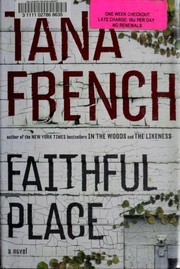
Faithful Place
Undercover Frank Mackey returns to Faithful Place when lost love Rosie suitcase is found.
2,161-word summary · 10 min read

The Likeness
A detective poses as her murdered double and moves in with four graduate students to find the killer.
2,751-word summary · 12 min read
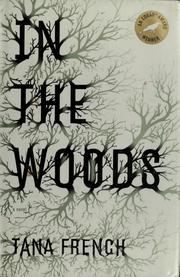
In the Woods
A detective investigates a girl's murder in the woods where his own friends vanished twenty years earlier.
2,773-word summary · 12 min read

What She Knew
Rachel lets her eight-year-old son run ahead in a Bristol park, and the nine-day search turns her into a suspect in the public eye.
2,952-word summary · 13 min read

The Beach House
A young valet is beaten to death at a Hamptons party, and his law-student brother spends a year building a case against the family that covered it up.
2,049-word summary · 9 min read
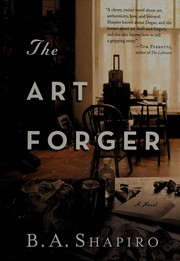
The Art Forger
A disgraced Boston painter agrees to copy a Degas stolen from the Gardner Museum, then begins to suspect the original she is copying is itself a forgery.
2,117-word summary · 9 min read

Six Years
A professor who promised to forget the woman he loved sees her husband's obituary and discovers that the wedding, the marriage, and the woman herself may never…
2,076-word summary · 9 min read

Rules of Prey
Minneapolis detective Lucas Davenport hunts a killer who leaves a new rule at every scene and treats murder as a game of wits.
1,914-word summary · 9 min read

4th of July
Lindsay Boxer shoots two armed teenagers in self-defense, faces a wrongful-death trial, and spends her leave chasing a string of throat-slashing murders in…
2,192-word summary · 10 min read

61 Hours
A bus crash strands Jack Reacher in a snowbound South Dakota town where a drug gang, a corrupt police force, and a single witness are on a collision course.
2,227-word summary · 10 min read

Still Missing
A realtor is abducted at a Vancouver Island open house and held for more than a year. Told through therapy sessions, the novel follows her escape and the hunt…
2,466-word summary · 11 min read

Bad Luck and Trouble
A deposit of $1,030 summons Jack Reacher back to his old army unit, which is being picked off one name at a time.
2,366-word summary · 11 min read

3rd Degree
The third Women's Murder Club novel follows a San Francisco terror cell and a three-day killing schedule, and it costs the club a member.
2,685-word summary · 12 min read

Worth Dying For
Reacher stops for one night in rural Nebraska and finds a family that runs the county, a missing girl and a shipment worth killing for.
2,021-word summary · 9 min read

Say You're Sorry
A widowed prosecutor defends the teenager accused of killing her babysitter, uncovering a small town's secrets and a killer hiding in plain sight.
2,116-word summary · 9 min read

Echo Burning
Reacher hitches a ride with a Texas woman who wants her abusive husband killed, then has to prove she did not murder him when he comes home.
2,209-word summary · 10 min read

Girl, Forgotten
A rookie US marshal guards a judge with a stalker and ends up reopening the 1982 prom-night murder of the judge's pregnant daughter.
2,111-word summary · 9 min read

The Woods
Twenty years after two teenagers were murdered and two vanished at summer camp, prosecutor Paul Copeland identifies a fresh corpse as one of the missing.
2,490-word summary · 11 min read

The Boy from the Woods
Wilde, found feral in a New Jersey forest in 1986, hunts for a missing teenager while a senator's secrets tear a wealthy town apart.
2,270-word summary · 10 min read
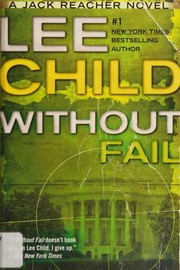
Without Fail
Reacher is asked to test vice presidential security by planning to kill.
2,084-word summary · 9 min read
Things We Do in the Dark
A comedian kills her husband, then a podcaster digs up her teen murder past.
2,427-word summary · 11 min read

The Widow
A widow of a suspected criminal faces reporters and police while hiding what her marriage really cost.
2,599-word summary · 12 min read
The Racketeer
A jailed lawyer trades a judge murder secret for freedom and revenge.
2,434-word summary · 11 min read
The Night Swim
A true crime podcaster covers a rape trial while probing an old drowning in a small town.
2,260-word summary · 10 min read
The Judge's List
Lacy Stoltz hunts a sitting judge who murders off his list.
2,513-word summary · 11 min read
The Innocent
A government hitman refuses one kill and must protect a teenage girl at the center of a cover-up.
2,403-word summary · 11 min read