
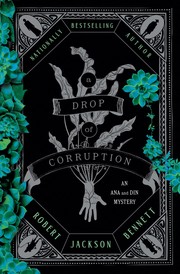
A Drop of Corruption
2,333-word summary 10 min read 480 pages in the book
- First published
- 2025
- Publisher
- Del Rey
- Pages
- 480
- ISBN
- 9780593723821
- Series
- Shadow of the Leviathan (#2)
Reading options
What's inside (10 sections)
- A blindfolded detective and a perfect memory
- A kingdom in the path of an empire
- The tower room and the canal
- The head in the vault and the message about marrow
- The Shroud, augury, and a name behind the killer
- The twins ruse and the poisoned king
- What the critics saw in it
- Where it drags, and who it is for
- Key takeaways
- FAQ
I picked this up because the first book in the pair, The Tainted Cup, had won a Hugo, and I wanted to see whether the follow-up could stand on its own rather than coast on that reputation. It can. Del Rey published this second Shadow of the Leviathan novel on 1 April 2025, and at 480 pages it is a big, dense book that asks you to keep a good deal in your head. What surprised me is how much of it is a detective story first and a fantasy second. Bennett is plainly enjoying the locked-room puzzle, and he trusts the reader to keep up with him.
The setup arrives quickly. Yarrowdale is a kingdom in the path of an annexation by the Khanum Empire, and into this tense borderland are sent two investigators who could not be more different. Around them is a world menaced by leviathans, enormous creatures whose blood has been turned into a raw material for biotechnology. That blood is the source of the book's strained politics and its strangest horrors. Bennett does not stop the story to explain the history. He drops you into a functioning society and lets the details gather as the case unfolds.
A blindfolded detective and a perfect memory
The two leads are Anagosa Dolabra, called Ana, and Dinios Kol, called Din. Ana is a detective who works blindfolded. She walks into crime scenes with her eyes covered and takes them in through sound, smell, touch and the questions she puts to the people around her. It is a striking choice, and Bennett makes it feel like a working method rather than a gimmick. Ana notices what a sighted investigator would skim past, because she has trained herself to build a scene from the parts other people ignore.
Din is her assistant, an "engraver" whose augmentation gives him perfect recall. He is the walking record of the investigation, the man who can bring back exactly what was said or seen. The interesting wrinkle is that Din secretly has dyslexia. Bennett keeps that detail quiet, and it sits awkwardly beside the gift of perfect memory, since the two are not the same thing. A mind that can stamp an image or a sound and return it later is not a mind that finds printed letters easy. That gap gives Din a private struggle that the rest of his colleagues do not understand, and it makes him more than the machinery of the plot.
Their partnership works because each covers a gap in the other. Ana reads a room without seeing it; Din preserves what he is told without judging it. There is a warm, dry humour between them that keeps the gloom of the cases from settling in. Publishers Weekly singled out that humour along with the fair-play clues, and I think that is right. Bennett gives you the pieces. If you pay attention, you can often see where Ana is going before she says it aloud.
A kingdom in the path of an empire
Yarrowdale is not a backdrop so much as a pressure cooker. The Khanum Empire is annexing it, which means every official in the story is working under the shadow of a power that is about to absorb them. Treasury officials, bank vaults and court hierarchies all carry the weight of that transition. People are anxious about their positions, about whose signature counts, about what will survive when the old order is folded into the new one. That anxiety is the soil in which the crime grows.
The leviathans make the setting more than a political thriller. Blood drawn from these creatures can be refined into products that do strange things to the body and to the land itself. The phrase that haunts the case, about sipping from the marrow, points straight at this industry. Bennett uses the biotechnology as a way to ask who gets to control a powerful substance and who gets hurt when it escapes the laboratory. The fantasy elements and the police work are glued together by that question.
I should say that the world building is thick. If you like a book that explains itself as it goes, this one will test you. Names and institutions arrive fast, and Bennett assumes you will sort them out from context. I mostly enjoyed that, though there were a couple of stretches where I had to flip back a few pages to remind myself who Thelenai was and what the Shroud did.
The tower room and the canal
The case begins with Treasury official Sujedo, who is apparently killed in a locked tower room. His remains are later found in a canal, which is the kind of detail that tells you the first story is wrong. A locked room is already a promise to the reader that the impossible has a mundane explanation, and Bennett adds a second puzzle by moving the body. Why is there a corpse in a room that no one could enter, and why does the real corpse turn up somewhere else entirely?
Ana works the scene the way only she can. Blindfolded, she listens to the accounts and tests them against the physical facts. Her conclusion is that an impostor took Sujedo's place. The man everyone thought was Sujedo was someone else wearing his identity, and that impostor used the position to open an imperial bank vault. The murder scene was staged. The locked room was a piece of theatre meant to send the investigation in the wrong direction, and the canal was where the truth ended up.
This is the part of the book that most satisfies as a puzzle. Bennett plays it fair. The clues that let Ana break the impersonation are there for the reader, tucked into the descriptions of the tower and the behaviour of the people who found the body. Kirkus noted the number of red herrings in the book, and there are plenty, but the central trick is not pulled out of thin air. When Ana explains it, I felt the small click of recognition you want from a good mystery.
The head in the vault and the message about marrow
Inside the vault, the impostor leaves a severed head with a message attached: "For those who sip from the marrow." It is a grotesque bit of staging, and it turns a case about an embezzled bank account into something broader. The words point at the trade in leviathan blood and at the people who profit from refining it. Bennett uses the sentence as a thread that connects a local murder to a much larger system of power.
Din and warden Tira Malo follow a separate line of inquiry. They find smugglers who have been fused to the landscape by leviathan blood. This is one of the book's most unsettling images, and it shows what the substance does to people who handle it carelessly or illegally. The smugglers are evidence of what the trade costs, people turned into a warning about it. Malo is a useful counterweight to the two detectives, a local authority with her own stakes in how the case resolves, and her presence keeps the investigation from floating free of the kingdom it takes place in.
The head and the smugglers push Ana toward a suspect with a grudge against the laboratory system. The message is not random rage. It is aimed at people who have built their careers on the marrow, and it is meant to be read by the authorities who protect them. That purpose makes the violence feel intentional rather than decorative.
The Shroud, augury, and a name behind the killer
Ana identifies the killer as Sunus Pyktis, an Apothetikal who had worked at a floating laboratory called the Shroud. The Shroud is the beating heart of the leviathan marrow industry, and Pyktis's supervisors were Thelenai and Ghrelin. Those two had managed to stabilise portable leviathan marrow, a breakthrough that would make the Shroud itself obsolete. That is the motive that gives the case its shape. A discovery that should have been a triumph for the lab threatens everyone whose power depends on the old arrangement.
Pyktis had also undergone an illegal modification called augury. It gave him predictive powers, a way of seeing what would happen before it did, but it drove him mad. This is where the book leans hardest into fantasy, and it is also where the detective story and the speculation meet. A man who can predict the future makes a strange murderer, because the usual questions about planning and opportunity stop working. Bennett handles that without letting the answer become a cop-out. Even with augury in play, Ana still has to work out who the impostor was and what the staged scene was covering up.
I found this section both inventive and a little crowded. The Shroud, the supervisors, the stabilised marrow, the augury and Pyktis's madness all arrive in quick succession. Each idea is interesting on its own, but Bennett sometimes moves from one to the next before I had settled with the first. That is a fair criticism of the book's pacing. It is not a slow novel, but it is a full one, and there is a lot to carry.
The twins ruse and the poisoned king
The stakes climb when the king of Yarrow is poisoned. Now the murder is not only an attack on a treasury official and a bank; it reaches the throne of a kingdom that is being annexed. Bennett uses the poisoning to force everyone into the open, since a dead king in a contested succession is a problem no court can ignore.
The case then turns on a twins ruse. Pyktis was twin to Prince Camak, and one of the pair had been sent to infiltrate the Empire. The corpse at the centre of the case proves to be the true prince, while the man who has been living under the name Pyktis is Camak. Ana exposes the switch, and the court executes Camak. It is a large, slightly wild reveal, and it depends on the reader accepting a lot about identity and substitution that the book has been planting since the tower room. I enjoyed the audacity of it even though I had to reread a page to get the relationships straight.
The aftermath matters as much as the reveal. Din arrests Thelenai, the supervisor whose work on portable marrow set the whole chain in motion. He stays with the Iudex rather than walking away, and Malo joins him. That ending is about institutions rather than heroes. The detectives do not ride off into a sunset; they commit to the slow, unglamorous work of making the law stick in a place where the law is changing hands. It is a quieter resolution than the violence that precedes it, and it fits a book that is more interested in how order is maintained than in how a clever person wins.
What the critics saw in it
The reviews picked up on that same interest in structures. In Locus, Jake Casella Brookins praised what he called a "subdued defense of social infrastructure and guardrails" and an "understated plea for routine justice, for infrastructure, for a regulatory state." That seems exactly right to me. The book keeps returning to the systems that hold a society together: banks, courts, laboratories, the rules that say who may handle a dangerous substance. When those systems fail, people like the fused smugglers pay for it.
Brookins also worried that the setup could lend itself to fascism, since an empire annexing a kingdom and a committee of experts controlling a miraculous substance are not exactly reassuring ingredients. He concluded that the book reframes the problem rather than endorsing it. I think that is a fair reading, though I can see why a reader might come away uneasy. Bennett is interested in the machinery of order, and he does not spend much time reassuring you that the people running it are good. Publishers Weekly liked the humour and the fair-play clues, while Kirkus pointed to the many red herrings, and all three of those responses match what I found on the page.
Where it drags, and who it is for
The main thing that held me back was density. At 480 pages there are long stretches where a new piece of the world arrives just as I was trying to absorb the last one. The Shroud and its politics, the augury, the succession crisis and the canal discovery all compete for attention. I never felt the book was padding, but I did feel it was asking me to do a lot of bookkeeping while the story was moving fast.
There is also a limit to how much the detective plot and the fantasy plot illuminate each other. Ana's blindfolded method is a wonderful idea, and her deduction about the impostor is satisfying, but the augury and the predictive powers push the book toward a different kind of explanation. Those two modes sit side by side more than they merge. A reader who wants a pure puzzle mystery may find the biological and imperial material heavy; a reader who wants a sweeping fantasy may find the bank vault and the locked tower too procedural.
I would hand this to someone who liked The Tainted Cup and wants more of the same partnership and the same strange world. I would be careful with a reader who wants a tidy, self-contained case, because the ending opens outward into the Iudex and the future of Yarrow rather than closing everything down. It is a demanding, inventive book with a real mystery at its centre and a sharp eye for what happens when the people who guard a powerful substance start serving themselves. That is enough to make the 480 pages worth the effort, even on the occasions when the effort itself is the main feeling.
FAQ
Is A Drop of Corruption a standalone novel?
No. It is the second book in the Shadow of the Leviathan series, following The Tainted Cup, which won a Hugo Award in 2024. Del Rey published it on 1 April 2025.
Do I need to read The Tainted Cup first?
It helps. This book continues the partnership of Ana Dolabra and Din Kol and builds on the world of leviathans and blood-based biotechnology established in the first novel.
What is the central mystery?
Treasury official Sujedo is apparently killed in a locked tower room, with his remains later found in a canal. Ana deduces that an impostor used his identity to open an imperial bank vault and staged the murder scene.
Similar books
More from Shadow of the Leviathan first, then related titles.

There Will Be Bodies
Digging out a villa buried by Vesuvius, Flavia Albia finds chained corpses and a death someone tried to hide for ten years.
2,152-word summary · 10 min read

The Hangman's Daughter
In 1659 Bavaria, a hangman ordered to torture an innocent midwife instead investigates the deaths of children marked with a strange tattoo.
2,523-word summary · 11 min read

Jade City
On an island where jade grants power, two clans fight over the mineral, the family name, and the right to decide what loyalty costs.
2,403-word summary · 11 min read
The Unquiet Grave
In Dervla McTiernan's fourth Cormac Reilly novel, a body found in a Galway bog turns out to be a missing school principal, and the case opens into something…
2,253-word summary · 10 min read
The Reversal
Mickey Haller prosecutes a child killer's retrial with ex-wife Maggie and half-brother Harry Bosch on his team.
2,056-word summary · 9 min read
The Hallmarked Man
A body in a silver vault behind Freemasons' Hall sends Strike and Robin into a world of coded letters, secret societies and a girl whose whole identity may be…
3,084-word summary · 14 min read
The Brass Verdict
Mickey Haller takes over a murdered lawyer's caseload and a Hollywood double-murder trial, with Harry Bosch circling the edges.
2,672-word summary · 12 min read
Fractured
In Karin Slaughter's second Will Trent novel, a mother kills the wrong man in an Atlanta mansion, and a GBI agent with a hidden reading difficulty finds a…
2,219-word summary · 10 min read
Eight Perfect Murders
A Boston bookseller's old blog post listing eight perfect fictional murders becomes the blueprint for a real killer, and the narrator knows more than he admits.
2,292-word summary · 10 min read
Skin Game
Marooned on Demonreach and bound to Winter, Harry Dresden joins a crew of old enemies to steal the Holy Grail from Hades' vault.
2,249-word summary · 10 min read
Ptolemy's Gate
Nathaniel and a weakened Bartimaeus face a possession plot in Stroud's dark final Bartimaeus novel.
2,328-word summary · 10 min read
Nightshade
Connelly launches Detective Stilwell on Catalina Island, where a beheaded buffalo and a Jane Doe in the harbor pull a quiet sheriff's post into violence and…
2,272-word summary · 10 min read

The Camel Club
Four Washington misfits witness a murder on Roosevelt Island and stumble into a conspiracy that reaches the Oval Office, with a hostage president and a nuclear…
2,354-word summary · 10 min read

3rd Degree
The third Women's Murder Club novel follows a San Francisco terror cell and a three-day killing schedule, and it costs the club a member.
2,685-word summary · 12 min read

The Hazel Wood
Alice Proserpine has spent her life running from bad luck. When her mother vanishes, she follows a trail of fairy-tale clues to her grandmother's estate and…
2,064-word summary · 9 min read
Ghost Story
Dead but not gone, Harry Dresden returns as a spirit to find his killer, protect the friends he left behind, and learn why the afterlife gave him a second…
1,978-word summary · 9 min read
Cold Days
Back from the dead as the Winter Knight, Harry Dresden must follow Mab's order to kill an immortal and defend Demonreach on Halloween night.
2,361-word summary · 10 min read
Men at Arms
The City Watch gets new recruits and a murder case when the Disc's only handgun turns up in Ankh-Morpork, in the fifteenth Discworld novel.
2,216-word summary · 10 min read
Turn Coat
Morgan asks Harry for sanctuary as the Council calls him traitor.
2,590-word summary · 12 min read

The Club
A luxury island resort for the rich turns deadly when secrets, staff and guests collide.
2,386-word summary · 11 min read
Small Favor
Harry owes Mab a favor and must find Marcone while Denarians hunt a holy girl.
2,741-word summary · 12 min read
The Body in the Library
A strange girl found dead in a library pulls Miss Marple into lies about dance halls and film.
2,017-word summary · 9 min read
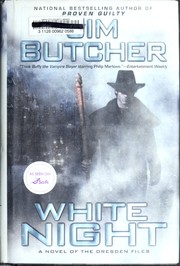
White Night
Wizard Harry Dresden hunts fear-feeding White Court killers preying on Chicago's minor talents, reunites with Elaine Mallory, and faces a coup at Chateau Raith.
2,521-word summary · 11 min read
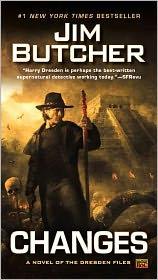
Changes
Harry Dresden learns he has a seven-year-old daughter Maggie, hidden for years. The Red Court seizes her for a bloodline rite, forcing him toward Chichen Itza.
2,855-word summary · 13 min read
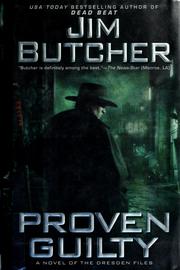
Proven Guilty
Warden Harry defends teen Molly from White Council while fear phages stalk con.
2,068-word summary · 9 min read
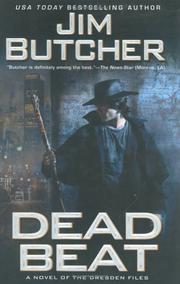
Dead Beat
Wizard Harry Dresden hunts the Word of Kemmler through necromancers to stop a Halloween godmaking rite.
2,883-word summary · 13 min read
The Slow Regard of Silent Things
Auri tends the Underthing through seven days of naming and small rituals.
2,491-word summary · 11 min read

The Bands of Mourning
Wax and Wayne hunt a mythical metalmind while southern visitors and the Set close in.
2,461-word summary · 11 min read

Jar of Hearts
At sixteen Geo helped bury her best friend. Fourteen years later the body is found, she goes to prison, and the killing starts again.
2,389-word summary · 11 min read

Hell Bent
Alex Stern risks Yale and Lethe to pull Darlington from Hell through a hidden gate.
2,994-word summary · 13 min read