
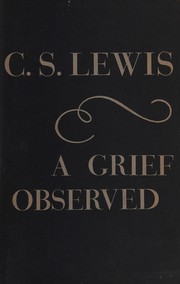
A Grief Observed
3,692-word summary 16 min read 160 pages in the book
- First published
- 1961
- Publisher
- Faber and Faber
- Pages
- 160
- ISBN
- 9780816401376
Reading options
What's inside (9 sections)
I came to this book expecting a slim volume of Christian consolation and found something much stranger. It is tiny, barely more than a long essay, yet it holds a mind coming apart in public and then, very slowly, reassembling itself in a shape it did not expect. A Grief Observed was first published in 1961 by Faber and Faber under the name N. W. Clerk, because Lewis did not want readers tying this raw material to the author of the Narnia books and Mere Christianity. Faber reissued it under his own name in 1964, the year after he died. The H who fills these pages is his wife Joy Davidman, who died of cancer in 1960, only three years after they married. The book later helped inspire the 1985 television movie and the 1993 film Shadowlands, though neither screen version quite captures how untidy the original is.
Four notebooks and a name on the cover
The book is compiled from four notebooks Lewis kept as a private place to pour out his grief. He arranged excerpts from them into four sections, each headed with a Roman numeral, and the result reads less like an argument than like eavesdropping on someone thinking at three in the morning. He calls his wife H throughout, a nod to her seldom used first name, Helen. That small veil matters. He is writing about a real woman he loved, but he is also writing about what remains of her inside his own head, and the distance in the letter H is the distance he cannot cross.
His stepson Douglas Gresham pointed out in a 1994 introduction that the indefinite article in the title is doing real work. This is one man's grief, not the grief, and certainly not a model for everyone else's. Madeleine L'Engle made a similar point in her foreword to the 1989 printing, drawing on her own bereavement to insist that each loss is its own country. When Lewis's agent sent the manuscript to Faber, one of the directors there was T. S. Eliot, who found it intensely moving. I like that detail. A publisher known for difficulty recognised honesty when he saw it.
There is a fair amount of machinery around this little book, then: pseudonyms, reissues, forewords, films. None of it prepares you for the first line.
Grief feels like fear
The opening is famous because it is so plain. No one ever told me that grief felt so like fear, Lewis writes. He is not afraid, but the sensation is the same: fluttering in the stomach, restlessness, yawning, a constant swallowing. At other times it feels like being mildly drunk or concussed, with an invisible blanket between him and the world. He wants people around him yet finds it hard to take in what they say, and even harder to want to. What he dreads are the moments when the house is empty. He asks his visitors to talk to one another rather than to him.
What follows is a catalogue of small humiliations that I suspect most bereaved people recognise and few writers have put so clearly. There is the laziness of grief, where even shaving or opening a letter feels like too much. There is the voice that tells him he was happy before he met H, that he has resources, that people get over these things, followed at once by what he calls a sudden jab of red hot memory that scatters the commonsense like an ant in the mouth of a furnace. There is the bath of self pity, the sticky sweet pleasure he despises even while he is indulging it, because it threatens to replace the real woman with a doll to be cried over.
And then H herself arrives on the page, quick and muscular as a leopard, scenting the first whiff of cant and knocking it over before you know what happened. Lewis says he soon learned not to talk rot to her unless he wanted the pleasure of being exposed and laughed at, and that he was never less silly than as her lover. This is the book at its best. It refuses to let the dead woman become a soft focus symbol. She is sharper than he is.
He also notices that grief has a shadow, the fact that you do not merely suffer but have to keep thinking about the fact that you suffer. He defends his notebook to himself as a drug, since reading is no longer strong enough, and he suspects H would find a hole in the defence. He knows he has become an embarrassment to people at work and at his club, that some funk saying anything and others cannot stop. He thinks the bereaved ought perhaps to be isolated in special settlements like lepers. Happily married couples look at him and calculate which of them will be next.
One passage stayed with me. He had been afraid of revisiting the pub and the wood where they had been happy, so he went at once, like sending a pilot up again after a crash. To his surprise it made no difference. Her absence was no more emphatic there than anywhere else. It was not local at all. If you were forbidden salt, he reasons, you would not miss it more in one dish than another, and her absence was like the sky, spread over everything. Except that there was one place it did come home to him locally, and that was his own body, which had been important as the body of H's lover and now felt like an empty house.
The door slammed in his face
The theological trouble starts early and never fully goes away. When you are happy enough not to need God, Lewis observes, you are welcomed with open arms if you turn to him in gratitude. Go to him when every other help has failed and you find a door slammed in your face, with the sound of bolting and double bolting on the inside, then silence and no lights in the windows. It might be an empty house. Was it ever inhabited? He tries talking about this with a friend he calls C, who reminds him that Christ himself cried out about being forsaken. Lewis's answer is bleakly funny: does that make it easier to understand?
He is careful about the nature of the danger. He does not think he is at risk of ceasing to believe in God. The real danger is coming to believe such dreadful things about him. The conclusion he dreads is not that there is no God, but that this is what God is really like. That distinction runs through the whole book and is the reason it disturbed so many of Lewis's admirers. Some could not accept that the great apologist for Christianity could sit this close to despair. A few decided the book must be fiction. Others thought he had never written more wisely.
Readers usually set this book beside The Problem of Pain, which Lewis wrote about twenty years earlier and in which he laid out the theory of suffering. This is that theory tried against an anguish he could no longer hold at a distance, and the difference between the two books is the measure of what he had been saying in the abstract.
His answer to the cheap consolations is scathing. Talk to him about the truth of religion and he will listen, and talk about its duties and he will listen submissively, but do not come with the consolations of religion, or he will suspect you do not understand. He has no time for bad hymns and lithographs about family reunions on the further shore, with cigars in Heaven and the happy past restored. When C quotes Paul about not mourning as those without hope, Lewis points out that such words were addressed to people who love God more than the dead and the dead more than themselves. A mother mourning a child may take comfort in the child's end, but the specifically maternal happiness is written off forever. She will never bath him or plan for his future or see her grandchild.
By the second section he is asking whether there is any reason, apart from desperate wishing, to believe God is good by any standard we can conceive. He tries out the idea of a bad God and rejects it as too anthropomorphic, more childish than the old king with a beard, because a being like the man he calls S C, who sat next to him at dinner describing what he had done to the cats that afternoon, could never have invented love or laughter or daffodils or a frosty sunset. He could not make a joke, or a bow, or an apology, or a friend. Lewis also picks apart the Calvinist escape hatch in which everything God does is good by definition, noting that this sponges God off the slate and makes the word good as empty as abracadabra.
What chokes every prayer, he writes, is the memory of the prayers he and H offered and the false hopes they were given, encouraged by X rays and strange remissions and one temporary recovery that might have ranked as a miracle. Step by step they were led up the garden path. He breaks off after that paragraph to say he wrote it last night, that it was a yell rather than a thought, and to try again more calmly. That self interruption is one of the most honest things in the book.
The memory that keeps inventing her
Running alongside the argument with God is a quieter anxiety about H herself. rereading his notes, Lewis is appalled to find that her point of view has dropped out and that he has been treating her death chiefly as an injury to himself. He remembers her crying out that there was so much to live for, a woman whose appetite for sense and intellect and spirit was fresh and unspoiled, and he thinks of Beethoven going deaf, which by our standards is the monkey trick of a spiteful imbecile.
He then notices something colder. Less than a month after her death he can feel the slow, insidious process beginning, in which the H he thinks of becomes more and more an imaginary woman. He will put in nothing fictitious, he hopes, but the selection and grouping are his own, and the reality is no longer there to check him. He describes a man he had not seen for ten years, whom he believed he remembered perfectly, and how five minutes with the real person shattered the image, not because the man had changed but because all the little details had faded from the picture and came rushing back on recognition. Flakes of himself, he writes, falling like slow snowflakes, are settling on the image of H until the real shape is hidden.
This leads to one of the sharpest passages in the book. He remembers a burly labourer coming into the churchyard with a hoe and a watering pot, calling to his friends that he was going to visit Mum, meaning he was going to tidy her grave. Lewis had found this mode of sentiment hateful. Now he wonders whether the six by three foot flower bed is not in one way better than an image in the mind, because the grave is obstinate and intractable reality while the image does whatever you want, smiling or frowning or being tender as your mood demands. It is a puppet whose strings you hold. To fall in love with your memory of her, he says, would be a sort of incest.
He is just as hard on his own faith. You never know how much you believe something until the truth of it becomes a matter of life and death. It is easy to say a rope is sound while you use it to tie a box, but different if you have to hang by it over a precipice. He tests his confidence in a friend called B R against a real secret and discovers there was no such thing. Faith that could take suffering into account in the abstract turns out to have been imagination playing with counters labelled Illness, Pain, Death and Loneliness. When his own sorrow comes, the house collapses, and he concludes it must have been a house of cards.
The house of cards and the Eternal Vet
The third section is where the book turns, though not with any dramatic conversion. He tries thinking instead of feeling and admits that H's death has introduced no new factor into the problem of the universe. He knew such things happened daily and had warned himself not to count on worldly happiness. The difference is that it happened to him, in reality rather than imagination. He borrows from bridge players the idea that there must be money on the game or people will not take it seriously, and decides his bid has only now been made with every penny at stake. He has to be knocked silly before he comes to his senses. Only torture brings out the truth.
Having said that, he immediately suspects the mood of the last few nights was not thought at all but hatred, a kind of Billingsgate, telling God what he thought of him with the pleasure of hitting back. He compares himself to a cat growling and spitting at the operator, which tells you nothing about whether the man is a vet or a vivisector. That image proves useful. He can believe God is a vet when he thinks of his own suffering, though it is harder when he thinks of hers, and he notes that grief is like a bomber circling and dropping its bombs each time it passes overhead, whereas physical pain is a steady barrage with no let up. He rebukes himself for wanting H back as an ingredient in restoring his own past, and asks whether Lazarus, called back after death, did not get a rawer deal than Stephen, the first martyr.
The admissions accumulate. His love for H was much the same quality as his faith, a good deal of card castle in both. What he thought was a house of cards he now sees may need knocking down again and again, and he cannot know whether a restoration of faith is real until the next blow comes. He refuses to trust the horrible thoughts simply because they were horrible, pointing out that there are fear fulfilment dreams as well as wish fulfilment ones, and that he took a certain pleasure in the Cosmic Sadist idea, which makes it poor evidence.
By the fourth section he has found a phrase for the whole experience. He had thought he could describe a state, make a map of sorrow. Sorrow turns out to be a process needing not a map but a history. Grief is like a long winding valley where any bend may reveal a new view, though sometimes the view is the same country you thought you had left miles behind, which makes you wonder if the valley is a circular trench. It is not, he decides. There are partial recurrences, but the sequence does not repeat.
He reads his own notes and sees they were about himself, then H, then God, exactly the order they should not have been. He resolves to do more praising, because praise is the mode of love that always contains some joy. H was like a sword, he wrote earlier, but that is inadequate. He should also have said she was like a garden, a nest of gardens with wall within wall and hedge within hedge, more secret and more fertile the further you entered. From the garden to the Gardener, from the sword to the Smith. It is a lovely correction, and a good example of how this book thinks by revising itself.
The famous closing paragraphs hold two convictions in tension rather than resolving them. He will not, if he can help it, shin up either the feathery or the prickly tree. On one side is the Eternal Vet, more inexorable and more painful than our severest imaginings can forebode. On the other is the old line from Julian of Norwich that all shall be well, and all shall be well, and all manner of thing shall be well. Near the end he describes an experience he will not call proof: a sound in total darkness, like a chuckle of laughter or waves half a mile away, proving either that he is not in a cellar or that a friend is close beside him. Later there is the impression of H's mind, not her soul, facing his own with the brisk, cheerful, business-like attention of a telephone call about a practical arrangement. It is icy and completely intimate at once, and he ends by recalling her words to the chaplain, that she was at peace with God, and a line of Dante about returning to the eternal fountain.
Where the book tries patience
I should be honest about the parts that did not work for me. The form itself is a barrier for some readers. These are jottings, not a treatise, and Lewis circles back to the same discoveries again and again: the wheel of grief returns, the memory keeps making a puppet, the house of cards falls again. He even admits near the end that everything repeats and wonders whether he is going in circles or on a spiral, and if on a spiral, which way. That honesty does not make the repetition less tiring. The book is short, but it can feel longer than it is.
There is also the matter of who is speaking. This is an Oxford don, a famous Christian writer, grieving in a house with help around him and a job whose machine runs on much as usual. When he says the bereaved ought to be isolated like lepers, or remarks on the embarrassment of the boys, there is a dry, patrician amusement that can grate. He knows this about himself and turns it into self criticism, which saves a lot of it, but not all. His complaint that his body is important only because it was the body of H's lover arrives in the same breath as a wry list of cancer taking his mother, his father and his wife, and I found myself admiring the sentence while resisting the sensibility behind it.
The philosophy can feel like a man arguing with himself in a room with no windows. God is a vet or a vivisector, the dead are pure intellects or they are nothing, images are links or snares, questions are answered with a silent gaze that waves the question away. Lewis is candid that half our great theological problems may be nonsense questions, as answerable as how many hours there are in a mile or whether yellow is square or round. That is genuinely liberating. It also means the reader is denied a neat position to carry away. The two great commandments are what is left, and a warning that any idea of his own will be shattered again as soon as he builds it.
A further caution. This is not a book to hand casually to someone in the first weeks of a loss. It is too raw, too full of anger at God, and too willing to say that passionate grief cuts us off from the dead rather than joining us to them. Lewis himself notes that at the times he feels least sorrow, such as getting into his morning bath, H rushes on his mind in her full reality. That is a hard thing to read when you are still weeping, and it is meant to be.
What stays with you
What I kept returning to after closing the book was not the argument about theodicy but the stubborn refusal to let H become an idea. Again and again he catches himself converting her into a mood, a memory, a comfort, a djinn who will appear when he summons her, and each time he drags her back into being a person with resistance and edges. Not my idea of God, but God. Not my idea of H, but H. He extends the same rule to the living, noting that we talk to the précis we have made of a person rather than to the person, who always has a card in his hand we did not know about.
That discipline is the real achievement here, and it is achieved without any grand conclusion. When he says he has stopped bothering about whether his memory of her is false, and that since then she seems to meet him everywhere, not as an apparition or a voice but as an unobtrusive and massive sense that she is a fact to be taken into account, he is describing something quieter than comfort. He calls it obstinately real. It is the closest the book comes to a resting place, and he immediately undercuts it by asking whether he is only sidling back to God because God is the road to H, then reminding himself that God cannot be used as a road.
I would give this to a reader who wants to see what honest doubt looks like from inside a life of faith, and to anyone who suspects that the tidy versions of grief they have been offered leave something out. I would be careful with a reader looking for reassurance. There is no ladder here, no five stages, no promise that the pain has a point. There is a man in a house he sometimes dreads being empty, writing in his last notebook because he resolved not to buy another, trying to get the woman he loved right on the page before his own mind edits her into something easier to bear. That is a small thing to ask of a book, and it is nearly everything this one does.
FAQ
Why was A Grief Observed first published under the name N. W. Clerk?
Lewis used the pseudonym for the 1961 Faber and Faber edition because he did not want readers connecting this private grief writing with his famous Christian apologetics. Faber reissued it under his own name in 1964, the year after his death.
Is the book a diary, a novel, or a work of theology?
It grew from four private notebooks that Lewis arranged into four Roman numbered sections, with his wife called only H. He uses the material to test his faith, but the result reads more like a record of grief than a formal argument.
How does it relate to The Problem of Pain?
The Problem of Pain, written about twenty years earlier, set out the theory of suffering. A Grief Observed is that theory tried against an anguish Lewis could no longer hold at a distance.
Similar books
The Pursuit of God: The Human Thirst for the Divine
Ten short chapters on wanting God rather than merely knowing about him, from a pastor who wrote the book in a single night on a train.
2,014-word summary · 9 min read
Have a Little Faith: a True Story
Asked to deliver his childhood rabbi's eulogy, Albom interviews the man and a Detroit pastor serving the homeless, and finds two very different models of faith.
2,339-word summary · 10 min read
Departure(s)
Barnes's fifteenth and final novel blends fiction, memoir and essay as a grieving north London writer tests what memory can be trusted to deliver. Short,…
2,234-word summary · 10 min read
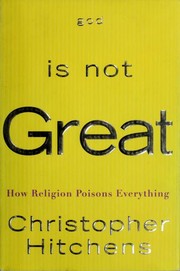
God Is Not Great
Hitchens argues religion poisons life across history and texts.
2,545-word summary · 11 min read
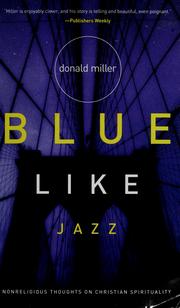
Blue Like Jazz
Donald Miller leaves youth group faith in Texas for Portland and Reed College, where a confession booth and shared house life reshape his view of Christian…
2,366-word summary · 11 min read
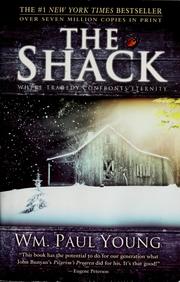
The Shack
After his daughter's murder, Mack gets a note to return to the shack and spends a weekend questioning God.
2,068-word summary · 9 min read
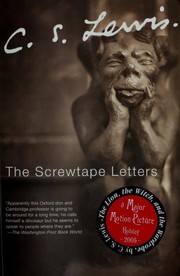
The Screwtape Letters
A senior devil advises his nephew Wormwood on tempting an ordinary Englishman away from faith and attention.
2,489-word summary · 11 min read
How to Change Your Mind
Pollan blends the history of psychedelic research, his own guided trips, and current neuroscience to ask what these drugs reveal about consciousness.
2,466-word summary · 11 min read
Wild at Heart: Discovering the Secret of a Man's Soul
Why do men feel bored and tame? John Eldredge argues a man's heart is wild by design, and that recovering it means facing the wound and the question of whether…
2,289-word summary · 10 min read

Taste: My Life Through Food
Stanley Tucci's memoir traces his life through food, from a Calabrian family kitchen in Katonah to film sets, marriage and a cancer fight that cost him his…
2,503-word summary · 11 min read
My Utmost for His Highest
A posthumous collection of 366 daily devotional readings assembled from Oswald Chambers's sermons, built around surrender, discipleship and the gap between…
2,015-word summary · 9 min read
Memnoch the Devil
In the fifth Vampire Chronicles novel, Lestat is taken by the Devil on a tour of Heaven and Hell and asked to serve as God's adversary.
2,619-word summary · 12 min read

If Cats Disappeared from the World
A dying postman takes the Devil's deal: each extra day costs one thing erased from the world. As phones, films and clocks vanish, he must decide whether even…
2,354-word summary · 10 min read
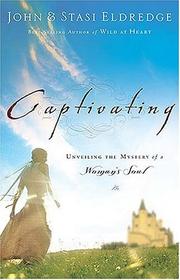
Captivating: Unveiling the Mystery of a Woman's Soul
A Christian companion to Wild at Heart in which John and Stasi Eldredge argue that women carry three God-given desires that wounds can bury. Warm, scriptural…
2,722-word summary · 12 min read
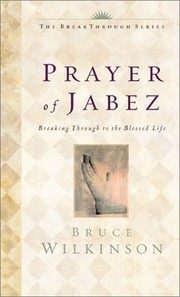
The Prayer of Jabez: Breaking Through to the Blessed Life
A tiny 2000 devotional built on two verses in Chronicles became a publishing phenomenon and a lightning rod for criticism.
2,296-word summary · 10 min read
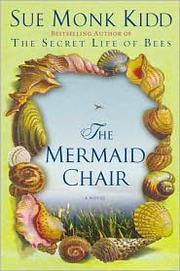
The Mermaid Chair
Jessie Sullivan returns to her childhood home on Egret Island to care for her agoraphobic mother, then finds her marriage, her faith, and a monk's vow thrown…
2,237-word summary · 10 min read
The Book of Mormon: Another Testament of Jesus Christ
A religious scripture first published in 1830, presented as a record of ancient peoples in the Americas and a second witness to Jesus Christ in the Latter Day…
2,390-word summary · 11 min read
The Autobiography of Benjamin Franklin
Franklin writes his own life in four parts, from a Boston boyhood and a runaway apprenticeship to printing, science, and public service, while keeping careful…
2,259-word summary · 10 min read
Preacher, Volume 1: Gone to Texas
A faithless Texas preacher bonded with Genesis sets out to find God, joined by Tulip O'Hare and an Irish vampire named Cassidy.
2,414-word summary · 11 min read
Same Kind of Different as Me
An art dealer and a formerly homeless sharecropper tell the story of the friendship that began at a Fort Worth mission and the woman who insisted on it.
2,023-word summary · 9 min read

Infidel
Ayaan Hirsi Ali's memoir of a Somali childhood, a forced marriage, a Dutch asylum claim, and the political fight that followed the murder of Theo van Gogh.
2,041-word summary · 9 min read
Love Does
A lawyer and activist tells stories of saying yes, showing up, and loving people through ordinary, often ridiculous actions.
2,411-word summary · 11 min read

The Chosen
A shattered pair of glasses in a 1944 Brooklyn softball game starts a friendship between a Hasidic boy and his Orthodox neighbor, and their fathers pull them…
2,443-word summary · 11 min read

The Magnolia Story
How Chip and Joanna Gaines met, closed their first shop, nearly lost everything in a housing development, and built Fixer Upper.
2,994-word summary · 13 min read
Smoke Gets in Your Eyes: And Other Lessons from the Crematory
A young medieval history graduate takes a job at an Oakland crematory and becomes a mortician, confronting the physical reality of death and the funeral…
2,003-word summary · 9 min read
90 Minutes in Heaven: A True Story of Death and Life
A pastor declared dead at a 1989 crash scene describes ninety minutes he says he spent in Heaven, then thirteen months of surgeries, depression, and recovery.
2,246-word summary · 10 min read
By the River Piedra I Sat Down and Wept
Pilar, 29, meets her childhood friend again in Madrid and finds a rumored miracle worker. One winter week through the Pyrenees to the river Piedra, and the…
2,845-word summary · 13 min read
A Canticle for Leibowitz
After nuclear war, monks save books across centuries while the world rebuilds and falls again.
2,381-word summary · 11 min read
Blankets
Craig Thompson recalls sharing a bed with brother Phil, falling for Raina at church camp, losing his faith, and keeping art through Michigan winters.
2,586-word summary · 11 min read
The Book of Longings
In first-century Galilee, Ana marries Jesus of Nazareth and fights to write women's stories in a world set against her voice.
2,368-word summary · 11 min read