
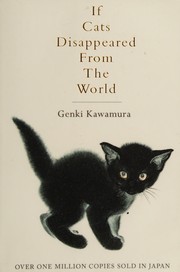
If Cats Disappeared from the World
2,354-word summary 10 min read 208 pages in the book
- First published
- 2012
- Publisher
- Picador
- Pages
- 208
- ISBN
- 9781509889174
- Original title
- 世界から猫が消えたなら (Sekai kara Neko ga Kieta nara)
Reading options
What's inside (9 sections)
I picked this one up on the strength of the title alone. It sounded like the sort of question a person asks at three in the morning, and I wanted to see what a novelist could do with it. If Cats Disappeared from the World is the first novel by the Japanese writer and film producer Genki Kawamura. It came out in Japan in 2012 as 世界から猫が消えたなら (Sekai kara Neko ga Kieta nara), and reached English readers in 2018 in a translation by Eric Selland, a slender Picador paperback of 208 pages. It sold a million copies in Japan and was made into a film in 2016, which tells you something about how well the premise travels. What I found inside was quieter and stranger than the packaging suggests: a short book about a man who has to price the things he loves, one day at a time.
A postman, a diagnosis and a man in a Hawaiian shirt
The narrator never gives us his name. He is thirty, he works as a postman, he is something of a film buff, and he lives alone with a cat called Cabbage. The cat came from his mother, who died of cancer four years earlier. That is the whole of his household.
Then he catches a cold that will not shift. Fever, headaches, two weeks of feeling rotten before he finally sees a doctor. The diagnosis is a brain tumour, advanced, with very little time left. His reaction is oddly flat. He thinks about a loyalty card for a spa that is nearly full, and about the detergent he has stocked up on. Kawamura gets that blunt, unheroic thinking exactly right. Nobody delivers a noble speech on hearing such news. The mind grabs hold of small, stupid things because the big one is too large to hold.
He walks home in a daze, faints in his doorway, and wakes on the floor with Cabbage beside him and a man sitting in the room who looks exactly like him, except for a loud Hawaiian shirt. The stranger says he is the devil. The narrator, stuck for anything better, calls him Aloha. Aloha is cheerful, almost breezy, and the postman finds that cheerfulness deeply irritating. It is one of the best choices in the book. A grim reaper in a black robe would have been easy. A grinning double in a floral shirt who talks like a tour guide is much harder to dismiss.
The offer is simple. Each time the devil erases one kind of thing from the world, as if it had never existed, the postman gets one more day of life. Aloha says the arrangement goes back to a bet with God, and that the postman is prospect number 108. I never quite worked out whether we are meant to take that cosmology seriously, and I do not think the book much cares. What matters is the mechanic: a day, for a thing. The postman agrees, because what else is he going to do.
He wants to choose what goes first. Aloha picks chocolate, takes a bite of a cookie, weeps at how good it tastes, and withdraws the suggestion. Then the postman's boss rings to ask where he has been, and the devil fastens on the mobile phone. One last call is allowed before phones vanish. The postman scrolls through his contacts and discovers that a man with hundreds of numbers has nobody he can bear to ring. Then one number comes back to him from memory: the landline of the woman he loved, a number he never saved because he had dialled it so often it etched itself into him. Her line still works. They agree to meet the next day.
The phone, and one last call
Phones are gone when he wakes. The world has quietly rearranged itself around their absence, and the book is at its best in these small adjustments, in a hand reaching for a pocket that now holds nothing.
The woman he meets is his first love. Their relationship lasted three years and ended seven years ago, on a trip to Argentina. They drifted apart after a friend of theirs died. What sticks with me is the detail of how they used to talk: for most of their time together she had no phone of her own, and later only a landline, so they spoke endlessly by voice, and he was far more talkative on the phone than he ever was face to face. Kawamura understands that a relationship can be held together by one particular medium, and that losing the medium means losing a way of being with someone.
She works at a cinema, and she invites him to a private screening the following day, partly because they both love films and partly because he is going to die. It is a gentle, awkward gesture, and it sets up the next bargain. They have not seen each other in seven years, and the conversation carries the careful politeness of two people who once knew exactly what to say to each other and now have to feel their way.
Movies, and a blank white screen
Aloha announces that movies will be the next thing to go. The postman wants to choose the last film himself, so he visits the video rental shop where his old school friend Tatsuya has worked for years. Tatsuya knows films the way some people know the weather. He is the sort of person who cannot meet your eye but can talk for an hour about a director. The postman tells him he is dying and asks for help picking something. Tatsuya cries.
They settle on Charlie Chaplin's Limelight. At the cinema, his ex-girlfriend opens the DVD case and finds it empty. There is no film to show. He decides to sit and watch the blank white screen anyway. What comes to him is a memory of seeing E.T. at three years old, wedged between his parents in the dark, his father's hand closing over his during the part where the bicycle flies. He understands, watching nothing, that he cannot fly and that what he had is gone for good. Afterwards he collapses outside the theatre.
I want to say something about how this is handled, because it could so easily have been mawkish. Kawamura keeps the sentiment on a short leash. The empty case, the blank screen, the half remembered childhood screening: these are physical things, and the feeling is allowed to come out of them rather than out of the narrator announcing what he feels. It is the most confident passage in the book.
Clocks, a talking cat and a photograph from a hot spring
He comes round at home. Aloha carried him back, and as a bonus has given Cabbage the power of speech. The cat's voice is formal and old fashioned, modelled on the period dramas the postman's mother used to watch. It is a lovely idea and it mostly works. Cabbage asks the names of flowers on their walks, the same questions the postman once asked his mother. He naps on a park bench. He listens more than he talks.
The next thing to go is clocks. The postman agrees with only a twinge of guilt, because his estranged father repairs watches and clocks for a living. With no way to tell the time, he feels an unexpected lightness. Hours stop being units to be spent. He and Cabbage wander the neighbourhood without checking the clock.
Then he mentions his mother, and Cabbage has no memory of her at all. The cat was hers, lived with her, slept on her lap, and now that she has been erased from the cat's past, none of it is there. The postman is devastated. He drags out the photo albums and starts telling Cabbage their shared history picture by picture, trying to put her back.
One photograph stops them. It shows a family trip to a hot spring four years earlier, not long before his mother died. She had suddenly insisted on the outing. The postman's booking at a lovely inn fell through, and his father, a man of few words who spent his life bent over clocks, drove from inn to inn until he found a shabby, welcoming place. At dawn they wheeled his mother down to the beach, and the innkeeper took a picture of the two men flanking her wheelchair, both forcing awkward smiles, with Cabbage yawning on her lap.
Looking at it now, the postman finally sees what the trip was for. His mother planned it to push father and son back together before she left them. Cabbage says he remembers nothing of her, only that he was happy. That photograph does more work than the entire philosophical framework of the book. It is a plain family snapshot, and it carries the argument better than any speech could.
The day the cats were due to disappear
Aloha names the next item on the list: cats. The postman wakes in a panic because Cabbage is not sleeping beside him. He runs into the street towards meows in the distance, crying, and relives his mother's last hours. His father was absent then, obsessively repairing a broken wristwatch, the first gift he ever gave his wife. The postman arrived half an hour after she died, watch in hand, and cursed him. They have not spoken since.
He finds Cabbage alive at the cinema, safe with the woman he once loved. She hands him a letter his mother left behind. It is not a list of regrets or instructions for the future. It is headed with ten reasons his mother found him wonderful: his dimples, his kindness, his knack for solving problems. At the end she asks him to make up with his father. He reads it, holds the cat, and decides he will not let cats be erased. He will take his death instead.
Aloha accepts the refusal. There is a hint that God has won their bet after all, and the devil explains that his appearance belongs to the postman: he is the version of himself the postman might have become if he had kept running from everyone. The two part on good terms. I liked that the book resists turning this into a victory over evil. The devil is not defeated. He is acknowledged, and then more or less thanked.
A letter he delivers by hand
The whole book turns out to be a letter to the father he has not spoken to in four years. Each chapter covers one day of that strange week, with memories breaking in around the edges. That framing explains the slightly formal tone, and it pays off at the end.
Before he dies, the postman clears out his flat and finds a box of childhood stamps. They were gifts from his father, and handling them as a boy was how he first felt close to a man he found hard to read. That discovery is enough. He writes the letter, addresses it, chooses a stamp showing a yawning cat from his collection, and walks to the red postbox. He cannot bring himself to drop it in.
Instead he goes home, puts on his postman's uniform, the charcoal jacket and striped tie that make him look so much like his father, lifts Cabbage into the front basket of his bicycle, and pedals downhill towards the bay and the next town, where his father still runs the repair shop. The wind clears, the sun comes out, Cabbage enjoys the air on his face, and the postman rides faster and faster with tears and sweat on his face. The letter stays in his bag. He is going to hand it over himself.
It is a final scene built entirely out of ordinary things. I will admit I felt myself welling up, and then felt faintly annoyed with myself for it, which is probably the right response to a book this controlled.
What the book does well, and where it strains
Kawamura's great trick is to make absence concrete. Taking away phones, films and clocks is a clever way of showing how much of a life is held in objects and routines. Grief works like that too. You do not miss a person in the abstract. You miss the way they took their tea, or the sound of their voice on a landline. When Cabbage loses his memories of the mother, the loss lands because it is so specific.
The faults are real. The devil's backstory, the bet with God and the tally of prospects, feels like decoration borrowed from a much larger fantasy than this story needs. The book is short, and at times the ideas arrive pre-packaged, with the narrator stopping to explain what a vanished thing meant before the scene has had time to say it. A few of the film memories are more knowing than felt. And the ending is awfully neat. A man who has spent the book learning to accept death gets a final ride into the sunlight with his cat, and the grief is smoothed over rather too comfortably.
There is also a limit to how much the premise can carry. Once you have grasped that everyday objects are precious, the remaining days keep making the same point in different costumes. The middle sags a little. I found myself skimming ahead, then slowing down again whenever Cabbage spoke in his aged, courtly voice.
Still, I would hand this to a reader who likes their speculative fiction small and intimate, and to anyone who has ever put off a difficult phone call to a parent. It is a gentle book, and there is more to it than its small size suggests. What stays with me is not the bargain but the things left sitting in the room afterward: an old stamp collection, a letter a man could not bring himself to post, and a cat who is happy even though he no longer remembers the woman who loved him.
FAQ
What is the deal the postman makes with the devil?
The devil, a cheerful double of the postman in a Hawaiian shirt nicknamed Aloha, removes one category of thing from the world in exchange for one extra day of life. He gets one last use of each thing before it goes.
Who is Cabbage and why does the cat matter so much?
Cabbage is the cat the postman inherited from his mother, who died of cancer four years earlier. When Aloha gives the cat the power of speech and then proposes erasing cats, the postman refuses the deal and accepts his own death.
Is this a grim book about dying?
It is gentle rather than grim, using a fantastical bargain to look at regret, grief and a strained relationship with an estranged father. The final scene leans toward hope and reconciliation, which some readers may find too tidy.
Similar books
The Midnight Train
An eighty-one-year-old bookshop magnate dies and wakes young again aboard a train that carries him back through the moments that mattered most.
2,299-word summary · 10 min read

Water Moon
A woman inherits a Tokyo pawnshop that trades in regrets, finds her father gone and one glowing bird freed, and crosses into another world to learn what her…
2,087-word summary · 9 min read
A Tale for the Time Being
A diary by bullied Tokyo teen Nao washes up in Canada, pulling novelist Ruth into her family past.
2,148-word summary · 10 min read
Hard-Boiled Wonderland and the End of the World
A Tokyo encoder who rents out his subconscious and a newcomer in a walled Town turn out to share one fate about memory.
2,406-word summary · 11 min read
Kafka on the Shore
Fifteen year old Kafka Tamura flees Tokyo while old Nakata, who talks to cats, drifts toward the same library town in Shikoku in parallel.
2,496-word summary · 11 min read
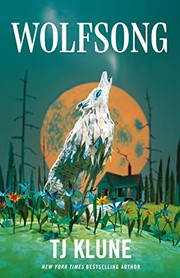
Wolfsong
Ox Matheson grows up believing he is worth nothing. Then the Bennett family moves in next door, werewolves with a secret, and a boy named Joe begins to howl…
2,823-word summary · 13 min read

The Travelling Cat Chronicles
A stray cat with a crooked tail and the man who rescued him drive across Japan to visit old friends, each stop hiding part of a secret neither can say aloud.
2,865-word summary · 13 min read
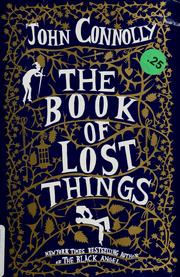
The Book of Lost Things
A twelve-year-old boy grieving his mother's death slips through a crack in the garden wall into Elsewhere, where fairy tales and a fading king guard the secret…
2,441-word summary · 11 min read
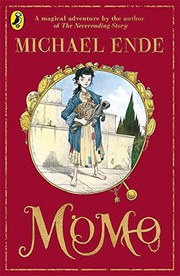
Momo
A girl with a gift for listening takes on grey-clad thieves who persuade a city to save its time, in Michael Ende's 1973 fable about efficiency and attention.
2,275-word summary · 10 min read
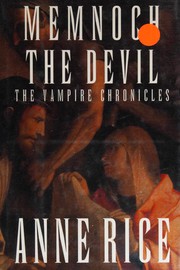
Memnoch the Devil
In the fifth Vampire Chronicles novel, Lestat is taken by the Devil on a tour of Heaven and Hell and asked to serve as God's adversary.
2,619-word summary · 12 min read

Lover Reborn
A grieving vampire warrior learns that the only way to free his dead mate from a cold afterlife is to love another, as a rival clan challenges the Blind King's…
2,768-word summary · 12 min read
Katabasis
Kuang sends a Cambridge doctoral magician into the underworld to fetch the supervisor she killed, all for a letter of recommendation. Academic satire turns…
2,374-word summary · 11 min read

Ikigai: The Japanese Secret to a Long and Happy Life
Two Spanish writers explain the Japanese idea of a reason for being, drawing on Okinawan centenarians, flow, friendship and the acceptance of imperfection.
2,030-word summary · 9 min read

Brida
A young Irishwoman convinced she has a spiritual Gift seeks out a forest Magus and a Dublin witch, and learns that her gift is to bridge the visible and…
2,012-word summary · 9 min read
A Grief Observed
In four raw notebooks written after his wife Joy died, C. S. Lewis records grief as fear, anger and doubt, then slowly learns to live without easy consolation.
3,692-word summary · 16 min read
Pyramids
A prince raised by assassins comes home to a desert kingdom where the high priest rules and a spitefully huge pyramid starts bending time.
2,441-word summary · 11 min read

Invisible Cities
Marco Polo describes fifty-five impossible cities to Kublai Khan, and each one turns out to be a way of talking about memory, desire and the place we call home.
2,465-word summary · 11 min read
Departure(s)
Barnes's fifteenth and final novel blends fiction, memoir and essay as a grieving north London writer tests what memory can be trusted to deliver. Short,…
2,234-word summary · 10 min read

Dance Dance Dance
A divorced Tokyo writer returns to a Sapporo hotel that has been rebuilt, then follows a woman who may be a ghost and a teenage girl through a mystery about…
2,407-word summary · 11 min read
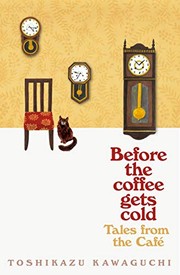
Tales from the Café
Four more visitors to a Tokyo café travel through time under strict rules, each hoping to say the thing they could not say before.
2,242-word summary · 10 min read

Once Upon a River
A wounded man stumbles into a riverside inn carrying what appears to be a drowned child who is not quite dead, and the story braids the guesses of everyone who…
2,173-word summary · 10 min read

The Tiger's Wife
A young doctor in a war-scarred Balkan country chases the stories her grandfather left behind, including a deathless man and a deaf girl who loved an escaped…
2,232-word summary · 10 min read

The Memory Police
On an unnamed island, ordinary things keep vanishing from memory, and a novelist hides her editor from the police who make sure the vanished stay forgotten.
2,440-word summary · 11 min read
The Water Dancer
An enslaved man with a strange power for travel fights to free himself and rescue those he loves.
2,910-word summary · 13 min read
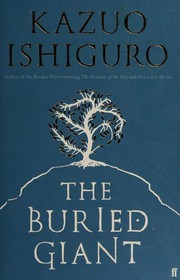
The Buried Giant
An old couple crosses a misty post Arthur Britain searching for a son.
2,593-word summary · 12 min read

Kitchen
Orphan Mikage finds home in a kitchen with Yuichi and Eriko after loss.
2,597-word summary · 12 min read
The Time Keeper
Mitch Albom's 2012 fable follows Dor, the first measurer of time punished in a cave, as he returns to guide a heartbroken teen and a dying businessman toward…
2,466-word summary · 11 min read
Small Gods
God Om trapped as a tortoise must convince novice Brutha to save Omnia from its own church.
2,063-word summary · 9 min read

A Wild Sheep Chase
An ad man chases a starred sheep to Hokkaido for a dying Boss while Rat hides with the Sheep Man.
2,579-word summary · 11 min read
Twelve Months
A grieving Dresden rebuilds Chicago over one year while ghouls gather and Thomas fades.
2,193-word summary · 10 min read