
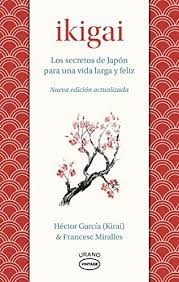
Ikigai: The Japanese Secret to a Long and Happy Life
2,030-word summary 9 min read 188 pages in the book
- First published
- 2016
- Publisher
- Ediciones Urano
- Pages
- 188
- ISBN
- 9788479539221
- Original title
- Ikigai: los secretos de Japón para una vida larga y feliz
Reading options
What's inside (7 sections)
The reason to get up
The premise of this book is simple. According to the Japanese, everyone has an ikigai, a reason for being, and the residents of the world's longest-living community in Okinawa credit finding it with a happier and longer life. The book sets out to explain what that means and how a reader might find one of their own.
It is worth being clear about the book's origins. Both authors are Spanish. Héctor García, known as Kirai, and Francesc Miralles wrote it in Spanish, and it was first published in Barcelona in 2016 by Ediciones Urano. Heather Cleary translated it into English in 2017. The title's claim that this is a Japanese secret is a piece of marketing. The book is a Spanish self-help book about a Japanese concept, written for a Western audience.
Both authors had already written about Japanese culture before this book. García had lived in Japan and wrote about it under the name Kirai, and Miralles was a journalist and novelist with an interest in psychology and personal growth. That background explains the book's tone. It is written by people who have spent time with the material and want to pass it on, not by writers treating a foreign concept as a branding opportunity.
The English edition is relatively short, and the chapters are brief. That is part of the book's design. A reader is meant to pick it up and find one idea to carry into the day, which is consistent with the argument that ikigai is lived in small pieces rather than grasped all at once.
I picked it up because the idea has escaped into the wider culture. The word appears in business presentations and self-help themes and social media posts, often attached to a diagram of four overlapping circles. The book is where many of those ideas came from, and it is worth reading to see what the original argument actually was.
The authors define ikigai roughly as the happiness of always being busy. They compare it to Viktor Frankl's logotherapy, the practice of finding meaning even in suffering, but argue that ikigai goes a step further. It is purpose as a daily, lived practice rather than an abstract philosophy. That distinction matters. A person does not find ikigai once and keep it. They enact it.
The four circles
The most famous image associated with the book is a diagram of four overlapping circles: what you love, what you are good at, what the world needs and what you can be rewarded for. Where they overlap is ikigai. The book includes Marc Winn's version of this diagram, and Wikipedia notes that it is not Japanese in origin and has been called catchy but misleading.
That criticism is fair. The diagram makes a complex and rather quiet idea look like a puzzle with a clean answer. The authors' actual account of ikigai is less tidy. It is about small, repeated actions, attention to ordinary work and the social structures that make a long life worth living. The four circles are a good selling tool and a poor summary of the book.
The structure moves from a prologue through nine sections: Ikigai, Antiaging Secrets, From Logotherapy to Ikigai, Find Flow in Everything You Do, Masters of Longevity, Lessons from Japan's Centenarians, The Ikigai Diet, Gentle Movements, Longer Life, Resilience and Wabi-sabi, and then an epilogue, notes and further reading. The Spanish first edition has the same chapters in a slightly different order.
The argument
The first chapter is about the reason to get up in the morning. The authors argue that having one is central to longevity in Okinawa. The next surveys modern longevity science and contrasts it with traditional Japanese practices and the mindset of the elderly in Okinawa. This is where the book is at its most journalistic, gathering research on aging and asking what the centenarians actually do.
From Logotherapy to Ikigai traces the idea from Frankl's search for meaning in suffering to a Japanese notion of purpose that is personal, spontaneous and undertaken willingly. The difference is important. Frankl's meaning can be imposed by circumstances; ikigai is chosen in the ordinary course of a day.
The chapter on flow is where the book's self-help purpose is clearest. The authors take a concept from psychology, associated with the complete absorption of a person in an activity, and argue that it is available in ordinary life. This is a more generous claim than the self-optimization literature usually makes. Not every task can be absorbing, and the book admits as much. Its point is that a person should notice the ones that are.
Masters of Longevity profiles individual centenarians, and their habits are less exotic than the title suggests. They work, they walk, they eat modestly and they remain part of a community. The authors' respect for these people is evident. They do not treat them as curiosities or as evidence for a brand. They let the details accumulate and trust the reader to notice the pattern.
Find Flow in Everything You Do draws on the psychological idea of flow, the state of total absorption in a task. The authors argue that everyday activities, not only grand ambitions, can generate ikigai. This is the book's most useful idea. A person does not have to become a painter or found a charity to have a reason to get up. Washing a cup with attention counts.
Masters of Longevity profiles long-lived Japanese people and their habits. The following chapter draws lessons from centenarians: stay active, remain socially engaged, and do not retire into inactivity. The book discusses the Okinawan moai, a close-knit group of friends, as a social support structure that helps explain the island's longevity. This is associated with Dan Buettner's Blue Zones reporting, and it is the strongest evidence the book offers. A group of friends who meet for decades is a more convincing account of a long life than any individual attitude.
The moai deserves more than a sentence, because it is the book's best piece of evidence. A moai is a group of friends who meet regularly, often for decades, and share the ordinary costs and pleasures of life. The authors link this to the Blue Zones research that identified long-lived communities around the world, where social connection is one of the few factors that appears consistently. That is a stronger argument than anything about attitude. A person with a reason to get up and a group waiting for them is likely to keep getting up.
The Ikigai Diet presents Japanese eating practices. Gentle Movements, Longer Life covers low-impact movement such as walking, stretching and ordinary activity rather than strenuous exercise. Resilience and Wabi-sabi connects acceptance of imperfection and change with the ability to endure setbacks. That last chapter is the book's philosophical close, and it is more convincing than the diagram. Wabi-sabi is a way of treating imperfection as a fact rather than a failure, and it fits the argument about ordinary purpose better than the four circles do.
I also want to note the book's tone toward work. The authors do not tell readers to find a job that expresses their soul. Their centenarians worked because work was what people did, and many kept working into their eighties and nineties. That is a very different claim from the one the four-circle diagram makes. The diagram suggests that a person needs to find the perfect overlap of passion, skill, need and payment. The chapters on longevity suggest that a person needs to keep doing something useful and keep seeing their friends. I found the second argument much more convincing, and it is the one the book keeps returning to when the marketing is stripped away.
The limitations
The book offers practical tools and exercises to help readers identify their own ikigai, framed with the question of who would not want happiness in every day. It situates the concept historically, noting that psychiatrist Mieko Kamiya popularized it with her 1966 book Ikigai ni tsuite, or On the Meaning of Life. That history is useful because it gives the word a origin and a context before the self-help industry got hold of it.
The scholarly response has been mixed. Studies do link a sense of ikigai with lower cardiovascular risk and greater well-being, which gives the book's central claim some support. But the four-circle diagram is a Western addition, and critics have called the idea an unrealistic ideal. Not everyone has work they love, a skill the world needs and a way to be paid for it. A book that presents ikigai as something everyone can find risks making ordinary lives look like failures. The authors are not entirely guilty of this. Their best chapters are about centenarians who worked at ordinary jobs until late in life and had strong friendships. But the marketing around the book has flattened that into a self-optimization exercise.
There is also a question about translation. The English edition is readable and clear, and Heather Cleary's work is not the problem. The problem is that the book treats Okinawa as a source of secrets for Western readers to extract, which is a familiar pattern in self-help writing. The authors are aware of this to some extent, and their respect for the people they interview shows. But the title is still doing what titles like this always do.
What I took from it
The English edition's subject headings give a sense of how bookshops and libraries filed it: longevity, happiness, quality of life, Japan, social life and customs, self-actualization. That is a fair description of the mixture. It is a book that moves easily between popular science, travel writing, philosophy and self-help, and its strengths and weaknesses follow from that. When it is reporting on what people in Okinawa actually do, it is excellent. When it turns that reportage into a formula, it becomes ordinary.
I finished the book skeptical of the diagram and convinced by the chapters on friendship and movement. The idea that a person should keep doing useful things and seeing the same friends into old age is not a secret, and it is probably the most valuable thing in the book. The authors' gift is to make that advice feel connected to a larger tradition, and to give it a Japanese name that carries some of the weight of a culture rather than the emptiness of a slogan.
The later books by the same pair, The Ikigai Journey and Ikigai for Teens, extend the brand and are separate works. I mention them because the first book now reads as the beginning of a franchise, and that changes how it feels. What was in 2016 a serious attempt to explain a concept has become a name attached to products.
The book's final idea is worth keeping. A life does not need a grand purpose. It needs something to get up for, and people to get up with. That is a smaller claim than the four circles suggest, and it is much easier to believe.
The book's English edition runs to just under two hundred pages and is organized for short reading sessions. Each chapter ends with practical suggestions, which is why it has been so often taken up by workplaces and self-help coaches. The original Spanish edition appeared in 2016 and the translation a year later.
The book's final idea is worth holding onto even if the diagram is discarded. A life does not need a single grand purpose to be worth living. It needs something that gets a person out of bed and people who will be glad to see them when they arrive. That is a smaller claim than the marketing suggests, and it is a great deal easier to believe. The centenarians the authors interview are not interesting because they solved a puzzle. They are interesting because they kept showing up to ordinary days for a very long time.
FAQ
Was Ikigai written in Japanese?
No. Both authors are Spanish, and the book was first published in Barcelona in 2016. The English translation by Heather Cleary appeared in 2017.
Who created the four-circle ikigai diagram?
It comes from Marc Winn and is a Western addition to the concept, not a traditional Japanese image. Wikipedia notes that it has been called catchy but misleading.
Who first popularized the word ikigai?
Psychiatrist Mieko Kamiya popularized it with her 1966 book Ikigai ni tsuite, or On the Meaning of Life, which the authors discuss.
Similar books
Flow: The Psychology of Optimal Experience
Csikszentmihalyi's 1990 study of optimal experience asks when people feel most alive and finds the answer in a balance of challenge and skill. Drawing on…
3,073-word summary · 14 min read
The Courage to Be Disliked: The Japanese Phenomenon That Shows You How to Change Your Life and Achieve Real Happiness
A philosopher and an angry young man argue over five nights about Adlerian psychology, trauma, approval, and the freedom to be disliked.
2,054-word summary · 9 min read
Four Thousand Weeks: Time Management for Mortals
Oliver Burkeman turns the whole productivity project on its head, arguing that a human lifespan of roughly four thousand weeks is not a problem to optimize…
2,447-word summary · 11 min read
The Defining Decade: Why Your Twenties Matter - and How to Make the Most of Them Now
A clinical psychologist argues that the twenties are not a holding pattern and urges readers to build skills, ties, and commitment now.
2,443-word summary · 11 min read
The Power of Your Subconscious Mind
Joseph Murphy argues that the subconscious accepts whatever the conscious mind repeats, so worry and confidence quietly grow into very different lives.
2,259-word summary · 10 min read
The Miracle Morning
Hal Elrod argues that the first hour of the day sets its tone, and offers six short practices, silence, affirmations, visualization, exercise, reading and…
2,240-word summary · 10 min read
Rising Strong: The Reckoning. The Rumble. The Revolution.
Brené Brown's 2015 book asks what happens after we fall, and argues that examining the stories we invent about failure and heartbreak is the path to getting…
2,271-word summary · 10 min read
Digital Minimalism: Choosing a Focused Life in a Noisy World
Cal Newport argues that willpower cannot beat an attention economy designed against you, and offers a thirty day reset to rebuild your digital habits around…
2,701-word summary · 12 min read
Boundaries: When to Say Yes, How to Say No to Take Control of Your Life
A Christian self-help book that treats a boundary as a personal property line and applies the idea to family, friendship, marriage, work and the self.
2,047-word summary · 9 min read

Everything is F*cked: A Book About Hope
Manson argues that hope, built on control, values, and community, keeps despair at bay, then takes apart the stories and diversions we use to sustain it.
2,789-word summary · 12 min read

As a Man Thinketh: A book that will help you to help yourself
In seven short chapters, James Allen argues that character and circumstance grow from thought, and that changing how you think is the practical route to…
2,673-word summary · 12 min read
Don't Sweat the Small Stuff ... and It's All Small Stuff: Simple Ways to Keep the Little Things from Taking Over Your Life
Richard Carlson’s 1997 bestseller offers one hundred short chapters on lowering the volume on daily irritations, and it is more pragmatic than its title…
2,502-word summary · 11 min read
The Road Less Traveled: A New Psychology of Love, Traditional Values and Spiritual Growth
M. Scott Peck argues that maturity begins with accepting difficulty, then builds discipline, love, and spiritual growth through honest, often painful work.
2,200-word summary · 10 min read
Braving the Wilderness: The quest for true belonging and the courage to stand alone
Belonging to yourself first lets you stand alone and still stay close to others.
2,004-word summary · 9 min read
The Untethered Soul
Singer names the noisy inner voice and shows how watching thoughts, loosening old hurt, and keeping the heart open through surrender can ease daily suffering…
2,752-word summary · 12 min read
The Art of Happiness
The Dalai Lama and psychiatrist Howard Cutler link lasting happiness to training the mind, human warmth, compassion, and basic spiritual values for daily life.
3,394-word summary · 15 min read
The Gifts of Imperfection
Shame research turned into ten guideposts for dropping perfectionism and living with courage and connection.
2,799-word summary · 12 min read
A New Earth
Tolle maps ego pain and shows how presence can loosen roles, thoughts, and suffering.
1,909-word summary · 8 min read

12 Rules for Life
Twelve essays on responsibility from posture to truth to petting cats.
2,045-word summary · 9 min read
How to Change Your Mind
Pollan blends the history of psychedelic research, his own guided trips, and current neuroscience to ask what these drugs reveal about consciousness.
2,466-word summary · 11 min read
You Can Heal Your Life
Louise Hay's 1984 bestseller argues that thoughts and beliefs shape the body, pairing a mirror-and-affirmation workbook with an A to Z list of ailments and…
3,672-word summary · 16 min read

Wild at Heart: Discovering the Secret of a Man's Soul
Why do men feel bored and tame? John Eldredge argues a man's heart is wild by design, and that recovering it means facing the wound and the question of whether…
2,289-word summary · 10 min read
The Art of Loving
Fromm argues that love is an art requiring care, responsibility, respect and knowledge, not a feeling we simply fall into. A short, stern classic of 1950s…
3,175-word summary · 14 min read

Getting to Yes: Negotiating Agreement Without Giving In
Fisher and Ury propose negotiating on interests rather than positions, using fair standards and a clear alternative if no deal is reached.
2,231-word summary · 10 min read
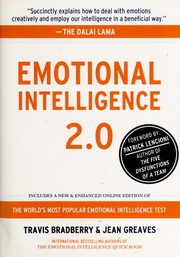
Emotional Intelligence 2.0
Bradberry and Greaves turn emotional intelligence into four learnable skills, a self-assessment and dozens of strategies, while their headline numbers rest on…
3,276-word summary · 15 min read
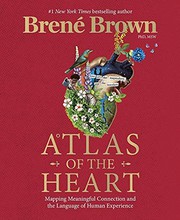
Atlas of the Heart: Mapping Meaningful Connection and the Language of Human Experience
Brené Brown maps 87 emotions and experiences into thirteen 'places we go,' arguing that precise language changes what we can ask for and how we connect.
2,491-word summary · 11 min read
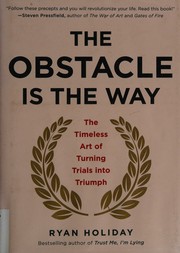
The Obstacle Is the Way: The Timeless Art of Turning Trials into Triumph
A 2014 Stoic self-help book arguing that perception, action and will can turn setbacks into fuel, told through historical anecdotes.
2,669-word summary · 12 min read

The Light We Carry: Overcoming in Uncertain Times
Michelle Obama's follow-up to Becoming offers ten practical habits for meeting fear, self-doubt and uncertainty, told through stories of her family,…
2,327-word summary · 10 min read
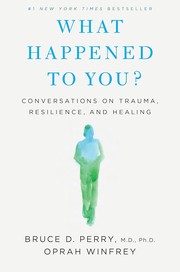
What Happened to You?
Oprah Winfrey and psychiatrist Bruce Perry explain how early experience shapes the brain, and why asking what happened to someone works better than asking what…
2,238-word summary · 10 min read
Moonwalking with Einstein: The Art and Science of Remembering Everything
A journalist spends a year training for the U.S. Memory Championship and discovers that extraordinary memory is mostly technique, attention, and a lot of…
2,027-word summary · 9 min read