
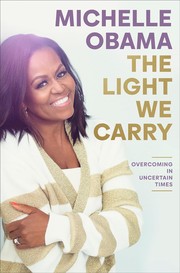
The Light We Carry: Overcoming in Uncertain Times
2,327-word summary 10 min read 336 pages in the book
- First published
- 2022
- Publisher
- Crown
- Pages
- 336
- ISBN
- 9780593237465
Reading options
What's inside (8 sections)
What I thought I was picking up
When Becoming came out in 2018, it sold more than fourteen million copies worldwide and felt like a finished story. Michelle Obama had walked readers from the South Side of Chicago through Princeton and Harvard Law, through the White House and out the other side. So when her follow-up arrived in November 2022, published by Crown at 336 pages, I assumed I was in for more of the same: another long stretch of memoir, another chance to sit in her company. That is not quite what this book is.
The Light We Carry: Overcoming in Uncertain Times is a work of self-help written by someone who has had to practice what she preaches under unusual pressure. Obama calls it a look inside her "personal toolkit," the habits and objects and attitudes she reaches for when fear or helplessness or self-doubt shows up. She describes the aim as becoming "more comfortable, less paralysed, inside of uncertainty." Much of it was written during the COVID-19 pandemic, with the political temperature already climbing toward the 2024 election. The book is divided into three parts, as Becoming was, and built around ten techniques that she returns to from different angles.
That structure can feel like a problem at first. A toolbox framework, motivational one-liners, epigrams from Toni Morrison, John Lewis and Maya Angelou: all of it can read like a holiday-season layup from a very accomplished person who has already done the hard work. The LA Times reviewer Rebecca Carroll called this risk out directly, and she was right to. But Carroll also argued that the book resists being dismissed, mainly because of Obama's stubborn humility and because of the plain fact that a pandemic-afflicted, politically siloed, emotionally shell-shocked country needed something like this in 2022. I tend to agree. The advice lands differently when you know who is giving it and what she has had to survive to be able to give it.
The withstander in the family
The most useful thing in the book, for me, is a word Obama borrows from her father. When she was a child, her family visited African American friends who had moved to a mostly white suburb. When they left, her father found a long ugly scratch running across the door of his beloved Buick, done with a key or a rock and in no way accidental. He did not make a scene. He carried on, the way he always did. Obama calls people like him "withstanders": men and women who take whatever comes and find a way to keep going.
Her father, Fraser Robinson III, is one of the quiet engines of this book. The other is her grandfather Dandy, whom she describes as petrified and trapped by structural racism, a man who hardly ever left his neighbourhood. From him she draws a hard little sentence: "Our hurts become our fears. Our fears become our limits." That line is the spine of the whole argument. Fear here is not a personality flaw. It is something learned, stored in the body, passed down. It can be unlearned, or at least held differently, and that is what the ten tools are for.
Obama is careful not to pretend the work is easy or that the tools erase the conditions that made them necessary. She writes about being a rare African American undergraduate at Princeton in the 1980s, and how in the dining hall she fixated on what she assumed everyone else was thinking: there goes the Black girl, looking for a seat. She admits that kind of anxiety can mess with your head if you let it. She writes about becoming the first African American First Lady, about the specific loneliness of being the only one in a room, and about how visibility is never the same thing as belonging.
The power of small
The opening chapter is called "The Power of Small," and it begins with knitting. Obama says she was never one for hobbies, then notes that according to her mother every woman on her side of the family learned to work a needle and thread, to sew, crochet and knit. She puts that fact in its historical place. For Black women in America, skill with a needle was often economic necessity, the work of seamstresses hired by white families to make and mend their clothes. So the knitting is never just a calm little pastime. It is a way of reaching back through her female line and pulling ancestral memory into the thing she is making with her hands, stitch by stitch.
That is the book at its best. A small, physical act becomes a way to quiet anxiety and also a way to remember where she came from. She does the same thing with the technique she calls "starting kind." The idea is to refuse the first nasty thought that arrives in the morning and deliberately invite a tender one in its place. It sounds almost too simple, and it is. But she frames it as a practice, not a revelation, something you do badly at first and gradually get better at. The same goes for her "kitchen table": the circle of trusted friends and mentors you pull in when a decision is too big to make alone. She does not romanticise it. A kitchen table is where people disagree with you.
One thing I appreciated is how little interest Obama has in presenting herself as someone who has conquered her fears for good. The Guardian's Rohan Silva called her "disarmingly honest" about her fears, failures and all-too human flaws, and that seems exactly right. The tools are things she still has to reach for, not badges she wears. She writes about the difference between being calm and being steady, and about how the feeling of being an outsider does not simply disappear because you have achieved something enormous. That refusal to claim arrival is what keeps the book from curdling into a lecture. She keeps returning to the idea that you can be frightened and still move, that the point is not to feel certain but to keep a hand on the railing and take the next step. For a reader expecting a victory lap, that is a quiet shock.
One of her examples is her college friend Angela, described as a fast-talking kid from D.C. with a ferocious intellect and the preppiest wardrobe she had ever seen. Obama uses Angela to make the case for building friendships with people you do not immediately feel aligned with. Another example is the comedian Ali Wong, who filmed her 2016 standup special Baby Cobra while seven and a half months pregnant. For Obama, Wong is a picture of what it means to bring your whole self into a room rather than a sanitised fragment of yourself. These are not celebrity name-drops. They are working examples, chosen because she can explain exactly what she took from them.
Fear, Hamilton and the whole of us
Fear gets its own sustained treatment, and this is where the book becomes unexpectedly lively. Obama tells the story of a twenty-nine-year-old Lin-Manuel Miranda performing a newly written song from a fledgling Hamilton at the White House. She uses it to describe what anxiety does at the worst possible moment. "The fearful mind loves to show up at moments of peak stress," she writes, "and with a clear agenda: It wants to veto everything. It is not at all down with your twirl." That last clause is the sort of line that makes the book worth reading even when the surrounding advice is familiar. She has a writer's ear for the way fear talks to you.
The answer she offers is not courage in the abstract. It is connection. One of her ten techniques is "the whole of us," the idea that life works better when we "grip hands with another soul." Near the end she describes lying next to her daughters, Malia and Sasha, when they were little, watching them drift off with their lips parted and their chests rising under the sheets, and realising that no matter how hard she tried she would never know half their thoughts. "We're alone, each one of us," she writes. "That's the ache of being human." She immediately follows that with its companion: any time we grip hands with another soul and recognise some piece of the story they are trying to tell, we affirm two truths at once. We are lonely, and yet we are not alone.
That tension between solitude and contact is the closest thing this book has to a thesis. During the pandemic, when bread baking became a household ritual, Obama writes about making bread and leaving loaves for people, an ordinary gesture that became a way of saying I see you when everything else had gone remote. It is a small thing in the literal sense. It is also a way of refusing the story that we are each sealed inside our own apartment, our own feed, our own fear. The point is never that the bread fixes anything. The point is that making it for someone else moves you, for a moment, out of your own head.
Partnering well
The chapter on marriage, "Partnering Well," is the warmest part of the book and the part where Obama's writing loosened up most for me. She writes that her marriage is "what we launch from and land in, a place where we can each be thoroughly, comfortably, annoyingly ourselves." She admits that the only love story she knows is the one she lives inside every day, and she says something about Barack that I did not expect to find in a book like this: that his candour and certainty are "sexy as hell." It is a wry, grown-up kind of affection, and it is more convincing than any amount of generic relationship advice.
She writes about the work of a long partnership without pretending that shared history does the job by itself. The garden metaphor shows up here, the sense that a marriage needs pruning and tending and that people change inside it. She also writes about women's friendship, about the particular cost of being visible as a Black woman in public life, and about the pressure to perform a version of yourself that is palatable to people who have never had to think about their own visibility. The through line is that you cannot show up whole for other people if you have spent years editing yourself down to something smaller.
This is also where the book has to be defended against its own format. There is a self-improvement tone that sometimes flattens the stories. A chapter will move from a vivid scene to a tidy takeaway a little too quickly, and a few of the aphorisms sound like they were designed for a mug. The Guardian review by Rohan Silva made exactly this complaint, arguing that the book is not as powerful as Becoming because the self-help scaffolding weakens the emotional pull of the personal material. That seems fair to me. When Obama is telling you about her grandfather or her daughters or her father's scratched car, she is a wonderful writer. When she is handing you a slogan, she sounds like every other person selling steadiness in a book.
Going high
The last chapter is called "Going High," and it returns to the line she delivered at the 2016 Democratic National Convention: when they go low, we go high. She gives the phrase a whole chapter rather than a single closing page, which is a defensible choice. The line ends up quoted as a piece of political branding, stripped of the speech around it, and here she tries to put it back into the context of a life built on refusing to be drawn down to the level of the people attacking you. In her introduction she recalls the 2020 convention and describes what she calls the "volcanic clarity" of speaking from the absolute centre of her being. The two moments bookend the argument: one is about restraint under fire, the other about certainty about who you are.
By the end, the ten tools have begun to overlap. Starting kind, going high, building a kitchen table, gripping hands with another soul, recognising your own light: these are not ten separate gadgets so much as ten entries into the same habit of noticing what you are feeling and choosing what to do next. "When we are able to recognize our own light, we become empowered to use it," she writes, and the sentence is typical of the book at both its best and its weakest. It is true. It is also the kind of line that gets repeated until it stops meaning anything. Whether it means anything to you depends on whether you have sat with the stories that come before it.
The book is not for everyone. If you want the dense, propulsive narrative of Becoming, you will find this one slower and more instructional. If you are allergic to self-help language, the framework will irritate you before the stories win you over, if they do. But if you accept the premise that a person who has been tested might have something practical to hand on, there is a lot here worth keeping: the Buick, Dandy's fear, Angela's wardrobe, the bread on a neighbour's step, the daughters drifting off to sleep. A podcast built around the book's topics followed in 2023, which makes sense, because this is material that wants to be talked through with other people rather than consumed alone. That, finally, is the light of the title. It is not something you generate in isolation. It is something you carry for each other.
FAQ
Is The Light We Carry a memoir like Becoming?
No. Published by Crown in 2022, it is a self-help book built from personal stories and ten named practices rather than a chronological life story.
What does Obama mean by going high?
The phrase comes from her 2016 Democratic National Convention speech, when they go low, we go high. The final chapter argues for refusing to be pulled down by opponents.
Who is this book for?
Readers who want practical reflections on fear, race and friendship will find plenty here. Those looking for the narrative drive of Becoming may find the self-help tone slow.
Similar books
Rising Strong: The Reckoning. The Rumble. The Revolution.
Brené Brown's 2015 book asks what happens after we fall, and argues that examining the stories we invent about failure and heartbreak is the path to getting…
2,271-word summary · 10 min read
The Defining Decade: Why Your Twenties Matter - and How to Make the Most of Them Now
A clinical psychologist argues that the twenties are not a holding pattern and urges readers to build skills, ties, and commitment now.
2,443-word summary · 11 min read
You Can Heal Your Life
Louise Hay's 1984 bestseller argues that thoughts and beliefs shape the body, pairing a mirror-and-affirmation workbook with an A to Z list of ailments and…
3,672-word summary · 16 min read
The Miracle Morning
Hal Elrod argues that the first hour of the day sets its tone, and offers six short practices, silence, affirmations, visualization, exercise, reading and…
2,240-word summary · 10 min read
Ikigai: The Japanese Secret to a Long and Happy Life
Two Spanish writers explain the Japanese idea of a reason for being, drawing on Okinawan centenarians, flow, friendship and the acceptance of imperfection.
2,030-word summary · 9 min read
Flow: The Psychology of Optimal Experience
Csikszentmihalyi's 1990 study of optimal experience asks when people feel most alive and finds the answer in a balance of challenge and skill. Drawing on…
3,073-word summary · 14 min read
Boundaries: When to Say Yes, How to Say No to Take Control of Your Life
A Christian self-help book that treats a boundary as a personal property line and applies the idea to family, friendship, marriage, work and the self.
2,047-word summary · 9 min read
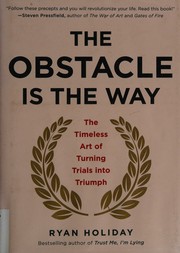
The Obstacle Is the Way: The Timeless Art of Turning Trials into Triumph
A 2014 Stoic self-help book arguing that perception, action and will can turn setbacks into fuel, told through historical anecdotes.
2,669-word summary · 12 min read
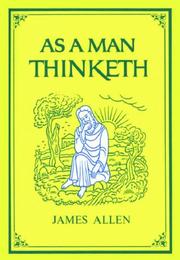
As a Man Thinketh: A book that will help you to help yourself
In seven short chapters, James Allen argues that character and circumstance grow from thought, and that changing how you think is the practical route to…
2,673-word summary · 12 min read
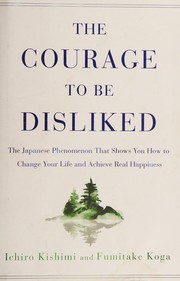
The Courage to Be Disliked: The Japanese Phenomenon That Shows You How to Change Your Life and Achieve Real Happiness
A philosopher and an angry young man argue over five nights about Adlerian psychology, trauma, approval, and the freedom to be disliked.
2,054-word summary · 9 min read
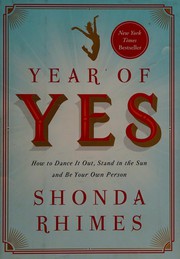
Year of Yes: How to Dance It Out, Stand in the Sun and Be Your Own Person
Shonda Rhimes takes her sister’s accusation seriously and spends a year saying yes to the things that frighten her, from live television to her own reflection.
2,585-word summary · 11 min read
Don't Sweat the Small Stuff ... and It's All Small Stuff: Simple Ways to Keep the Little Things from Taking Over Your Life
Richard Carlson’s 1997 bestseller offers one hundred short chapters on lowering the volume on daily irritations, and it is more pragmatic than its title…
2,502-word summary · 11 min read
Four Thousand Weeks: Time Management for Mortals
Oliver Burkeman turns the whole productivity project on its head, arguing that a human lifespan of roughly four thousand weeks is not a problem to optimize…
2,447-word summary · 11 min read

Dear Girls: Intimate Tales, Untold Secrets & Advice for Living Your Best Life
Ali Wong's debut collects fourteen letters to her daughters, covering sex, money, work, marriage, Vietnam, and being a working Asian American mother.
2,266-word summary · 10 min read
Reasons to Stay Alive
Matt Haig's memoir of the breakdown that nearly killed him at twenty four and the three years of unglamorous recovery that followed.
2,065-word summary · 9 min read
Bird by Bird
Anne Lamott's 1994 book on writing and life: shitty first drafts, the one-inch picture frame, and quieting the inner critic so you can take it bird by bird.
2,592-word summary · 12 min read
10% Happier
An ABC newsman panics on air, then finds meditation without losing his edge.
2,590-word summary · 12 min read
Braving the Wilderness: The quest for true belonging and the courage to stand alone
Belonging to yourself first lets you stand alone and still stay close to others.
2,004-word summary · 9 min read
Tiny Beautiful Things: Advice on Love and Life from Dear Sugar
Dear Sugar answers letters on love, grief, and work with tough empathy drawn from her own losses.
2,253-word summary · 10 min read
The Happiness Project
Gretchen Rubin spends a year testing monthly resolutions on energy, marriage, work, parenting, and play, tracking small habits to build a happier ordinary…
3,516-word summary · 16 min read
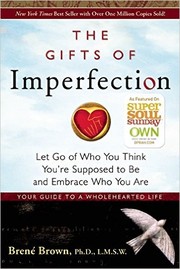
The Gifts of Imperfection
Shame research turned into ten guideposts for dropping perfectionism and living with courage and connection.
2,799-word summary · 12 min read
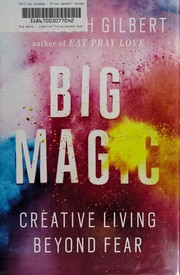
Big Magic
Gilbert on creative living past fear: ideas that visit, permission without credentials, daily work, finished over perfect, and trust in curiosity.
2,984-word summary · 13 min read
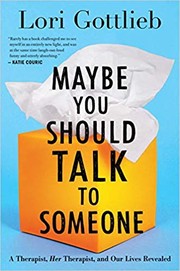
Maybe You Should Talk to Someone
Therapist Lori Gottlieb counsels John, Julie and Rita while seeing her own therapist Wendell after a breakup.
2,234-word summary · 10 min read
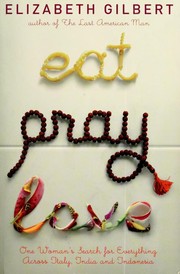
Eat, Pray, Love
Eat, Pray, Love retold: divorce, Italy for pleasure, India for practice, Bali for balance.
1,962-word summary · 9 min read
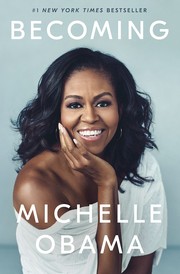
Becoming
Michelle Obama traces her path from South Side Chicago through Princeton, Harvard law and the White House years in this warm, candid memoir of family, work and…
2,143-word summary · 10 min read
Survival in Auschwitz
A chemist deported from Turin records ten months in Auschwitz with a restraint that makes the horror impossible to look away from.
2,177-word summary · 10 min read
Motherland: A Feminist History of Modern Russia, from Revolution to Autocracy
A feminist history of modern Russia told through women's lives, from the revolutionaries of 1917 to Pussy Riot and the politics of today.
2,191-word summary · 10 min read
I Feel Bad About My Neck: and Other Thoughts on Being a Woman
In short, funny essays written just after her sixty-fifth birthday, Nora Ephron takes on aging, vanity, a White House summer, and the daily upkeep of looking…
2,099-word summary · 9 min read
How to Change Your Mind
Pollan blends the history of psychedelic research, his own guided trips, and current neuroscience to ask what these drugs reveal about consciousness.
2,466-word summary · 11 min read
Alive: The Story of the Andes Survivors
After a rugby team's plane crashes in the Andes in 1972, Piers Paul Read tells the survivors' 72-day fight to live, drawn from interviews with the men and…
2,179-word summary · 10 min read