
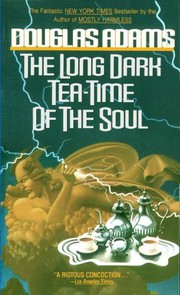
The Long Dark Tea-Time of the Soul
2,244-word summary 10 min read 320 pages in the book
- First published
- 1988
- Publisher
- Simon & Schuster
- Pages
- 320
- ISBN
- 9780671742515
- Series
- Dirk Gently (#2)
Reading options
What's inside (8 sections)
The title is the best joke in the book, and it was not invented for this book. Adams used the phrase in Life, the Universe and Everything to describe the endless boredom of Wowbagger the Infinitely Prolonged, and he plays here with Saint John of the Cross's Dark Night of the Soul. In his own explanation, the long dark teatime of the soul is that stretch of a Sunday when the weekend is over but the week has not begun, starting around twenty to three in the afternoon, when you have already had every bath you can usefully have and the newspaper remains unread no matter how long you stare at it. I keep coming back to that image because it describes the mood of the whole novel better than any of the plot does. This is a book about supernatural forces running on fumes.
It is also a book about a detective whose cases arrive by accident and whose clients tend to end up dead. Dirk Gently had already appeared in 1987 in Dirk Gently's Holistic Detective Agency, and this 1988 follow-up gives him a new case with no reference to the old one beyond his method and his temperament. That method is the real subject. Dirk believes everything is connected, and he charges accordingly. The joke is that he is usually right, but for reasons so tangled that no reader could have followed them from the clues. Adams is less interested in the puzzle than in the idea that the universe is a very large, very badly run office.
A fire at Heathrow and a man with a sledgehammer
The story opens with Kate Schechter standing in a queue at Heathrow, trying to buy a ticket to Oslo. Ahead of her is a large blond man who has no identification and no way to pay for a flight. Before anything can be settled, the check-in counter is consumed by fire. Kate and the man are both taken to hospital with injuries, and then he is removed against his will, along with a short-handled sledgehammer and a Coca-Cola vending machine. The clerk who served them has vanished. Kate checks herself out and sets off to find where the blond man has gone, which is how a sensible American journalist gets trapped in an English comic plot.
Adams drops the reader straight into the absurd without an introduction, and he trusts that the strangeness of the vending machine will carry the scene. It does. The image of a man being wheeled away with a soft drink dispenser is the kind of detail that sticks longer than the mystery itself. The check-in clerk who disappears is not a minor figure either. She turns out to have been Dirk's secretary at some point in the past, which is how a stranger's bad afternoon becomes a case. Kate's decision to leave the hospital and follow the blond man is the only straight piece of detection in the early chapters, and even she is operating on instinct rather than evidence.
Geoffrey Anstey and the bill that was not a contract
Dirk Gently wakes several hours late for a meeting with a new client named Geoffrey Anstey, a songwriter who hired him because a green-eyed giant carrying a scythe had started following him. The giant, Anstey said, had something to do with a contract he had signed. When Dirk finally arrives at the house, Anstey is dead in a chair with his head on a record turntable. Searching the place, Dirk finds an envelope marked with a list of names, all crossed out except Anstey's own. He tries to question Anstey's son and gets his nose broken for his trouble. On the boy's television, a news report about the Heathrow fire mentions a missing check-in clerk, and Dirk recognizes her as his former secretary.
The document is written in a language he cannot read, but Dirk notices its layout. The spacing and the columns tell him it is not a contract at all. It is a bill for services rendered. This is holistic detection in practice, the method that brought him the case in Dirk Gently's Holistic Detective Agency. He assumes that everything is connected and then follows the connections, however ridiculous. Here the assumption leads him to the truth faster than any amount of conventional detective work would, mostly because the truth involves a goblin with an accounts payable problem.
There is a fine running joke about Anstey's son, who is less a witness than a pair of fists. Adams also takes time for a horoscope that appears to have been aimed at Dirk personally, the sort of gag that feels throwaway until you notice how seriously he takes it. The envelope with the crossed-out names is a better device. It tells us that Anstey was only the latest in a line of people who were billed for the same impossible job, and that the giant with the scythe is less a monster than a collector. The dead man on the turntable is grotesque and rather sad at once, which is a tone the book returns to whenever it remembers that somebody has actually been killed.
Gods at St Pancras and in Valhalla
The blond man from Heathrow turns out to be Thor, and he turns up at Kate's flat needing first aid after being glued to a wooden floor and attacked by an eagle. The old patient being moved from the private Woodshead Hospital is his father Odin, and the short man accompanying him is Odin's goblin-like assistant Toe Rag. Thor and Odin have a long history of arguments about Thor's temper. Kate follows the van, has a chance encounter with Dirk, and mentions the small man she saw. Dirk, who is being attacked in his own home by the same hostile eagle, becomes very interested. Woodshead itself is a private hospital for the very rich with very strange afflictions, which gives Adams room for a few more jokes about medicine as a luxury service.
The eagle, it emerges, is a fighter jet that Thor transformed when he lost his temper after failing to reach Oslo by air. The Heathrow fire and the missing clerk turned into a vending machine are more of the same overflow. Dirk follows the homeless people sleeping around St Pancras railway station and discovers that they are the old gods, their status collapsed over the centuries as mortals stopped needing them. It is a lovely idea, the idea that divinity is a kind of employment that can be outsourced, and Adams makes the decline funny rather than sad. He follows them into Valhalla, where Thor has challenged Odin but failed to appear. The great hall of the Norse afterlife has the feel of a waiting room that nobody staffing it really wants to be in.
The reason for the challenge is the bill. Odin could no longer support himself in the modern world, so he sold his powers to a married couple, the lawyer Clive Draycott and his wife Cynthia, an advertising executive. The Draycotts resold pieces of that power to other buyers. Toe Rag did the legwork and tried to bill for his time, and the invoice was passed from one owner to the next until it landed with Geoffrey Anstey. When Anstey did not pay, Toe Rag sent the giant with the scythe. Adams is having enormous fun with the idea that Norse mythology would behave like a small business with an aggressive collections department, and most of the jokes land.
The chain of ownership is the closest thing the book has to a proper mystery plot, and it works because each transfer is more banal than the last. A king's power becomes an asset, the asset becomes a resale, and the resale becomes an unpaid invoice. Only in the last link does anything supernatural happen, and by then the joke has done its work. The Draycotts themselves are drawn with a particularly English nastiness, the couple who can turn any situation into a negotiation. When the consequences finally arrive for them, it is hard to feel much sympathy.
The refrigerator and the new god
Running alongside the main case is a subplot about Dirk's kitchen refrigerator. It has become so filthy that he and his cleaning lady have stopped speaking directly to each other and instead try to trick one another into opening the door first. It is a small, perfectly observed piece of domestic warfare, and it is the sort of thing the 2010 BBC television adaptation seized on because it needs no special effects. Dirk eventually buys a replacement from a fence and has the old one hauled away. The new fridge is clean, reasonable, and completely uninteresting, which is exactly why the old one has to come back.
From that discarded appliance a new god emerges, created out of Dirk's guilt over failing to save Anstey. This new god kills Toe Rag and the giant, which means the machinery of the plot is resolved by something that was never set up as a clue. It is a wildly unfair solution, and I enjoyed it more than the official one. Adams treats guilt as a force that can simply climb out of a kitchen appliance and settle old scores, and the absurdity feels earned because the fridge has been on the page the whole time. There is a neat symmetry in it too. The old gods are dying because nobody believes in them, and a brand new one is born because one man feels bad about a death he could not prevent. Belief and guilt turn out to run on the same wiring.
Endings, and the things that do not hold together
Thor drags Kate into Valhalla, but all the other gods have departed and he has to face Odin alone. To prove he has his temper back under control, he reverses his accidental transformations: the eagle becomes a jet again and the vending machine becomes the missing clerk. He still has no idea how to settle the argument with his father. Kate suggests that Odin simply will his entire estate to Woodshead, which gets him admitted as a patient for the rest of his life. The Draycotts are killed when the restored fighter jet bursts out of Dirk's flat and crashes into their car, an ending that owes more to cartoon physics than to detection.
This is where the book loses me a little. The clue work is loose even by the standards of this series, Kate spends much of the second half being taken places rather than choosing to go anywhere, and the reconciliation between Thor and Odin arrives too easily for a grudge that has driven the whole catastrophe. She suggests that Odin will his estate to Woodshead, and just like that a father and son who have been circling each other for two hundred pages agree to stop. There is no real reckoning between them, only a settlement. The Draycotts' deaths in the restored jet are funny in the way a cartoon is funny, but they also show how little the book cares about cause and effect once it wants to clear the board.
There is also the unavoidable comparison with The Hitchhiker's Guide to the Galaxy. Adams had already trained readers to expect big ideas delivered as punchlines, and here the big idea about gods dying when belief fades is handled with a lightness that sometimes feels like evasion. The joke about a religion running on an expense account is funny once. Sustaining a whole novel on it requires more discipline than Adams brings. The title promises a long afternoon of genuine gloom, and the book keeps choosing the gag over the melancholy underneath it.
Still, the prose is full of lines worth keeping, and the book is short enough that its sagging middle does not do much damage. Anyone who liked the first Dirk Gently novel will find the same energy here: the interconnected clues, the personal horoscope, and the sense that Adams is filling in a crossword whose clues only he can see. You do not need to have read Dirk Gently's Holistic Detective Agency first, since the case is self-contained and the cast is new, but the method makes more sense if you have.
What became of it
Adams meant to write a third Dirk Gently novel, The Salmon of Doubt, and left an unfinished draft when he died in 2002. That fragment appeared in a posthumous collection of the same name, so the pair of books you can hold today is all there is of the detective's proper run. The novel was adapted for BBC radio in 2008 with Harry Enfield, Peter Davison and Stephen Moore, and the 2010 and 2012 television series starring Stephen Mangan borrowed several of its incidents, including the cleaning lady standoff and that personally aimed horoscope.
For all its flaws, this is a book that knows what its title means. The gods are bored, Dirk is bored, and the Sunday afternoon will not end. The new god in the refrigerator is the only thing in the story with any real urgency, and it arrives from the one place nobody thought to look. I closed it smiling at the fridge rather than at the mystery, which is probably the response Adams was after.
FAQ
Do I need to read Dirk Gently's Holistic Detective Agency first?
No. This 1988 sequel has a new cast and a self-contained case, though Dirk's holistic method and his taste for impossible cases carry over.
Is this a mystery or a comedy?
Both. It is filed as comedy, science fiction and detective fiction, and the odd clues resolve into a story about Norse gods whose power has faded.
Was there ever a third Dirk Gently novel?
Adams began The Salmon of Doubt but died in 2002 before completing it. An unfinished draft appears in the posthumous collection of the same name.
Similar books
More from Dirk Gently first, then related titles.
Dirk Gently's Holistic Detective Agency
Holistic detective Dirk Gently links a Cambridge murder, a ghost, and time travel to stop a four-billion-year-old mistake.
3,000-word summary · 13 min read
Feet of Clay
A clay golem goes mad and a Patrician is poisoned as Vimes and the Watch untangle a murder plot in the nineteenth Discworld novel.
2,308-word summary · 10 min read
The First Fifteen Lives of Harry August
Harry August dies and is born again into the same life, again and again, until a warning from a child tells him the world is ending faster with each pass.
2,189-word summary · 10 min read
The Caves of Steel
Detective Elijah Baley must solve a Spacer's murder in a domed New York, partnered with R. Daneel Olivaw, a humaniform robot built in the victim's image.
2,445-word summary · 11 min read
Men at Arms
The City Watch gets new recruits and a murder case when the Disc's only handgun turns up in Ankh-Morpork, in the fifteenth Discworld novel.
2,216-word summary · 10 min read
The Eyre Affair
Literary detective Thursday Next chases a villain who kidnaps Jane Eyre from her own novel in an alternate 1985 England.
1,929-word summary · 9 min read
Gideon the Ninth
Swordswoman Gideon guards necromancer Harrow in a deadly Emperor trial.
2,232-word summary · 10 min read
Mostly Harmless
Arthur makes sandwiches on Lamuella while Ford steals a Guide Mk II that wipes Earths across realities.
2,059-word summary · 9 min read
So Long, and Thanks for All the Fish
Arthur Dent finds Earth back again and meets Fenchurch, who sensed the planet's odd moment, in Adams's softer fourth Hitchhiker novel from 1984.
2,448-word summary · 11 min read
Life, the Universe and Everything
Arthur in slippers must stop cricket robots from rebuilding the Wikkit Gate.
2,216-word summary · 10 min read
The Restaurant at the End of the Universe
Arthur Dent flees Vogons, dines at Milliways at the end of time, and strands on prehistoric Earth in Adams' sharp 1980 sequel.
2,749-word summary · 12 min read
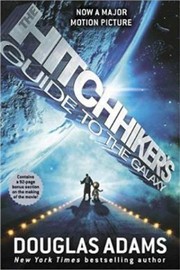
The Hitchhiker's Guide to the Galaxy
Douglas Adams' Hitchhiker's Guide retold: Earth's end, Ford, Zaphod, Marvin, and the answer 42.
2,253-word summary · 10 min read
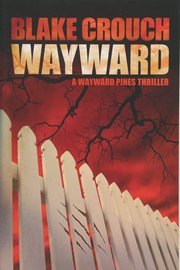
Wayward
With Ethan Burke now sheriff, Wayward Pines runs on cameras, fear and a founder's private plan, until a murder forces him to choose between order and the truth.
2,252-word summary · 10 min read

There Will Be Bodies
Digging out a villa buried by Vesuvius, Flavia Albia finds chained corpses and a death someone tried to hide for ten years.
2,152-word summary · 10 min read

The Yiddish Policemen's Union
An alcoholic detective in an alternate Sitka investigates a murder that leads toward a messianic plot and his own family's past.
2,247-word summary · 10 min read

The New York Trilogy
Three linked novels turn a wrong-number call into a puzzle about names, authorship, and the stories people tell to stay sane.
2,259-word summary · 10 min read
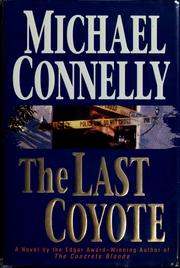
The Last Coyote
On stress leave, Harry Bosch reopens the unsolved murder of his mother, a prostitute strangled when he was twelve, and finds corruption reaching the DA's…
2,069-word summary · 9 min read
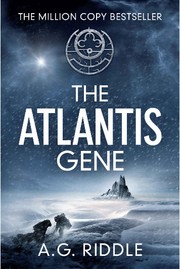
The Atlantis Gene
A geneticist and an intelligence operative chase two kidnapped boys through a global conspiracy about human evolution and a weapon built to cull humanity.
2,369-word summary · 11 min read
The 5th Horseman
Two linked cases pull Lindsay Boxer and the Women's Murder Club into a hospital full of strange deaths and a luxury-car murder spree.
2,609-word summary · 12 min read

Revelations
Schuyler is pulled into the Force household as Silver Bloods rise, and a Conclave gathering in Rio ends in bloodshed.
2,166-word summary · 10 min read
Evil Under the Sun
Poirot's Devon holiday turns deadly when a flirtatious actress is strangled at a secluded seaside hotel in this 1941 puzzle.
2,380-word summary · 11 min read
What We Can Know
In McEwan's eighteenth novel, a lonely scholar in a flooded, diminished Britain chases a vanished poem that could win him the professorship he has long wanted.
2,408-word summary · 11 min read

Visions of Sugar Plums
A strange man named Diesel appears in Stephanie Plum's kitchen days before Christmas and pulls her into hunting a bail-jumping toy maker. A short, silly, warm…
2,193-word summary · 10 min read
The Word Is Murder
A fictionalised Anthony Horowitz is talked into chronicling a prickly ex-detective's case: a woman murdered hours after planning her own funeral. A clever…
2,296-word summary · 10 min read
The Unquiet Grave
In Dervla McTiernan's fourth Cormac Reilly novel, a body found in a Galway bog turns out to be a missing school principal, and the case opens into something…
2,253-word summary · 10 min read

The Secret of the Old Clock
The first Nancy Drew novel: a sixteen-year-old detective follows a clue hidden in a clock to overturn a will and restore a family's inheritance.
2,011-word summary · 9 min read
The Salt King
Sent back to the salt-mining town he fled, a Jesuit priest investigates miracles that turn pilgrims into pillars of salt. Pulley adds a slow-burning queer…
2,214-word summary · 10 min read
The Running Grave
In the seventh Cormoran Strike novel, Robin goes undercover inside a Norfolk cult while Strike digs into a child's death from decades earlier.
2,615-word summary · 12 min read

The Lunatic Cafe
Anita Blake takes a missing-shapeshifter case into St. Louis werewolf politics while Jean-Claude and Richard both press their claim on her.
2,327-word summary · 10 min read
The Keeper of Lost Causes
Jussi Adler-Olsen introduces Carl Mørck and Department Q, a Copenhagen cold-case unit in a basement, and a missing politician whose file refuses to stay closed.
2,759-word summary · 12 min read