

The Lunatic Cafe
2,327-word summary 10 min read 369 pages in the book
- First published
- 1996
- Publisher
- Ace Books
- Pages
- 369
- ISBN
- 9780425201374
- Series
- Anita Blake, Vampire Hunter (#4)
Reading options
What's inside (9 sections)
I came to The Lunatic Cafe straight from Circus of the Damned, expecting another vampire fight and getting a tour of the St. Louis werewolf pack instead. Laurell K. Hamilton published it in 1996 with Ace Books, and the copy I read is the 369 page Ace edition, ISBN 9780425201374, book four of Anita Blake, Vampire Hunter. The story starts two weeks before Christmas and spends most of its length among lycanthropes, which is a colder and more claustrophobic world than the vampire court in the previous book.
Anita Blake raises zombies for a living, executes vampires on the side, and consults for the police. For three books she has insisted that monsters are monsters. Now she is dating one, and engaged to him, and trying to work out what that means before she says yes to anything permanent.
The case nobody hands to the police
The story opens with a missing shapeshifter. A woman has been gone for days, and the people who notice are not the kind to file a report. Anita hands that thread to Ronnie, her best friend and a private investigator who works on retainer with Animators, Inc. Ronnie is the only person in the book with an ordinary life, and Hamilton uses her as a contrast. While Anita is being summoned into pack politics, Ronnie is following up a disappearance the way a working PI would, with phone calls and legwork and no supernatural help.
Then the police get a body. A man is found in the snow, torn apart, and the first guess is a bear. Anita is called in by Dolph and the Regional Preternatural Investigative Team, the "spook squad" that handles cases with a monster in them. Detective Zerbrowski is there too, making jokes and watching Anita closely. The bear explanation does not survive a look at the wounds. This is the book at its strongest, in my view: a crime scene in cold weather, a few precise details about what a claw did to a face, and Anita building a different account from the one on the form.
The missing person and the dead man are the same case, though nobody says so at first. The reason the police cannot solve it is the reason Anita can. Shapeshifters will not talk to a badge. They will talk to her, grudgingly, because she has done work for Jean-Claude and because Richard is one of them. She is a bridge between two communities that distrust each other, and the book keeps putting her in the middle of that distrust.
What I liked is that Hamilton gives the investigation a shape. Ronnie finds the disappearance, Dolph finds the body, Anita finds the door into the pack, and each of them has a piece that the others lack. What I did not like is how quickly the case gets pushed aside once the pack appears. The police work is good, and then it mostly stops being the point.
Marcus Fletcher sends for Anita
Marcus Fletcher calls Anita to the Lunatic Cafe for a conversation. He is the former Ulfric of the local werewolf pack, a surgeon by trade, and one of the few people in St. Louis who can order Richard around. The cafe itself is a werewolf bar, and the invitation is not friendly. Marcus wants to find out where Anita stands, and he wants her to understand who still holds authority in the pack.
Anita goes, because that is what she does in every one of these books. She walks in without backup and refuses to be impressed. This is the part of her character that works: she is small, outgunned, and unwilling to be handled. Marcus tries to handle her anyway. He has the bulk of a man used to being obeyed, and he talks to her the way a boss talks to an employee who has forgotten her place.
The interesting thing about Marcus is that he is not the main villain. He is a leader who thinks the pack should be ruled from the top, and Richard is the challenger who thinks otherwise. Richard has nearly half the pack behind him by this point. He is strong enough to take Marcus on and, because he is a science teacher with a conscience, he will not make the killing blow. That refusal is the whole of his arc here. It reads as decency in a world that rewards the opposite, and it also reads as a man who cannot finish what he starts. Hamilton lets both readings stand.
Anita's position is impossible, and the book knows it. She is the lover of the challenger, the marked servant of the vampire who sits outside the pack, and a human who can walk into a room full of wolves and leave again. Every group in the story wants something from that. Nobody asks what she wants.
The cafe itself is worth a moment. It is a bar where wolves can stop pretending to be people, and the title sits on it uneasily. Hamilton never pauses to define what a lunatic is in this world, and I had to work the word out from the people around it. That is a risk. A title term left undefined can feel like a cheat, and I was annoyed at first. By the end I thought the vagueness suited a story about people whose inner lives are not available to outsiders. Anita sees the results of the change long before she understands the rules behind it.
Raina and the films
Raina Wallis is the lupa of the pack, and she is the most alarming person Anita meets here. She is beautiful in the way the series' alpha females are beautiful, and she is a sadist who uses sex to get other wolves to do what she wants. She was Richard's lover once, which is the detail Anita cannot put down. The idea that a man she loves was involved with Raina disgusts her more than any of the violence does.
Raina and Marcus run pornographic snuff films using werewolves and wereleopards who displease them. Wolves who refuse them end up on film. That is the ugly engine behind the missing shapeshifter case, and it is the reason the community stays quiet. People who vanish in this city are not always dead in the ordinary sense. Some of them are being used, and the ones who survive are too ashamed or too frightened to say where they have been.
Anita saves Stephen from being pulled into one of those films. Stephen is a werewolf who works as a stripper at Jean-Claude's club under the stage name Harlow, and he is one of the vulnerable performers Anita keeps taking under her wing. Jason Schuyler, a young blond werewolf who stripper and tease, is another new face in this book. Hamilton is better at these people than at the plot that surrounds them. Stephen and Jason feel like people with lives outside the scene, and Raina's cruelty has weight because she can reach them.
The films are also where the book earns its content warning. This is not a coy series anymore. There is gore in the crime scenes, a bestial and sexual cruelty in the films, and a scene where Anita reacts to what she has seen with a revulsion the narration does not soften. I would not hand this to a younger reader, and I do not think the book expects me to.
A proposal and a date-off
Richard proposes. Anita accepts, and no date is set, which is the first sign that this engagement is going to be a problem. She is still the woman who swore off monsters, now promising herself to a werewolf she has known for a few months. The narration knows the contradiction is there but does not do much with it beyond letting Jean-Claude point it out.
Jean-Claude learns of the engagement and demands equal time. He reasons that if Anita loves both of them, then both of them get a chance to court her, and Anita takes the argument seriously. That is the "date-off" that readers either love or cannot stand. I land closer to the second group. It plays like a sitcom premise dropped into a horror novel, with two supernatural alpha males negotiating access to a woman who is already exhausted. Anita does eventually admit that she loves both men in different ways, which is honest, and the book refuses to give her a clean answer. A line about fairy tales and love not conquering all lands harder here than the romance itself.
The relationship material takes up a large share of the novel, and it is the main reason the mystery loses momentum. There is a stretch where every scene turns into a conversation about who has the right to stand beside her. I understand why the series needed to widen the triangle. I just think the amount of time spent on it is out of proportion to what it adds.
Gretchen, Kaspar, and Edward
Gretchen, a master vampire hopelessly in love with Jean-Claude, attacks Anita. She sees Anita as the obstacle between herself and her master, and she acts on it. The punishment is severe: Jean-Claude confines her to a coffin wrapped in crosses and chains, and the book tells us it will last for years. This is one of those moments where the series' idea of justice and my idea of justice part company. Nobody in the room treats the confinement as troubling.
Kaspar Gunderson is a wereswan, a cursed European prince turned into a bird by a witch who wanted him to learn kindness. Centuries later he is still bitter, still proud, and still impossible to kill by ordinary means. Edward kills him. Edward, the human assassin the vampires call Death, turns up because following Anita around lets him kill a great many people, which is his explanation and also a joke. He gives Anita Kaspar's feathered skin as a gift and adds a note saying he has found a witch who can lift the curse. She has the pelt mounted. I am not sure I have ever read a gift like that in a mystery, and it stays with me.
Edward is the best thing in this book besides the pack. He is cheerful about violence in a way that makes Anita's own comfort with a gun look almost modest. Their friendship is built on the shared understanding that both of them could kill without feeling much, and the books keep circling that idea. Here it is used well: he arrives, solves a problem with brutal efficiency, and leaves Anita to deal with what she thinks of it.
What the case costs
The missing-shapeshifter thread bends back toward Marcus and Raina and their films, and Anita's refusal to play along is what breaks it open. There is no tidy courtroom ending. The pack handles its own, and what Anita gets is the knowledge of what happened to the women who vanished, plus the satisfaction of having been the one person who would not look away.
The women who vanish do not come back whole, and Anita's discovery is less a rescue than an inventory of harm. She can tell Dolph what she found. She cannot undo any of it. That limitation is the honest part of her job, because in most of these novels she wins by being the person with the gun and the right answer. Here the right answer arrives late, and the best she can do is make sure it is spoken aloud.
She also gets hurt, more than once. She ends up in hospital and back on her feet inside a few days, which is the pace of the whole novel. The events of this book take less than a week, and Hamilton drives them hard. Anita goes from a date to a murder scene to a pack challenge to a vampire attack with hardly a night of sleep between them. That is exciting while you are in it and exhausting in retrospect.
By the end, Richard is still the challenger who cannot bring himself to finish the fight, and Marcus is still the leader. That argument gets settled in the next book, and this one is content to leave the wound open. I like that choice. It makes the ending feel like a pause rather than a wrap-up.
Where it strains
The mystery is better than the book around it. The disappearing shapeshifters, the man in the snow, and the reason nobody will talk all fit together, and Ronnie's legwork pays off. But the plot is given roughly sixty pages and the relationships get the rest. If you came for the procedural side of Anita Blake, this is the book where that side starts to thin out.
The clothing descriptions become a joke. We are told about the color of the swoosh on Anita's Nike shoes, about her Christmas sweater, about what Dolph's coat might be lined with, and about Jean-Claude's boots and shirt. I do not need any of it. The books are at their best when they are moving, and a paragraph about a fanny pack is a paragraph not spent on the case.
What keeps me reading is the world. This is the first time the werewolves feel like a society rather than a group of men with a secret. There is a hierarchy, a surgeon who leads it, a lupa who rules through fear, a challenges system with a name, young performers trying to stay out of a film operation, and a science teacher who cannot stomach the price of the crown. That is a lot of material, and most of it is better than the romance plot draped over it. Read it for the cafe and the wolves. The engagement can wait.
FAQ
When was The Lunatic Cafe first published?
Laurell K. Hamilton published it in 1996 with Ace Books. The edition described here runs 369 pages with ISBN 9780425201374.
Is this the fourth Anita Blake novel?
Yes. It follows Circus of the Damned and precedes Bloody Bones in the Anita Blake, Vampire Hunter series. Richard's challenge to Marcus is left unresolved for the next book.
Do I need to have read the earlier books first?
Yes, it helps a lot. The engagement, Jean-Claude's marks and the pack history all carry over from Circus of the Damned.
Similar books
More from Anita Blake, Vampire Hunter first, then related titles.
Guilty Pleasures
Animator Anita hunts a vampire killer while Jean-Claude pulls her close.
2,136-word summary · 9 min read
The Laughing Corpse
A millionaire offers Anita Blake a fortune to raise a three-hundred-year-old corpse, then names the human sacrifice it would take. A zombie murder follows.
2,290-word summary · 10 min read
Circus of the Damned
A rogue master vampire arrives in St. Louis and Anita Blake is caught in an undead turf war, with a science teacher in the crossfire.
2,757-word summary · 12 min read

Blood Bound
Coyote mechanic Mercy Thompson stands with vampire friend Stefan against a demon driven rival while pack ties strain.
2,636-word summary · 12 min read

Moon Called
A coyote mechanic in wolf country gets pulled into pack fights and fae bargains when a lost teen shows up.
1,943-word summary · 9 min read

Revelations
Schuyler is pulled into the Force household as Silver Bloods rise, and a Conclave gathering in Rio ends in bloodshed.
2,166-word summary · 10 min read
Destined for an Early Grave
A Paris vacation turns into a fight over Cat's past when a vampire who claims to be her husband returns, and she must decide what she is allowed to know.
2,924-word summary · 13 min read
Dead Ever After
In the final Sookie Stackhouse novel, Sookie is framed for murder, Eric is bound to another vampire, and a choice about Sam may decide her future.
2,388-word summary · 11 min read
A Hunger Like No Other
Kresley Cole's 2006 paranormal romance pairs a Lycan freed after a thousand years of Fae captivity with a Valkyrie who has no wish to be claimed.
2,539-word summary · 11 min read
At Grave's End
Cat and Bones face Max, a zombie-raising ancient vampire, and a prophecy that ties their marriage to Patra's death in the third Night Huntress novel.
2,061-word summary · 9 min read
House of Salt and Sorrows
Annaleigh Thaumas investigates her sister's death in a cursed island manor where the balls are illusions and the sea god is always listening.
2,025-word summary · 9 min read
Deadlocked
A dead woman on Eric's lawn starts a murder investigation, a vampire queen wants Eric as her consort, and the fairies in Sookie's life close in.
2,885-word summary · 13 min read

Bitten
Elena Michaels is the world's only female werewolf, and keeping that world away from her human life in Toronto works fine until the Pack calls in a favor.
2,039-word summary · 9 min read
Silver Borne
Mercy hides a Fae book while Samuel slips and the fae close in.
2,571-word summary · 11 min read
One Foot in the Grave
Cat hunts vampires with Bones while her Sire plots from the grave.
2,200-word summary · 10 min read
Cry Wolf
Omega Anna joins Charles to hunt a rogue werewolf in Montana.
2,463-word summary · 11 min read

Bone Crossed
Mercy faces vampire queen Marsilia after killing a vampire to save friends.
2,261-word summary · 10 min read
Magic Bites
A broke Atlanta mercenary takes her murdered guardian's last case and walks into a war between vampires and shapeshifters.
2,272-word summary · 10 min read
Iron Kissed
Mercy repays Zee by hunting a fae killer, clears his name, and finally chooses between Adam and Samuel.
2,944-word summary · 13 min read
Dead Reckoning
Sookie confronts the firebombing of Merlotte's, Sandra Pelt's revenge, and a vampire power struggle while questioning her future with Eric.
2,391-word summary · 11 min read
Blood Rites
Wizard Harry Dresden guards a porn set from entropy curses while learning brother Thomas and fighting Black Court nest.
2,211-word summary · 10 min read
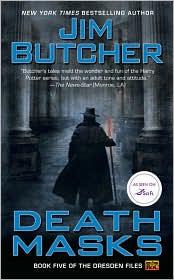
Death Masks
Wizard Harry Dresden hunts the stolen Shroud of Turin while dueling a vampire lord and facing fallen angels.
2,979-word summary · 13 min read

Blue Bloods
At an elite Manhattan school, Schuyler Van Alen learns she is a forbidden half-vampire as someone starts killing her kind.
2,725-word summary · 12 min read
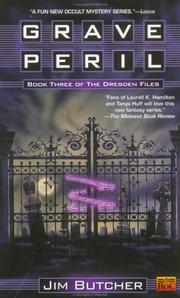
Grave Peril
Chicago ghosts turn murderous as Harry Dresden faces a vengeful sorcerer and Bianca's vampire trap.
3,484-word summary · 15 min read
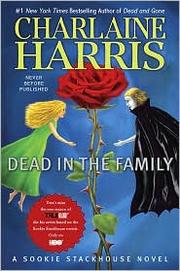
Dead in the Family
Sookie shelters fairy kin and a telepathic boy while pack murder and Eric's vampire kin close in.
2,412-word summary · 11 min read
From Dead to Worse
Sookie mediates a Were war and vampire takeover while learning about her fairy blood.
2,533-word summary · 11 min read
Fool Moon
Wizard Harry Dresden hunts a full moon killer through Chicago werewolf packs.
2,855-word summary · 13 min read
Dead and Gone
Weres reveal themselves as Sookie faces a murder, a Fellowship trap, and a brutal fairy war.
2,798-word summary · 12 min read
Definitely Dead
Sookie heads to New Orleans for her dead cousin estate and finds witches, vamps, and family curses.
2,027-word summary · 9 min read