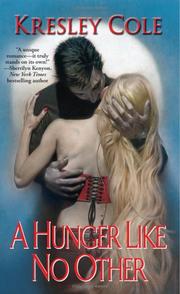
A Hunger Like No Other
2,539-word summary 11 min read 384 pages in the book
- First published
- 2006
- Publisher
- Pocket Star
- Pages
- 384
- ISBN
- 9781416509875
- Series
- Immortals After Dark (#1)
Reading options
What's inside (9 sections)
I picked this one up because a friend kept describing it as the book that started everything, the first full length entry in Kresley Cole's Immortals After Dark line. She also said it had a werewolf in chains, which turned out to be the truest part of the pitch. Cole published it in 2006 with Pocket Star, a 384 page mass market paperback, and it went on to win the 2007 RITA Award for paranormal romance. Open Library and the series list on Cole's own site both treat it as book 1, so that is the order I use here. Some lists place a short prequel ahead of it, but this is the novel most readers mean when they say the first Immortals After Dark book.
It helps to know what kind of book this is before you begin. Cole is writing paranormal romance, a form with its own promises: two people meant for each other, obstacles larger than either of them, and an ending that pays the longing in full. She keeps those promises, but her version is heavier than most. The world she builds has a history of wars, uneasy truces, and old hatreds, and the love story is tangled up in all of it. That is why the book has stayed with readers even where the prose is plain. There is a whole invented society under the heat, and Cole is clearly enjoying the work of making its rules.
Lachlan, the wolf in the collar
The hero is a Lycan named Lachlan, and the first time we see him he is not free. He has spent a thousand years as a captive of the Fae, used as a fighting beast and tormented for sport, held by a collar that stops him from shifting and reminds him each day that he is property. That long cruelty is the engine of the entire book. Lachlan is not a cheerful werewolf with a bad boy grin. He is a proud, half broken alpha who has been pushed to the edge of sanity and left there, and his first act after he finally breaks loose is not to rest but to follow a scent.
Cole writes him as a creature of appetite and restraint at the same time. He wants topossess what he has been denied for a millennium, yet he is governed by a code that came before his captors. The Lycans are a proud people with a hierarchy and a home of their own, and his enslavement is a national wound as much as a personal one. When he returns to his own kind he is both a king in waiting and a man who does not quite trust his own hands. That tension gives the romance its heat and most of its trouble. A hero who has been starved of everything does not make gentle choices, and the book does not pretend otherwise.
Cole spends real time on the Fae side of his history. The Fae here are not delicate people with wings. They are a powerful, cruel court that treats other supernatural races as stock to be used, and Lachlan's thousand years of servitude is the price his people paid for an old defeat. He was made to fight in their arenas, paraded as a trophy, and reminded year after year that he had outlived anyone who might have rescued him. When he finally gets free, the anger he carries is not a tantrum. It is the accumulated response to a very long stretch of being treated as a thing.
His return to the Lycans is handled with the same care. His people live apart, bound by their own customs and wary of the other factions, and Lachlan comes back to them as a figure both revered and unsettling. The men who should be his allies do not fully know what was done to him, and he does not want to tell them. That reticence is one of the better choices Cole makes. It keeps the hero's damage present without turning every conversation into an explanation of it.
Emmaline, the Valkyrie who fights back
The heroine is Emmaline Langdon, called Emma, a Valkyrie raised among warriors who escort the dead and settle disputes with blades. She is competent, stubborn, and used to being the smallest person in a room that expects violence. Cole gives her a wound of her own: a twin sister named Viola who was killed by a vampire, a loss that sits under her bravado and sharpens her hatred of the supernatural elite who think they can take whatever they want. Emma is not a damsel waiting to be carried off. She is a trained fighter who keeps swinging even when the odds are foolish.
The Valkyries in this world are an order of warrior women with a duty to the dead and a code that leaves little room for softness. Emma was raised inside that order, which explains both her competence and her difficulty with anyone who tries to protect her. Cole gives her a distinctive talent that matters later, a knack for noticing what others overlook, and it makes her more than a fighter with a grudge. She is the one who sees patterns in events that everyone else treats as separate accidents.
Viola's murder is the wound that shapes her. The two sisters were close, and the vampire who killed Viola left Emma with a hatred that has had years to harden. That history is what makes her wary of Lachlan at first. He is enormous, possessive, and part of the same supernatural hierarchy that produced the man who destroyed her family. Cole writes their early arguments with a sharp edge because both of them are carrying grief, and neither has any practice talking about it. Their banter is funny in places and brittle in others, which is exactly what two people in their position should sound like.
That matters because the first meeting between these two is a kidnapping, and the book has to work hard to make it romantic. Emma is taken by Lachlan after their worlds collide, and she spends the early chapters furious, frightened, and determined to escape or kill him. Cole leans into the fairy tale logic of the genre: the two are fated mates, bound by something older than either of them, and the pull is immediate and physical. For a reader who likes that convention, the slow turn from fear to want is the pleasure of the story. For a reader who does not, the whole setup will feel like a problem the book never honestly solves. I sat somewhere in the middle, enjoying the craft while noticing the wobble.
Claimed, taken, and slowly won over
The middle of the book is a long negotiation conducted mostly without words. Lachlan brings Emma into his world, a Lycan island home that is meant to be a refuge but feels to her like another cage. He is convinced she is his, in the way his people understand mating, and he acts on that certainty with a single-mindedness that is either thrilling or alarming depending on your tolerance for alpha heroes. Emma pushes back at every turn. She tests him, argues with him, and refuses to be impressed by his size or his history. What changes between them comes through small acts: him learning that she will not be handled, her seeing that his roughness hides a fierce protectiveness.
There is a scene early on where Emma tests him by fighting, and it tells you more about the book than any amount of description. Lachlan expects to overpower her quickly. She surprises him, lands a hit, and forces him to recalculate. His response is not to punish her but to laugh, and that laugh is the first crack in his armor. Cole repeats this pattern in smaller ways: a meal offered awkwardly, a hand held back at the last moment, a question asked because he genuinely does not know the answer. The physical pull between them is constant, which is what the title promises, but the emotional turn is built out of these small corrections.
Cole is at her best in these quieter turns. She understands that paranormal romance lives or dies on whether you believe two people could actually want each other, so she gives them shared jokes, mutual frustration, and moments of tenderness that land because they are earned. The physical pull is constant, which is what the title is about, but the emotional turn is gradual. There is also a great deal of world building about the Fae court and the old grievances between the supernatural factions. I liked the detail, though it does slow the pace in places. The book keeps stopping the chase to explain the rules of a world that would later grow into a long series.
The old war under the surface
One reason this book carries more weight than a typical first romance is the scale of the history behind it. Lycans and Fae have a long, ugly past, and Lachlan's enslavement is only the most recent chapter. There are treaties, betrayals, and old battlegrounds that mark where an earlier supernatural order was pushed aside. Cole drops these references constantly, sometimes in the middle of a fight or a lovers' quarrel, and at first it feels like clutter. By the end it reads like a world that existed before the characters and will keep going after them.
The Valkyries bring another layer. They answer to their own traditions and to gods who are distant but not absent, and Emma's place among them is both an honor and a set of obligations. When she and Lachlan try to build something together, they are not just crossing a cultural divide. They are defying the terms on which their two peoples have agreed to live apart. That is the real obstacle the book is about: can a bond between two people survive the politics that say it should not exist? Cole does not answer that question in one book, which is why the series had somewhere to go.
Lothaire and the debt from the past
The plot tightens when Lothaire reappears. He is an ancient vampire, a notorious figure in this world, and he is tied to the murder of Emma's sister. His return turns a romance into a rescue, and it forces Lachlan to choose between guarding what he has claimed and risking everything to go after her. Cole writes the confrontation as a genuine escalation rather than a formalities check. The vampire is cruel in a cold, intellectual way, the opposite of Lachlan's blunt fury, and the contrast gives the climax some real menace. Emma is not merely a prize to be retrieved either. Her fighting instincts and her grief both matter in how the ending plays out.
The climax itself is a piece of old fashioned adventure storytelling. There is a rescue, a confrontation in a place that belongs to the enemy, and a moment where Lachlan has to choose between his rage and what Emma actually needs from him. Cole stages it with more clarity than the earlier chapters managed, and the payoff is earned because the threat has been building since the first page. Lothaire is given enough presence to be more than a plot device, and his scenes crackle with the particular menace of someone who has spent centuries perfecting cruelty.
What I appreciated is that the sister's murder is not brushed aside as a convenient motive. It sits at the center of Emma's anger and makes her attraction to a powerful male figure complicated, since so much of her life has been shaped by powerful males taking what they wanted. The book does not fully resolve that tension, but it at least seems aware of it. Lothaire also works as a bridge to later books. He becomes a recurring presence in the series, and reading this first novel with that knowledge makes his scenes feel heavier than they might on a first pass.
The parts that drag
Let me be honest about the friction. This is a book written to a formula, and the formula shows. There are long stretches where the only thing happening is two very strong willed people circling each other, and the surrounding mythology can read like homework inserted between love scenes. The pacing is uneven, with a slow middle and a rushed feeling once the final confrontation arrives. Some of the dialogue is broad and genre coded rather than natural, and a few supporting characters exist mainly to explain a rule or deliver a threat.
The voice also takes some getting used to. Cole writes with a blend of formal narration and broad, almost operatic emotion, and her heroes speak in declarations rather than sentences. At its best that style gives the book a heightened, memorable quality. At its worst it makes a serious scene feel like a performance. There are also repeated verbal tics in the banter that wear thin by the third or fourth exchange. None of this sinks the book, but it explains why it reads as energetic rather than polished.
The bigger objection is the consent question. Lachlan takes Emma, confines her, and assumes she will come around, and the narrative eventually rewards that behavior because he is handsome, wounded, and destined to be her mate. Readers who need a hero to earn trust before intimacy will find that hard to accept. Cole tries to soften it by making Emma a real combatant who wins respect through her own actions, and by giving Lachlan a code he will not violate even when he is furious. That helps, but it does not erase the basic shape of the story. This is a power fantasy built on a captive scenario. If that is not your thing, no amount of good prose will fix it. If it is your thing, the book delivers it with unusual conviction.
Where it leads
As the first full length Immortals After Dark novel, this book sets the template for everything that follows: a supernatural hero with a brutal past, a heroine with her own scars, a bond that defies the politics of their world, and a villain whose story is not finished. Cole would go on to write many more of these, refining the mix of steam, world building, and long arcs. Reading this one first shows the machinery being assembled in public. It is rougher than the later entries and more willing to stop and explain itself, but it has an energy that comes from knowing it is opening a door.
I would recommend it with a caveat attached. Go in for the heat, the chain bound wolf, and the clash of two proud people, and you will likely have a good time. Go in expecting a modern negotiation of power and consent, and you will probably finish it annoyed. I enjoyed it more than I expected, mostly because Emma is a better character than the setup requires and because Cole can write longing very well. It is a strong example of its subgenre and an imperfect example of almost everything else.
FAQ
Is A Hunger Like No Other the first Immortals After Dark book?
Yes in the sense most readers use. It was published in 2006 by Pocket Star and is listed as book 1 by Open Library and Cole's own series list, though a short prequel novella appeared a few months earlier.
Who is the villain, and what happened to Emma's sister?
The vampire Lothaire killed Emma's twin sister Viola. He returns in the later chapters as the main threat and becomes a recurring figure in the wider series.
Is this book right for a reader who dislikes captive romances?
Probably not. The story opens with a kidnapping, and the hero assumes a mating bond the heroine resists, so the power dynamic stays uncomfortable even after Emma proves herself as a fighter.
Similar books
More from Immortals After Dark first, then related titles.
The Lunatic Cafe
Anita Blake takes a missing-shapeshifter case into St. Louis werewolf politics while Jean-Claude and Richard both press their claim on her.
2,327-word summary · 10 min read
Lover Reborn
A grieving vampire warrior learns that the only way to free his dead mate from a cold afterlife is to love another, as a rival clan challenges the Blind King's…
2,768-word summary · 12 min read
Destined for an Early Grave
A Paris vacation turns into a fight over Cat's past when a vampire who claims to be her husband returns, and she must decide what she is allowed to know.
2,924-word summary · 13 min read
At Grave's End
Cat and Bones face Max, a zombie-raising ancient vampire, and a prophecy that ties their marriage to Patra's death in the third Night Huntress novel.
2,061-word summary · 9 min read
Lover Unleashed
Paralyzed vampire warrior Payne and surgeon Manny Manello collide in an adult paranormal romance, as Xcor's Band of Bastards arrives in Caldwell for revenge.
2,374-word summary · 11 min read
Deadlocked
A dead woman on Eric's lawn starts a murder investigation, a vampire queen wants Eric as her consort, and the fairies in Sookie's life close in.
2,885-word summary · 13 min read
New Moon
Twilight book 2 retold: Edward leaves, Jacob warms, the cliff dive, and Volterra.
2,403-word summary · 11 min read
Eclipse
Twilight book 3 retold: Bella caught between Edward and Jacob as Victoria builds an army in Seattle.
2,060-word summary · 9 min read
Breaking Dawn
Breaking Dawn retold: Bella and Edward marry, Renesmee arrives, the Volturi gather in Forks snow.
2,020-word summary · 9 min read

Revelations
Schuyler is pulled into the Force household as Silver Bloods rise, and a Conclave gathering in Rio ends in bloodshed.
2,166-word summary · 10 min read
My Roommate Is a Vampire
A struggling artist takes a cheap room in Chicago and discovers her polite, nocturnal roommate is a vampire with a proposition.
2,502-word summary · 11 min read
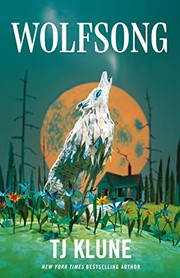
Wolfsong
Ox Matheson grows up believing he is worth nothing. Then the Bennett family moves in next door, werewolves with a secret, and a boy named Joe begins to howl…
2,823-word summary · 13 min read

White Hot Kiss
Layla is half Warden, half demon, and one kiss from her steals a soul. A demon prince warns that Hell is hunting her, and she must choose between the clan that…
2,299-word summary · 10 min read
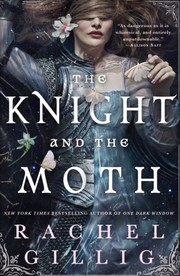
The Knight and the Moth
Six of seven Diviners vanish, and the last one flees a cathedral with a mocking knight and a gargoyle who calls everyone Bartholomew. Gillig's gothic fantasy…
2,936-word summary · 13 min read
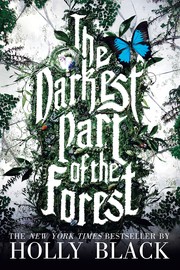
The Darkest Part of the Forest
In a town built around a sleeping horned boy in a glass coffin, a girl discovers she has been spending her nights as a faerie king's knight and remembers none…
2,012-word summary · 9 min read
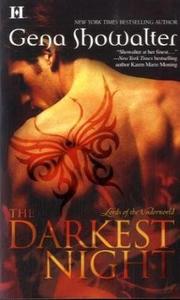
The Darkest Night
A woman who hears the voices of the past meets an immortal warrior who dies every night in Gena Showalter's first Lords of the Underworld novel, a dark…
3,483-word summary · 15 min read
Shadowland
Ever Bloom cannot touch Damen without risking his life. As she hunts for a cure, a mysterious surfer named Jude arrives and her loyalty to Damen is tested.
2,301-word summary · 10 min read
Nightshade
Calla Tor is raised to lead a wolf pack and marry its chosen alpha, until saving a human boy makes her question the Keepers who command her kind.
2,619-word summary · 12 min read
Night Pleasures
An accountant is kidnapped by a soul-stealing Daimon and handcuffed to a two-thousand-year-old Dark-Hunter, beginning a romance that forces him to want…
2,039-word summary · 9 min read

Heartless Sky
The seventh Zodiac Academy novel hides the Vega twins in an underground rebel base, where a hidden killer, shadow rifts and Darius's fatal bargain lead to a…
2,443-word summary · 11 min read
Glow
In the fourth Plated Prisoner book, Auren escapes Midas's death only to stand trial for it, while Slade fights to keep her and their world from tearing apart.
2,667-word summary · 12 min read
Evernight
A girl raised among vampires falls for a human boy at a Gothic boarding school, unaware that he hunts her kind.
2,200-word summary · 10 min read
Quicksilver
Saeris Fane steals from the desert queen's reservoirs until a gateway flings her into the frozen fae world, where Kingfisher needs her alchemist magic.
2,311-word summary · 10 min read
Destined
In the ninth House of Night novel, Zoey Redbird takes her fight with Neferet to the High Council while an ancient bull stirs and a vessel built for murder…
2,317-word summary · 10 min read
Dead Ever After
In the final Sookie Stackhouse novel, Sookie is framed for murder, Eric is bound to another vampire, and a choice about Sam may decide her future.
2,388-word summary · 11 min read
Six Scorched Roses
A dying scholar bargains with a reclusive vampire for blood, and six roses turn a transaction into a slow, dangerous romance.
2,663-word summary · 12 min read
The Lost Sisters
Taryn Duarte writes a letter to her twin, Jude, explaining how she fell for Locke and why she stayed silent while he used them both.
1,914-word summary · 9 min read
The Awakening / The Struggle
A popular high school girl falls for a vampire, then discovers that his dangerous brother wants her too, in the first two books of the Vampire Diaries series.
2,660-word summary · 12 min read
Angels' Blood
Nalini Singh's 2009 Guild Hunter opener sends vampire hunter Elena Deveraux after a murderous archangel in New York, while its most powerful ruler watches.
2,367-word summary · 11 min read