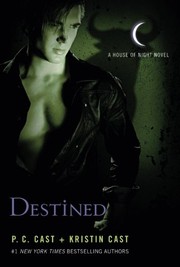
Destined
2,317-word summary 10 min read 336 pages in the book
- First published
- 2011
- Publisher
- St. Martin's Press
- Pages
- 336
- ISBN
- 9780312650254
- Series
- House of Night (#9)
Reading options
What's inside (8 sections)
I came to Destined as the ninth book in a series that had been circling the same war for a while, and I expected more of the same: Zoey Redbird looks worried, Neferet smiles beautifully, somebody dies in a ritual. St. Martin's Press published the book in October 2011, and it runs 336 pages in the first edition. What surprised me is how much the Cast mother-and-daughter team changes the camera here. The story is told from eleven points of view, and for the first time in a while the book starts paying actual bills from earlier chapters instead of just raising new ones. It is still a soap opera with fangs. It is also the most consequential instalment since Burned.
A quick warning for anyone picking this up cold: this is a middle chapter, not an entry point. The Casts assume you know who Kalona is, why Stevie Rae has red markings, and what happened to Jack. The book will tell you those things eventually, in its own slightly rushed way, but it will not hold your hand. Read the first eight and this lands. Skip them and you will spend two hundred pages asking who everybody is.
Eleven narrators and a bull who wants chaos
The prologue puts Zoey with Stark, her Guardian Warrior, and she notices Darkness clinging to him. She calls on Spirit to send it away, which is a good early demonstration of why she is the youngest High Priestess in vampyre history: the girl can command all five elements. She is also still unsure about the death of her mother, Linda, and that uncertainty drives half the book. In a parallel scene Aurox, a beautiful and obviously unnatural teenager, kills a human being. The white bull appears to Aurox and Neferet and says he can create chaos. Neferet, the former High Priestess who has spent the series pretending to be a mentor, plans to use Aurox to kill the white bull and take the title of Goddess of Vampyres.
Then the book opens the floor to everyone. The eleven narrators are Zoey, Stevie Rae, Rephaim, Kalona, Stark, Aurox, Neferet, Shaunee, Lenobia, Dragon and Erik. That is an ambitious list, and the effect is uneven in a way you can feel page by page. Zoey, Stevie Rae and Kalona get material that could not exist anywhere else in the series. Lenobia and Stark get chapters that mostly restate what we already know. Neferet's sections are the most interesting because the Casts let her think in straight lines: she is patient, she is certain, and she thinks the world belongs to her. Reading her mind is a cold pleasure.
The white bull is the series at its least subtle. He turns up, announces that chaos is his favourite thing, and goes back to being a plot device. But the Aurox material works better than the mythology around it. The idea of a weapon built out of a dead boy's lingering soul, with just enough human feeling left to cause trouble for its maker, gives Zoey something useful to do besides have visions.
Zoey takes the fight to the Council
Back at school, Zoey does something nobody expects. She blindsides Neferet by setting up a Skype call with Duantia, the leader of the Vampyre High Council, and gives her own account of the events of Awakened. Neferet is forced to accept Rephaim at the House of Night in front of a witness she cannot bully. Zoey then asks for a second House of Night to be established in the tunnels under the Tulsa train depot, where Stevie Rae and the red fledglings have been living. The Council accepts Stevie Rae as High Priestess of the red fledglings, but Duantia will not give a straight answer about the second school. It is a partial win, and the book is smart enough to leave it partial.
Neferet's discomfort is the point of the scene. For eight books she has operated in the gaps, relying on the Council's distance and on everyone's reluctance to believe ill of her. Zoey closes one of those gaps in front of an audience. It is a genuinely satisfying piece of plotting, mostly because it is procedural. Nobody stabs anybody. A video call and a few well-chosen words do more damage to Neferet than a duel would have.
The depot itself matters. It is an abandoned Art Deco train station in Tulsa, and the tunnels beneath downtown were built by bootleggers during Prohibition. The series has always used the real city as a kind of second character: the House of Night campus is based on Cascia Hall, Zoey shops around Utica Square, and the tunnels have hosted some of the sharpest confrontations in earlier books. Asking for a second school down there is not only a logistical request. It is Zoey claiming a piece of the city for the red fledglings who have been living underground, and a direct challenge to Neferet's hold on the official school. Duantia's refusal to give a straight answer keeps the request hanging, and that unresolved business is part of what makes the book feel like a living middle chapter.
The Council sends Thanatos, a vampyre High Priestess with an affinity for death, to report on the situation. Thanatos can see the threads of Darkness that Neferet carries, which means Zoey is no longer the only person who can see what is in front of her. Zoey eventually tells Thanatos her fears about Neferet and about her mother's death, and Thanatos offers to perform a reveal ritual at the place where Linda was killed, on the fifth day of mourning. That single offer gives the novel a clock. Everything after it is preparation for a ritual that somebody is going to try to stop.
Rephaim, the blind girl, and the split twins
Rephaim, Kalona's son, has been given a human form by Nyx, and three of his Raven Mocker brothers come to find him in the garden. Their father sent them to spy on him and to exploit his bitterness. Instead they are shocked into silence by his human body. Aurox turns up and kills one of them, then attacks Rephaim, and in the fight he half-shifts into a bull. Neferet arrives and smoothly calls Aurox her gift from the Goddess. Stevie Rae stops the fight, but not before she, Rephaim and Zoey have all seen what he can do.
Elsewhere, Erik hears the commotion and tries to intervene, but the Tracker compulsion takes hold of him first. He finds Shaylin Ruede, a blind girl, and fumbles the traditional words of the Marking so badly that she ends up with a red Mark instead of a blue one. Erik blames himself. Shaylin recovers her sight and gains True Sight, a rare gift that lets her see people as colours. When Neferet walks in, Shaylin pretends to faint and later says the colour around her was like dead fish eyes. It is one of the better ideas in the book, and it gives an outsider a way to see the truth that the regular characters have been arguing about for years. Erik takes her to Stevie Rae, where she will be safe.
The twins, Shaunee and Erin, break over Rephaim. Shaunee defends him, partly because her own father left and she recognises the shape of that wound. Erin cannot understand why Shaunee cares so much about a Raven Mocker, and the argument slices through their long-running act as one person in two bodies. It is the most human conflict in the book. While waiting for Rephaim in the tunnels, Shaunee spots Kalona and lends him her phone so he can contact his son, a small gesture that quietly rearranges the board.
Two prophecies, one from Kramisha and one from Aphrodite, warn that Rephaim will die at the reveal ritual, probably at Dragon's hand. Thanatos asks him to remain at the House of Night. He does not obey. Kalona, meanwhile, appears on the wall and offers Zoey a truce against Neferet, which she accepts with visible reluctance. The two of them standing on the same side is one of those moments that makes a long-running series feel like it has actually moved.
The humans in the halls and Aurox's problem
One of the stranger tensions in this book is not magical at all. The House of Night has an influx of humans in its halls, including a handsome horse whisperer who works with Lenobia, and the students' precarious stability gets thinner because of it. The Casts use this to make the school feel like an actual institution with staffing problems rather than a stage set. It also reminds you that fledglings are supposed to be learning, except most of their lessons now consist of surviving the next prophecy. Aphrodite, unmarked but still gifted with visions, and her Warrior Darius keep drifting through the margins, and Kramisha's poems keep arriving as warnings nobody wants to read. The book is crowded, and that is both a pleasure and a problem.
Aurox is the thread that ties the human and the monstrous together. The publisher's description calls him jaw-droppingly gorgeous and hints that he is more, or possibly less, than human. Zoey can sense the part of him that is still a person, the compassion fighting his dark calling, and there is something familiar about him that she cannot place. Readers who have been keeping track will understand why before he does. The Casts are playing the longest game in the series here: a weapon that remembers enough of the boy it was built from to suffer. It gives Aurox a few good scenes, though I wish they had let him speak for himself more often. He is more interesting when he is quiet and confused than when Neferet is explaining him.
The ritual and the cost
Neferet learns about the reveal ritual and sends Aurox to interrupt it. The ritual goes ahead anyway. Aurox charges out in bull form, and Dragon Lankford, the fencing instructor and Anastasia's husband, steps in and takes the hit meant for Rephaim. Dragon dies. The ritual closes on his death, and Zoey and her grandmother Sylvia learn what really happened to Linda. Rephaim is badly injured as well, and Kalona, called by Stevie Rae, arrives and begs Nyx not to kill his son for his father's mistakes. The request is granted. Rephaim wakes up.
Thanatos then goes to Dragon and guides him to the Otherworld. Everyone watches a gateway open and sees Dragon reunited with Anastasia, which is the sort of payoff that only works because the series has spent books building that marriage. Thanatos decides to stay as the new High Priestess of the Tulsa House of Night. Kalona, of all people, pledges himself as her Warrior. As the group leaves the scene, Nyx appears to them with a reminder that the fight will continue.
That final vision is honest about what kind of book this is. Destined resolves a murder, kills a beloved teacher, turns an enemy into an ally, and then says, plainly, that this is not the end. For a ninth instalment that is the correct ending. It gives you enough to feel that the previous eight books were leading somewhere, while keeping the door open for the last three.
What works and what drags
The best pages here are the ones that trust small moments. Shaylin's colour sight is a clean idea, and her reading of Neferet lands because the girl has nothing to lose by saying it. Shaunee's defence of Rephaim gives a side character a real argument to make. Kalona pleading with Nyx is a strange and moving beat, because this is a fallen immortal who has spent the series being treated as a force of nature, and here he is reduced to a parent asking for one exception. Dragon's death works for the same reason: it has been prepared for, and when it comes it is quick and costs something.
The eleven-point-of-view structure is also the book's main problem. There are chapters that exist mostly so a name appears in the chapter list, and the shift into Neferet's head, while chilling, slows the momentum whenever it arrives. The prose keeps telling us that characters face choices and that destinies are being decided, when the scenes themselves are already doing that work. The romantic entanglements, Zoey with Stark and Erik, Rephaim with Stevie Rae, get as much attention as the plot against the High Council, which will delight readers who came for the relationships and frustrate readers who wanted the war to move faster.
The religious argument underneath the series also gets a heavier hand here than it needs. Nyx is said to give every vampyre and human free will, and this book keeps announcing that idea in dialogue. The good news is that it also puts the claim to work in small ways. Shaylin decides what to do with her sight, Kalona chooses to ask for mercy instead of taking it, and Dragon steps into Aurox's path without being told. Those choices are cleaner than the prophecy language wrapped around them, and they are a large part of why the ritual lands.
I would also warn against expecting a satisfying read on its own. The reveal ritual depends on guilt that only earlier books could establish, and the death of Dragon needs the history of Dragon and Anastasia behind it. On the other hand, the mechanics are solid. Every prophecy in this book pays off, the ritual is staged clearly enough that you can follow who is standing where, and the shift of Kalona into Thanatos's service genuinely changes the shape of the conflict. It is a competent, slightly overstuffed machine, and it earns its place in the series.
FAQ
Which book in the House of Night series is Destined?
It is the ninth novel, published in October 2011, following Awakened and coming before Hidden in the main sequence.
Do I need to read the earlier House of Night books first?
Yes. Destined leans on events and relationships from the first eight books, especially the story of Dragon and Anastasia and the red fledglings.
Does Destined resolve the series?
No. It solves the mystery of Zoey's mother's murder and changes the leadership at the Tulsa school, but it ends with a vision that the fight continues.
Similar books
More from House of Night first, then related titles.

Marked
Zoey Redbird is Marked as a fledgling vampyre and sent to Tulsa's House of Night, where Goddess-gifted powers, new friends, and a corrupt queen bee test her…
2,101-word summary · 9 min read
Betrayed
Zoey leads the Dark Daughters while human teens die near Tulsa, and her best friend's death exposes a cruel secret inside the House of Night.
2,910-word summary · 13 min read
Chosen
Zoey juggles Erik, Heath and Loren as undead fledglings rise around Tulsa while Neferet schemes for full control of the school.
2,398-word summary · 11 min read

Untamed
Zoey loses friends and faces Neferet's war as Kalona wakes under Tulsa.
2,155-word summary · 10 min read
Hunted
Zoey hides in Tulsa's tunnels as Kalona charms the House of Night, and an old prophecy names five unlikely saviors.
2,600-word summary · 12 min read
Tempted
Zoey faces Kalona in dreams and Venice while Stevie Rae hides a wounded Raven Mocker, and one loss breaks her soul.
3,185-word summary · 14 min read
Burned
Zoey's soul hides in the Otherworld while Stark must die to fetch her and Stevie Rae burns secrets.
2,074-word summary · 9 min read
Awakened
Zoey returns from Skye to a grieving House of Night, where one funeral and one act of mercy split the school.
2,989-word summary · 13 min read

The Indigo Spell
Sydney Sage hunts an aging witch, learns forbidden magic, and finally admits she loves Adrian, while the Alchemist tattoo on her cheek may be controlling her.
2,604-word summary · 12 min read

Midnight Sun
Twilight retold by Edward Cullen: a silent mind, singer blood in Forks, and restraint tested to the edge.
3,824-word summary · 17 min read
Twilight
Stephenie Meyer's Twilight in full: Bella and Edward's romance in Forks, the Cullens' rules and the nomad vampires, and what the novel's restraint does to its…
2,494-word summary · 11 min read

Revelations
Schuyler is pulled into the Force household as Silver Bloods rise, and a Conclave gathering in Rio ends in bloodshed.
2,166-word summary · 10 min read

Evernight
A girl raised among vampires falls for a human boy at a Gothic boarding school, unaware that he hunts her kind.
2,200-word summary · 10 min read

Masquerade
After Cordelia's death, Schuyler flies to Venice to find her exiled grandfather, then returns to the Blue Bloods as they prepare for a masked ball and a hidden…
2,543-word summary · 11 min read
Demonglass
Sophie Mercer spends the summer at the Council's English estate, where two new demons, a suspicious host, and Archer's return complicate her plan to remove her…
2,771-word summary · 12 min read

Born at Midnight
Kylie Galen is sent to a camp for troubled teens and discovers it is a haven for vampires, werewolves, and witches, and that she may be something stranger…
2,310-word summary · 10 min read
Cemetery Boys
A trans brujo in East Los Angeles summons the ghost of a boy who refuses to move on, and together they uncover a murder hidden beneath Día de los Muertos.
1,997-word summary · 9 min read
Switched
A Minnesota teenager who can make people obey her discovers she is a changeling troll princess, and the hidden kingdom she came from wants her back.
2,131-word summary · 9 min read

Glass Houses
Claire Danvers moves off campus to escape a bully and lands in a house where the roommates know Morganville's real secret: the town belongs to vampires.
2,345-word summary · 10 min read

This Savage Song
Monster hunter Kate meets August, a monster who plays violin.
2,574-word summary · 11 min read

Soulless
A soulless spinster in Victorian London nullifies supernaturals and solves disappearances.
2,362-word summary · 10 min read

One Foot in the Grave
Cat hunts vampires with Bones while her Sire plots from the grave.
2,200-word summary · 10 min read
Half-Blood
Half-blood Alex trains at the Covenant while gods stir and rules close in.
2,601-word summary · 12 min read
Dreams of Gods & Monsters
Karou and Akiva unite chimera and seraphim against empires invading Earth.
2,179-word summary · 10 min read
Lover Mine
Mute fighter John Matthew loves scarred Xhex as Lash and the war close in on Caldwell.
2,516-word summary · 11 min read
Lover Avenged
Half symphath Rehvenge hides behind ZeroSum and drugs while nurse Ehlena pulls him toward truth.
2,421-word summary · 11 min read

The Golden Lily
Sydney Sage guards Jill at Amberwood Prep in Palm Springs, studies forbidden magic, favors Adrian over Brayden, and faces Alchemist custody in this second…
2,988-word summary · 13 min read