
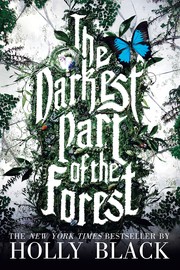
The Darkest Part of the Forest
2,012-word summary 9 min read 328 pages in the book
- First published
- 2015
- Publisher
- Little, Brown Books for Young Readers
- Pages
- 328
- ISBN
- 9780316213059
Reading options
What's inside (8 sections)
The boy in the glass coffin
Fairfold is a town where people and the Folk live side by side. Tourists come for the wonders of Faerie at the edge of town and, above all, for a horned boy who lies sleeping in a glass coffin in the woods. Nobody knows who put him there or how long he has been asleep. He has become the town's most reliable industry. Parents bring children to look at him. Vendors sell things. The coffin is a landmark, a curiosity and, for two siblings named Hazel and Ben Evans, the setting of a game they played throughout childhood.
In that game the horned boy was a prince. Hazel was his knight and Ben was his bard. They visited the coffin constantly, made up stories about the prince, and invented elaborate histories for a sleeping stranger who could not answer back. It is a lovely image of childhood, two siblings building a whole world out of a tourist attraction. Holly Black is interested in what happens when a game like that turns out to have been real.
As teenagers the siblings have drifted apart. Ben is a gifted musician whose talent feels connected to Faerie in a way nobody can quite explain. Hazel is guarded and restless, quicker with a blade than she should be and less willing to say what she means. Their friend Jack is a changeling who was raised among humans and carries a painful family history. All three of them are still orbiting the coffin in one way or another. None of them has really grown out of the game.
The novel was published in 2015, and it is a standalone, though it shares characters and assumptions with Black's other faerie books. You do not need to have read the Modern Faerie Tales or the Folk of the Air novels to follow it. It does help to accept, immediately, that Black is not going to explain her world to you. The rules of the Folk are dangerous and partial, and the characters know more than the reader does. That is part of the pleasure.
The morning the coffin breaks
The glass coffin is shattered. The horned boy wakes and vanishes, and the fragile balance between Fairfold and the faerie courts starts to come apart. Violent incidents begin to threaten the town. Hazel is unsettled for a reason she cannot explain: she suspects she knows how the coffin broke, but the memory of that night is simply gone.
This is where the book becomes genuinely strange. Hazel keeps finding notes and clues that she appears to have written to herself. Small traces in her own handwriting tell her that her nights have not been blank, that she has been somewhere and done something, and that her waking self has no access to it. Black handles this with a light, creepy touch. The clues are not dramatic. They are the kind of thing you might find in a pocket and cannot account for. The horror is in the plain fact of a gap in your own life.
The awakened boy turns out to be a faerie prince named Severin. Ben's childhood longing for the prince becomes something real and complicated as he spends time with him. Hazel is drawn to Jack, but trust between them is strained by what each is hiding from the other. The romantic threads are handled with Black's usual restraint. Nobody says what they mean for a long time, and when they finally do, the admission costs something.
The bargain
The secret at the center of the book is a bargain Hazel made years earlier. She asked the fae to give Ben his musical talent, and the price was seven years of her own life. Since then, every night, she has served as the Alderking's knight, carrying out his commands. His magic erases all memory of it by morning. The sword she found in the woods as a child belongs to this hidden history, as do the written traces her nighttime self leaves behind.
This is a tremendous reveal, and what makes it work is that it re-reads everything that came before. Hazel's skill with a blade, her unnatural composure in danger, her exhaustion, her missing nights, all of it was a life she was living without knowing it. She was the prince's knight from the childhood game, only the prince was not the boy in the coffin. She was serving something much worse.
The bargain also gives the book its moral argument. Hazel made a choice for love of her brother, and she paid for it without understanding the price until years later. Black is not interested in whether the choice was noble. She is interested in what it means to have a good reason and still be trapped by it. The seven years are not a metaphor. They are seven years she will never get back, and the ending makes her look directly at that fact.
The Alderking now wants Hazel to deliver Severin and the sword to him. His plan depends on Severin's sister Sorrow, whose grief over her husband's death has been twisted into something monstrous and violent. Rather than keep obeying a bargain whose cost she is only beginning to understand, Hazel decides to resist. She takes the fight into the faerie world, drawing on the knightly skills she honed during the nights she cannot remember.
Knight and bard
What I liked most about the book is that Ben's music matters as much as Hazel's sword. The childhood roles turn out not to have been pretend. Hazel really is a knight, with a real blade and real habits of violence. Ben really is a bard, and his music has power in a world where names and songs are a kind of magic. The siblings grow into the parts they invented for themselves, but the parts were never theirs to invent. They were descriptions of what they would become.
The climax brings all of this together. The danger reaches the town, Hazel confronts the Alderking and defeats him with the sword, and his control over Sorrow ends. The Alderking's dying curse restores every memory the bargain stole, which means Hazel has to face what she did while she was under his command. This is a braver choice than a simpler victory would have been. Black does not let her heroine off with the death of the villain. The memories come back, and they stay.
Sorrow's monstrous transformation ends once the Alderking is gone. Hazel and Jack admit what they feel and begin a relationship. Ben and Severin choose a future together, and Ben leaves Fairfold with him for Faerie. The ending fulfills the siblings' childhood fantasy: the knight and the bard get their prince. But Black makes clear that the fantasy carried costs. Lost years, violence, grief and responsibility are part of the package. You cannot play at being a knight without eventually having to be one.
The world around the edges
Black's greatest strength here is the density of the world. Fairfold feels like a real place with a real economy and real habits, a town that has learned to live with the dangerous things just outside it. The Folk are not one thing. Some are comic, some are predatory, some are bound by rules the humans can learn but never quite master. That same sense of bargain and hazard runs through every exchange with the Folk, from a careless tourist asking for a souvenir to a knight trying to work out what her own sword has been doing at night.
The secondary characters are drawn sharply. Jack's history as a changeling gives him a reason to distrust both worlds, and his relationship with Hazel works because both of them understand what it is like to have been someone else's project. Ben's music is described in a way that makes you believe in it, which is not always the case when a writer asks you to accept a magical art. Sorrow is the book's most tragic figure, a person whose grief was weaponized by someone else, and her resolution is handled with more care than the plot strictly requires.
The prose is clean and often funny. Black trusts her reader to keep up with the rules, and she rarely stops to explain a custom. When she does pause, it is because the explanation itself is a trap or a piece of power. That is the correct approach for this kind of story. A fully explained faerie world stops being frightening.
I also appreciate that the book treats Fairfold's relationship with Faerie as ordinary. The townspeople are not awed or terrified in the way tourists are. They have learned to live next to dangerous things, the way people live near a coast that takes a house every few years. That familiarity is what makes the early chapters feel so solid. The coffin is not a monument to wonder. It is a fixture, something the town has built its routines around, and the people who sell postcards of it have long since stopped looking at it. Hazel and Ben are the exceptions, the two who never stopped looking, which is why they are the ones the story chooses.
The ending also trusts the reader to sit with mixed outcomes. Hazel gets the knight's ending and pays for it in memories. Ben gets the prince and leaves his sister behind. Jack gets Hazel, but he has had to watch her nearly die to say so. Sorrow is freed from the Alderking's influence, but nobody suggests that her life will simply return to normal after what she did. Black is not writing a story in which the right people are rewarded and the wrong people are punished. She is writing a story in which people make bargains and then live inside the terms, which is a much more grown-up way to use faerie material.
Where the book strains
The plot is dense, and the density sometimes works against the story. There are a great many named Folk, bargains, objects and obligations to keep track of, and the last third of the book asks the reader to hold several of them in mind at once. A first encounter with the Blackthorn family and the wider politics of the faerie courts can feel like arriving halfway through a conversation. It is a standalone novel, but it was written by someone who had been building this world for years, and the book occasionally assumes more than a new reader has.
The pacing is uneven too. The opening chapters move slowly through Fairfold and the tourism business, then the middle accelerates sharply once the coffin breaks and Hazel's missing nights start to surface. The slow start is worth it for the atmosphere, but it takes patience. There is also a reliance on characters being deceived about things that a careful reader may work out earlier than they do. Hazel's missing nights are signposted generously, so the central reveal lands as confirmation rather than surprise.
I did not mind that. The book is not written as a puzzle to be solved ahead of the narrative. It is written as a story about a young woman who made a bargain in grief and has to live with the consequences when the magic stops hiding them. The moment she chooses to resist, rather than continue as the Alderking's obedient knight, is the real heroism in the book. It comes after years of not knowing she was a hero at all.
That is the idea I keep coming back to. Hazel spent seven years being someone without knowing it, and the cost of finding out is that she has to become that person on purpose. The game she played as a child with her brother was a way of asking what she might be. The answer arrives in the form of a sword, a missing memory and a choice she has to make with her eyes open.
FAQ
Is The Darkest Part of the Forest part of a series?
No. It is a standalone novel, though it shares characters and a faerie world with Holly Black's other books. You do not need to have read them first.
What is the bargain Hazel makes?
She asks the fae to give her brother Ben his musical talent and gives seven years of her life in return. Each night she serves the Alderking as his knight, and his magic wipes her memory by morning.
Who is the horned boy in the glass coffin?
He is Severin, a faerie prince. His awakening and disappearance upset the balance between Fairfold and the faerie courts and set the plot in motion.
Similar books
An Enchantment of Ravens
Isobel, a mortal artist in the fairy town of Whimsy, paints a portrait of the autumn prince and falls in love with him, breaking the laws of her craft.
2,087-word summary · 9 min read
The Reckoning
Twin heirs survive trials and hazing at Zodiac Academy while the heirs start to split.
1,984-word summary · 9 min read

The Lost Sisters
Taryn Duarte writes a letter to her twin, Jude, explaining how she fell for Locke and why she stayed silent while he used them both.
1,914-word summary · 9 min read
Tithe: A Modern Faerie Tale
A retelling of Holly Black's Tithe: Kaye Fierch returns to the Jersey Shore, discovers she is a changeling, and becomes the mortal sacrifice in a faerie power…
2,586-word summary · 11 min read
The Wicked King
Jude must hold Cardan on the Elfhame throne while the Undersea plots.
3,439-word summary · 15 min read
Wings
A homeschooled fifteen-year-old grows a blue flower from her back and learns she is a faerie sent to guard a hidden gate. Pike's debut makes plant lore feel…
2,506-word summary · 11 min read
The Knight and the Moth
Six of seven Diviners vanish, and the last one flees a cathedral with a mocking knight and a gargoyle who calls everyone Bartholomew. Gillig's gothic fantasy…
2,936-word summary · 13 min read
The Girl of Fire and Thorns
Rae Carson's debut follows Elisa, an insecure princess born with a godstone in her navel, who is married to a foreign king and must grow into the leader a…
2,331-word summary · 10 min read
Shadowland
Ever Bloom cannot touch Damen without risking his life. As she hunts for a cure, a mysterious surfer named Jude arrives and her loyalty to Damen is tested.
2,301-word summary · 10 min read
Nightbane
Isla Crown has thirty days to defend Lightlark after Grim threatens to destroy it, while memories of the year she spent with him return.
2,353-word summary · 10 min read

Magic Study
Sentenced to die in Ixia, Yelena returns to the land she was stolen from to learn the magic that made her an outlaw.
2,542-word summary · 11 min read
Magic Bleeds
The fourth Kate Daniels novel finds Kate investigating a magical plague in Atlanta while her relationship with Curran fractures and an ancient enemy tied to…
2,236-word summary · 10 min read

Heartless Sky
The seventh Zodiac Academy novel hides the Vega twins in an underground rebel base, where a hidden killer, shadow rifts and Darius's fatal bargain lead to a…
2,443-word summary · 11 min read
The Paper Magician
A graduate magician is assigned to paper magic instead of metal, then must face a woman who tears out her mentor's heart.
2,454-word summary · 11 min read
Quicksilver
Saeris Fane steals from the desert queen's reservoirs until a gateway flings her into the frozen fae world, where Kingfisher needs her alchemist magic.
2,311-word summary · 10 min read
Magic Strikes
Drafted into the Order of Merciful Aid, Kate Daniels investigates the beating of her friend Derek and finds a hidden tournament where rakshasas fight in human…
2,012-word summary · 9 min read

Magic Burns
A magic flare hits Atlanta, and mercenary Kate Daniels must recover stolen maps, find a missing witch, and keep a teenage girl alive while Celtic gods try to…
2,021-word summary · 9 min read

The Siren
Saved from a shipwreck in 1930, Kahlen becomes a siren who sings men to their deaths for the Ocean, until a boy in a college library makes her want a life she…
2,369-word summary · 11 min read
The Golem's Eye
Two years after The Amulet of Samarkand, Nathaniel is a rising bureaucrat, Bartimaeus is his unwilling servant again, and something made of clay is tearing…
2,299-word summary · 10 min read

The Rose & the Dagger
Shahrzad is pulled from her Caliph husband and left in a desert camp of rebels, needing to break his curse and end a war before it ends her.
2,520-word summary · 11 min read

We Hunt the Flame
In a fractured Arabia-inspired world, a disguised huntress and a prince-assassin race to find a magic-restoring book and confront an ancient evil.
2,195-word summary · 10 min read

Lore
Lore Perseous, the last of a hunted bloodline, is pulled back into the Agon when a wounded Athena offers her revenge against the god who killed her family.
2,188-word summary · 10 min read
Blue Moon
Ever Bloom tries to save her immortal boyfriend, Damen, from a mysterious illness while a new student named Roman quietly takes control of her school and her…
1,998-word summary · 9 min read
The Bane Chronicles
Eleven stories across five centuries follow Magnus Bane from a ban in Peru to his first date with Alec in this illustrated Shadowhunter companion.
2,470-word summary · 11 min read
Cold Days
Back from the dead as the Winter Knight, Harry Dresden must follow Mab's order to kill an immortal and defend Demonreach on Halloween night.
2,361-word summary · 10 min read

The Indigo Spell
Sydney Sage hunts an aging witch, learns forbidden magic, and finally admits she loves Adrian, while the Alchemist tattoo on her cheek may be controlling her.
2,604-word summary · 12 min read
Dreamfever
With the walls between worlds down and Mac broken by the Fae, Dreamfever is the darkest volume of the Fever series, and the one that changes everything.
2,007-word summary · 9 min read
A Deal with the Elf King
A village herbalist is exposed as the hidden Human Queen, married to a cold elf king, and given three months to save his dying kingdom or be bound to it…
2,094-word summary · 9 min read
These Hollow Vows
Brie trades with the Unseelie to save her sister and steals for a prince.
2,384-word summary · 11 min read