
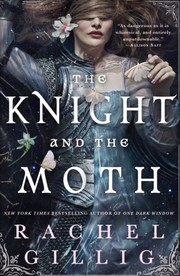
The Knight and the Moth
2,936-word summary 13 min read 400 pages in the book
- First published
- 2025
- Publisher
- Orbit
- Pages
- 400
- ISBN
- 9780316582704
- Series
- The Stonewater Kingdom (#1)
Reading options
What's inside (9 sections)
- Six women who cannot leave the cathedral
- A king, a stolen secret, and a knight who laughs at it all
- The bargain, and one night beyond the walls
- The vanishings, and a companion who calls everyone Bartholomew
- The Omens and the stories people tell about them
- Faith, myth, and a woman learning to choose
- What lands, what drags, and who it is for
- Key takeaways
- FAQ
I picked this one up because a friend kept going on about the gargoyle. Not the romance, not the cathedral full of drowned women, not the six gods. The gargoyle. Apparently it calls everybody Bartholomew and is a better companion than most of the humans on the page. That was enough of a recommendation for me, and by the time I finished I thought my friend had undersold the rest of it too. The Knight and the Moth came out from Orbit on 20 May 2025, a 400-page gothic romantic fantasy, and it is the first volume of the Stonewater Kingdom duology, with the follow-up, The Knave and the Moon, arriving in 2026. Gillig has said the seed of the whole thing was an old folk ballad called The Outlandish Knight. I went in expecting a dark fairy tale with a sense of humor and got something stranger and more interested in faith than I had bargained for.
Six women who cannot leave the cathedral
The story begins in Traum, in a place called Aisling Cathedral, where six young women live under a rule that is part vocation and part prison. They are Diviners. Their job is to scry the future, and the way they do it is by drowning themselves, over and over, in a sacred spring. Each drowning is meant to bring back a vision from one of six gods called the Omens. It is a brutal little machine of a system: the water, the repeated submersion, the vision, the recovery, and then the whole thing again when the next question comes in.
The Diviners wear face coverings. They have given up their old names. They cannot leave the cathedral. Six of them, kept behind walls, their identities filed away in favor of a number. The one we follow is simply called Six, and we learn that she was once Sybil Delling. She is close to the end of a ten years of service, which is a long time to spend as a numbered, veiled woman whose body is the instrument somebody else uses to look into the future.
What interested me here is how much of the book's atmosphere comes from those constraints rather than from any single scare. Gillig does not need to shout. There is something grimly ordinary about six women accepted into a routine of ritual drowning, about names surrendered as the price of a role, about a door that only opens in one direction. The cathedral is a home and a cage at the same time, and the book keeps that double meaning in view. Even before anything goes wrong, you can feel that the arrangement is not as holy as the people running it claim.
I should be careful about how much I pin down, because the book gives its world in pieces and trusts you to assemble them. What is clear is that the Diviners are treated as conduits rather than as people, that their visions are treated as public property, and that the faith built around the spring has a political usefulness. Six's position near the end of her term gives the story its clock. She has almost paid her debt. Then a visitor arrives, and the clock stops meaning what it did.
A king, a stolen secret, and a knight who laughs at it all
The visitor is the newly crowned King Benedict Castor III, and he has come to Aisling to have his fortune told. A new king wanting a read on his reign is a fertile situation for a book like this, and Gillig uses it to put faith and power in the same room. The cathedral has the visions. The crown has the authority. Neither entirely trusts the other, and neither is above a bit of theft.
Six catches members of the king's party stealing water from the sacred spring. That is the small crack that everything else widens. It is not a grand act of sacrilege staged for the cameras; it is a practical theft, by people who serve a king and apparently think the spring's water is worth taking. The moment tells you something about how much the visitors actually believe, and it gives Six a lever. She also meets the king's knight, Sir Rodrick Myndacious, whom everyone calls Rory. Rory is a mocking nonbeliever, the sort of man who stands in a holy place and treats it as a joke. He is the natural opposite of a veiled woman who has spent ten years drowning for a faith she is expected to embody.
The chemistry between them is built on that opposition rather than on a meeting of minds. She is caught up in a system she cannot quite bring herself to leave. He stands outside it and finds it ridiculous. He does not share her belief, and he does not treat the Omens with the reverence the Diviners are expected to show. I liked that the book lets the friction be real. Rory's unbelief is not a cute cover for a hidden faith, at least not at first, and Six's devotion is not presented as naive. They are two people looking at the same cathedral from different sides of a wall.
What I also liked is that the stealing of the water is not buried. It is the first honest thing in the encounter. In a story about scrying and prophecy and divine favor, the inciting incident is a petty theft. That choice sets the tone. This is a book about institutions that claim to speak for the gods and behave like ordinary, self-interested people.
The bargain, and one night beyond the walls
Six does not immediately run. She makes a deal. She agrees to stay quiet about the stolen water if Rory helps her and the other Diviners sneak out of the cathedral for a night of fun. It is a small, human want, and that is what makes it work. After ten years of service, of veils and drowning and numbered identity, what she asks for is a night like an ordinary young woman might have. The request is modest on purpose. Gillig is not writing a woman who dreams of overthrowing a theocracy on her first night out. She is writing someone who wants to taste a freedom she has been told she does not get to have.
The bargain also tells you the shape of Rory's usefulness. He is a knight with access, a man who can move where the Diviners cannot, and a skeptical outsider who is not invested in the cathedral's rules. He can open the door, in a practical sense and in a larger one. His help is transactional at first, which keeps the romance honest. Neither of them is doing a favor out of pure goodwill. He wants her silence. She wants a night outside. The arrangement is clean, and it gives their later closeness somewhere to grow from.
I found this stretch of the book the most immediately pleasurable. There is a lightness to the idea of six veiled women getting out for an evening, and it plays against the heavier material without undercutting it. The book understands that freedom, for someone who has never really had it, starts with small and slightly reckless choices. A night of fun is not nothing when you have spent a decade as a numbered instrument of the state.
It is also the last moment of normalcy. Once the Diviners are outside, the story changes gear. Gillig plants the trap quietly, and the shift from a night of license to a story about disappearance is where the book stops being a contained gothic puzzle and becomes a road novel with stakes.
The vanishings, and a companion who calls everyone Bartholomew
The Diviners begin to disappear, one by one, until only Six is left. That is the turn that sends her out of Aisling with Rory and with a sentient gargoyle who insists on calling everyone Bartholomew. I am not going to pretend the gargoyle is a minor flourish. It is one of the best ideas in the book, and it does real work. A creature that names everyone the same thing is a funny gag, but it is also a quiet argument about identity in a story full of people whose names have been taken from them. Six lost her name and became a number. The gargoyle refuses the whole business of correct names and hands the same one to everybody. It is hard to stay solemn about identity in its company.
Six's flight with Rory is where the book opens up. The cathedral had been a closed space with a strict set of rules. The road is the opposite: cultures, legends, and a kingdom that is much larger than the chapel the Diviners were raised in. Their journey introduces the world of Traum and the stories that hold it together. I liked this part most when it stayed concrete, when the book was showing me how different the kingdom's corners are rather than explaining a system at length. I liked it less when it stopped to lecture, which is a complaint I will come back to.
The disappearances are the engine here. They give Six a reason to travel and a reason to question what she has been told. If the Diviners are being taken, then somebody is taking them, and if somebody is taking them, then the story the cathedral told about her service and her visions may not be the whole truth. The plot works because it turns a supernatural mystery into a question about who has been manipulating whom. The disappearances are not there only to raise the body count. They are there to dismantle Six's faith from the outside, one absent woman at a time.
The Omens and the stories people tell about them
The six gods at the center of the faith are the Artful Brigand, the Harried Scribe, the Ardent Oarsman, the Faithful Forester, the Heartsore Weaver, and the Moth. Six of them, matching six Diviners, and each with a title that reads like a tiny biography. Gillig gives only fragments of their legends, and the book is stronger for it. The names do a lot of work on their own. The Heartsore Weaver sounds like a god who knows about appointed sorrow. The Faithful Forester and the Ardent Oarsman sound like figures from older, humbler stories. The Moth, the one the title reaches for, is the quietest and the most suggestive of the six.
What I found most interesting is how the book treats myth-making as a human activity. The Omens are woven into the life of the cathedral and the wider kingdom, but the story keeps asking where the divine ends and the manufactured begins. Who wrote the legends? Who benefits from the Diviners believing them? When Six starts questioning whether her destiny was preordained, she is really asking whether the Omens chose her or whether people who wanted a compliant tool used the idea of the Omens to keep her in place. That question runs through the travel sections and gives them a spine.
This is where the folk ballad origin becomes visible. The Outlandish Knight is a story about a young woman, a persuasive stranger, and a fatal misreading of who is dangerous. Gillig is not retelling it beat for beat, but the shadow of it is here: a woman trusting a charming figure who may be taking her away from safety, and a question about who is really the predator. Knowing the ballad is not required to follow the book, but it adds a layer. The title's knight and moth are a study in contrasts, one armored and certain, one small and drawn to the light.
I will say that the legends are introduced in a way that asks for patience. The book has a talky middle section, and some of that talk is spent on the Omens and the cultures around them. If you are the sort of reader who wants every bit of lore to arrive through action, there are stretches here where the story stops to explain itself. I stuck with it because the individual legends are vivid enough to hold my attention, and because Six's growing doubt gave the exposition a purpose. Your tolerance will likely depend on how much you enjoy being told how a world works.
Faith, myth, and a woman learning to choose
Underneath the disappearances and the road, this is a book about a woman learning to choose for herself. Six has spent a decade in a role assigned to her, with a number instead of a name, a veil instead of a face, and a set of visions she was expected to deliver on demand. The slow-burning romance with Rory runs alongside that arc rather than swallowing it. He is part of her education in choosing, but he is not the reason she changes. The point of the book is that she starts asking questions that the cathedral could not permit.
Faith is treated with more care than I expected. Gillig could have made the Omens a simple lie and the cathedral a simple conspiracy. She does not. The book seems genuinely interested in the comfort and the structure that belief provides, and in why a person would hold onto it even when the evidence turns against it. Six's doubt is painful because her faith was real. She is not shaking off a con; she is losing a framework that told her who she was. That is a heavier thing than a standard fantasy hero's discovery that the authorities are corrupt.
The romance is deliberately slow and relatively chaste, which will please some readers and frustrate others. Gillig is more interested in the long burn of trust between two people who start as adversaries than in a quick physical payoff. Rory begins as the man who mocks what she believes and helps her break a rule. Over the journey, that mockery becomes a kind of honesty she can use. He is outside the system she was raised in, and he can see its seams in a way she could not while she was inside it. The relationship grows out of that vantage point. It is not instant, and it is not presented as the answer to all of Six's problems.
I appreciated that the book leaves her choices hers. Even when Rory is beside her, the decisions about what to believe and what to do are Six's. The title pairing can make it sound like a story about a knight rescuing a woman, but the arrangement on the page is closer to two people escaping a shared mess, with the woman doing most of the growing. That is a better story than the cover premise suggests, and it is the main reason I would recommend it.
What lands, what drags, and who it is for
The things that work here are the things Gillig built from the start. The cathedral setting is concrete enough to feel lived in: the repetition of the drowning ritual, the veil, the lost names, the numbered identity. The disappearance plot gives the book real momentum once it starts. The gargoyle is a genuine bright spot, funny without flattening the darker material. And the question of whether Six's path was chosen for her or by her gives the fantasy machinery an emotional anchor. When the book stays close to Six and her actual situation, it is hard to put down.
The main criticism is one that professional reviewers raised too. Paste's Lacy Baugher Milas gave the novel a 9.0 and praised its vivid worldbuilding and what she called a uniquely Gothic atmosphere, and I agree with that assessment. Publishers Weekly was less warm, faulting a talky middle section where the pace flags and noting that the chaste romance arrives too late. I think both readings are fair. There are stretches, particularly once the journey expands into the wider kingdom, where the book seems more interested in displaying its pieces than in moving Six through them. If the pacing dips for you, it will likely dip in the same stretch that PW flagged.
That said, the book did well, and for reasons that make sense. It debuted at number one on the New York Times hardcover fiction list and spent eight weeks there. That kind of staying power usually means a book has given readers something to argue about, and this one has plenty: the slow burn, the ending of the first volume, the treatment of faith, and what exactly the Omens are up to. As the opening book of a duology, it is content to leave a great many threads loose, which is both a promise to the reader and a frustration if you wanted a complete story in one sitting.
I would hand this to someone who likes gothic fantasy with a slow romance and a woman at the center of her own plot. I would be cautious with a reader who wants a fast, clean adventure and a payoff on every page. The book asks you to sit with questions about belief and choice, and it sometimes asks you to sit through a lecture to get them. For me the trade was worth it, mostly because of Six and her gargoyle, and because the idea at the heart of it, a numbered woman deciding what she believes, turned out to be more compelling than the title's playful surface had led me to expect.
FAQ
Is The Knight and the Moth a standalone novel?
No, it is the first volume of the Stonewater Kingdom duology. The sequel, The Knave and the Moon, was published in 2026, and this book leaves several threads open for it.
Where did Rachel Gillig get the idea for the book?
Gillig has said the spark was the old folk ballad The Outlandish Knight, a story about a young woman and a persuasive stranger. Its shadow shows up in the knight and moth pairing and the question of who is truly dangerous.
How does the romance develop in this book?
It is a slow burn between Six and the skeptical knight Rory, who begin as adversaries and grow through the journey. It stays relatively chaste, and Publishers Weekly noted it arrives rather late in the story.
Similar books
More from The Stonewater Kingdom first, then related titles.
Two Twisted Crowns
Elspeth and Ravyn hunt Providence Cards to free the kingdom while Elm courts danger and the Nightmare bargains.
2,052-word summary · 9 min read
One Dark Window
Elspeth Spindle hides a monster in her head and joins a treasonous hunt for twelve magic cards to save mist-locked Blunder.
3,040-word summary · 14 min read

The Darkest Part of the Forest
In a town built around a sleeping horned boy in a glass coffin, a girl discovers she has been spending her nights as a faerie king's knight and remembers none…
2,012-word summary · 9 min read
Quicksilver
Saeris Fane steals from the desert queen's reservoirs until a gateway flings her into the frozen fae world, where Kingfisher needs her alchemist magic.
2,311-word summary · 10 min read
Innamorata
A mute necromancer heiress engineers a royal marriage to reach a forbidden library, then falls for the prince she plans to use.
2,464-word summary · 11 min read
An Enchantment of Ravens
Isobel, a mortal artist in the fairy town of Whimsy, paints a portrait of the autumn prince and falls in love with him, breaking the laws of her craft.
2,087-word summary · 9 min read
A Deal with the Elf King
A village herbalist is exposed as the hidden Human Queen, married to a cold elf king, and given three months to save his dying kingdom or be bound to it…
2,094-word summary · 9 min read
The Reckoning
Twin heirs survive trials and hazing at Zodiac Academy while the heirs start to split.
1,984-word summary · 9 min read
Forced Bonds
The Sanctuary's shield is down and the Resistance is inside. Oli must complete her bond group, including the hostile Nox, before the war costs her everything.
2,316-word summary · 10 min read
Wings
A homeschooled fifteen-year-old grows a blue flower from her back and learns she is a faerie sent to guard a hidden gate. Pike's debut makes plant lore feel…
2,506-word summary · 11 min read
Water Moon
A woman inherits a Tokyo pawnshop that trades in regrets, finds her father gone and one glowing bird freed, and crosses into another world to learn what her…
2,087-word summary · 9 min read
The Unicorn Hunters
Arden trades Russian folklore for fifteenth-century Brittany in a standalone about a duchess, a forced marriage, and a unicorn hunt that hides a secret wedding.
2,559-word summary · 11 min read
The Girl of Fire and Thorns
Rae Carson's debut follows Elisa, an insecure princess born with a godstone in her navel, who is married to a foreign king and must grow into the leader a…
2,331-word summary · 10 min read
The Binding
In an alternate Victorian England, binders remove unbearable memories into books, and a young apprentice discovers his own past was erased from him.
2,036-word summary · 9 min read
Temple of the Winds
In Sword of Truth book four, a magical plague sweeps the Midlands and prophecy demands that Richard enter the Temple of the Winds, but only through an…
2,962-word summary · 13 min read
Spark of the Everflame
A village healer stops taking the powder that keeps her strange powers quiet. After a dying king names her his heir, Diem Bellator faces a choice between a…
2,293-word summary · 10 min read
Shadowland
Ever Bloom cannot touch Damen without risking his life. As she hunts for a cure, a mysterious surfer named Jude arrives and her loyalty to Damen is tested.
2,301-word summary · 10 min read
Nightbane
Isla Crown has thirty days to defend Lightlark after Grim threatens to destroy it, while memories of the year she spent with him return.
2,353-word summary · 10 min read
Magic Study
Sentenced to die in Ixia, Yelena returns to the land she was stolen from to learn the magic that made her an outlaw.
2,542-word summary · 11 min read
Magic Bleeds
The fourth Kate Daniels novel finds Kate investigating a magical plague in Atlanta while her relationship with Curran fractures and an ancient enemy tied to…
2,236-word summary · 10 min read
Lords and Ladies
The elves are coming and Lancre is not ready. Pratchett's 1992 novel sends Granny, Nanny and Magrat into a cruel, glittering invasion that spoofs A Midsummer…
2,476-word summary · 11 min read

Heartless Sky
The seventh Zodiac Academy novel hides the Vega twins in an underground rebel base, where a hidden killer, shadow rifts and Darius's fatal bargain lead to a…
2,443-word summary · 11 min read
Glow
In the fourth Plated Prisoner book, Auren escapes Midas's death only to stand trial for it, while Slade fights to keep her and their world from tearing apart.
2,667-word summary · 12 min read
Evernight
A girl raised among vampires falls for a human boy at a Gothic boarding school, unaware that he hunts her kind.
2,200-word summary · 10 min read
Brida
A young Irishwoman convinced she has a spiritual Gift seeks out a forest Magus and a Dublin witch, and learns that her gift is to bridge the visible and…
2,012-word summary · 9 min read
Blood of the Fold
In Sword of Truth book three, Richard Rahl takes command of Aydindril while a zealot army and an emperor who walks in dreams threaten everything he loves.
2,321-word summary · 10 min read
The Paper Magician
A graduate magician is assigned to paper magic instead of metal, then must face a woman who tears out her mentor's heart.
2,454-word summary · 11 min read
Onyx Storm
A quest south with Violet Sorrengail, a dragon rider racing to cure Xaden before he turns venin. Yarros trades the academy for islands, irids and a costly war.
2,368-word summary · 11 min read
Magic Strikes
Drafted into the Order of Merciful Aid, Kate Daniels investigates the beating of her friend Derek and finds a hidden tournament where rakshasas fight in human…
2,012-word summary · 9 min read
Dominion
Jean Kwok opens a trilogy in a world of four Dominions, where a memoryless refugee bonds with a tyger queen and uncovers a royal past.
2,213-word summary · 10 min read