
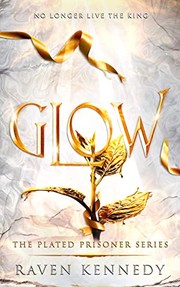
Glow
2,667-word summary 12 min read 816 pages in the book
- First published
- 2022
- Publisher
- Bloom Books
- Pages
- 816
- ISBN
- 9781464224447
- Series
- The Plated Prisoner (#4)
Reading options
What's inside (9 sections)
I came to Glow having read the first three Plated Prisoner books, so I already knew the shape of the trap Auren was in. Raven Kennedy first published this fourth installment on her own in 2022, and the copy most bookshops sell now is the Bloom Books paperback, a heavy 816 pages that takes its time getting where it goes. I say that up front because length is the first thing you notice. This is not a quick read, and it is not a comfortable one either. It picks up literally moments after the previous book stopped, with blood and gold still drying on the floor, and it refuses to give you a quiet chapter to catch your breath.
What struck me again on this read is how completely the story belongs to a world built out of cruelty. The seven kingdoms of Orea are ruled by men and women with strange powers, and the fae across the water in Annwyn are older and far more dangerous than any crown. Auren, the woman at the center of everything, has spent ten years as the gilded favorite of King Midas, kept in a cage and passed off as the source of his famous gold touch. Her skin really is gold. The power really is hers. Midas simply told everyone it was his, and the world believed him because he was a king. That lie is the engine of the whole series, and in Glow it starts to come apart.
I was nothing but a road to Midas. A means to get to where he wanted to go, and I paved that path in gold.
That line, printed in the book's own front matter, tells you where Auren has been. The question the novel asks is what she becomes once the road runs out.
The morning after the gold
The book opens in the wreckage of a ballroom at Ranhold, Midas's stronghold. In the final pages of Gleam, Auren finally snapped. Midas had hacked the twenty four magical gold ribbons from her spine, and something in her broke loose. Liquid gold tore through the celebration, drowning the castle and killing Midas, whose body ended up sealed inside a gilded wall. It was not a clean act of justice. It was a flood, and it took innocent people with it, and Auren knows that.
The political vultures move in before the gold has cooled. Queen Kaila of Third Kingdom had come to Ranhold intending to marry Midas and fold his power into her own. With him dead, she sees an opening. A pregnant former favorite named Mist accuses Auren of stealing the king's gold touch and seducing the man who killed him, and Kaila runs with the story. She installs a puppet named Hagan Fulke on the throne, brands Auren a power stealing murderess, and calls a Conflux, a gathering of the monarchs, to put her on trial. The charge is convenient for everyone. If Auren can steal one king's magic, she might steal them all, and every crowned head in Orea suddenly has a reason to want her dead.
Slade gets her out. He is the man who has spent this series wearing other names, Commander Rip and King Ravinger and King Rot, and he arrives on his timberwing, a great flying creature named Argo, and lifts Auren's unmoving body out of the city. To stop her rampage he had to wrap her in a stasis of his own rot magic, and when he pulls most of it back, one fragment stays lodged in her chest and keeps her unconscious. A blizzard forces them apart. Slade flies her to a hidden sanctuary in the Fourth Kingdom while his captain Osrik marches the army home, grudgingly sheltering two more of Midas's former favorites, Rissa and Polly, along the way.
I liked the messiness of this opening. There is no triumphant escape, no heroine standing tall on a balcony. Auren is a survivor who has just done something monstrous and does not know yet whether she regrets it. The book stays with that uncertainty for a long time.
The cave where she wakes up feral
Slade's refuge is Drollard Village, a settlement tucked inside an immense cavern in a region called Deadwell, with a living space carved into the rock that the people call the Grotto. It is one of the more inventive places I have read in fantasy lately. A village of long lived humans living inside a mountain, bound to a tear in the world that keeps them alive and will kill them if they wander too far from it.
At the Grotto, a mender named Hojat tends Auren's back and finds the damage Midas did. The twenty four gold ribbons are gone, hacked off at the root, leaving bleeding stubs along her spine. She lies unconscious for four days. Then her gold magic starts up on its own, pooling into a liquid lake around her bed, and Slade has to carry her into a mountain cave before she drowns her own sickbed.
When she wakes, she is not herself. She comes feral, lashing out with whips of liquid gold, and Slade has to shift into his fae form and fight her to a standstill before he can kiss her conscious mind back to the surface. The scene is brutal and sad, and it is the clearest picture in the book of what Auren is up against. Her power is not a gift she can simply celebrate. It is bound up with every year of abuse, and it comes out screaming.
The grief comes next, once she is thinking clearly. Midas is dead, her back is ruined, and the ten years she spent as his prisoner cannot be undone. Digby, a loyal guard whom Midas had brutalized for protecting her, is there to hold her through it, and so is Slade. Auren decides she will never be weak again. She asks Slade to teach her to fight, and under Captain Judd she starts a punishing regimen of combat and balance work in a cavern called the Teeth, learning to move all over again without the ribbons she once relied on.
A boy made of rot and bad decisions
Glow gives Slade a great deal of page time, and I did not mind it. For three books he has been the charming masked commander with a terrible secret, and here the mask comes off. His father, Stanton Ravinger, known as the Breaker, was a fae who trained him in the rot magic that is both his gift and his curse. There are flashbacks to a childhood of beatings and worse, to a servant named Jak who was Ryatt's true father, and to the night a fifteen year old Slade fought back and tore a hole in the world.
That rip threw Slade, his mother Elore, his brother Ryatt, and thirty two Orean servants out of Annwyn and into Orea. Elore, broken by the abuse, no longer speaks and lives alone in a cave cottage. The Oreans built Drollard and its people, and because years in Annwyn made them long lived, they are still there, bound to the rip. If the tear closes, they die. Slade has to feed it his magic every few months to keep it open, and he does it until he is emptied, while Auren watches and begins to understand the weight he carries.
This is where the book is at its best, in my opinion. Slade is not a noble savior. He is a man who has killed and will keep killing, who threatens whole kingdoms with rot when they come for the woman he loves, and who is nevertheless raising a found family of people who would be lost without him. Auren says at one point that she and Slade will be the villains for each other, and that line sums up the moral weather of this story. Nobody here is clean, and the book knows it.
The cost is pace. Kennedy keeps returning to the same emotional beats, and at 816 pages there are stretches where a chapter feels like a variation on the argument the last one already settled. Some readers will love the slow burn. I found myself skimming a few of the more repetitive internal monologues.
Learning to hold the gold
Auren's arc in this book is about taking ownership of a power she has spent her life being told is not hers. Early on, her gold only came out at night or under extreme stress. Through training, the restriction fades. She learns to summon it on purpose, to shape it into whips and shields, and even to pull gilded metal back into her own skin. Each small victory is a claim of ownership, and the book treats them as hard won rather than magical.
Her growing confidence plays out against her relationship with Slade, which is intense and explicit and often gradient. She wants to save herself, and she means it. She insists on facing the Conflux. He refuses to let her, because he would rather burn the world down than watch her stand in front of six swords. That argument is the emotional spine of the second half, and the book does not resolve it neatly. Her self empowerment is real, and it is also undercut by the fact that when she is taken, it is Slade who has to come and get her. I noticed that tension and could not quite shake it.
I should be honest about the content too. This is adult dark fantasy romance, and it earns that label. There is graphic violence, a long shadow of sexual abuse, threats of sexual violence, bullying, and substance dependency in the wider cast, along with explicit sexual content between the two leads. If any of that is hard for you, this book does not soften it. The publisher describes it as a dark adult fantasy with an emotionally charged romance at its core, and that is accurate. This is not a cosy evening read, and it is not a good place to start the series. It is book four for a reason, built on revelations and relationships the earlier novels set up.
A trial nobody meant to be fair
The middle of Glow is a long game of political pressure. The monarchs send formal demands that Auren answer at the Conflux in Second Kingdom. Third Kingdom stops shipping food into Fourth Kingdom to force Slade's hand. He refuses to hand her over, his council scrambles to ration supplies and find new trade with First Kingdom, and he moves Auren to Brackhill Castle, his royal seat, for safety.
Kaila's brother Manu arrives as an envoy, smooth and polite and utterly ruthless. At a diplomatic dinner he presents surrender terms, and Slade answers with a threat to rot every kingdom that touches her. Manu gives him seven days. Then, in the castle gardens, Manu's people ambush Auren and Rissa. Rissa is stabbed through the chest. Auren is drugged and taken. Slade chases across Orea on Argo, and the timberwing is shot out of the sky by an iron bolt, so he continues on foot and then on a second bird Ryatt brings him.
Auren wakes in Second Kingdom in the hands of Queen Isolte Merewen, the First Matron of a puritanical order called the Gathering of Temperance. Isolte tortures her with pain magic and forces her into a grey Cleansing robe before marching her onto an outdoor stage in the city square. The Conflux assembles. Kaila works her particular magic, capturing voices and twisting words, and broadcasts altered recordings of past conversations that make Auren look like a murderer and a thief. The monarchs find her guilty and sentence her to death on the spot.
The square at Second Kingdom
The execution is the set piece the whole book has been building to, and Kennedy stages it with real force. Six swords drive toward Auren and crumble into rust. The guards holding them rot into dust. Slade arrives on Argo and lets loose a wave of rot across the square that kills the executioners. For a few pages it looks like a rescue.
Then Prince Hamus of Second Kingdom throws a magical barrier around the stage, and Auren is sealed inside it. Rot cannot break through. Runes in the barrier begin draining her power, and she is dying. Slade stops holding back and channels raw, world tearing magic. He does not shatter the barrier. He tears open a new rift in the sky, directly above her enclosure, and it connects Orea to Annwyn.
Slade begs her to jump. He promises he will find her on the other side. Auren trusts him and leaps, and he holds the tear open until his magic is completely gone, at which point it snaps shut. At the same moment, the old rip that kept Drollard alive vanishes, and everyone Slade was protecting is left stranded without the magic that sustained them. He returns to find the village empty. The book ends with Auren alone in the fae world she was stolen from as a child, and Slade depleted and swearing he will follow her.
That is a punishing choice, and it left me genuinely unsure how I felt. It gives Auren a fresh beginning in the next book while quietly undoing her stated goal of saving herself, and it costs the Drollard community its lifeline in one stroke. The emotional payoff is enormous, but so is the feel of a story pulling the rug out so it can keep going.
The bridge left standing
The epilogue reopens the map and turns to Malina, Midas's widow, the woman who should have inherited his kingdom but had no magic of her own. Guided through the ruins of Seventh Kingdom by a merchant named Sir Loth Pruinn, she meets a pair of identical fae twins, Fassa and Friano. They offer her power in exchange for a few drops of her royal Colier blood, and she agrees. An assassin who had been sent to kill her warns that she cannot trust anyone there, but she is too taken with the promise of power to listen.
The ritual the twins perform restores an ancient bridge between Annwyn and Orea. Fae armies begin marching across it. So the danger that Slade accidentally unleashed with one rip in the sky is being multiplied by a door that Malina has just opened wide, and the series heads into its final book with two worlds on a collision course.
I finished Glow impressed and a little worn out. It is a big, angry, heart on sleeve book about a woman learning to hold power that has been used against her for a decade, wrapped in court intrigue and a romance that treats love and destruction as close cousins. The writing is sharp when it wants to be, especially in the fight scenes and the quiet moments between Auren and Elore, and the world building around Drollard is genuinely memorable. The same qualities that make it immersive also make it bulky. The political maneuvering is dense, the emotional arguments repeat, and the very idea of self reliance the story argues for is tested by another rescue at the very end.
For readers who have come this far with Auren, that is probably the point. Glow is about how hard it is to leave a cage even after the door is open, and how easy it is for new cages to be built out of good intentions and love. It does not offer a tidy answer. It offers a woman standing in a strange fae land with no road left to pave, and a king on the other side of a closed rift figuring out how to cross over. That image stayed with me longer than the plot twists did, and it is the reason I would recommend the book to someone willing to give the whole series its due.
FAQ
Do I need to read the earlier Plated Prisoner books before Glow?
Yes. Glow is book four and opens moments after Gleam, so the Midas revelations and Auren and Slade's relationship are taken as already known.
How does Glow end?
Auren is found guilty at the Conflux, Slade tears open a rift to Annwyn, and she jumps through while he is left depleted in Orea and the village he protects loses its sustaining magic.
Is Glow meant for younger readers?
No. It is an adult dark fantasy romance with graphic violence, the long shadow of sexual abuse, and explicit sexual content between the leads.
Similar books
More from The Plated Prisoner first, then related titles.
Gild
A gold-skinned woman kept as Midas favored learns her cage is a bargain, then war drags her onto the road.
2,755-word summary · 12 min read
Glint
A gold-skinned captive of Midas falls to Fourth Kingdom troops and learns to fight with the ribbons she hid.
2,969-word summary · 13 min read
Gleam
Captive Auren finds power in gold touch while Slade hunts her across kingdoms in Plated Prisoner book three.
2,073-word summary · 9 min read
A Game of Fate
The Fates choose a queen for Hades, but the god of the dead resists, and the journalism student sent to expose him defies him at every turn.
2,373-word summary · 11 min read
Daughter of the Moon Goddess
The daughter of Chang'e hides in the Celestial Court, trains as an archer, and risks everything to free her mother from the Emperor's punishment.
2,146-word summary · 10 min read

The Dark One
Winnie trades with Hook while Peter Pan turns cruel in Neverland.
2,596-word summary · 12 min read

A Touch of Malice
Engaged Hades and Persephone face gods who vote on their marriage.
2,562-word summary · 11 min read

Neon Gods
Promised to Zeus, Persephone flees to Hades and trades fake dating for real choice in Olympus.
2,002-word summary · 9 min read
A Touch of Darkness
Persephone bargains with Hades in New Athens nightclub deal.
2,545-word summary · 11 min read
The Knight and the Moth
Six of seven Diviners vanish, and the last one flees a cathedral with a mocking knight and a gargoyle who calls everyone Bartholomew. Gillig's gothic fantasy…
2,936-word summary · 13 min read

The Darkest Part of the Forest
In a town built around a sleeping horned boy in a glass coffin, a girl discovers she has been spending her nights as a faerie king's knight and remembers none…
2,012-word summary · 9 min read

Magic Bleeds
The fourth Kate Daniels novel finds Kate investigating a magical plague in Atlanta while her relationship with Curran fractures and an ancient enemy tied to…
2,236-word summary · 10 min read

Heartless Sky
The seventh Zodiac Academy novel hides the Vega twins in an underground rebel base, where a hidden killer, shadow rifts and Darius's fatal bargain lead to a…
2,443-word summary · 11 min read

Quicksilver
Saeris Fane steals from the desert queen's reservoirs until a gateway flings her into the frozen fae world, where Kingfisher needs her alchemist magic.
2,311-word summary · 10 min read
Percy Jackson's Greek Gods
Rick Riordan's illustrated 2014 companion: Percy Jackson retells the Greek myths, from Chaos and the Titans to the Twelve Olympians, with sarcastic asides and…
2,709-word summary · 12 min read
Magic Strikes
Drafted into the Order of Merciful Aid, Kate Daniels investigates the beating of her friend Derek and finds a hidden tournament where rakshasas fight in human…
2,012-word summary · 9 min read
A Hunger Like No Other
Kresley Cole's 2006 paranormal romance pairs a Lycan freed after a thousand years of Fae captivity with a Valkyrie who has no wish to be claimed.
2,539-word summary · 11 min read

The Lost Sisters
Taryn Duarte writes a letter to her twin, Jude, explaining how she fell for Locke and why she stayed silent while he used them both.
1,914-word summary · 9 min read

Magic Burns
A magic flare hits Atlanta, and mercenary Kate Daniels must recover stolen maps, find a missing witch, and keep a teenage girl alive while Celtic gods try to…
2,021-word summary · 9 min read

The Siren
Saved from a shipwreck in 1930, Kahlen becomes a siren who sings men to their deaths for the Ocean, until a boy in a college library makes her want a life she…
2,369-word summary · 11 min read
Cruel Beauty
A girl raised to kill the demon prince who rules her cursed land instead falls in love with him, in a retelling that mixes Beauty and the Beast with Bluebeard…
2,669-word summary · 12 min read

The Rose & the Dagger
Shahrzad is pulled from her Caliph husband and left in a desert camp of rebels, needing to break his curse and end a war before it ends her.
2,520-word summary · 11 min read
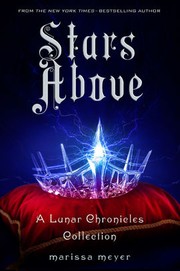
Stars Above: A Lunar Chronicles Collection
Nine Lunar Chronicles stories fill in the histories of Cinder, Wolf, Thorne, Cress, Winter, and Jacin, and end with a wedding after the war.
2,230-word summary · 10 min read

Lore
Lore Perseous, the last of a hunted bloodline, is pulled back into the Agon when a wounded Athena offers her revenge against the god who killed her family.
2,188-word summary · 10 min read
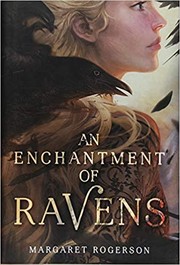
An Enchantment of Ravens
Isobel, a mortal artist in the fairy town of Whimsy, paints a portrait of the autumn prince and falls in love with him, breaking the laws of her craft.
2,087-word summary · 9 min read
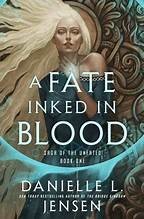
A Fate Inked in Blood
In Norse-inspired Skaland, a fish gutter hiding a goddess's blood is claimed by a jarl, bound by oath, and guarded by the son she cannot want.
1,971-word summary · 9 min read


Dreamfever
With the walls between worlds down and Mac broken by the Fae, Dreamfever is the darkest volume of the Fever series, and the one that changes everything.
2,007-word summary · 9 min read
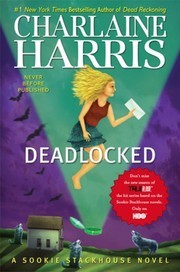
Deadlocked
A dead woman on Eric's lawn starts a murder investigation, a vampire queen wants Eric as her consort, and the fairies in Sookie's life close in.
2,885-word summary · 13 min read
A Deal with the Elf King
A village herbalist is exposed as the hidden Human Queen, married to a cold elf king, and given three months to save his dying kingdom or be bound to it…
2,094-word summary · 9 min read