
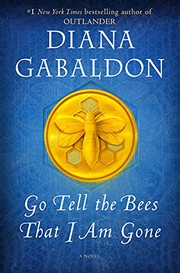
Go Tell the Bees That I Am Gone
2,372-word summary 11 min read 928 pages in the book
- First published
- 2021
- Publisher
- Delacorte Press
- Pages
- 928
- ISBN
- 9781101885680
- Series
- Outlander (#9)
Reading options
What's inside (9 sections)
I had waited a long time for this one. The eighth Outlander book, Written in My Own Heart's Blood, came out in 2014, and it was seven years before Diana Gabaldon delivered the ninth. Go Tell the Bees That I Am Gone finally arrived in hardcover on 23 November 2021, from Delacorte Press, and the first thing I did was read the title note on her website. The custom of telling the bees goes back to the Celts and made its way to the Appalachians. You tell the bees when someone is born or dies or comes or goes, because if you do not, they will fly away. That small, strange bit of folklore is the whole book in miniature: a household trying to hold itself together while everything around it is leaving.
The book is long. The Delacorte first edition runs 928 pages, and Gabaldon says she finished the writing and research in March of 2021 after years of work. I mention that up front because it shapes the reading. This is not a book you finish in a weekend. It is a book you live in for a while, and I found that the length suits the story even when it tests my patience.
The family comes home to the Ridge
The novel opens on 17 June 1779, at Fraser's Ridge in the Colony of North Carolina. Claire Fraser is sitting on the ground by a fire with her three-year-old granddaughter Mandy asleep in her arms and Jamie beside her. Jamie's hand is trapped under her. He asks her to move her arse so he can scratch his nose. It is a small, tired, domestic moment, and it is the point of the scene. Around the fire are Brianna, Roger and their son Jem, and the family that has been torn apart across two centuries is, for the moment, together.
Brianna and Roger have come back through the stones with their children. They have arrived at the New House foundation, a rectangle of stone in the grass where Jamie means to build a bigger home. The old Big House has already been burned, its trace nearly gone under the grass. Brianna pulls a black metal chisel from her bag, a Craftsman tool, and hands it to Jamie for the hearth blessing. It is one of those objects from the future that the book handles so well: ordinary, heavy and completely out of place. They also brought books, including a history written by Frank Randall called The Soul of a Rebel: The Scottish Roots of the American Revolution. That book will matter later.
The surrounding community turns out to welcome them. Women run to fetch food, men pile wood on the ridge where the New House will stand, and news spreads through six households before sundown. Nobody asks whether the travelers are happy to be back. That is taken for granted. Jamie and Claire do not ask questions either. Later, alone by the fire, Roger answers the only one that counts, telling Claire the family is home for good. Claire's fingers keep finding the hairline scar on Mandy's ribs, the mark left by the surgery that saved the child's life far away from her. She tears up. The joy in this scene is real, but it is edged with the knowledge of what it cost.
What they carried back with them
The return is not a clean homecoming. Before they left the twentieth century there was the kidnapping of young Jem by Rob Cameron, and Roger's frantic trip back to 1739 to find the man, a journey that put him in touch with his own father and with Jamie's father, Brian Fraser. Brianna brought back the books, and with them a record of the future that Jamie will come to read with dread.
During the family's absence the meeting house on the Ridge burned down. The community rebuilds it, and the rebuilding gives Gabaldon a way to show the Ridge as a place of uneasy coexistence. Roger is working toward ordination in the Presbyterian faith. He shares the new church building with Charles Cunningham, a former British naval captain who holds Methodist services, and with Rachel, Young Ian's wife, who offers Quaker meetings. Three kinds of worship under one roof, in a colony where loyalties are already splitting. It sounds like a tidy symbol, but the book earns it by letting Cunningham's politics turn lethal later on.
I want to be honest about the middle stretch of this book. It is very long, and a good deal of it is given over to the daily work of the Ridge: calving cows, building houses, tending the sick, arguing about who will sleep where. I liked that material, because the physical life of these people is the best part of Gabaldon's writing. I also found myself skipping ahead now and then. A book this size has room for everything, and everything sometimes stays in.
William, Lord John and the business of blood
While the Frasers settle in, the book follows Jamie's son William Ransom in Savannah. William is the boy Lord John Grey raised as his heir, and he has only recently learned that his blood father is Jamie Fraser. He cannot bear the titles that came with the name he was given, and he talks about giving them up. His uncle Hal tells him it is not so simple. William is also hunting for his cousin Benjamin, who he has learned is not buried in the grave that carries his name.
Lord John asks Brianna to come to Savannah to paint a portrait of an acquaintance's wife, and he quietly hopes she can talk sense into William before the young man throws away his inheritance. Brianna goes, with Roger in tow. On the way they stop in Charles Town and find Fergus, Brianna's adopted brother, and his family. Fergus runs a newspaper that loyalists have been harassing, and with a siege coming he decides to move his family to Wilmington. These stops are not filler. Gabaldon is planting the people who will matter when the war reaches the coast.
In Savannah, Roger gets pulled into the siege of the city. When the Polish officer Casimir Pulaski is killed, Roger asks Brianna to come into the American camp and draw the man's portrait for his soldiers, and she arrives with William at her side. It is one of the stranger wartime episodes in the book, and it sticks because it is so specific.
William's search for Benjamin takes him to New Jersey, where he discovers that his cousin is alive and fighting for the Americans. Benjamin had let everyone believe he was dead. William goes back to confront Amaranthus, Benjamin's wife, known as Ami, because she knew the truth. There had been a flirtation between them, and now it curdles. Ami runs, William chases her down and brings her back to Savannah intending to marry her. When they arrive, Lord John is gone.
That disappearance is one of the strongest threads in the novel. Lord John has been kidnapped by Ezekiel Richardson, who wants to use his life to force Hal into keeping Britain in the American war. Richardson's reasoning is twisted but coherent: let Britain win, abolish slavery in the American colonies by imperial decree, and spare the country the civil war that will come later. Lord John manages to send word to William through Percy, his former lover and his old counterpart from his spying days, known as Monsieur Citron. He ends up trapped on a ship while Richardson hunts for Hal. I found this plot more gripping than much of the Ridge material, and it is a shame that Lord John's story keeps getting pulled away from the center of the book.
Young Ian goes north
Young Ian Murray gets word that his Mohawk wife has lost her husband in battle and that her welfare is unknown. He decides to go to New York to find out what happened, and he takes his wife Rachel, their son and his mother Jenny with him. Rachel will not let him travel alone, because she suspects that a child of his former love may be his. That suspicion hangs over the journey without ever quite resolving, which is characteristic of how this book handles its questions.
On the way they stop in Philadelphia to check on Silvia Hardman, a woman who had helped Jamie when his back went out before the Battle of Monmouth. Silvia is in terrible shape, so Ian takes her and her children along. When they reach the Mohawk, Silvia discovers that her husband is alive and has married a Mohawk woman. Ian brings Silvia and her children back to the Ridge, where she will eventually marry Bobby Higgens, whose own wife was killed by a bear. It is a strange, untidy chain of losses and second chances, and Gabaldon lets it play out without insisting on a moral.
Cunningham, Ulysses and the fight for the Ridge
Back on the Ridge, Jamie reads Frank Randall's history and learns that he is meant to die at the Battle of Kings Mountain, not far from his own land. Charles Cunningham, the naval captain who shares the meeting house, is a committed loyalist and starts raising a militia of men faithful to the crown. Jamie interferes, and Cunningham decides to arrest him and hand him over to Major Patrick Ferguson as proof of his loyalty. Jamie hears about the plan and prepares to run.
The confrontation comes on a stormy night. Jamie bolts from the Lodge meeting and a fight breaks out. Cunningham is shot in the back, and in the confusion a landslide tears at the mountain. Jamie is slashed across the chest with a sword. Claire works on Cunningham in her surgery, digging the bullet out of his lower back, and saves his life though she cannot tell whether he will ever walk again. His mother takes him back to England. Jamie, meanwhile, makes a list of the men who conspired against him and evicts them from the Ridge. It is a harsh act, and the book does not soften it.
Then a man named Ulysses arrives with three British officers. Ulysses used to be a butler in the household of Jamie's aunt, and he brings a letter claiming that Jamie obtained the land grant illegally because Catholics cannot own land. He means to take the grant for himself. Jamie gathers trusted men and goes after him. In the scuffle a boar attacks and breaks the leg of a soldier named Sipio Jackson, and Claire sets it. Jamie's militia drives Ulysses off, and they send the wounded Jackson toward Charles Town. Each of these skirmishes costs something, and by the end of them Jamie knows the real battle is coming.
Kings Mountain
Jamie builds a partisan band from his tenants and makes alliances with other militias in the area. When his men join the Overmountain men pursuing Ferguson, the combined force has to settle on a single leader, and they choose William Campbell. Before the battle Jamie makes his arrangements. He asks Roger to pray for him. He tells Claire that if he dies she should take Mandy back through the stones, but leave David with Ian and Rachel, and he asks for a Catholic mass and for her to remember him.
At Kings Mountain Jamie is bitten by a snake and then shot, four times, with the worst wound in his chest. Claire climbs the mountain toward him while men tell her to leave. She finds that he is still alive, though losing blood, and the other time travelers see a blue light around them as she works. Ian insists Jamie is dead and tries to pull her away. She refuses, sits with him for close to two days, and stays until a musket ball drops free of his chest. He wakes. The recovery is long and ugly. Claire has to operate on his shattered kneecap, and he heals slowly, with a spell of depression that the book treats honestly.
The novel closes not on the battle but on a quieter scene. Silvia and Bobby are married in a Quaker meeting where the children take the role of minister. Everyone gathers at the New Big House to celebrate, and Claire watches Silvia's daughters tell Fanny that she is one of their sisters. Then a rider comes up to the house. It is William, and he has come to ask Jamie for help. The book ends there, with a request rather than an answer.
What stays and what drags
For a book of its size, Go Tell the Bees That I Am Gone is more patient than most sequels. Gabaldon takes the time to let ordinary scenes carry weight, and the opening by the fire is as good as anything she has written. The Washington Post called the book vast and sweeping, and that is fair. The Seattle Times said hefting the volume was an unbearably delicious moment, which is also fair for a reader who has waited seven years.
It is also a book that asks a lot. Several plotlines are left open, including Lord John's fate, William's title and the time travel puzzle of the children, and readers who want every thread tied off will be frustrated. The pace sags in the long middle, and the domestic detail, which I enjoy, sometimes crowds out the story. This is not a place to start the series. A newcomer would be lost within pages, because the book assumes you know who Geneva was, why Roger was sold to the Mohawk and what happened to Jem. For those of us who do, that history is exactly the point.
The title, in the end, is about telling the bees so they will not fly away. The Frasers spend nine hundred pages trying to keep their people from flying apart. Some of them do anyway. What is left is the household that keeps tending the sick, rebuilding the meeting house and sitting up with the wounded. That is the book's quiet argument, and it is a better one than the battles.
FAQ
Do I need to read the first eight Outlander books before this one?
Yes. Book nine assumes you already know the backstory, including Jem's kidnapping, Roger's sale to the Mohawk and the revelation that Jamie is William's father.
When was Go Tell the Bees That I Am Gone published?
Delacorte Press published the 928-page hardcover first edition on 23 November 2021, with ISBN 9781101885680.
Does Jamie die in this book?
Jamie is shot four times at the Battle of Kings Mountain and is pronounced dead, but Claire stays with him until he recovers.
Similar books
More from Outlander first, then related titles.

Outlander
Nurse Claire Randall slips through Craigh na Dun from 1945 to 1743 Scotland, torn between Frank and Jamie Fraser as clan politics, war and witch trials close…
2,190-word summary · 10 min read
Dragonfly in Amber
Claire 1968 recalls Jacobite Paris with Jamie to stop Culloden.
2,530-word summary · 11 min read
Voyager
Claire returns through the stones in 1968 after learning Jamie survived Culloden.
2,901-word summary · 13 min read
Drums of Autumn
Brianna crosses stones to save parents, finding love, assault fallout, and a home to build.
2,003-word summary · 9 min read
The Fiery Cross
Jamie musters militia for Tryon while Brianna and Roger wed on the Ridge, ending at Alamance with a hanging that steals Rogers voice.
2,719-word summary · 12 min read
A Breath of Snow and Ashes
Jamie and Claire Fraser face the coming Revolution on Fraser's Ridge, torn between Crown oaths and rebel neighbors as old enemies return.
2,362-word summary · 10 min read
An Echo in the Bone
Jamie and Claire endure Revolution war while Brianna reads their letters at home.
1,945-word summary · 9 min read
Written in My Own Heart's Blood
1778 war splits Jamies and Claires across rebellion and time as Brianna hunts a kidnapped son.
2,008-word summary · 9 min read
The Guernsey Literary and Potato Peel Pie Society
A London writer trades letters with Guernsey islanders after the war.
1,979-word summary · 9 min read
Birdsong
A love affair in Amiens before the First World War and a granddaughter's search through encoded journals decades later, joined by the tunnels of the Somme.
2,041-word summary · 9 min read
At the Water's Edge
A Philadelphia socialite follows her husband and his friend to wartime Scotland to hunt the Loch Ness monster, and finds herself instead: a novel of friendship…
2,906-word summary · 13 min read
The Bronze Horseman
On the day Germany invades the Soviet Union, Tatiana Metanova meets a mysterious Red Army officer, and their love is tested by the Siege of Leningrad.
2,461-word summary · 11 min read
Onyx Storm
A quest south with Violet Sorrengail, a dragon rider racing to cure Xaden before he turns venin. Yarros trades the academy for islands, irids and a costly war.
2,368-word summary · 11 min read
The Unmaking of June Farrow
A woman in a North Carolina flower-farming family walks through a red door into 1951, where she must solve her mother's disappearance and decide whether to…
2,701-word summary · 12 min read
The Bookshop on the Corner
A Birmingham librarian loses her job, buys a van, and moves to the Scottish Highlands to run a mobile bookshop. Warm and bookish, with uneven pacing.
2,557-word summary · 11 min read
Fantasy Lover
A New Orleans sex therapist summons a cursed Spartan general from an ancient book and gets one month to break his spell.
2,315-word summary · 10 min read
What the Wind Knows
Annie scatters her grandfather's ashes on Lough Gill and is pulled into 1921 Ireland, where she becomes the missing Anne Gallagher and falls for Dr. Thomas…
2,056-word summary · 9 min read
Doctor Zhivago
A doctor and poet lives through revolution, war, and love in Pasternak's novel of private life under the pressure of Russian history.
2,213-word summary · 10 min read
A Reaper at the Gates
The Martial capital falls to an army of ghosts, Elias becomes the Soul Catcher, and Laia and Helene pay brutal prices as the Nightbringer moves to free the…
1,991-word summary · 9 min read
Emerald Green
Gwyneth must close the blood circle that will crown an immortal tyrant, and the prophecy says her death is the final lock.
2,044-word summary · 9 min read
Sapphire Blue
Gwyneth trains with Gideon for new jumps while Lucy and Paul warn the circle must stay open.
2,218-word summary · 10 min read
The Tenant of Wildfell Hall
Helen flees a cruel marriage, hides as Helen Graham at Wildfell Hall, and tells her full story through a long diary young Gilbert Markham must read before…
2,838-word summary · 13 min read
The Island of Sea Women
On Jeju island, haenyeo divers Young-sook and Mi-ja share decades of friendship strained by war and massacre.
2,204-word summary · 10 min read
The English Patient
In a ruined Italian villa in 1945, a burned man, a nurse, a thief, and a sapper trade pasts shaped by desert love and war.
2,006-word summary · 9 min read
One Thousand White Women: The Journals of May Dodd
May Dodd journals joining Cheyenne as a bride in an 1875 government swap, learning prairie life and loss.
2,036-word summary · 9 min read
Daughter of Fortune
Eliza Sommers flees Chile for California gold rush San Francisco, disguised and searching for her lover, finding freedom with Tao Chi'en.
2,009-word summary · 9 min read
Brooklyn
Eilis Lacey leaves Enniscorthy for Brooklyn boarding house work, love with Tony, then a home death forces divided choice.
2,143-word summary · 10 min read
Once and Again
Novak women can redo one moment; Lauren must decide whether to use hers.
2,330-word summary · 10 min read
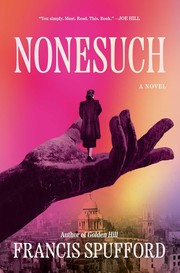
Nonesuch
A London secretary finds real angels and a fascist plot to erase Churchill in the Blitz.
2,197-word summary · 10 min read
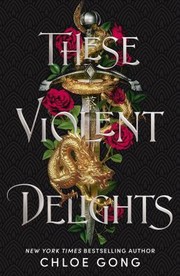
These Violent Delights
Ex lover gang heirs hunt a madness monster in 1927 Shanghai together.
2,122-word summary · 9 min read