
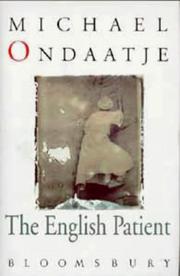
The English Patient
2,006-word summary 9 min read 304 pages in the book
- First published
- 1992
- Publisher
- Bloomsbury
- Pages
- 304
- ISBN
- 9780747512547
Reading options
What's inside (9 sections)
I read The English Patient slowly, a few pages at night, because the prose asks for that kind of attention. It is set in the last months of World War II in a broken villa north of Florence, where four damaged people wait out the end of the war and trade stories that explain how they got there. It is not a fast mystery. It is a room you sit in while past and present bleed together.
The villa and the burned man
The house is the Villa San Girolamo, once a convent, then a field hospital, now half destroyed by shells. Walls stand open to sky. Mines dot the garden. In an upstairs room lies a man burned beyond recognition, wrapped in bandages, fed on morphine and plums. He says he does not remember his name. The nurses call him the English patient.
Hana, a twenty year old Canadian nurse, refuses to leave with the retreating hospital convoy. She stays to tend him. Her father died in France, her lover died, she had an abortion after a pregnancy she could not carry through war. She is tired of moving bodies and wants one person to care for well. She cleans his wounds, reads to him, picks figs, and sleeps in the next room with a dog for company.
The patient talks in fragments. He remembers desert winds, a plane down in sand, Bedouin rescuers, maps inked on skin. He owns a copy of Herodotus with notes, photos, and pressed flowers stuffed between pages. Hana reads it aloud and he corrects her, then drifts. You learn early not to trust his order of events. Memory comes the way pain does, in waves.
What I loved here is the quiet. Ondaatje writes domestic chores with the same care as bombing raids. Boiling water, changing sheets, cutting hair. After so many war books about pushes and fronts, this focus on tending feels radical. Healing is slow and mostly fails.
Hana and the choice to stay
Hana could be a symbol and Ondaatje keeps her human instead. She is competent, angry, and tender by turns. She steals supplies, hides from officers who want her to rejoin the unit, and makes a small home from salvaged blankets and candles. She plays the piano in a ruined library even though some keys stick.
Her friendship with the patient grows through reading. She brings him books from the villa library, and he tells her which passages explorers marked before the war. She tells him about her stepmother Clara back in Canada, about learning to be a nurse too young, about holding men while they died. He listens without advice, which is rare in novels. He has no future to offer, so he offers attention.
The library and Herodotus
The villa library, though shelled, holds enough to sustain them. Hana shelves salvaged books by size to keep dust off, reads in snatches between dressings, and argues with the patient about which guidebook lies least. His Herodotus, fat with insertions, becomes a shared project. Maps of the Gilf Kebir, a pressed poppy from a Cairo garden, a note in Katharine's hand about wind. Each object prompts a story that may be true or morphined.
Ondaatje uses the book within the book to show how travelers write themselves into history. Herodotus reported wonders he never saw. Almasy added his own corrections in margins. Hana adds a pressed violet from the villa hill. The layers say knowledge is personal and partial, carried in pockets rather than archives. When Caravaggio later demands facts about nationality, the Herodotus answers with older borders that ignore his questions.
I liked how reading itself is care here. Hana adjusts pillows before long passages. The patient asks for water before hard memories. They stop when pain spikes. No one performs scholarship. It is bedside reading as nursing, keeping a mind company while a body fails. That tenderness makes the later political rupture sharper. People who shared sentences cannot share a world after the bomb.
There is a gentle suitor in the house for a while, but Hana does not want rescue. She wants work she can stand behind. Staying is her rebellion against an army that treats nurses as fuel. It costs her. She is lonely, underfed, and at risk from mines and stray patrols. She stays anyway. That stubbornness anchors the whole book.
Caravaggio and morphine
Into this quiet walks Caravaggio, a Canadian thief turned Allied spy, his thumbs cut off by interrogators in Italy. He knows Hana from before the war and loves her like an uncle. He also believes he knows who the patient is. He thinks the burned man is Count Ladislaus de Almasy, a Hungarian desert explorer who worked for the Germans.
Caravaggio spends his days hunting for morphine and for proof. He rummages through packs, questions the patient while he is drugged, and tries to trip him with place names. His chapters are restless and funny in a dark way. He describes prewar Toronto break ins with pride in craft, then describes torture with flat precision. The contrast shows how war turned a skilled thief into a man who steals drugs from the dying.
His search raises the moral spine of the book. If the patient helped the enemy, does he still deserve Hana's care? Caravaggio wants justice. Hana wants to finish nursing someone without a committee voting on his worth. Ondaatje does not settle it with a speech. He lets both positions sit in the same kitchen while soup boils.
I found Caravaggio uneven at times. His slang and jumps can confuse. On a second read his function is clearer. He carries the outside world into the villa, with its demands for names, nations, and punishment. The villa resists those labels, and he slowly softens.
Kip the sapper
The fourth figure is Kirpal Singh, called Kip, a Sikh sapper in the British Army who defuses bombs. He arrives with his tea set, his turban, his quiet manners, and his total bravery. Each morning he walks out to clear the villa, the road, and nearby houses of German traps. He listens for the faint tick of a fuse, studies wire by touch, and marks safe paths with tape.
Kip and Hana fall into love carefully. He shows her how to listen for a mine. She shows him how to rest. They eat together, bathe apart, and share a tent during a storm. Their scenes are among the most tender I have read about war. No grand declarations. He adjusts her helmet. She saves him sugar.
Kip's backstory widens the book beyond Europe. He left Punjab to train in England, faced polite racism from officers who praised his skill while mispronouncing his name, and found brotherhood with other colonial troops. He loves the technical beauty of bombs even as he hates what they do. Ondaatje writes his work with clear, physical detail. The click of a casing, the sweat on a wrist, the decision to cut or wait.
The heartbreak comes with Hiroshima and Nagasaki. When Kip hears an English patient in the next room celebrate the bomb as triumph, something breaks. He sees that Western powers will use any weapon on brown bodies and call it necessity. He packs, rides away on his motorcycle, and does not say goodbye in person. Hana understands and does not forgive the world for it. I thought this turn was earned and devastating. It reframes the villa idyll as a pause inside empire, not outside it.
Almasy, Katharine, and the desert
The patient's long central story belongs to the 1930s Sahara. As Almasy, he joins the Geographical Society expeditions mapping the Gilf Kebir and Uweinat. With other Europeans and Bedouin guides, he searches for the lost oasis of Zerzura. They travel by old Fords, navigate by sun compass, and cache fuel in sand.
In Cairo he meets Katharine Clifton, young wife of a fellow explorer. Their affair starts with talk about Herodotus and turns consuming. She reads aloud, he maps her shoulder like terrain. They meet in hotel rooms and desert camps, fight about leaving spouses, and fail to end it cleanly. When her husband learns the truth, he flies their small plane into a crash meant to kill them all. The husband dies. Katharine is badly hurt. Almasy leaves her in a cave with food and walks for help.
What follows is the book's most harrowing stretch. Almasy walks for days, finds a British post, is refused help because his name sounds enemy, then turns to German patrols to get a plane back. He flies to the cave too late. Katharine is dead. He carries her body, buries her with ceremony, then attempts to fly out and is shot down and burned. That is how he reaches the villa, rescued and passed along through field hospitals.
Ondaatje writes the desert as a place that erases nations. Wind covers tracks, maps lie, guides know more than surveyors. Love there feels absolute because society is far away. Back in cities, that same love becomes paperwork, passports, and war work. Almasy helps the Germans not from belief but to reach Katharine. The book asks if that excuse matters. It suggests motives blur under grief, which is uncomfortable and honest.
Style, gaps, and why it lasts
The prose is dense with image and elision. Ondaatje cuts between times without signposts. One paragraph is 1945 soup, the next is 1936 sand. If you like straight plots, you may struggle for fifty pages. I did on first try years ago. This time I let the rhythm carry me and kept a simple timeline on scrap paper. That helped.
A fair criticism is that Katharine can feel seen only through Almasy. We get her letters and sharp remarks, but not a full inner life apart from him. Hana is fuller, but even she exists mainly in relation to men she nurses or loves. Kip is the most independent, and his exit is the moral climax, yet he vanishes for long stretches. The book centers a European man while gesturing at empire. Some readers will find that gap too wide, even with Kip's rebuke built in.
I also want to note the small crew who pass through. Hardy the sapper who sings while he works, theCounts and doctors who argue over morphine, the partisans who bring wine and news of cleared roads. These brief figures keep the villa from feeling like a stage set. They remind you a whole country is moving around these four, carrying bundles, burying dead, reopening schools.
The villa itself changes across the months. Early on it smells of disinfectant and rot. Later Hana plants a small garden in a shell crater, Kip strings wire for a light, Caravaggio finds a usable chair. By August swallows nest in the eaves. Ondaatje uses these repairs to show healing that never completes. Walls stay broken. People sleep better for a week, then news from Japan ruins it.
Still, the villa chapters hold. The image of four people from four corners sharing plums while mines tick outside says more about 1945 than many histories. Nations used them and left them to mend each other. When the bomb news breaks that spell, the sadness is not that love failed. It is that care could not survive the scale of what states do.
If you read it, read the Herodotus passages aloud. They sound like prayers. Then read Kip's farewell letter twice. The second time you will hear how polite anger can cut deeper than shouting. That is Ondaatje at his best, making quietness carry weight.
I closed the book thinking about names. Hana loses hers to war work, Kip shortens his to fit British mouths, Almasy hides behind Englishness, Caravaggio borrows a painter's name to steal by. In the desert Almasy says nations wash off. In Italy they stick like burns. The villa lets them try living without those tags for a season. The world does not let them keep it.
FAQ
When was The English Patient published?
Bloomsbury published it in London in 1992. The first hardcover runs 304 pages and won the Booker Prize, shared that year.
Is the patient actually English?
Almasy is a Hungarian desert explorer, not English. His accent, maps, and burned state let others project an identity onto him.
Is the film faithful to the book?
Yes. Anthony Minghella's 1996 film keeps the villa and love story but simplifies Kip, Caravaggio, and the desert surveys.
Similar books
All the Light We Cannot See
Doerr's All the Light We Cannot See retold: blind Marie-Laure, Werner the radio boy, and Saint-Malo.
1,962-word summary · 9 min read
The Orphan's Tale
A Dutch teenager rescues a Jewish baby from a death train and joins a German circus, where a Jewish aerialist teaches her to fly.
2,943-word summary · 13 min read

The Japanese Lover
A Polish refugee and the son of a Japanese gardener fall in love in San Francisco in 1939, then keep the affair secret for nearly seventy years.
2,286-word summary · 10 min read

Sophie's Choice
A young Southern writer in 1947 Brooklyn befriends a brilliant, unstable couple and slowly learns the story of the Polish Catholic woman at the center of their…
2,798-word summary · 12 min read
Stones from the River
Trudi Montag is born a dwarf in a small German river town in 1915 and grows up to keep the town's library and its secrets, from the First World War to the…
2,818-word summary · 13 min read

Ivanhoe
A disinherited Saxon knight, a great tournament, a besieged castle and a trial by combat. Scott's most famous novel, set in England in 1194.
2,834-word summary · 13 min read
Euphoria
Three anthropologists in 1930s New Guinea turn fieldwork into a love triangle, and a real history breathes behind them.
2,048-word summary · 9 min read
The Silence of the Girls
Briseis, queen of Lyrnessus, is captured by Achilles and narrates the Trojan War from inside the Greek camp, where women are prizes and survival is its own…
2,098-word summary · 9 min read
Mother Night
Howard W. Campbell Jr., a Nazi propagandist and American spy, tells the story of his double life from an Israeli prison cell while waiting to be tried for war…
1,988-word summary · 9 min read

Doctor Zhivago
A doctor and poet lives through revolution, war, and love in Pasternak's novel of private life under the pressure of Russian history.
2,213-word summary · 10 min read
The Keeper of Happy Endings
Barbara Davis's 2021 standalone braids a Paris dressmaker's wartime losses with a grieving Boston artist who unlocks her family's secrets through an old row…
2,437-word summary · 11 min read

The Island of Missing Trees
A talking fig links 1970s Cyprus lovers Kostas and Defne with their grieving London daughter Ada years later.
3,172-word summary · 14 min read
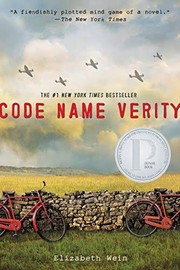
Code Name Verity
In 1943 France, captured agent Verity writes a confession for von Linden to buy time. Her pilot friend Maddie survives the crash and searches for her by…
2,690-word summary · 12 min read
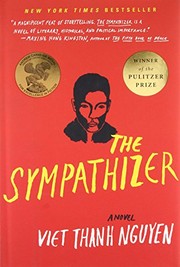
The Sympathizer
Double agent captain spies in Saigon fall and LA exile while confessing to commandant.
2,169-word summary · 10 min read
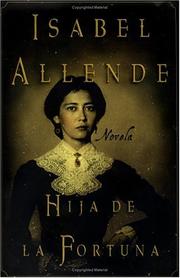
Daughter of Fortune
Eliza Sommers flees Chile for California gold rush San Francisco, disguised and searching for her lover, finding freedom with Tao Chi'en.
2,009-word summary · 9 min read
Brooklyn
Eilis Lacey leaves Enniscorthy for Brooklyn boarding house work, love with Tony, then a home death forces divided choice.
2,143-word summary · 10 min read
The Girl You Left Behind
Two women a century apart fight for what they love, joined by a portrait painted in wartime France and claimed in modern London.
2,613-word summary · 12 min read
Half of a Yellow Sun
Ugwu, Olanna and Richard are pulled from Nsukka comfort into the Biafran war, where love and hunger test every loyalty.
2,973-word summary · 13 min read
The Things We Cannot Say
A Florida mother travels to Poland to answer her silent grandmother's plea, uncovering a wartime love story and a decades-old identity swap.
2,365-word summary · 11 min read
Snow Falling on Cedars
A Japanese American fisherman stands trial for murder on a snowy island, while a reporter faces lost love and wartime prejudice.
2,224-word summary · 10 min read
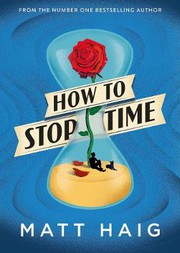
How to Stop Time
Tom Hazard, aging one year in fifteen, hides behind new identities until a London classroom and a lost daughter force him to live.
2,597-word summary · 12 min read
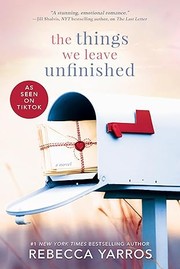
The Things We Leave Unfinished
Georgia Stanton and Noah Harrison finish Scarlett's last novel while her WWII romance with pilot Jameson unfolds in letters. A dual timeline story of grief,…
2,565-word summary · 11 min read
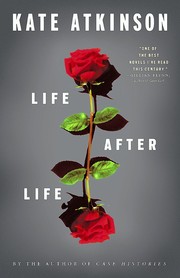
Life After Life
Ursula Todd dies and restarts through wars, flus, and bad marriages.
2,060-word summary · 9 min read
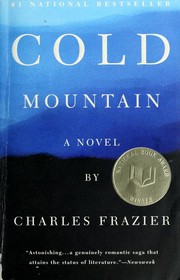
Cold Mountain
Wounded deserter Inman walks home to Ada as the Civil War ends, while she learns to keep a mountain farm in North Carolina with tough Ruby.
2,314-word summary · 10 min read
For Whom the Bell Tolls
An American dynamiter joins Spanish guerrillas for three days to blow a mountain bridge, finding love and doomed courage.
2,286-word summary · 10 min read
A Farewell to Arms
Frederic loves Catherine in Italy until desertion leads to Switzerland and stillbirth.
2,502-word summary · 11 min read
The Sun Also Rises
Jake Barnes drifts through Paris bars and Pamplona bullfights with Brett Ashley and a wounded generation.
3,187-word summary · 14 min read
All Quiet on the Western Front
Paul Bäumer enlists at nineteen and faces the trenches of World War I in Remarque's 1929 classic, told from the German side of the wire.
2,543-word summary · 11 min read
The Song of Achilles
Song of Achilles retold: Patroclus and Achilles from boys to Troy, love and war in Miller prose.
1,925-word summary · 9 min read
The Nightingale
Nightingale retold: Vianne and Isabelle in occupied France, hide children, run routes, trials.
1,950-word summary · 9 min read