
The Things We Leave Unfinished
2,565-word summary 11 min read 400 pages in the book
- First published
- 2021
- Publisher
- Entangled: Amara
- Pages
- 400
- ISBN
- 9781682815663
Reading options
What's inside (8 sections)
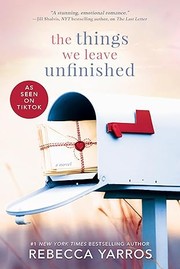
I came to this book sideways. I knew Rebecca Yarros from the Empyrean books, where dragons and war college politics drive every chapter. I wanted to see what Yarros did without dragons in the sky. The Things We Leave Unfinished was published in 2021 with Entangled: Amara as a 400 page paperback, and it tells two love stories at once.
The present story centers on Georgia Stanton. She is twenty eight and newly divorced when the book opens. Her marriage to a Hollywood producer ended in public fashion, and the coverage painted her as cold. She lost the New York house and much of her social footing along with the marriage. She goes back to Colorado, to the house where she grew up under the care of her great grandmother. That woman was Scarlett Stanton, a famous romance writer with decades of loyal readers. Scarlett has died. She left behind an estate full of paper, plus one unfinished novel that no one has seen in full. Georgia holds that manuscript. Her mother Ava wants her to sell the rights and take the money. Georgia does not want to let go of it cheaply, because she knows readers will judge Scarlett by whatever ending gets printed.
The past story belongs to Scarlett when she was young. She was the daughter of an English baron, raised with manners and expectations that left little room for choice. When war came, she found work connected to the air effort, helping track aircraft movement and serving in rooms where women plotted raids and counted planes home. Yarros places her in that world of blackouts and sirens, ration books and shared housing. Shifts run long and leave runs short. Into that world walks Jameson Stanton, an American pilot flying with Allied forces. He is confident in the air and direct on the ground. Scarlett meets him through the social circle around the base, and their early scenes carry the awkward pull of two people who notice each other and try not to show it.
A Divorce And An Unfinished Book
Georgia does not arrive in Colorado looking for a fresh start in any hopeful sense. She arrives because she has nowhere else that feels safe. The house is full of Scarlett. There are books on shelves, notes in margins, dishes in familiar cupboards, and a study that still smells of paper. Georgia was raised there, so every room returns a memory. She is grieving Scarlett while trying to process the divorce, and she is angry at her mother in a way she has not fully admitted. Ava can be sharp and practical about money, and she sees the unfinished novel as a solution to bills. Georgia sees it as a trust she did not ask to carry.
The manuscript itself tells part of Scarlett life in fictional dress. It follows a young Englishwoman through wartime service and a romance with a pilot, and it stops before the end. There is no final chapter. There are notes that trail off. Georgia reads it with a tight throat, because she can feel where lived memory breaks through the invented scenes. She believes the book must stay true to what Scarlett actually lived, even where that truth hurts. She fears a stranger will smooth the story into something sweet and false.
That stranger arrives quickly. The publisher has chosen Noah Harrison to finish the book. He is young by the standards of bestselling authors, and handsome in the way interview cameras love. He is known for romance novels that often close in sorrow. Georgia has read enough profiles to dislike him in advance. When he shows up at the Colorado house with plans and opinions, she meets him with folded arms. She tells him plainly that he cannot understand Scarlett from press clips. He tells her plainly that an unfinished draft cannot go to print as it stands. Their first meetings are all friction, and Yarros lets them argue about craft in ways that reveal character. Georgia guards the past. Noah guards the work ahead.
The Writer Hired To Finish It
Noah Harrison sits at the top of his field when we meet him. He has book deals and film interest. His public image is the golden boy of romance, and his private work ethic keeps him at the desk late. He grew up admiring Scarlett Stanton, and he does not treat the offer to finish her last novel as just another contract. He treats it as a duty. He wants to read every draft page and every letter that might show what Scarlett meant the story to say. He also brings his own instincts as a novelist, which run toward shape and payoff. He thinks Scarlett readers will want an ending that honors her brand, which promised feeling without cruelty.
Georgia disagrees, and the book lets both positions breathe. She points to the letters and to dates. She points to gaps in the draft where Scarlett seemed to stall rather than invent. Noah points to structure. He points to scenes that need compression and threads that need tying. He argues that fiction owes readers clarity, even when life withheld it. Georgia argues that clarity bought by invention would betray the woman who wrote the rest. Their editor and Ava press from the sides for progress, which only hardens Georgia at first. She starts to see Noah as a threat to Scarlett memory, not as a partner.
Yarros alternates the present day chapters between Georgia and Noah, so we sit inside both heads. Georgia notices small things about Noah that cut against his image. He listens when older neighbors talk about Scarlett. He takes notes by hand. Noah notices things about Georgia too. She handles Scarlett papers with cotton care, the way an archivist handles fragile cloth. She pushes people away before they can pity her. The attraction builds through work rather than through staged dates, which makes it feel earned. They sort letters together. They map the draft against known events. I found those working scenes more persuasive than the later kisses, because they show two minds learning to trust.
England Under Bombs
The wartime chapters move at a different pace. Scarlett lives under rules that shape every choice. Her father expects a suitable match. Her mother expects decorum. Servants and neighbors watch and report. War loosens some rules while tightening others. Women take on jobs once closed to them, and Scarlett uses that opening to serve in rooms where aircraft plots move across large tables. She learns to keep her voice level when a plot marker stops moving, and to drink tea that has gone cold. She writes letters she may never send, because the act steadies her.
When she meets Jameson, she first registers him as noise in a quiet room. He laughs easily. He asks plain questions. He is American, which marks him as outsider among English officers, and he carries that status with ease rather than apology.
Their early courtship is constrained by duty rosters and weather. Leave gets canceled. Flights run long. Dances in village halls end early because of blackout rules. Scarlett and Jameson steal time on walks and in pubs, trading stories about home. Beneath the lightness sits fear that neither names at first. Every mission changes the math. Friends vanish from the mess table. Scarlett learns to scan casualty lists with a hand she forces to stay still.
Pilots Letters And Absence
Jameson flies fighter sorties that test nerve and luck. Yarros does not turn him into a flawless hero. He gets scared. He gets tired. He writes about that in letters where he can, and he hides it where he must to spare Scarlett. The letters matter because they form the spine of the historical thread. Scarlett keeps them tied with string, dated in pencil, some stained by damp. In them, Jameson describes dawn takeoffs and Channel cold, the cramped cockpit and the roar that fills his bones, the strange calm that settles once formation holds. He apologizes for short notes. He promises longer ones when leave allows.
Scarlett answers with news from the plotting rooms and from home. She describes long shifts and small kindnesses, like a neighbor who shares sugar. She describes air raids in concrete terms, the siren climb and the smell of dust after bombs fall blocks away. She does not dramatize. She reports, and the restraint makes the fear clear.
The romance deepens under pressure. Scarlett introduces Jameson to parts of her life her parents never see. They make plans in conditional tense, the grammar of wartime love. If leave holds, they will walk the river path. If the weather lifts, they will borrow bicycles. The conditions pile up, and both feel the weight.
Then comes the break the manuscript never resolved. Jameson goes up on a mission that ends in loss. Word reaches Scarlett in fragments, the way wartime news often arrived. A plane down in bad weather. A name on a list that might mean missing rather than dead. Scarlett waits through days that feel flattened, checking lists and asking contacts. She writes letters that receive no reply. Yarros handles this stretch without spectacle. There is no slow motion farewell on a runway. There is paperwork and rumor. Then silence. Scarlett keeps working because work gives her hands something to do. She keeps writing because stopping would admit an end she cannot face. The draft stops in this region of grief, and the halt feels human rather than staged. She could not write past the place where life stopped making sense.
Two Endings Argued On The Page
Back in Colorado, Georgia and Noah read those letters together, and the reading changes them. Georgia starts to see Scarlett as a young woman rather than as a legend. She sees impatience and humor in the margins, places where Scarlett scolded herself for sentiment or praised a sharp line of dialogue. She sees fear that Scarlett hid from family but trusted to paper. Noah starts to see why Georgia clings to accuracy. For Georgia, every invented happy beat would feel like a denial of what Scarlett endured. For Noah, every refusal to shape the material would leave readers with fragments instead of a novel.
Their argument about the ending sharpens. Noah favors an ending that gives Scarlett readers the lift they expect from her name. He believes a novel can honor truth of feeling without copying fact line by line. He suggests scenes that close open loops and let secondary figures act with kindness. Georgia favors an ending that holds the sorrow intact. She believes Scarlett earned the right to be remembered as a woman who loved and lost, not as a brand that must deliver comfort. She points out that Scarlett chose to leave the book unfinished rather than force a false close, and that choice should guide them.
Noah proposes a compromise that feels true to publishing practice. He will draft two closings, one that leans toward hope and one that stays with loss, and Georgia will choose which one goes forward after reading both in full. The offer shifts their dynamic. It tells Georgia that Noah trusts her judgment more than his contract. It tells Noah that Georgia will engage with craft rather than block it. They write and revise side by side, trading pages with red marks and coffee rings. The house grows crowded with printouts. The study wall fills with timelines taped in rows. Georgia finds herself laughing at Noah jokes before she remembers to stay cool. Noah finds himself calling Georgia first when a letter yields a new date.
Family history complicates the work. Georgia learns things about Ava and about Scarlett generation that reframe old quarrels. Ava kept secrets meant to protect, and those secrets cost trust. Their romance does not cure those wounds. It gives both a steadier place to examine them. The physical pull is strong, and Yarros writes it with heat, but the scenes that linger are quieter. A hand held during a hard phone call. A shared meal after archive dust.
What Works And What Wears Thin
The dual structure is the reason to read this novel. The past gives weight to the present, and the present gives purpose to the past. When Georgia finds a date in a letter that matches a gap in the draft, the discovery lands with force because we have lived both sides. Yarros handles the cuts between eras with care, often closing a chapter on an image that the next chapter answers.
The wartime detail also stands out. Yarros writes about plotting rooms and sorties with enough concrete texture to place the reader without drowning the romance in jargon. She notes cold tea and damp wool. Ink smears when fingers shake. Jameson reads as a person rather than a uniform. He is brave in the air and uncertain on leave. Scarlett reads as sheltered but not soft.
The book is not without drag. The middle repeats its central fight more than needed. Georgia and Noah circle the same ground about truth against comfort, and several scenes restate positions already clear. A few side figures exist mainly to deliver pressure or praise, especially publishing staff who appear to set deadlines and then vanish. Ava turns on a narrow track for long stretches, secretive and sharp, before late chapters grant her fuller motive. Readers who prefer lean historical fiction may find the present day banter long. Readers who prefer steam may find the wartime restraint slow. I wished Yarros had trimmed two or three present day quarrels to give Jameson squadron mates more page time, since those men shape his choices and their absence is felt later.
There is also the question of neatness. A story about an unfinished book invites a tidy close, and Yarros reaches for feeling in the final section. Without giving away the last pages, I will say the ending favors emotional payoff over hard realism. Some readers will welcome that choice as mercy after so much loss. Others will feel the book argues for truth and then softens at the last turn. I landed between those views. The close satisfied me as romance while leaving me aware of the seams. Georgia growth felt solid. She learns to speak where she once withdrew, to ask her mother direct questions, to let Noah see her without armor. Noah growth felt slighter but real. He learns to cede control of a story he loves, which for a successful author may be the harder lesson.
Who should pick this up. Readers who like romance with historical roots will find much to hold. Readers who liked books built around letters and manuscripts will feel at home. The prose stays plain and direct, with short exchanges set against longer reflective passages. Scarlett England feels cold and close. Georgia Colorado feels wide and quiet.
I closed the novel thinking about paper. Letters tied with string, drafts with soft edges from handling. Notes in margins argue with the text. Scarlett kept those pages through moves and decades, which tells us she could not let the story go even when she could not finish it. Finishing another person book will always involve presumption. This novel admits that pressure and still finds a way forward that respects grief while allowing new love.
FAQ
Is The Things We Leave Unfinished part of a series?
No. It is a standalone novel published in 2021 with Entangled: Amara. It is not connected to the Empyrean books.
Who are the two couples in the book?
In the present, Georgia Stanton and author Noah Harrison work to finish a manuscript. In the past, Scarlett Stanton and American pilot Jameson Stanton fall in love during World War II.
Does the book have a happy ending?
The closing favors emotional payoff for Georgia and Noah while honoring wartime loss in Scarlett's thread. Readers who want hard realism throughout may find the final section soft.
Similar books

The Shadow Sister
Star D'Apliese steps out of her sister's shadow and follows a bookshop clue into the Edwardian life of Flora MacNichol, a woman who gave up love for duty.
2,260-word summary · 10 min read

Doctor Zhivago
A doctor and poet lives through revolution, war, and love in Pasternak's novel of private life under the pressure of Russian history.
2,213-word summary · 10 min read
The Storm Sister
Ally D'Aplièse loses her father and her lover within weeks, then follows a brass frog and a Norwegian biography into Anna Landvik's music and the world of…
2,376-word summary · 11 min read
The Keeper of Happy Endings
Barbara Davis's 2021 standalone braids a Paris dressmaker's wartime losses with a grieving Boston artist who unlocks her family's secrets through an old row…
2,437-word summary · 11 min read
The Last Letter from Your Lover
A 1960s wife with lost memory and a modern journalist chase the same lost love letters across forty years.
2,506-word summary · 11 min read
The English Patient
In a ruined Italian villa in 1945, a burned man, a nurse, a thief, and a sapper trade pasts shaped by desert love and war.
2,006-word summary · 9 min read
The Girl You Left Behind
Two women a century apart fight for what they love, joined by a portrait painted in wartime France and claimed in modern London.
2,613-word summary · 12 min read
When He Was Wicked
Widowed Francesca Bridgerton falls for her late husband cousin Michael, who loved her silently for years.
2,055-word summary · 9 min read
Cold Mountain
Wounded deserter Inman walks home to Ada as the Civil War ends, while she learns to keep a mountain farm in North Carolina with tough Ruby.
2,314-word summary · 10 min read
For Whom the Bell Tolls
An American dynamiter joins Spanish guerrillas for three days to blow a mountain bridge, finding love and doomed courage.
2,286-word summary · 10 min read
A Farewell to Arms
Frederic loves Catherine in Italy until desertion leads to Switzerland and stillbirth.
2,502-word summary · 11 min read
The Last Letter
Ella trades letters with soldier Chaos, then her brother Ryan death brings Beckett to Telluride with a hidden name, sick Maisie, and a love tested by truth.
2,559-word summary · 11 min read
Iron Flame
Violet survives her first year at Basgiath and returns for war games, rebellion secrets, and a harder second year.
2,687-word summary · 12 min read
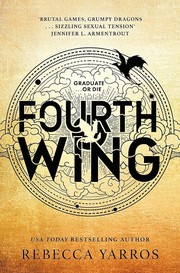
Fourth Wing
Rebecca Yarros's Fourth Wing retold: Violet enters Basgiath, bonds Tairn, and learns what the wards hide.
2,580-word summary · 11 min read
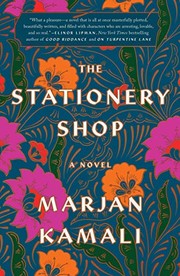
The Stationery Shop
Two teenagers fall in love in a Tehran stationery shop in 1953, are separated by the coup and a family deception, and meet again sixty years later.
2,024-word summary · 9 min read
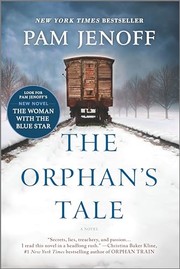
The Orphan's Tale
A Dutch teenager rescues a Jewish baby from a death train and joins a German circus, where a Jewish aerialist teaches her to fly.
2,943-word summary · 13 min read

The Japanese Lover
A Polish refugee and the son of a Japanese gardener fall in love in San Francisco in 1939, then keep the affair secret for nearly seventy years.
2,286-word summary · 10 min read

Anatomy: A Love Story
In 1817 Edinburgh, a noblewoman who wants to be a surgeon disguises herself to study anatomy and falls for the grave robber who supplies her with bodies.
2,031-word summary · 9 min read
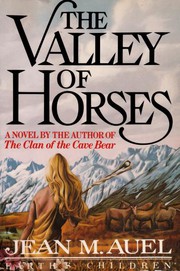
The Valley of Horses
Exiled from the Clan, Ayla survives alone in a hidden valley, tames a horse and a cave lion, and nurses a wounded stranger back to life.
2,311-word summary · 10 min read

Sophie's Choice
A young Southern writer in 1947 Brooklyn befriends a brilliant, unstable couple and slowly learns the story of the Polish Catholic woman at the center of their…
2,798-word summary · 12 min read
A Long Walk to Water
Two eleven-year-olds in southern Sudan, twenty-three years apart: a Dinka boy fleeing war and a Nuer girl walking hours for water, until their stories meet at…
2,217-word summary · 10 min read

Sam's Letters to Jennifer
A grieving journalist reads her grandmother's letters and finds a decades-long love affair that changes how she sees her family.
2,310-word summary · 10 min read
Amy & Roger's Epic Detour
Amy Curry has not driven since the crash that killed her father. With Roger at the wheel and a box of maps between them, a cross-country trip becomes a slow…
3,034-word summary · 13 min read
Two by Two
Sparks's twentieth novel turns from first love to a marriage breaking up: Russell Green loses his wife and his job, then rebuilds his life around his…
2,192-word summary · 10 min read
The Echo of Old Books
Barbara Davis's 2023 novel sends a rare-book dealer in 1984 New Hampshire hunting for the authors of two unpublished volumes that tell opposite sides of one…
2,491-word summary · 11 min read
The Storyteller's Secret
A New York journalist goes to India to learn why her grandmother loved a British officer, and why a family servant kept the truth for forty years.
2,270-word summary · 10 min read
The First to Die at the End
On the night Death-Cast launches, a boy with a bad heart meets a model with everything ahead of him, and one of them gets the call.
2,908-word summary · 13 min read

Origins
Stefan's diary of 1864 and 1888: how he and Damon fell for Katherine, became vampires, and went looking for a killer in London.
2,056-word summary · 9 min read

Last Night at the Telegraph Club
The 2021 National Book Award winner follows Lily Hu, a Chinese American teenager in 1954 San Francisco, as she falls for Kath and learns what it costs to be…
2,336-word summary · 10 min read

Ivanhoe
A disinherited Saxon knight, a great tournament, a besieged castle and a trial by combat. Scott's most famous novel, set in England in 1194.
2,834-word summary · 13 min read