
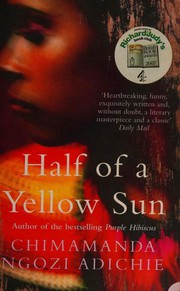
Half of a Yellow Sun
2,973-word summary 13 min read 433 pages in the book
- First published
- 2006
- Publisher
- Fourth Estate
- Pages
- 433
- ISBN
- 9780007200283
Reading options
What's inside (9 sections)
- Nsukka mornings: Ugwu learns to cook and listen
- Olanna and Kainene: two sisters, two ways of standing straight
- Richard, the Englishman who wants to belong
- Coups, massacres, and the road south
- Biafra years: hunger, schoolrooms, and relief lines
- The book inside the book and Kainene's last trade
- What stayed with me and where I struggled
- Key takeaways
- FAQ
I came to this one late, after Americanah, and I wish I had read it first. A friend who grew up in Enugu told me it was the book her family argued about at meals, the one her mother said got the hunger right and her uncle said got the politics wrong. That stuck with me. Published in 2006 by Fourth Estate at 433 pages, it covers the Biafran war through three close lives, and it reads less like a history lesson and more like staying too long in someone else's house while everything outside falls apart. I read it slowly over about ten days, often putting it down to look up a date or a name, then picking it back up because I wanted to know where Olanna had gone or whether Ugwu was safe.
The shape helped me stay oriented once I got used to it. Adichie moves between the early sixties, when Nigeria has fresh independence and university life in Nsukka feels full of talk and plans, and the late sixties, when secession and blockade have narrowed life to food, shelter, and news from the front. She does not tell it straight through. You meet people comfortable, then you meet them hungry, then you go back to learn how they loved before the war. At first I found the jumps annoying. Around page one hundred I stopped minding, because the contrast does the work. A joke at Odenigbo's table lands differently when you have already seen those same people sharing one thin stew in a refugee classroom.
Nsukka mornings: Ugwu learns to cook and listen
Ugwu is thirteen when he leaves his village to work as a houseboy for Odenigbo, a mathematics professor at the University of Nigeria in Nsukka. He is shy about his English, proud of his work, and hungry to learn in a way that made me root for him right away. Odenigbo's house is full of books, strong opinions, and evening guests who drink beer and argue about tribe, socialism, America, and what a free Africa should look like. Ugwu learns to cook Odenigbo's favorites, to clean around the piles of papers, to listen from the kitchen while pretending not to listen.
I loved these early house scenes because they are told through small jobs. Ugwu learns to make jollof and pepper soup the way Odenigbo likes it. He learns which guest wants extra meat and which one will stay late to keep arguing. He starts to read in secret, then openly, borrowing books and sounding out words. Odenigbo, for all his big talk about equality, can be careless and vain at home. He believes in revolution in the parlor and still expects his food hot and his house quiet. That gap matters later, when principles get tested by scarcity.
Olanna enters this house like a shift in weather. She is the beautiful daughter of a rich Igbo businessman from Lagos, educated in London, used to comfort, and she gives much of it up to live with Odenigbo in dusty Nsukka. People gossip. Her parents disapprove. Odenigbo's mother disapproves even more loudly. But Olanna scrubs floors she has never scrubbed before and learns market prices and tries to belong. Ugwu adores her almost at once, and I did too in those pages. She treats him with a direct kindness, asking about his family, correcting him without shaming him, slipping him books.
The evenings at Odenigbo's place give you the politics without speeches. There is Miss Adebayo, sharp and funny, and Okeoma, the poet, who will later put on a uniform. They argue about tribe, socialism, and what a free Africa should look like. Some of it feels young and loud. That is the point, I think. These are clever people who assume ideas will protect them.
Olanna and Kainene: two sisters, two ways of standing straight
Olanna has a twin sister, Kainene, and they could not be more different in manner, though they share a stubborn core. Olanna is warm, full figured, open, quick to trust. Kainene is thin, wry, businesslike, quick to cut through sentiment. She runs part of their father's business in Port Harcourt, smokes, drinks, says what others avoid. Their father is a wealthy contractor with government ties, their mother polished and social. The family has money from contracts and connections, and both sisters know their comfort rests on deals they do not fully respect.
I found the sister bond painful in a familiar way. They love each other and irritate each other and compete without admitting it. Olanna had a life in London and Lagos before Nsukka, including an affair with a Hausa man named Mohammed, kind and steady, whom she left for Odenigbo. Kainene keeps her distance at first, then lets Olanna back in by small steps. A phone call. A visit. A shared joke about their parents. Adichie does not force them into sweet scenes. They misunderstand each other for long stretches, then show up when it counts.
The test comes through men and through pride. His mother brings a village girl named Amala to his house while Olanna is away, and he sleeps with her. Amala becomes pregnant. Olanna learns of it and is gutted. She leaves for a time, sleeps with Richard in a hurt night she regrets almost at once, then returns and chooses to raise Amala's baby girl as her own. They call the child Baby, later Chiamaka. I believed it because Olanna's choice is not framed as noble. It is possessive and tender and angry all at once.
Kainene watches all this with her dry eye and does not lecture. Her own love life is steadier in its odd way. She takes up with Richard, an Englishman who follows her to Port Harcourt and stays. She mocks him, protects him, uses his whiteness when it helps at checkpoints and ignores it at home. Where Olanna bends toward people, Kainene holds her line. During the war that hardness will let her run a refugee camp, trade for food, stare down soldiers. It will also make her final absence harder to accept, because you assume someone that capable will always come back.
Richard, the Englishman who wants to belong
Richard Churchill came to Nigeria for Igbo-Ukwu art and stayed for Kainene. He is shy, fair haired, earnest, writing a book about the bronze heads and pots that first drew him east. In Nsukka circles he is both welcomed and teased. People like him personally and distrust what he represents. He tries hard to learn Igbo, to eat what is offered, to listen more than he speaks. Sometimes he gets it right. Often he misses the joke or the warning underneath the joke.
His thread gave me a lot to chew on. He wants to be an insider through love and study, and Adichie lets him get close without ever letting him fully arrive. He breaks with his old expatriate life. He refuses to leave when other white residents fly out. He tries to write about the war for foreign papers, hoping outside attention will help Biafra. Some Biafrans value that. Others see him as a mascot, useful for photos and quotes. Kainene loves him but does not coddle him. She corrects his Igbo, laughs at his seriousness, trusts him with money and errands, and keeps her own counsel about fear.
There is a quiet rivalry between Richard and Odenigbo that hums under dinners. The night Olanna sleeps with Richard out of grief about Amala damages all of them for a while. Adichie does not turn it into a love triangle. It is a mistake that leaves a mark, apologized for but not erased.
Richard also carries the book inside the book. Early on he plans to write a novel about Nigeria with the title The World Was Silent When We Died. He drafts, stalls, burns pages, starts again. By the end that title belongs to someone else, and the shift feels right rather than cruel. Richard learns that wanting to tell a story does not give you the best claim to it. His articles help for a time, then the world moves on. I liked that Adichie lets him be useful and limited at once.
Coups, massacres, and the road south
The middle of the novel turns on history that Adichie handles in close up rather than in headlines. Nigeria's first coup in January 1966, then a counter coup in July, then organized killings of Igbo people living in the North. Olanna happens to be in Kano visiting family when the violence reaches her street. Those pages were the hardest for me to read. Neighbors turn. A beloved uncle is killed. Olanna escapes on a train south with Mohammed's help, pressed among terrified families, seeing bodies at stations, holding Baby tight and trying not to scream.
Ugwu's view is different. He is in Nsukka, hearing rumors, seeing students mobilize, watching Odenigbo swing from confident theorist to frightened father. The university empties. Markets thin. Friends who joked about socialism now talk about survival and revenge. When the East secedes in May 1967 under Chukwuemeka Odumegwu Ojukwu and takes the name Biafra, with a flag showing half of a yellow sun, there is real joy in these pages alongside fear. People feel they have chosen dignity over slow death. Odenigbo, who once argued for one Nigeria, now shouts for Biafra with tears in his eyes. Miss Adebayo, who is Yoruba, leaves. Friendships strain along lines nobody wanted to draw.
Adichie is careful not to make secession sound simple. She shows pressure to conform, suspicion of saboteurs, propaganda on both sides. Federal radio calls Biafrans rebels. Biafran radio promises swift victory and foreign help that never fully comes. Ordinary people get caught between armies and broadcasts. I appreciated that she lets Odenigbo be both brave and blinkered here. He believes because he needs to believe.
The fall of Nsukka scatters them. The university town, which felt like the center of thought, becomes a frontline. The family packs in panic, loses goods, splits up, reunites in smaller rooms in Umuahia and then farther south. Houses that held debates now hold displaced cousins. Cars run out of petrol. Schools close. Ugwu, who once worried about perfect rice, learns to carry loads, queue early, and keep his head down at checkpoints. If I remember right, there is a scene where they bury valuables and another where Olanna trades her wig for food. Details like that stayed with me more than battle maps, because they show how war shrinks a life to what you can carry.
Biafra years: hunger, schoolrooms, and relief lines
The longest war stretch follows Olanna and Ugwu through hunger that gets worse month by month. Olanna teaches in makeshift schools, first in Umuahia and later in refugee settings, trying to keep children calm while planes pass overhead. She lines up for relief food, for powdered milk and stockfish and rice from church groups and foreign charities. She watches children's bellies swell and hair turn reddish from kwashiorkor. She barters, begs, borrows. Her old Lagos pride is gone. What remains is a fierce, tired focus on Baby and on whoever is in front of her.
Kainene, meanwhile, runs a refugee camp with terrifying competence. She sources food where others find none, keeps ledgers, scolds thieves and comforts mothers, trades across lines when she must. Her camp is cleaner and better fed than most because she refuses pity and sentiment. She and Olanna, reunited after separations, fall into old rhythms. They quarrel about money and risk. They share soap and sugar. They hold Baby between them like a small peace. One of my favorite quiet scenes has the sisters braiding hair or sorting clothes while Richard hovers, useless and worried, and for an hour the war feels far away.
Ugwu's war is the darkest thread. He is conscripted, or pressed, into the Biafran army while still young. Training is brutal and brief. He sees friends die in confused bush fighting. He goes hungry in a different way from civilians, marching on empty stomachs, looting cassava, drinking bad water. And he does something terrible. With other soldiers, drunk and emboldened, he takes part in the rape of a bar girl. Adichie does not look away and does not excuse him. Ugwu is haunted after, sickened, unable to tell Olanna and Odenigbo, unable to meet his own eyes in the mirror of memory. I found this section almost unbearable, and I think it is meant to be. It refuses the easy idea that suffering makes people pure. Victims of a blockade can still harm others. A kind houseboy can do a cruel thing and have to live with it.
Back in the towns, daily life narrows to sounds. The whine of a jet, the thud of shelling, the relief lorry horn. Odenigbo drinks more. He argues less. Olanna learns to cook with almost nothing, to make a thin soup feed five. Baby, small and observant, stops asking for things she knows are gone. That detail hurt me more than any speech about starvation.
People gather around radios and argue about Ojukwu's speeches and whether foreign help will save Biafra. Richard files stories and takes photos. The blockade holds. Children die while adults debate wording.
The book inside the book and Kainene's last trade
Late in the novel the focus shifts to who gets to tell what happened. Richard's long planned book stalls. He realizes, slowly and without self pity, that Ugwu has the truer material: the kitchen and the camp and the barracks, the jokes and the hunger, the Igbo proverbs and the soldiers' songs. Ugwu, back from the front, thin and changed, starts to write in an exercise book. He writes about his village, about Odenigbo's debates, about Olanna's kindness, about the girl he harmed and cannot forget. The title he uses is The World Was Silent When We Died, the same title Richard once chose. Richard hands it over without a fight. That handoff moved me. It feels like Adichie saying that witness belongs to those who stayed through the worst, not those who observed with love but from the edge.
Because we have seen Ugwu learning letters in Nsukka, his halting then steady prose feels earned. He names names when he can and hides them when he must. Odenigbo reads pages and weeps. For a book full of loss, these writing scenes feel like small repair.
And then Kainene goes missing. She decides to trade across enemy lines, an afia attack, to get food for her camp. It is the sort of risk she has taken before and survived through nerve and contacts. This time she does not return. Days pass. Richard searches, asks soldiers, bribers, priests, traders. Olanna refuses to mourn, insists Kainene is alive, keeps her room ready, keeps asking. The war ends in January 1970 with Biafra's surrender, federal troops moving in, slogans about no victor and no vanquished that sound thin against ruined towns. People come home to looted houses. Odenigbo finds his Nsukka house occupied and his books gone. Yet the family endures. Ugwu survives. Baby survives. Olanna and Odenigbo hold each other in the wreckage. Only Kainene's fate stays open.
I sat with that ending for a long time. Part of me wanted a clear answer. Adichie refuses it, and I have come to think she is right. In wars of hunger and flight, many families never learned what happened to a sister at a checkpoint or on a trading road. Olanna's refusal to say Kainene is dead is not denial so much as loyalty. The half sun on the flag, rising or setting depending on how you look, fits that uncertainty.
What stayed with me and where I struggled
What stayed with me is the domestic scale. This is a war novel that spends as much time on cooking pots and school fees as on battles, and that choice makes the horror land harder. I can still picture Ugwu pounding yam in peacetime and later guarding a pot of watery porridge like gold. She trusts you to feel both the numbers and the hands.
The voices stayed too. Odenigbo's bluster turning quiet. Kainene's jokes getting shorter as food gets shorter. Ugwu's growth from mimic to maker, from boy who repeats proverbs to young man who writes them down and questions them.
Where I struggled is pace in the middle war years. Some stretches repeat the same loop of queue, rumor, raid, hunger, and while repetition is truthful to siege life, it can drag on the page. A few debate scenes in the early Nsukka chapters also run long for my taste, with guests making points rather than talking like friends. And Odenigbo tested my patience. His treatment of Olanna around the Amala episode is selfish, and his early certainty about everything wears thin. I kept reading because Olanna, Kainene, and Ugwu carry the moral weight, not him. He is interesting to watch precisely because he is flawed, but there were nights I wanted to shake him.
Pick it up if you want a full, human account of Biafra that does not flinch and does not preach. Give the time jumps twenty or thirty pages to settle. Keep a light hand on keeping track of towns, Nsukka to Umuahia to Port Harcourt to the villages south, rather than memorizing every date. Notice food, how it moves from abundance to ration to memory. Notice who writes and who is written about. By the last pages, when Ugwu writes and Olanna waits and Richard watches the road for Kainene, you may feel, as I did, that you have lived with these people through both feasts and famine, and that saying goodbye is a relief tangled with guilt.
FAQ
What war is Half of a Yellow Sun about?
The Nigerian Civil War of 1967 to 1970, when the Eastern Region seceded as Biafra. The novel follows the buildup from the 1966 coups and massacres through blockade and surrender.
Does Kainene survive at the end?
We never learn. She leaves to trade across enemy lines for her refugee camp and does not return. Adichie leaves her fate open, which mirrors many real wartime disappearances.
Who writes The World Was Silent When We Died?
Ugwu does. Richard first plans a book with that title, then steps aside when he sees Ugwu has the closer witness from kitchen, camp, and front line.
Similar books

Sophie's Choice
A young Southern writer in 1947 Brooklyn befriends a brilliant, unstable couple and slowly learns the story of the Polish Catholic woman at the center of their…
2,798-word summary · 12 min read
Euphoria
Three anthropologists in 1930s New Guinea turn fieldwork into a love triangle, and a real history breathes behind them.
2,048-word summary · 9 min read

Wide Sargasso Sea
Jean Rhys gives the first Mrs. Rochester a Caribbean childhood, a marriage built on money and suspicion, and a voice that Charlotte Bronte left in the attic.
2,021-word summary · 9 min read
The Silence of the Girls
Briseis, queen of Lyrnessus, is captured by Achilles and narrates the Trojan War from inside the Greek camp, where women are prizes and survival is its own…
2,098-word summary · 9 min read
The Island of Missing Trees
A talking fig links 1970s Cyprus lovers Kostas and Defne with their grieving London daughter Ada years later.
3,172-word summary · 14 min read
The Sympathizer
Double agent captain spies in Saigon fall and LA exile while confessing to commandant.
2,169-word summary · 10 min read
The English Patient
In a ruined Italian villa in 1945, a burned man, a nurse, a thief, and a sapper trade pasts shaped by desert love and war.
2,006-word summary · 9 min read
Snow Falling on Cedars
A Japanese American fisherman stands trial for murder on a snowy island, while a reporter faces lost love and wartime prejudice.
2,224-word summary · 10 min read
Life After Life
Ursula Todd dies and restarts through wars, flus, and bad marriages.
2,060-word summary · 9 min read
Things Fall Apart
Proud Igbo wrestler Okonkwo rises in 1890s Umuofia, then loses standing through hard exile, a son's conversion, and British missionaries and courts remaking…
2,518-word summary · 11 min read
All Quiet on the Western Front
Paul Bäumer enlists at nineteen and faces the trenches of World War I in Remarque's 1929 classic, told from the German side of the wire.
2,543-word summary · 11 min read
All the Light We Cannot See
Doerr's All the Light We Cannot See retold: blind Marie-Laure, Werner the radio boy, and Saint-Malo.
1,962-word summary · 9 min read
A Thousand Splendid Suns
Splendid Suns retold: Mariam and Laila share Kabul house, war, Rasheed, escape and return.
1,957-word summary · 9 min read
Purple Hibiscus
Kambili, fifteen, watches her devout factory-owner father rule the Enugu house through fear until a Nsukka visit teaches her speech and freedom.
2,595-word summary · 12 min read
Americanah
Ifemelu leaves Nigeria for America on a scholarship, blogs about race and hair, while Obinze endures undocumented London until they reunite years later in…
2,527-word summary · 11 min read
Violeta
A woman born in 1920 writes her life story to her grandson, from one pandemic to another, through wealth, ruin, passion, and dictatorship in South America.
2,555-word summary · 11 min read
The Orphan's Tale
A Dutch teenager rescues a Jewish baby from a death train and joins a German circus, where a Jewish aerialist teaches her to fly.
2,943-word summary · 13 min read
A Long Walk to Water
Two eleven-year-olds in southern Sudan, twenty-three years apart: a Dinka boy fleeing war and a Nuer girl walking hours for water, until their stories meet at…
2,217-word summary · 10 min read
The Lowland
Two brothers grow up beside a marshy lowland in Calcutta, and the choices of the younger one draw the older into a life of duty, distance, and quiet grief that…
2,213-word summary · 10 min read
The Storyteller's Secret
A New York journalist goes to India to learn why her grandmother loved a British officer, and why a family servant kept the truth for forty years.
2,270-word summary · 10 min read
Stones from the River
Trudi Montag is born a dwarf in a small German river town in 1915 and grows up to keep the town's library and its secrets, from the First World War to the…
2,818-word summary · 13 min read

Ivanhoe
A disinherited Saxon knight, a great tournament, a besieged castle and a trial by combat. Scott's most famous novel, set in England in 1194.
2,834-word summary · 13 min read
The Sisters Brothers
Two hired killers ride from Oregon to Gold Rush California to murder a prospector, and find their trade, their brotherhood, and the frontier myth coming apart.
2,095-word summary · 9 min read
The Last of the Mohicans
During the French and Indian War, Hawkeye and two Mohican warriors try to save two British sisters from a Huron chief whose revenge will end the Mohican line.
2,017-word summary · 9 min read

The Birth of Venus
A Florentine merchant's daughter trains as an artist, marries a man who hides a secret, and survives Savonarola's bonfire of the vanities.
2,404-word summary · 11 min read
Mother Night
Howard W. Campbell Jr., a Nazi propagandist and American spy, tells the story of his double life from an Israeli prison cell while waiting to be tried for war…
1,988-word summary · 9 min read
Doctor Zhivago
A doctor and poet lives through revolution, war, and love in Pasternak's novel of private life under the pressure of Russian history.
2,213-word summary · 10 min read
Bring Up the Bodies
Thomas Cromwell sets out to destroy Anne Boleyn, building a case from rumor and revenge while Henry VIII waits to marry Jane Seymour.
2,066-word summary · 9 min read

The Tiger's Wife
A young doctor in a war-scarred Balkan country chases the stories her grandfather left behind, including a deathless man and a deaf girl who loved an escaped…
2,232-word summary · 10 min read
Exodus
Leon Uris's sweeping 1958 novel follows Jewish refugees, Haganah fighters, and Holocaust survivors from Cyprus to the founding of Israel and the 1948 war.
2,529-word summary · 11 min read