
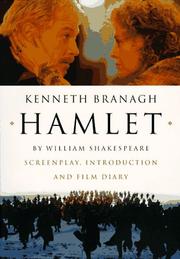
Hamlet: Screenplay, Introduction and Film Diary
2,903-word summary 13 min read 208 pages in the book
- First published
- 1996
- Publisher
- W. W. Norton & Company
- Pages
- 208
- ISBN
- 9780393315059
Reading options
What's inside (8 sections)
I picked up this book after a long argument with a friend about whether anyone should film all of Hamlet. My friend said four hours was pure stubbornness. I said I wanted to see what stubbornness looked like from the inside. My copy is the 1996 W. W. Norton and Company edition, 208 pages, and it is a strange object to hold. Part of it reads like a play text. Part reads like a director talking through his choices before anyone can interrupt. Part reads like a log kept between setups while the light was changing.
Branagh published it around his 1996 film, the one shot on 70mm and set in the 1800s. He plays Hamlet himself. Derek Jacobi plays Claudius. Julie Christie plays Gertrude. Kate Winslet plays Ophelia. The names matter here because the book keeps circling back to them, to why these people were cast and what they were asked to carry. I went in expecting a souvenir. I came out with a much clearer sense of how a huge classic gets moved from stage to screen without cutting the spine out of it.
The book has three layers. First comes an introduction where Branagh explains why he wanted the full text. Then comes the screenplay itself, which follows the play in order from the ghost to the duel, with Fortinbras given real weight at the start and the finish. Then comes the film diary, written during the shoot, mostly at and around Blenheim Palace. If you only know Hamlet from school, the middle section will feel familiar. The value is in the first and third parts, where Branagh shows his working.
Why film every word
Branagh opens by saying he was tired of the standard two hour Hamlet. His point is simple. When you cut half the play you lose the politics. You lose the way Elsinore watches everyone. You lose Rosencrantz and Guildenstern as more than jokes, you lose much of Fortinbras, and you lose the slow pressure that makes Hamlet wait so long and then move so fast at the end.
He wanted the camera to do what a stage cannot. On stage, soliloquies often stop the night. On film, he thought, you could let Hamlet speak while life went on around him. Servants pass. Doors close. Snow falls outside a window. That idea runs through the introduction. He did not want a museum piece. He wanted a court that felt busy and watched.
He also talks about sound and scale. Shooting on 70mm was a deliberate throwback at a time when most dramas had gone smaller. He wanted faces large and rooms large. Blenheim Palace gave him corridors long enough for a man to walk while thinking, and rooms that could stand in for different corners of Denmark. The introduction admits this was risky. Money was tight and the weather kept turning.
One passage I kept returning to was his note on verse. He did not want the actors to push the poetry. He wanted it spoken fast enough to sound like thought. Derek Jacobi gets praised here for making Claudius smooth in public and tight in private. Julie Christie gets credit for playing Gertrude as someone who sees more than she says. Kate Winslet, very young at the time, is described as direct and unguarded, which Branagh felt Ophelia needed before everything breaks.
There is pride in these pages, sometimes too much pride. He answers critics before they have spoken. He explains why uncut was necessary rather than simply letting the film try to prove it. I found that slightly wearing on a first read. On a second read I was more forgiving. He knew reviewers would call the project vain. The introduction is his attempt to get his reasons on record while he still could.
A 19th century court with soldiers at the door
The most argued about choice in the book is the setting. Branagh moves Denmark to the 1800s. Think high collars, swords mixed with rifles, mirrors and chandeliers, newspapers and uniforms. Elsinore becomes a palace that looks like it belongs to a fading empire, full of polished floors and hard glares.
This is where Fortinbras comes in. In many stage cuts Fortinbras almost disappears. Here he is present from early on. Norwegian troops move near the borders. His name is spoken in council rooms. At the end he walks in with his army after everyone else is dead. Branagh uses him as a frame. The old order rots from inside while a colder order waits outside.
I had doubts about this when I first saw stills. Hamlet in a 19th century great hall can look like a costume party. Reading the screenplay helped. The period gives Branagh practical tools. Letters can be sealed and intercepted. Spies can hide behind doors. A play can be put on in a private theater with real curtains. The duel can be a formal court event with rules and witnesses instead of a scuffle.
The 19th century setting also sharpens Claudius. Derek Jacobi plays him in the book as a modern politician in older clothes, a man good at weddings and speeches. In the council scenes he manages news of Fortinbras with calm hands. At home he watches Hamlet. That double work, public ease and private worry, fits a period when kings still had to perform for courts and cameras in the mind, if not yet real ones.
Not everyone will buy it. Some readers will feel the mirrors and uniforms fight the verse. Branagh knows that. The introduction addresses it head on and basically says the text can take the weight. After reading the whole screenplay straight through, I lean his way more than I expected. The period never solves Hamlet, but it gives the spying and formality a place to live.
The ghost, the wedding, and a son who cannot join in
The screenplay proper starts where Shakespeare starts. Night. Cold. Soldiers on a platform seeing what they think they see. Bernardo and Marcellus and Horatio watch a shape pass that looks like the dead king. They fetch Hamlet.
Branagh keeps this opening brisk in print. Short lines. Much white space. You can feel him thinking in shots. The ghost is not a vague mist in his version. It is armored and large, shot to fill the 70mm frame. The diary later notes how hard those night exteriors were to light at Blenheim in winter, with breath showing and fingers numb.
Then the wedding. This is one of the best handled stretches in the screenplay. Claudius and Gertrude enter bright and pleased. The court smiles. Hamlet sits apart in black. Claudius deals with Fortinbras in public, sends ambassadors to Norway, then turns to Laertes and grants him leave for France with easy charm. Then he turns to Hamlet and tells him to stop mourning. Stay. Be a son.
Gertrude asks him to stay too. Hamlet agrees in a flat line that fools nobody. Then, alone, he speaks the first great grief speech about flesh melting and the world feeling flat and empty. Branagh prints it whole. Reading it after the busy court scene, you notice how much of the play is about being alone in a crowded room.
Laertes warns Ophelia before he leaves. Polonius warns her too, longer and more pompous. Do not trust Hamlet's vows, they say. She listens. She has listened all her life. Kate Winslet in these early pages is written as attentive rather than weak, a girl trying to be good in a court that uses goodness.
Hamlet meets the ghost on the ramparts with Horatio and Marcellus. The ghost tells him he was murdered by Claudius, poison poured in his ear while he slept in an orchard. Revenge me, he says. Hamlet swears he will remember and nothing else. Then he makes his friends swear secrecy and starts acting strange to cover what he knows. The screenplay keeps all the doubling here. Is the ghost true. Is Hamlet mad or performing. Branagh does not tip his hand in the text. His camera notes suggest closeness rather than tricks, faces held long enough that you have to decide.
Players, traps, and Ophelia left exposed
The middle of the book is where the full text policy pays off. Rosencrantz and Guildenstern arrive, old school friends turned informers. Polonius bustles. Hamlet deflects them with jokes that have teeth. The diary has a funny complaint about how many rooms at Blenheim looked alike on film and how the crew had to redress doors and drapes so the audience could tell one spying scene from another.
Then the players come. This traveling troupe gives Hamlet his idea. He will have them perform a murder like his father's murder and watch Claudius watching it. The play within the play is printed in full, with stage directions for the court audience. Hamlet narrates and needles. Ophelia sits near him and takes his barbs. Gertrude watches. Claudius rises and calls for light.
It works. Claudius breaks. But the victory costs Hamlet. He has proof now, or something close to proof, and still he delays. He finds Claudius praying and refuses to kill him there, reasoning that death in prayer would send him clean to heaven. Whether that is principle or excuse is left hanging. Branagh in the introduction calls this the moral knot of the play and says he told Jacobi to play Claudius in that scene as a man who cannot truly repent even when he tries.
Ophelia suffers most in this stretch. Hamlet turns on her in the nunnery scene, cruel and loud, telling her to go to a convent because all men are false. The screenplay makes clear there are listeners. Polonius and Claudius hide and hear. Ophelia, who came to return letters, ends up displayed. Reading it on the page is harder than hearing it quoted. She has almost no privacy. Even her grief is watched.
To be, or not to be, that is the question.
I quote that line only because the book forces you to meet it in context rather than as a poster. Here it comes after Hamlet has been sent for, spied on, and disappointed. Branagh stages it, according to his notes, with mirrors. Hamlet looks at himself looking at himself. I rolled my eyes at the description. On the page it reads better than it sounds. He is a prince in a palace of reflections who cannot find a private corner to think in.
Ophelia's break comes later but is prepared here. Her father uses her. Her lover wounds her. The court treats her as evidence. Winslet's Ophelia, as Branagh describes her in the intro, does not start mad. She starts tired. That choice makes the later mad scenes land with less decoration and more ache.
Closets, letters, and a supervised trip to England
After the play scene Hamlet is summoned to his mother. On the way he passes Claudius at prayer and spares him. In Gertrude's closet he confronts her with words and pictures, comparing his father and his uncle. Polonius, hidden behind a curtain, cries out. Hamlet stabs through the cloth and kills him. It is rash and wrong and the play never lets him off for it.
This closet scene is one of the longest in the screenplay and one of the most talked about in the diary. Christie and Branagh rehearsed it many ways. The book notes floor marks, candle positions, and how many takes the large format demanded because every small move showed. Gertrude in this version sees the ghost or does not see him depending on how you read Hamlet's eyeline. Branagh keeps Shakespeare's ambiguity. She looks where he looks and finds empty air.
Ophelia now loses her father to the man she loves. The court covers the death with euphemism. Claudius sends Hamlet to England with Rosencrantz and Guildenstern and sealed orders for his death. Hamlet, suspicious, switches the letters at sea so his escorts die instead. The screenplay keeps the sea story as reported action, with Hamlet returning to Denmark after pirates take his ship. It is an odd corner of Hamlet and the full text does not smooth it. Branagh admits in the intro that film audiences may fidget here. He kept it because removal would make Hamlet's return feel like magic.
Laertes returns from France furious. His sister drowns offstage. Reports say she fell in a brook among willows and slipped under while singing. The book does not stage the death, which is faithful to Shakespeare and, I think, right. Ophelia's funeral becomes a brawl in words. Laertes leaps in the grave. Hamlet, hidden nearby, steps forward and claims his own grief is larger. It is ugly and human. Two young men competing over a coffin while a priest shortens the rite.
The diary pages for this section are full of mud and coats. Blenheim grounds stood in for roads and churchyards. Extras playing courtiers and soldiers had to be kept dry between takes. One entry complains, with humor, about sheep wandering into a wide shot. Another notes Jacobi learning to ride for a short arrival beat that lasts seconds on screen. These entries are why the book earns its shelf space. They show the unglamorous math behind grandeur.
Foils, poison, and the diary after the deaths
The end moves fast after so much waiting. Hamlet returns changed, quieter, less interested in wordplay. Horatio listens. Hamlet tells him about the switched letters without triumph. He apologizes to Laertes in public but the apology does not hold. Claudius proposes a fencing match between Hamlet and Laertes. Bets are laid. Cups are prepared.
Branagh prints the duel with care. Foils are chosen. Laertes has a sharpened and poisoned tip. Claudius has a poisoned cup as backup for Hamlet. Gertrude drinks to her son and is poisoned. Laertes wounds Hamlet and is wounded in return when the foils switch. Gertrude dies. Laertes confesses the plot. Hamlet kills Claudius with the poisoned blade and forces the cup on him. Horatio wants to die too. Hamlet stops him. Ask him to tell the story.
Fortinbras enters with his army to find bodies on the floor. He orders Hamlet borne off like a soldier. The screenplay ends where Shakespeare ends, with foreign drums and a throne empty again. Branagh's framing pays off here. Because Fortinbras has been present in memos and marches all along, his arrival does not feel like a late insert. It feels like the outside world collecting what is left.
The diary closes the book with tired satisfaction. There are notes on the final days, on striking sets, on sound mixing for whisper scenes that 70mm cameras, which are loud, made difficult. There are thank you lists. There are box office hopes that now read as optimistic. The film did respectably but did not change the market. Four hours is four hours.
This is where my fair criticism sits. The diary is the best and weakest part at once. At its best it is specific about lenses and rehearsal time. It explains how to move a crowd through a doorway without losing the verse. At its weakest it is self protective. Bad notices are answered a little too quickly. Compromises are framed as victories. Branagh directed, starred, adapted, and then narrated the making. That much control leaves little room for doubt on the page, even when doubt would be interesting.
The length question is real too. Reading uncut is different from sitting uncut. On the page you can pause. In a cinema you cannot. I admire the completeness and I felt the drag in the political passages on a first pass. On a second pass those same passages gave the ending its weight. Viewers who love character scenes may still wish he had trimmed council talk. Readers who love structure will be glad he did not.
The 19th century idea will divide people for good. I know friends who find it fussy. Mirrors and medals can pull focus from language if you let them. I found that after a while the setting faded and the faces took over, which is probably what Branagh wanted. But I cannot call it neutral. It is a strong flavor. If you prefer a bare stage Hamlet, this book may read as excess even as it argues for fullness.
What stays with me is smaller than the concept. Jacobi smoothing his robe before lying. Christie pausing before she drinks. Winslet trying to hand back letters with steady hands. A corridor at Blenheim made to look endless so one man can walk and talk to himself while others watch from doorways. The introduction promises a Hamlet with nothing removed. The diary shows what nothing removed costs in film stock and hours waiting for light. I am glad the record exists, even when the narrator is selling his own film a little hard. It lets you see the work behind the words we usually meet only in classrooms.
I finished the book late at night and put it beside my paperback Hamlet. The paperback looked thin and lonely. That seems like the right effect. This is not a replacement for the play. It is a companion for anyone who wants to know what happens when someone decides to film it all and then writes down what the decision took.
FAQ
What is actually inside this Hamlet book?
It holds three parts in order: an introduction on directing an uncut Hamlet, the full screenplay text used for the four hour film, and a day by day diary of the shoot at places like Blenheim Palace.
Is it a shortened or modernized version of the play?
No. The screenplay prints the full play text as filmed, set in the 1800s and shot on 70mm. The new material is Branagh on casting, cutting nothing, staging, plus diary notes on schedule, weather, and large scenes.
Who will get the most from it?
Readers who like Shakespeare in performance, film craft, or stage history. If you want only the play, a standard edition is cheaper and lighter to carry.
Similar books
The Taming of the Shrew
Petruchio woos sharp-tongued Kate while suitors scheme for sweet Bianca in Shakespeare's rowdy early comedy of marriage and disguise, first printed in 1623.
3,605-word summary · 16 min read
Rosencrantz and Guildenstern Are Dead
Stoppard's 1966 play retells Hamlet from the wings, where two minor courtiers wait, joke, and walk toward a death they cannot see.
2,021-word summary · 9 min read
Pygmalion
Higgins bets he can pass flower girl Eliza off as a duchess.
2,521-word summary · 11 min read
Sonnets & Poems
154 sonnets plus Venus and Adonis and other poems on time, love, and fading beauty.
2,341-word summary · 10 min read
Twelfth Night
Viola disguised as Cesario woos Olivia for Orsino while a forged letter ruins Malvolio in Illyria.
2,546-word summary · 11 min read
The Merchant of Venice
Antonio borrows from Shylock to fund Bassanio, Portia picks suitors by chests, and a courtroom bond comes due.
2,950-word summary · 13 min read
The Tempest
Prospero raises a storm to wreck his enemies on his island, where his daughter meets a prince and old wrongs face trial.
2,890-word summary · 13 min read
Julius Caesar
Brutus joins Cassius to kill Caesar for Rome, then loses Rome to Antony words and Octavius swords.
1,916-word summary · 9 min read
Othello
Iago's lies drive the Moor of Venice to murder his innocent wife in Shakespeare's tragedy of jealousy.
2,409-word summary · 11 min read
A Midsummer Night's Dream
Four lovers flee to a forest where fairies mix them up, while workmen rehearse a play for a duke's wedding.
2,597-word summary · 12 min read
Macbeth
Macbeth hears witches hail him king and murders Duncan with Lady Macbeth pushing him on.
4,056-word summary · 18 min read
Hamlet
Hamlet sees his father's ghost in Elsinore and pretends madness to test Claudius and Gertrude while Denmark slides toward duel and death.
2,996-word summary · 13 min read
Romeo and Juliet
Shakespeare's Romeo and Juliet retold: Verona feud, balcony, Friar's plan, and why the last minutes collapse.
2,531-word summary · 11 min read

The Long Winter
Dakota Territory, 1880: seven months of blizzards cut a town off from the railroad, and a family survives on twisted hay, ground wheat, and a dangerous wheat…
2,210-word summary · 10 min read
The Crying of Lot 49
A California woman named executor of her ex-lover's estate follows a muted post horn into a possible centuries-old postal conspiracy, and Pynchon refuses to…
2,003-word summary · 9 min read
Silas Marner
A falsely accused weaver hoards gold in Raveloe until a stolen hoard and an abandoned child remake his narrow life.
2,699-word summary · 12 min read

Revolutionary Road
A Connecticut couple who believe they are too good for the suburbs plan to move to Paris, and the plan slowly exposes everything they cannot say to each other.
2,085-word summary · 9 min read

Make Way for Ducklings
A pair of mallards raise eight ducklings on the Charles River and lead them across Boston to the Public Garden, with a little help from a friendly policeman.
2,044-word summary · 9 min read

Little Town on the Prairie
In the spring after the Long Winter, fifteen-year-old Laura sews shirts, studies for a teaching certificate, and helps send her blind sister Mary to college.
2,071-word summary · 9 min read

Amelia Bedelia
A literal-minded housekeeper follows her employer's list to disastrous and funny effect in the 1963 picture book that made wordplay a children's staple.
2,038-word summary · 9 min read

Howards End
Forster's 1910 novel follows two families, a house in Hertfordshire, and a burned note, asking whether money and feeling can ever be connected.
2,187-word summary · 10 min read
The Mitten
Jan Brett retells a Ukrainian folktale about a boy, a lost white mitten, and the woodland animals that crowd inside until a bear sneezes.
2,609-word summary · 12 min read
The Agony and the Ecstasy
Irving Stone turns Michelangelo's seventy years of carving, painting, and arguing with popes into a novel about the cost of making something that outlives you.
2,260-word summary · 10 min read

Sophie's Choice
A young Southern writer in 1947 Brooklyn befriends a brilliant, unstable couple and slowly learns the story of the Polish Catholic woman at the center of their…
2,798-word summary · 12 min read

Fathers and Sons
Arkady brings the nihilist Bazarov home to his father's estate, and a generational argument turns into love, a duel, and an early death.
2,192-word summary · 10 min read
Clifford the Big Red Dog
Emily Elizabeth picks the smallest puppy in the litter, loves him as hard as she can, and wakes up to a dog the size of a house.
2,092-word summary · 9 min read
The Story of Ferdinand
A gentle Spanish bull would rather smell flowers than fight, and when he is taken to the bullring he simply sits down among the flowers in the ladies' hats.
2,135-word summary · 9 min read
Naked Lunch
Burroughs's banned 1959 collage novel follows Bill Lee through addiction, Tangier, and the nightmare bureaucracy of the Interzone.
2,082-word summary · 9 min read
Go, Dog. Go!
Dogs drive, work, play, and climb a tree for a party in this Beginner Book built on repetition, opposites, and one very unpopular hat.
2,196-word summary · 10 min read
Caps for Sale
A peddler balances his caps on his head, naps under a tree, and wakes to find monkeys wearing his stock in this 1940 picture book.
2,787-word summary · 12 min read